Indonesia's biggest palm oil market is now at home
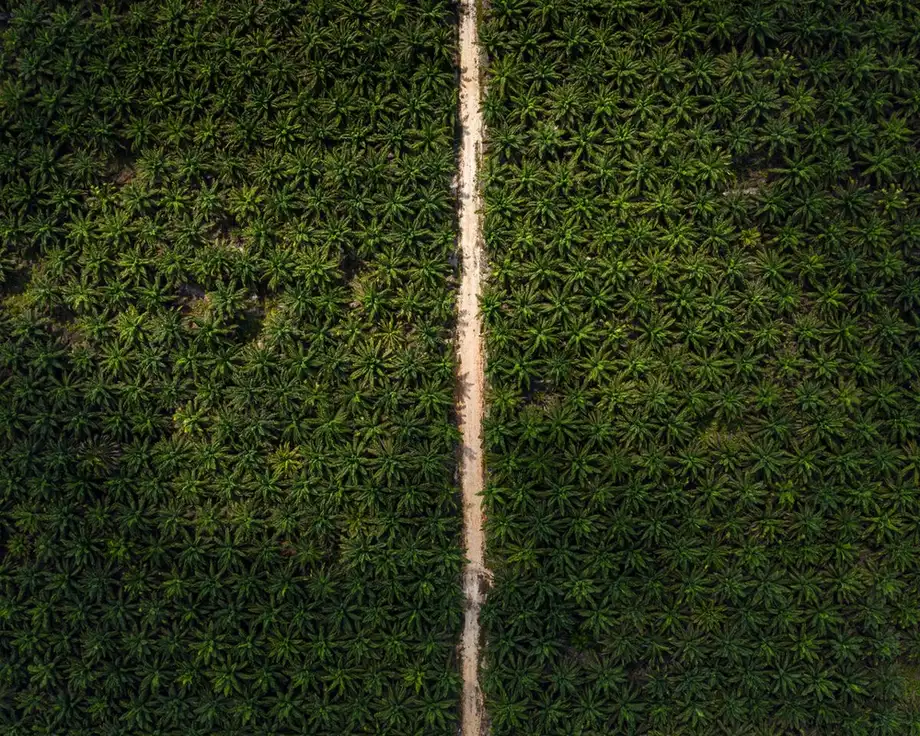
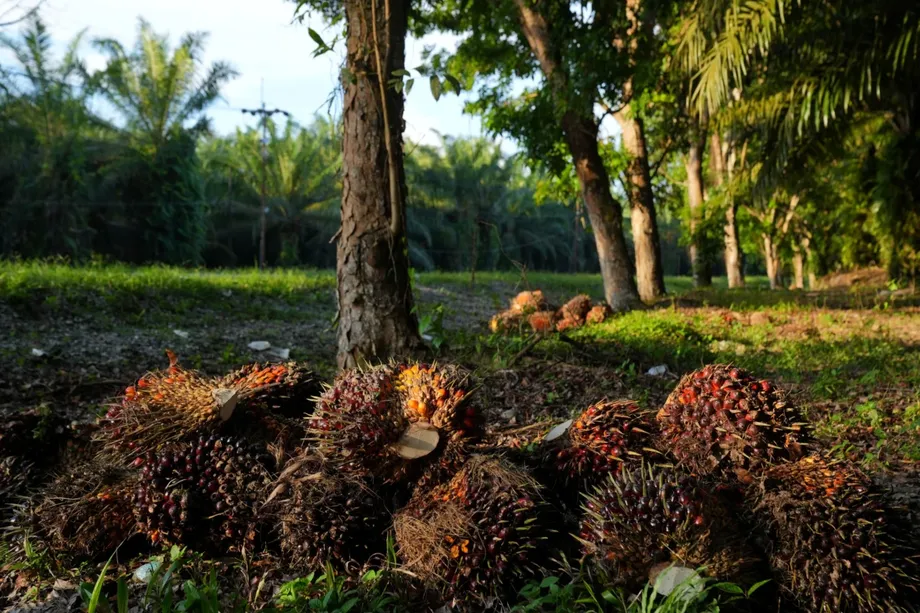
Indonesia consumed 24.6 million tonnes of palm oil domestically in 2024, a record 53% of production, and that demand was associated with 67% of the sector's deforestation exposure. The footprint attributed to domestic purchases reached 629,000 hectares, compared with 71,400 hectares linked to India, Indonesia's largest export destination. That makes the domestic footprint about 8.8 times larger.
Contents
- Indonesia's biggest palm oil market is now at home
- Fuel policy helps drive the domestic shift
- What the data tracks, and when
- Lower national clearing masks pressure in Papua
- India leads exports as Pakistan overtakes China
- Four groups dominate exports, but missing records grow
- Forest pledges cover trade, not proven additional gains
- Peat emissions persist after forest clearing slows
- Fire risk and farmer support expose unfinished work
- What stronger accountability would need to cover
- Key Points
The findings, presented by Trase and its Indonesian partner Auriga Nusantara in Jakarta on October 13, 2026, shift attention toward buyers inside the world's largest palm oil producer. Export standards and corporate forest protection pledges cover much of the international trade, but the largest market now sits within Indonesia, where researchers want better disclosure of buyers and sourcing locations.
Trase's latest palm oil analysis examines supply chains in 2023 and 2024 alongside forest loss data for 2025. It finds that production reached 47 million tonnes in 2024 while new forest conversion for palm oil remained far below historical levels, at about 32,000 hectares.
Those numbers describe different things. The 629,000 hectares associated with domestic demand are a deforestation exposure measure, not the amount of forest cleared for domestic buyers during 2024. Trase's risk approach connects current production and trade to past clearing within plantation footprints. Annual forest loss measures new conversion during a particular year. Confusing the two would greatly overstate the year's clearing.
The distinction also explains the central tension in the findings: Indonesia can produce more palm oil with much less new deforestation than in the past, while its current supply chains still carry a substantial forest loss footprint and continuing emissions from drained peat.
Fuel policy helps drive the domestic shift
The domestic share of Indonesian palm oil production rose from 32% in 2018 to 40% in 2020, then 44% in 2022 and 53% in 2024. That is an increase of 21 percentage points in six years. Domestic demand includes food consumption and industrial processing, rather than cooking oil alone.
Trase identifies the B35 biodiesel mandate and the Domestic Market Obligation as contributors to demand in 2024. B35 refers to diesel containing 35% biodiesel. The Domestic Market Obligation requires producers to allocate part of their palm oil to the domestic market before exporting. These policies pursue energy security and domestic supply objectives, but they also make Indonesian purchasing decisions increasingly important for forest protection.
According to Indonesian Palm Oil Association figures cited in Trase's earlier analysis, more than half of domestic palm oil consumption in 2022 went to biodiesel and oleochemicals. Oleochemicals are chemicals made from oils and fats for products such as soaps and detergents. The latest analysis does not give an equivalent breakdown for 2024, so it does not establish how much of that year's domestic deforestation exposure belonged specifically to fuel production.
Trase records a government announcement in June 2026 to move toward B50, containing 50% biodiesel. The subsequent B50 implementation timetable described legal effect on July 1, a launch on July 9 and full implementation scheduled for October 1. These are separate stages, rather than competing dates for a single event.
A separate assessment led by Yayasan Madani Berkelanjutan estimated that biodiesel and bioethanol supply could reach 26.6 million kiloliters in 2030 against road transport demand of 42 million kiloliters. That projected gap concerns a broader fuel balance, not a forecast of palm oil deforestation. It nevertheless shows why expansion targets need to be assessed against supply limits.
What the data tracks, and when
Trase's palm oil dataset covers 2018 through 2024 and was last updated on October 9, 2026. Its preview lists 2,362,886 records and 34 columns, including trade year, processing mill, refinery and production province. The accompanying data and methods are identified as version 1.2.5.
The chronology separates the years being measured from later policy developments and publication dates:
- 2018: Domestic use accounted for 32% of Indonesian palm oil production.
- 2022: Domestic use reached 44%, while industrial palm oil deforestation rose slightly from its 2021 low.
- 2024: Domestic consumption reached 24.6 million tonnes, and annual palm oil deforestation was about 32,000 hectares.
- 2025: Palm oil deforestation in Papua rose to more than 7,300 hectares.
- June 2026: The government announced plans for B50.
- October 9, 2026: Trase updated the supply chain dataset.
- October 13, 2026: Trase and Auriga presented the findings in Jakarta.
Lower national clearing masks pressure in Papua
The latest analysis puts annual palm oil deforestation in 2024 about 81% below the 2008 to 2015 average of 166,544 hectares. This is a major reduction despite continued high production. It does not mean new forest conversion has stopped, or that the decline has been uninterrupted.
There is also a qualification to descriptions of 2024 as a historic low. Trase's latest explainer uses that description for the 32,000 hectare figure, but its discussion also identifies 2021 as a low point followed by small increases. Its 2024 palm oil analysis described an 18% increase in industrial palm oil deforestation in 2022. The consistent finding is that recent clearing remains close to historical lows, rather than that every successive year has set a new minimum.
The geographical pattern is more concerning. Papua's annual palm oil deforestation increased from about 3,600 hectares in 2024 to more than 7,300 hectares in 2025. Using those rounded figures, the increase was about 3,700 hectares, or more than 100%. Kalimantan accounted for 56% of national palm oil deforestation in 2025.
Earlier research found that four Kalimantan provinces accounted for 72% of industrial palm oil deforestation during 2018 to 2022. That regional average is not directly equivalent to the newer single year figure, but both identify Kalimantan as a central area of forest conversion. Sumatra and Kalimantan together account for almost 96% of Indonesian palm oil production.
The earlier assessment also identified 2.4 million hectares of intact forest within oil palm concessions. That was a finding from the earlier research, not an updated 2026 inventory. It demonstrates why low annual clearing alone cannot settle the question of future exposure: land allocated to palm oil can still contain forest.
India leads exports as Pakistan overtakes China
India remained Indonesia's largest foreign palm oil market in 2024, receiving 4.37 million tonnes. That volume was 21% below 2023 and 32% below the 2018 peak. Domestic demand's dominance therefore reflects both rising consumption at home and weaker purchases in several major export markets.
Pakistan became the second largest destination after shipments increased 20% to 3.15 million tonnes. China fell to third as shipments dropped 44%, from 4.47 million tonnes in 2023 to 2.48 million tonnes in 2024. Trase attributes the Chinese decline to buyers switching to cheaper domestic soybean oil, while Pakistan's limited domestic production capacity supported its reliance on imports.
Shipments to the European Union fell from 3.78 million tonnes in 2018 to 1.9 million tonnes in 2024, a reduction of about half. Trase links the decline largely to the EU Renewable Energy Directive, known as RED II, which phases out palm oil biofuels because of deforestation concerns, and to stricter corporate sourcing commitments.
The earlier analysis found that Indonesia, China and India together accounted for 75% of Indonesia's palm oil deforestation exposure in 2021 and 2022. Their supplies had roughly twice the exposure per tonne of shipments to the EU. Those earlier figures help explain why action focused on European imports alone cannot address the largest share of the sector's forest footprint.
Four groups dominate exports, but missing records grow
Royal Golden Eagle, Sinar Mas, Musim Mas and Wilmar together accounted for 52% of Indonesian palm oil export volume in 2024. Royal Golden Eagle became the largest exporter, with a 15.5% share, after ranking fourth in 2018.
Among medium sized exporters, KPN Corp moved from 15th place in 2018 to seventh in 2024. Permata Hijau moved in the opposite direction, falling from fifth to 12th. The shifts matter because sourcing transparency needs to extend beyond a stable list of the largest groups.
At the same time, the share of export volume classified by Trase as unknown rose from less than 1% in 2018 to nearly 17% in 2024. Trase attributes the gap to missing shipment records in trade data. An unknown classification is not evidence that the shipments came from illegally cleared land, but it limits the ability to connect trade with suppliers and environmental exposure.
Trase researcher Adelina Chandra called for better reporting of domestic buyers and public access to their sourcing locations. With domestic consumption now exceeding half of production, disclosures designed mainly around exports leave a large part of the market harder to examine.
A separate palm oil mislabelling investigation concerned allegations that exporters disguised palm oil as mill waste to avoid higher taxes. That investigation does not explain Trase's missing shipment records, and European buyers were not alleged to have known of the scheme. It illustrates a different verification problem: knowing a product's declared category is not always enough to establish what moved through a supply chain.
Forest pledges cover trade, not proven additional gains
Companies with formal commitments to avoid deforestation covered nearly 93% of recorded Indonesian palm oil exports in 2024. Earlier research put that coverage above 85%. These percentages refer to observed or recorded trade, an important qualification when the unknown share is growing.
The evidence on performance needs careful interpretation. In a 2022 SEI assessment, exporters with such commitments had 70% of their competitors' deforestation risk per tonne. Robert Heilmayr of the University of California Santa Barbara, who led the Trase research, described that result at its launch.
"This is the first clear evidence of a link between zero-deforestation commitments (ZDC) and lower deforestation risk in palm oil supply chains," said Dr Robert Heilmayr.
Later analysis found similar annual deforestation intensities for exporters with and without commitments: 0.27 and 0.23 hectares per 1,000 tonnes, respectively. The latest explainer also reports that concessions associated with commitments kept annual deforestation below 1% during 2018 to 2020, but did not show an additional reduction compared with concessions without commitments.
These findings concern different measures, periods and units of analysis. A lower footprint from past clearing is not the same as a lower annual clearing rate, and neither comparison alone proves what would have happened without the pledges. Trase also leaves open the possibility that commitments influenced practices beyond participating companies, an effect outside the comparison's scope.
Peat emissions persist after forest clearing slows
Peat subsidence associated with palm plantations released nearly 148 million tonnes of carbon dioxide equivalent in 2024. Together with peat fires, it accounted for almost 85% of the sector's emissions assessed by Trase. Carbon dioxide equivalent expresses the warming effect of different greenhouse gases on a common scale.
Peat consists of accumulated organic material in wet ground. Draining it for cultivation exposes that material to decomposition, releasing carbon and causing the surface to sink. Dry peat also becomes more vulnerable to fire. These processes can continue long after the original land conversion, so falling new deforestation does not automatically deliver a comparable fall in emissions.
Trase estimates annual assessed emissions averaged 215 million tonnes of carbon dioxide equivalent during 2015 to 2024, covering land conversion, peat subsidence and peat fires. The land conversion component fell 58% over that period. These figures are not a complete accounting of every stage from agricultural inputs through refining, transport and final use.
The Stockholm Environment Institute's 2024 emissions assessment reported an earlier average of 220 million tonnes annually for industrial production during 2015 to 2022, with peat subsidence and fires responsible for nearly 92%. The newer 85% figure refers to 2024, not the same historical average, so the two shares should not be treated as a direct measure of improvement.
The productive palm oil area on peat increased from about 1.28 million hectares in 2015 to 1.64 million hectares in 2024, about 28%. This accumulated area explains why preventing new peat conversion and managing already drained land are separate climate tasks.
Fire risk and farmer support expose unfinished work
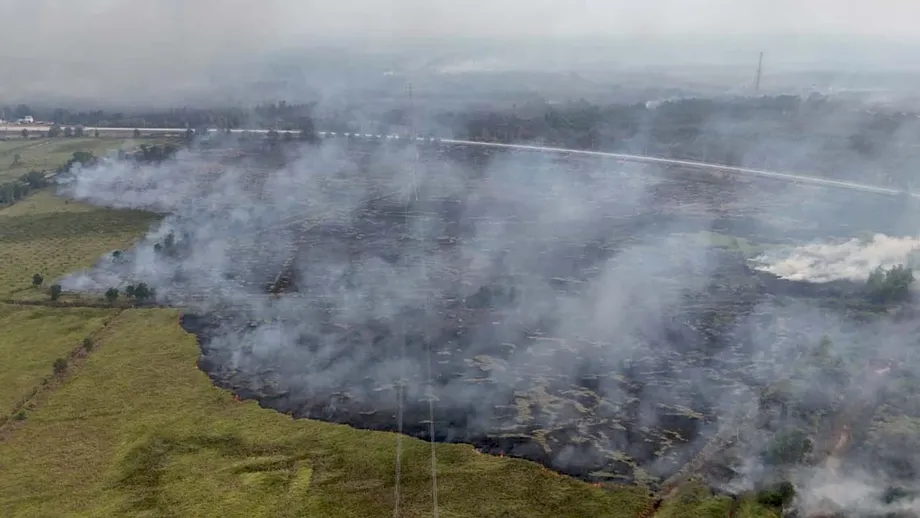
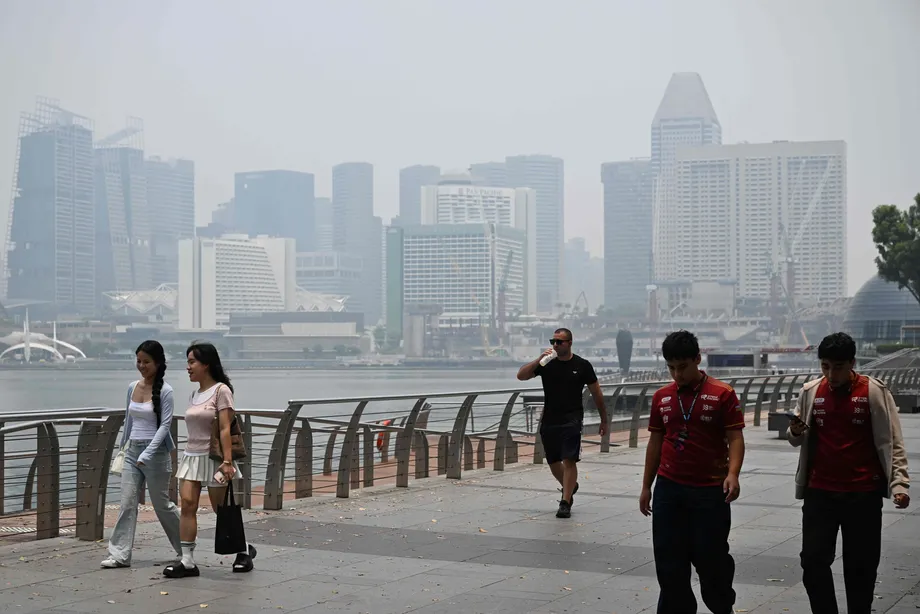
The latest Trase analysis cites MapBiomas Fire Monthly as recording 677,743 hectares burned between January and August 2026. That figure describes burned area in Indonesia, not land proven to have burned because of palm oil. Auriga executive director Timer Manurung nevertheless said MapBiomas Indonesia mapping showed palm oil concessions recorded the most fires among extractive concessions.
Trase also describes emergency ground and air operations in six provinces during August 2026 and more than 60 consecutive rainless days in South Kalimantan, recorded by the Meteorology, Climatology and Geophysics Agency. Its recommendations include stronger enforcement of forest and peat protections, rewetting and restoration.
For farmers, the challenge is different but connected. Smallholders manage 32% of oil palm plantations and produce 35% of Indonesia's palm oil. Replacing ageing trees could increase output on existing land, but farmers face uncertain tenure, weak traceability and a period without harvest income while new palms mature.
The Smallholder Palm Oil Replanting programme, known as PSR, doubled its grant to Rp 60 million per hectare in 2024. Yet it reached only 41% of its 120,000 hectare target that year and 31% in 2025. Applying those reported percentages to the target gives approximately 49,200 hectares and 37,200 hectares, respectively.
The annual target was reduced to 50,000 hectares in 2026, with 20,229 hectares replanted by August, about 40.5% of that smaller goal. Undocumented ownership, overlap with legally designated forest areas and lost income during replanting remain barriers. The wider plantation seizure campaign makes land status especially consequential, although Trase does not quantify its effect on PSR participation.
What stronger accountability would need to cover
The findings point to three connected priorities: make domestic sourcing visible, protect remaining forest and reduce emissions from cultivated peat. Progress on one does not substitute for the others. Export pledges cannot cover undisclosed domestic purchases, and low new clearing cannot stop emissions from land drained years earlier.
The economic stakes are substantial. Trase puts the sector's contribution at about 4.5% of Indonesian GDP, export earnings at US$27.8 billion in 2024 and direct and indirect employment above 16.5 million jobs. Improving accountability therefore involves farmers and domestic industries as well as international traders.
Several decisions and measurements remain incomplete. The analysis does not provide a full domestic buyer map, a 2024 allocation of deforestation exposure between food and fuel, or an estimate of B50's additional forest footprint. It discusses debate over Forestry Law revisions and legislation on Indigenous communities without specifying voting dates. Its August 2026 fire and replanting figures are partial year totals, not final results.
For smallholders, better traceability must be paired with accessible recognition of land rights and practical replanting support. Otherwise, stricter requirements, including those under the EU Deforestation Regulation, risk excluding farmers who cannot document their land and supply routes even when improving production on existing plantations.
Key Points
- Domestic consumption reached 24.6 million tonnes, or 53% of Indonesian palm oil production, in 2024.
- Domestic purchases accounted for 67% of deforestation exposure, about 8.8 times the footprint linked to India.
- Exposure associated with past clearing is different from the approximately 32,000 hectares newly cleared for palm oil in 2024.
- Papua's palm oil deforestation more than doubled in 2025, while Kalimantan accounted for 56% of national clearing.
- Four corporate groups handled 52% of exports, while nearly 17% of export volume was classified as unknown.
- Peat subsidence and fires produced almost 85% of assessed sector emissions in 2024.
- Smallholder replanting missed its targets despite larger grants, with land documentation and lost income remaining barriers.