Yellow borewell water triggers closures and health checks
Groundwater tests in Nashik's Dattanagar have found chromium at 45 milligrams per litre, 900 times the drinking water limit, while an independent laboratory measured an even higher concentration of 50.5 milligrams per litre. The Maharashtra Pollution Control Board (MPCB) has ordered the closure of 17 electroplating units, and municipal health screening has identified skin conditions or allergies in 109 of 248 people examined.
Contents
- Yellow borewell water triggers closures and health checks
- What the chromium measurements mean
- Families relied on water they feared
- Health camps find skin conditions in 109 people
- Children and households bear the cost
- Industrial inspections widen beyond the first notices
- A treatment plant nearly nine years in the making
- How far has contamination spread?
- Godavari testing becomes urgent before Kumbh
- The dates shaping the response
- Key Points
The contamination has brought an immediate household water crisis into Nashik's preparations for the 2027 Kumbh Mela. Residents near the Ambad industrial estate have reported yellow water from borewells used for bathing, washing clothes and cleaning utensils. Authorities have prohibited groundwater use in the affected area, shut eight of 17 borewells and begun supplying water by tanker.
The independent test, conducted by Ashwamedh Engineers and Consultants on October 3, 2026, measured total chromium at 50.5 milligrams per litre, including 50.3 milligrams of hexavalent chromium, a form classified as carcinogenic to humans. The Bureau of Indian Standards sets the drinking water limit for total chromium at 0.05 milligrams per litre.
Dattanagar and adjoining neighbourhoods contain approximately 25,000 residents, although another local estimate puts the population at about 20,000. Officials are investigating a pocket about half a kilometre across. Environmental campaigners say contaminated water also reaches the Godavari through local drains, creating an urgent need to test the river near ghats used for ritual bathing.
The crisis combines three tasks: supplying safe water now, investigating residents' health problems and stopping industrial waste from entering water sources. A shared industrial treatment plant proposed nearly nine years ago remains incomplete.
What the chromium measurements mean
The independent laboratory's total chromium result was 1,010 times the drinking water limit: 50.5 divided by 0.05. Almost all the chromium measured in that sample was hexavalent chromium, accounting for about 99.6% of the total.
The MPCB's October 8 analysis found total chromium at 45 milligrams per litre in two groundwater samples collected from borewells and dug wells. That result equals 900 times the same standard. Both tests therefore recorded concentrations hundreds of times above the permitted drinking water level, despite the different readings.
Milligrams per litre describes how much of a substance is present in a litre of water. Total chromium includes the different chemical forms of chromium found in a sample. Hexavalent chromium, also written as Cr(VI), is a particularly hazardous form used in some industrial processes.
The International Agency for Research on Cancer classifies hexavalent chromium as carcinogenic to humans. Exposure can increase cancer risk, while the health danger depends on how much enters the body, how long exposure continues and whether contact occurs through swallowing, breathing or the skin.
SANDRP, the South Asia Network on Dams, Rivers and People, identified the independently tested sample as residential borewell groundwater. The initial account of the same laboratory findings described sampling from the Nandini river system near Ambad. The MPCB's 45 milligram result specifically concerns groundwater; river sampling is also needed to map contamination along the Nandini and Godavari.
Families relied on water they feared
Dattanagar residents say inadequate municipal supplies left them dependent on borewells even as the water changed colour. Some describe a faint yellow tinge beginning eight to nine years ago, with the colour deepening over the past two years. More recent complaints prompted activists to arrange laboratory testing.
One residential building with 35 flats reportedly had only one municipal water connection. Families used borewell water for everyday chores because the municipal supply could not meet their needs. Replacing drinking water alone would leave substantial contact through bathing, laundry and cleaning.
Rajesh Pandit, a Nashik environmental activist who helped investigate residents' complaints, explained why families continued using the water:
"Because of the low and inconsistent water supply from the Nashik Municipal Corporation, families are forced to depend on this water for bathing, washing clothes and cleaning utensils," Pandit said.
Authorities have started tanker deliveries, which SANDRP says began on October 9. Residents and activists have requested 10 to 15 tanker trips daily, alongside the sealing of affected borewells until their water is confirmed safe.
Health camps find skin conditions in 109 people
Nashik Municipal Corporation examined 248 people during its screening drive and diagnosed skin conditions or allergies in 109, approximately 44% of those examined. The screenings involved people seeking assessment, rather than a survey of every household in the neighbourhood.
Prashant Shete, an assistant medical officer with the municipal corporation, said specialists had been brought together to examine residents:
"Dermatologists from private hospitals, NMC hospitals and Nashik Medical College have been called in for the task. The free-of-cost drive is aimed at checking for any skin ailments among residents," he said.
Shete said another camp was scheduled for October 17 to collect blood and urine samples. The planned tests would look beyond chromium to investigate other possible contaminants.
Explaining the purpose of that testing, Shete said:
"We want to be thorough, and samples will be taken from people to check for any other potential contaminants, such as mercury or other compounds, apart from chromium," he said.
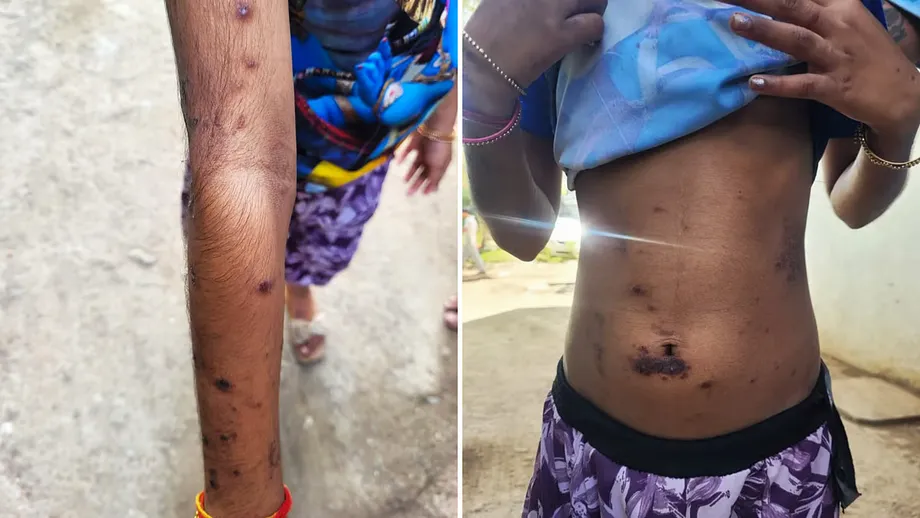
Residents have described itching, blisters, rashes and ulcers. SANDRP also reported swollen lymph nodes, chronic illnesses and two miscarriages. Medical investigation is still needed to determine the causes of individual conditions and assess any connection between exposure and the reported miscarriages.
Some residents say symptoms improved after they stopped using borewell water or temporarily moved away. Shete also reported improvements among people who had left the affected area. Continued examinations and follow up treatment will be necessary for families reporting persistent symptoms.
Children and households bear the cost
Priti Shah said her eight-year-old daughter Aradhya experienced persistent itching and blisters that disrupted her sleep. Shah also described her own symptoms and ongoing treatment.
Recounting how her condition developed, Shah said:
"It began with intense itching and then blisters appeared on both hands. Even after the wounds healed, dark patches remained. I am still undergoing treatment," she said.
Resident Jayram Ghayal said his wife had been receiving treatment for a skin disease for about six months. He reported gradual improvement after the family stopped using borewell water. Another resident, Radhika, said inadequate supplies eventually led her to sell her flat and move to an area with better water availability.
SANDRP's assessment found that some working families were spending nearly half their monthly income on private treatment, alternative accommodation and wound dressings. Those expenses add to the daily difficulty of securing enough water for household use.
Activists have requested dermatology, paediatric and obstetric services, together with specialised wound care. Their demands also include recovering medical and water treatment expenses from industries found responsible for the contamination.
Industrial inspections widen beyond the first notices
The MPCB ordered 17 electroplating units to close after inspections found untreated industrial effluent being discharged. Some factories had wastewater treatment systems that were shut or not functioning. Electricity and water supplies to some units have been disconnected, and proposed directions have been issued to five more establishments.
Electroplating adds a thin metal coating to an object, often to improve its appearance or resistance to corrosion. The process can generate wastewater containing metals and other chemicals, which requires treatment before disposal.
A joint team from the MPCB, Maharashtra Industrial Development Corporation (MIDC) and district collector's office also sealed an unauthorised factory operating in a temporary shed on private land beside the industrial estate. Officials found it carrying out hazardous chemical processing without a licence and discharging untreated wastewater into the open.
An earlier enforcement stage involved notices to 11 companies, with 10 days allowed for responses. Officials warned that inadequate replies could lead to power and water disconnections. The later tally of 17 closure orders reflects the widening inspection effort.
Inspectors identified two units using chromium that breached rules governing hazardous waste handling, discharge and disposal. Investigations are also examining allegations that effluent was released into soak pits, allowing chemicals to seep into groundwater.
Municipal Commissioner Manisha Khatri called on industrial establishments to comply with environmental rules and warned of legal action. Entrepreneurs have requested time to correct violations and urged the commissioning of the common effluent treatment plant.
A treatment plant nearly nine years in the making
Ambad's proposed common effluent treatment plant has become a central issue in the response. The project, costing Rs 13 crore, is intended to treat wastewater from more than 150 plating units. Its planned 10 treatment units have a combined capacity of 0.5 million litres daily, or 500,000 litres.
A common effluent treatment plant allows several factories to send wastewater to a shared facility. Factories must still perform the required initial treatment on their own premises. Officials have directed industries to follow that requirement while managing hazardous waste.
The Bombay High Court directed MIDC to establish the plant during proceedings concerning Godavari river pollution. Pandit and fellow petitioner Nishikant Pagare filed a contempt petition in 2025, alleging failure to comply with court directions, including those concerning Ambad's industrial effluent.
MIDC had promised in an affidavit that the plant would operate by the end of September 2026. That deadline passed. Officials subsequently said the first two units were expected to be commissioned in October, with the remaining units opening in phases by the end of November. Another announced schedule placed phased completion between October 15 and November 30.
Rajendra Pansare, president of the Ambad Industries and Manufacturers Association, said the association was pursuing the project. MIDC officials said the plant was originally expected to be developed by plating businesses, before a court observation in 2023 prompted the corporation to step in if industries failed to act.
How far has contamination spread?
The MPCB says visibly contaminated groundwater has so far been found within a Dattanagar pocket about half a kilometre across. Borewells upstream and downstream of that pocket largely yielded clear water during its survey. Officials closed eight borewells producing yellow, odourless water, while the groundwater use prohibition covers the affected area.
Roshan Kedar, an environmental activist involved in raising the alarm, has called for groundwater mapping by agencies such as the Groundwater Surveys and Development Agency. Mapping would help identify the direction of underground water movement, affected wells and the routes by which industrial chemicals reached residential supplies.
An aquifer is an underground layer of rock or sediment that holds and carries water. Remediation means cleaning contaminated water or ground, containing pollution and preventing further spread. Closing a factory stops its operations; groundwater recovery requires its own investigation and treatment programme.
A report submitted to the state government recommends tracing contamination pathways, disconnecting illegal industrial connections and undertaking aquifer remediation with expert assistance. District collector Ayush Prasad presented the findings to Chief Minister Devendra Fadnavis during a Nashik visit.
Pandit has called for action under the Polluter Pays Principle, which places cleanup costs on those responsible for pollution. SANDRP has requested broader industrial inspections, publication of testing data, community healthcare, compensation and criminal cases following investigation.
Godavari testing becomes urgent before Kumbh
SANDRP says contaminated water moves through local drains and tributaries into the Godavari at a stretch containing Kumbh bathing ghats. The Nandini flows into the Godavari, making the connection between industrial drainage, groundwater and river water central to the investigation.
Nashik is preparing for the 2027 Kumbh Mela, when large numbers of devotees will bathe in the river. The Dhvajarohan, or flag hoisting ceremony, was scheduled for October 31, 2026. Campaigners have requested testing of the Nandini and the Godavari downstream of the suspected entry point, together with warnings to affected downstream users.
Girish Mahajan, the minister overseeing Kumbh preparations and Nashik's district guardian minister, visited the affected area and raised the findings with Environment and Climate Change Minister Pankaja Munde. An official from Munde's office said she directed the MPCB to take immediate and appropriate action against polluting industries.
Dandekar shared the independent laboratory findings with government authorities. Local activists Roshan Kedar and Pandit had helped bring residents' complaints to attention. SANDRP criticised the initial regulatory response, saying a September 30 notice went to only one company and that testing data had not been shared with residents.
The dates shaping the response
The response has moved from complaints and laboratory testing to industrial closures, alternative water supplies and medical screening. The next scheduled steps concern further health tests and completion of the shared treatment facility.
- September 30, 2026: According to SANDRP, the MPCB issued a show cause notice to one company following complaints about yellow water.
- October 3: Ashwamedh Engineers and Consultants tested the independent sample, finding total chromium at 50.5 milligrams per litre.
- October 8: MPCB testing found total chromium at 45 milligrams per litre in two groundwater samples. SANDRP also released its warning about contamination.
- October 9: Tanker water deliveries began, according to SANDRP.
- By October 14: Municipal screening had examined 248 people and identified skin conditions or allergies in 109; closure orders covered 17 electroplating units.
- October 17: A further medical camp was scheduled to collect blood and urine samples.
- October 31: The Kumbh flag hoisting ceremony was scheduled.
- By November 30: MIDC's revised schedule envisaged phased completion of the common effluent treatment plant.
Residents need reliable replacement water while these steps proceed. The longer task is to identify and stop the contamination pathways, treat affected groundwater and ensure that industrial wastewater is properly managed before it reaches homes or the river.
Key Points
- MPCB groundwater tests found chromium at 45 milligrams per litre, 900 times the drinking water limit.
- An independent test measured total chromium at 50.5 milligrams per litre, almost all of it hexavalent chromium.
- Authorities ordered 17 electroplating units to close, shut eight borewells and began tanker water supplies.
- Municipal screening identified skin conditions or allergies in 109 of 248 people examined.
- Further medical testing was scheduled for October 17.
- The Rs 13 crore common effluent treatment plant missed its September deadline, with phased completion planned by November 30.
- Campaigners are seeking groundwater mapping and river testing ahead of Nashik's 2027 Kumbh Mela.