A promising Martian rock is waiting for a ride home
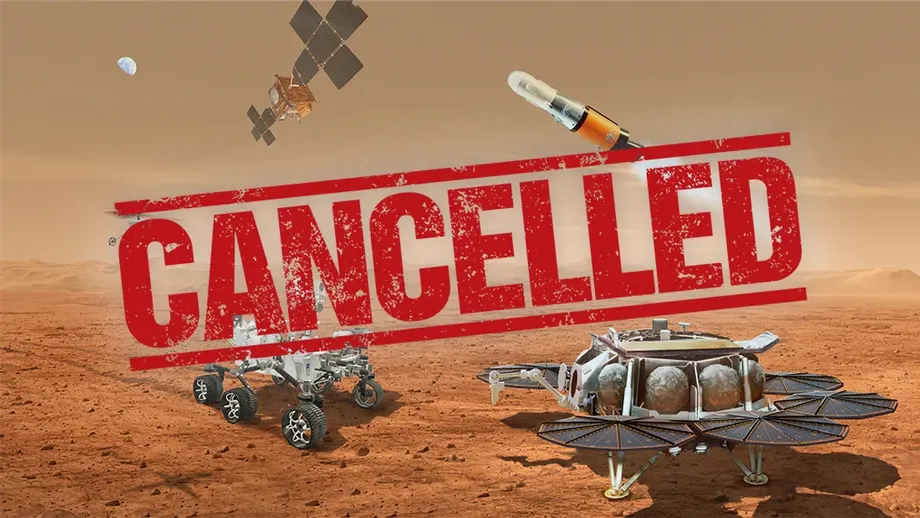
A piece of rock called Sapphire Canyon sits sealed inside NASA's Perseverance rover on Mars, holding chemical clues that scientists want to examine for possible evidence of ancient life. The mission intended to bring it to Earth has been canceled after estimates for NASA's original Mars Sample Return plan reached as much as $11 billion and its projected return date slipped to 2040.
Contents
- A promising Martian rock is waiting for a ride home
- Why scientists are interested in Sapphire Canyon
- Why laboratories on Earth matter
- How the retrieval plan became too expensive
- The dates that shaped the competition
- How Tianwen-3 would collect and return samples
- Landing safely limits where China can search
- What scientists would test, and how samples would be protected
- What remains possible for NASA and Europe
- Key Points
China is pursuing a different route. Its Tianwen-3 mission aims to launch around 2028 and deliver at least 500 grams of Martian material to Earth around 2031, according to the Chinese government's Tianwen-3 mission outline, published in July 2025. That would make China the first country to collect samples on Mars and bring them home.
NASA had spent about $2.5 billion on its retrieval program before cancellation. Perseverance has already stored samples in 33 tubes, selected during years of exploration in Jezero Crater, where rivers once fed a lake more than 3 billion years ago.
The stakes go beyond which country arrives first. China's mission would collect its own material from another location. Sapphire Canyon, drilled from a spotted rock beside an ancient river channel, would remain on Mars unless another mission retrieves it.
NASA Administrator Jared Isaacman has said the agency intends to bring the samples back eventually, either with robots or astronauts. No timetable or replacement mission has been announced. China, meanwhile, is moving toward construction of the spacecraft it intends to fly.
Why scientists are interested in Sapphire Canyon
Perseverance collected Sapphire Canyon in July 2024 from an arrowhead shaped rock called Cheyava Falls, near Neretva Vallis, a valley carved by rivers that flowed into Jezero's ancient lake. The rover drilled out a cylindrical fragment roughly the size of a piece of chalk and sealed it in a tube.
Cheyava Falls attracted attention because of small spots resembling a leopard's markings. On Earth, similar features can form when microbes consume organic material buried in sediment. Their activity changes the chemistry of nearby iron minerals, leaving pale spots or halos.
Adrian Broz, a postdoctoral researcher at Purdue University and a member of Perseverance's science team, helped write a study about the rock published in September 2025. He described why the discovery stood out:
This is the first time I think we've found something that qualifies as a 'potential biosignature'
A biosignature is a physical or chemical feature that could have been produced by life. Scientists examining Sapphire Canyon need to determine whether microbes created its spots or whether ordinary chemical reactions produced them. Surrounding mudstones also contain large numbers of similar features, giving researchers a wider geological setting to investigate.
Water shaped this landscape long before Perseverance arrived in February 2021. Its former rivers and lake made Jezero a promising place to search for rocks that might preserve traces of organisms that lived billions of years ago.
Why laboratories on Earth matter
Perseverance carries instruments that examine rock chemistry and structure, but its scientific tools were chosen partly to identify samples for later study on Earth. A rover must operate with limited power, weight and equipment. Laboratories can apply a much wider range of techniques to tiny pieces of the same sample.
Briony Horgan, a professor of Earth, atmospheric and planetary sciences at Purdue University and a member of the Perseverance team, explained the need for direct examination:
We can keep doing these studies and coming up with these hints, but we're never going to know for sure until we get those samples back.
The Martian meteorite Allan Hills 84001 shows how demanding that work can be. Discovered in Antarctica in 1984, it was initially interpreted as containing possible remnants of ancient life. Later investigations showed that geological processes could produce features resembling biological traces.
Scientists studying Sapphire Canyon would therefore need several kinds of evidence that support the same explanation. They could investigate mineral structures, organic molecules and the relationships between chemical changes and the rock's history. Having a sample on Earth would also allow different laboratories to repeat tests and compare results.
How the retrieval plan became too expensive
NASA's Mars Sample Return program, developed with the European Space Agency, required a chain of spacecraft and operations. A lander would deliver a small ascent rocket to Mars. Perseverance would bring its samples to the lander, where they would be placed in a container for launch into orbit.
A European spacecraft waiting above Mars would capture the container, carry it toward Earth and release a capsule capable of landing safely. Launching material from Mars and collecting it in orbit would both be firsts for space exploration.
The engineering challenge is transporting enough equipment and propellant while keeping the spacecraft light enough to launch and land. NASA's relay design divided those tasks among several vehicles. It also created multiple points where delays or technical problems could affect the entire mission.
Earth and Mars offer favorable launch opportunities roughly every 26 months. Missing one can add about two years to a schedule, making spacecraft development deadlines especially consequential.
The original plan carried an estimated maximum cost of $11 billion. A revised approach in 2024 was estimated at about $7 billion, but questions persisted about affordability and whether the lower estimate could be achieved. NASA's fiscal year 2026 budget request proposed terminating Mars Sample Return, and Congress approved cancellation in January.
Mars sample retrieval had been identified as NASA's highest planetary science priority in 2011. Its cancellation leaves a gap between the successful collection of scientifically valuable rocks and the means to study them directly.
The dates that shaped the competition
NASA's plans changed repeatedly as the return architecture grew more complex. China has combined collection and return into a single mission campaign, drawing on experience from its Mars landing and lunar sample missions.
The main developments show how the two efforts reached their current positions:
- February 2021: Perseverance landed in Jezero Crater to investigate ancient environments and collect samples.
- May 2021: China's Tianwen-1 mission landed on Mars and deployed the Zhurong rover.
- 2022: NASA revised its retrieval design around Perseverance delivering samples, with recovery helicopters as a backup. The expected return moved to 2033.
- 2024: China returned samples from the Moon's far side with Chang'e 6. NASA reassessed its Mars retrieval program, and Perseverance collected Sapphire Canyon in July.
- July 2025: China's government outlined a Tianwen-3 launch around 2028 and sample return around 2031.
- January: Congress approved cancellation of NASA's Mars Sample Return program following the fiscal year 2026 termination proposal.
- March 2026: Tianwen-3 chief designer Liu Jizhong said the project would enter development of flight hardware during 2026.
- End of 2026: China's science team plans to narrow its landing options to three finalists.
China's move into hardware development, announced in March, marks a step beyond prototype work. Its official timetable remains launch around 2028 and return around 2031; a reported launch date of 2031 conflicts with that schedule.
How Tianwen-3 would collect and return samples
Two Long March 5 rockets are planned to launch from Wenchang on China's Hainan island in late 2028. One would carry the lander and ascent equipment. The other would carry an orbiter and the system for bringing samples back to Earth.
China's government says the journey to Mars would take seven to eight months, followed by about a year of operations there. The lander's main surface collection campaign is expected to last roughly 70 days within that broader mission schedule.
Tianwen-3 would use three collection methods: scooping material from the surface, drilling as deep as 2 meters and sending a drone to collect additional material. It would carry no rover. Hou Zengqian, the mission's chief scientist and an academician of the Chinese Academy of Sciences, says the drone would reach locations within several hundred meters of the landing site.
The drilling system could obtain material from beneath the surface, while the drone would broaden the area sampled beyond the lander's immediate surroundings. Together, the methods aim to provide a more varied collection than a scoop beside the spacecraft alone.
After collection, an ascent vehicle would launch a sealed container holding at least 500 grams into Mars orbit. The waiting orbiter would receive it and begin the return journey. China's lunar missions provide useful experience, but departure from Mars and the orbital meeting would still require new capabilities.
Landing safely limits where China can search
Tianwen-3's science team has narrowed an initial pool of more than 80 landing candidates to 19, according to Hou's official July 2025 outline. Three finalists are due by the end of 2026. Scientists favor locations with conditions that could have supported life and preserved its traces.
Engineers also impose strict limits. The site must be between 17 and 30 degrees north latitude. Mission descriptions specify terrain at least 3 kilometers below Mars's average elevation, allowing the spacecraft to pass through more atmosphere and slow down during descent.
The expected landing ellipse, the area within which the spacecraft might touch down, measures about 50 by 20 kilometers. That is a large target compared with the drone's collection range. The mission therefore needs a region where useful material is accessible across a broad area rather than at one small outcrop.
Perseverance has taken a different approach, traveling through Jezero and selecting rocks with carefully recorded geological context. Scientists know where each sample came from and how it relates to nearby layers and ancient water features. Tianwen-3 would collect a more local set of materials without years of rover reconnaissance.
Jezero is not among China's identified candidates. A successful Tianwen-3 return would open a new window into Mars, while Sapphire Canyon would still await its own retrieval mission. The two collections would answer different questions about different parts of the planet.
What scientists would test, and how samples would be protected
Tianwen-3's scientific goals include searching for possible signs of life, studying changes in Mars's ability to support life and examining its geological history. Those goals connect the biology question to the planet's water, atmosphere and rocks.
Li Yiliang, a professor of astrobiology at the University of Hong Kong involved in outlining the mission, describes several possible lines of investigation. Researchers would look for molecules associated with biological functions, microscopic fossil traces and changes in isotope ratios.
Isotopes are versions of the same chemical element with different masses. Living processes can favor one version over another. On Earth, photosynthesis tends to use lighter carbon, leaving measurable changes in the proportions of carbon isotopes. Researchers would examine any Martian pattern alongside the sample's minerals and other chemistry.
China also plans a secure laboratory with extremely clean work areas and facilities for biological safety. Hou says the sample chain would cover collection, sealing, transport, processing and biological risk assessment, under planetary protection policies set by the Committee on Space Research.
Planetary protection serves two purposes: keeping Earth organisms from contaminating Mars and safely containing material brought back from another world. Clean handling also helps scientists determine whether a chemical trace originated on Mars or entered a sample during collection and analysis.
Hou says international scientists would be able to study the returned material, subject to safety requirements. Access to multiple laboratories could expand the range of tests and allow researchers to check each other's findings.
What remains possible for NASA and Europe
NASA says it is examining simpler and more affordable retrieval options, including commercial and international contributions. Lockheed Martin has proposed a mission with a fixed price below $3 billion to return 30 Perseverance samples by 2037, using experience from the InSight Mars lander and OSIRIS-REx asteroid sample mission.
The company's proposal would cost less than three elevenths of the original $11 billion maximum estimate, based on its stated price ceiling. Its proposed return date is six years after China's 2031 target. NASA has not adopted the proposal.
Congress's compromise spending bill includes $110 million for Mars Future Missions. That work could support improved landing technologies and other capabilities useful to later exploration, including a future retrieval effort.
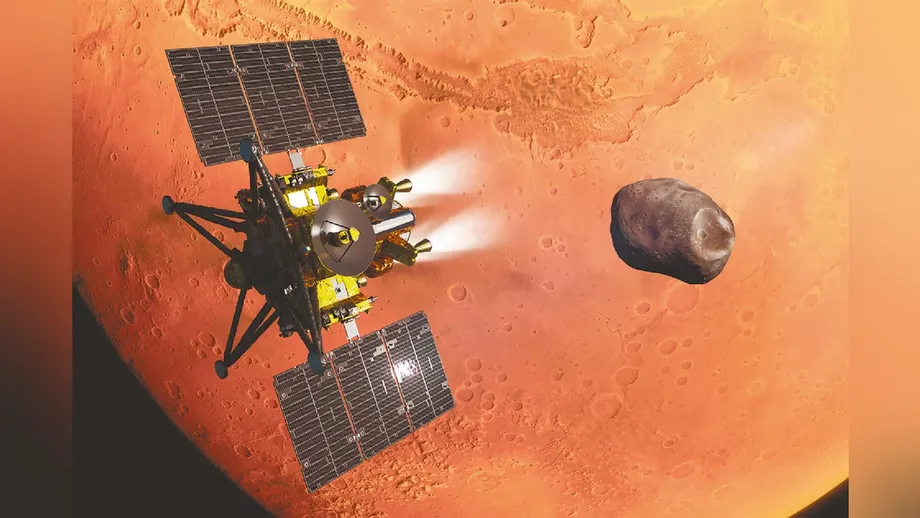
The European Space Agency is examining whether its Earth Return Orbiter, whose development is more advanced than the retrieval lander, could be repurposed to study Mars from orbit. Japan is also pursuing samples from Phobos, a Martian moon that may contain material thrown off Mars by asteroid impacts.
Perseverance and Curiosity will continue investigations with their onboard instruments. Perseverance's sealed samples can remain available for a later mission, and the rover still has some unused tubes for further discoveries.
Victoria Hamilton, chair of NASA's Mars Exploration Program Analysis Group, described the cancellation's effect on the scientific community:
This is deeply disappointing.
NASA has already completed the demanding task of finding and collecting promising rocks. China now has the more defined route for returning new samples. For scientists, the central goal remains obtaining material that can explain Mars's history and whether any part of that history included life.
Key Points
- NASA's Mars Sample Return program was canceled after rising costs and delays, leaving Perseverance's collected samples on Mars.
- Sapphire Canyon contains spots that scientists want to test for a possible biological origin.
- China officially targets a Tianwen-3 launch around 2028 and return of at least 500 grams around 2031.
- Tianwen-3 plans surface scooping, drilling to 2 meters and collection by drone, without a rover.
- China plans to select three landing finalists by the end of 2026. Jezero is not among its identified candidates.
- Lockheed Martin's proposed retrieval mission remains unadopted, and NASA has announced no replacement schedule.