Two mothers, two calves expected in May 2027
Ratu was 238 days pregnant and her daughter Delilah was 251 days pregnant when Indonesia announced two expected Sumatran rhino births at Way Kambas National Park in October 2026. Both calves are due around May 2027. For a species whose wild population is estimated by the IUCN Asian Rhino Specialist Group at just 34 to 47 animals, two healthy births would be a rare gain.
Contents
- Two mothers, two calves expected in May 2027
- Why the family relationships matter
- Ratu could set a reproductive record
- A timeline of five successful births
- Pregnancy is progress, not a guaranteed birth
- Different counts describe a tiny population
- Isolation makes finding a mate difficult
- A forest sanctuary with a longer purpose
- Key Points
The pregnancies also expose a difficult conservation tradeoff. Ratu is carrying her fourth calf with Andalas. Delilah is carrying her second with Harapan, who is Andalas's full brother and therefore Delilah's paternal uncle. Every male in Indonesia's captive breeding program is related, leaving managers with few options for producing calves without repeating shared ancestry.
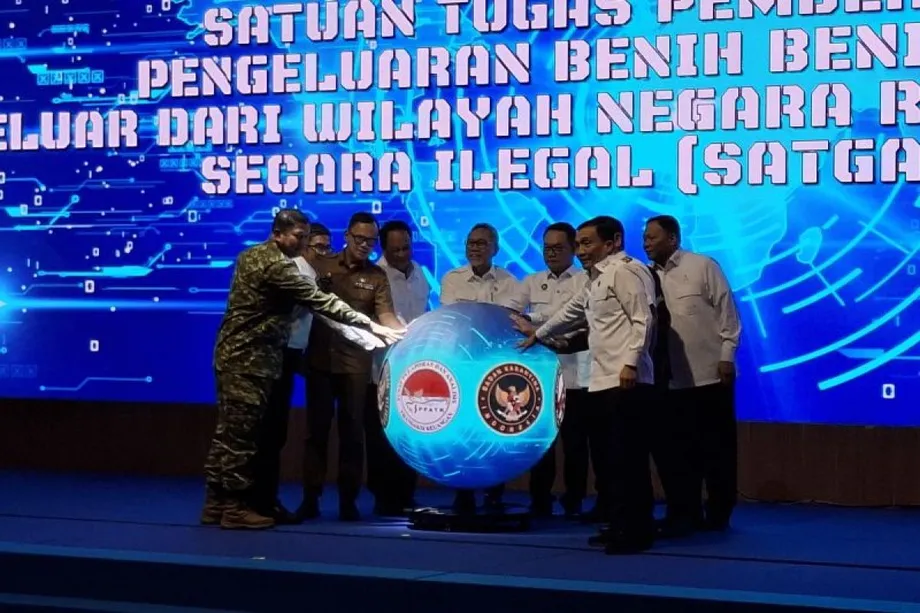
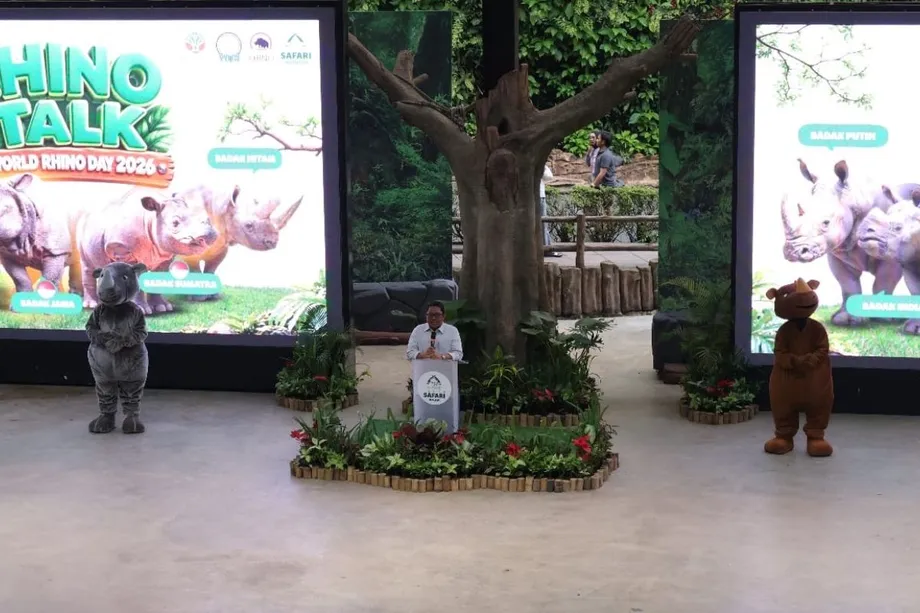
The announcement was made at Taman Safari Indonesia in Bogor on October 3, 2026, during celebrations associated with World Rhino Day, which falls on September 22. Reports differ on the announcement date: detailed accounts place the event on October 3, while another dates the government announcement to October 4. They agree on the pregnancies and the expected delivery month.
Ahmad Munawir, director of species and genetic conservation at Indonesia's Ministry of Forestry, described the pregnancies as part of a sustained effort to prevent extinction through breeding and medical care.
"The pregnancy of both rhino mothers is part of a long-term effort to sustain the population of the Sumatran rhino through planned breeding, reproductive health management, and intensive individual monitoring," said Ahmad.
The immediate task is to bring both pregnancies safely to term. The larger challenge is to turn a small group of related animals into a population that can survive beyond the sanctuary.
Why the family relationships matter
Andalas and Harapan were born at Cincinnati Zoo in the United States in 2001 and 2007, respectively. Their parents, Ipuh and Emi, had been captured from the wild. All the males now in the Indonesian breeding program trace their ancestry to that pair.
Ratu came from the wild in Sumatra in 2005. Her daughter Delilah was born at Way Kambas on May 12, 2016, to Ratu and Andalas. Pairing Delilah with Harapan therefore joins a niece with her uncle. This is a closer relationship than the pairing of Ratu and Andalas described in the breeding history.
Close relatives are more likely to carry the same inherited genetic variants. When both parents pass on a harmful recessive variant, one whose effects can remain hidden in an animal with only one copy, their offspring may face health or reproductive problems. Related parents do not guarantee an unhealthy calf, but repeated breeding within a narrow family tree limits genetic variety and can increase risks.
Nina Fascione, executive director of the International Rhino Foundation, said sanctuary specialists try to match the least related males and females possible. They must also consider practical factors, including differences in body size. With so few animals under human care, genetic preference alone cannot determine every pairing.
Fascione described the urgency behind those decisions:
"The current critical situation outweighs the genetic diversity considerations," Fascione said.
A healthy calf would increase the number of surviving animals, but it would not introduce a new ancestral line. Population growth and genetic diversity are connected goals, not interchangeable measures of success.
Ratu could set a reproductive record
If Ratu delivers a healthy calf, she would become the first known Sumatran rhino to give birth four times, according to Munawir. That would exceed the previous record of three calves held by a female at Cincinnati Zoo.
Her three existing offspring are Andatu, born in 2012; Delilah, born in 2016; and Anggi, born in 2023. Their births span more than a decade, illustrating the time required to build even a small population of this slowly reproducing species.
The International Rhino Foundation's Sumatran Rhino Sanctuary page records five calves born at the facility and confirms that Ratu's first pregnancy to reach birth lasted 16 months. It also records Delilah's later achievement as the first female Sumatran rhino born in captivity to produce a calf herself.
That second milestone matters because a breeding program must do more than produce a single generation. Delilah's successful first birth demonstrated that an animal born under human care could mature and reproduce within the same conservation program.
A timeline of five successful births
The sanctuary's breeding record includes long waits and recent successes. Ratu and Rosa arrived in 2005, and Andalas moved from Cincinnati to Way Kambas in 2007. Harapan joined the program in 2015.
- June 23, 2012: Ratu gave birth to Andatu, the first Sumatran rhino born in captivity in Indonesia.
- May 12, 2016: Ratu and Andalas produced their second calf, Delilah.
- March 24, 2022: Rosa gave birth to Sedah Mirah, fathered by Andatu, after eight lost pregnancies.
- September 30, 2023: Ratu and Andalas welcomed their third calf, Anggi.
- November 25, 2023: Delilah gave birth to Indra, a healthy male fathered by Harapan.
- October 2026: Ratu's fourth pregnancy and Delilah's second were announced, with births expected around May 2027.
If both expected calves survive, the number of births recorded at Way Kambas would rise from five to seven, a 40% increase in the sanctuary's cumulative birth total. That comparison measures breeding output, not growth in the wild population.
Pregnancy is progress, not a guaranteed birth
Sumatran rhino pregnancies last about 15 to 16 months, and calves can remain dependent on their mothers for up to two years. At 238 and 251 days, Ratu and Delilah were roughly eight months into gestation when their pregnancies were announced. Several months of monitoring still lay ahead.
The sanctuary's history shows why caution is necessary. Ratu experienced two miscarriages before delivering Andatu in 2012. Rosa lost eight pregnancies before giving birth to Sedah Mirah in 2022. Reproductive problems associated with prolonged periods without natural breeding are among the difficulties reported in the program, although the histories do not establish the cause of every individual loss.
Delilah's own birth was also difficult. She was born breech and initially showed no signs of breathing, according to an account of her early history. She survived and soon walked and nursed. When she delivered Indra in 2023, the birth occurred naturally without human assistance.
Jansen Manansang, a senior leader of Yayasan Badak Indonesia, the organization managing the sanctuary, said the medical team would continue close observation throughout both pregnancies.
"The SRS medical team will conduct intensive monitoring to ensure that Ratu and Delilah progress well through their pregnancies and give birth to healthy calves," he said.
The work involves veterinarians, keepers and sanctuary managers, together with the Way Kambas National Park authority. The expected delivery month is a planning estimate, not a guarantee of either the date or the outcome.
Different counts describe a tiny population
The wild population figures differ. The IUCN Asian Rhino Specialist Group estimate cited in the pregnancy reporting is 34 to 47 animals. The International Rhino Foundation's sanctuary page uses an upper estimate of no more than 80, while other pregnancy reports say fewer than 80 or no more than 80.
Those figures should not be treated as a single precise count. The lower range and the broader ceiling both describe an exceptionally small population, but the accounts do not explain their different reference dates or counting methods. The foundation also states that the wild population declined by more than 70% over 30 years.
Captive totals require similar care. Reporting on the pregnancies describes 11 animals in Indonesia's breeding program as the world's only captive Sumatran rhinos. The foundation's sanctuary page lists ten animals at Way Kambas. One figure refers to the national program and the other to the sanctuary; their update dates are not established, so the difference cannot be confidently explained.
Isolation makes finding a mate difficult
The remaining wild Sumatran rhinos, scientifically named Dicerorhinus sumatrensis, survive only in Indonesia. The largest population believed to be viable is in the Leuser Ecosystem at the northern end of Sumatra. Other accounts identify Way Kambas, Bukit Barisan Selatan and East Kalimantan among the remaining areas.
Reports differ in how they describe the distribution. One includes West Kalimantan, while another names national park areas in North Sumatra, Lampung, Bengkulu and East Kalimantan. These lists use different geographic labels and do not provide comparable population counts for each location.
The central breeding problem is isolation. Sumatran rhinos are solitary animals that must encounter potential mates across large forest areas. In very small, scattered groups, males and females may not live close enough to meet, even where some habitat remains.
That creates a demographic problem alongside habitat loss and poaching: animals can survive individually without producing the next generation. Bringing rhinos into a managed breeding setting addresses the difficulty of finding a mate, although it cannot by itself restore unrelated ancestry or secure their former habitats.
A forest sanctuary with a longer purpose
The International Rhino Foundation says it built the 250 acre sanctuary in 1996 with Indonesian partners, including Yayasan Badak Indonesia, the government, Way Kambas National Park and Taman Safari International. An expansion opened in October 2019 to provide room for more rescued animals.
The animals live in large rainforest enclosures with veterinary care, nutritional support and reproductive monitoring. The setting is described as semi in situ, meaning rhinos are managed within their natural habitat rather than in a conventional zoo environment, with human interaction kept as limited as their care allows.
Some accounts date the wider Sumatran rhino captive breeding effort to 1984. That date is distinct from the foundation's 1996 construction date for the Way Kambas sanctuary. The five Indonesian births recorded by the foundation occurred between 2012 and 2023.
Manansang identified the International Rhino Foundation, Taman Safari Indonesia and TFCA Sumatera as financial supporters of the sanctuary program. The foundation describes the captive animals as an insurance population that might eventually help rebuild wild populations, but only after threats in their natural habitat have been removed.
No release timetable or new plan to introduce unrelated breeding animals accompanies the pregnancy announcements. The next stated milestone is the expected arrival of the calves around May 2027. Until then, their survival and the health of both mothers remain the immediate priorities.
Key Points
- Ratu and Delilah were 238 and 251 days pregnant when the pregnancies were announced in October 2026.
- Both calves are expected around May 2027.
- Delilah's mate, Harapan, is her paternal uncle, and all males in the captive breeding program are related.
- A healthy fourth calf would give Ratu a new known reproductive record for the species.
- Way Kambas has recorded five successful births; two more would bring that total to seven.
- Wild estimates differ, ranging from 34 to 47 animals to an upper figure of 80.
- Both pregnancies require continued monitoring, and neither birth is guaranteed.