Permit penalties expand across seven provinces
Indonesia's Forestry Ministry has sanctioned 32 companies over forest and land fires covering 12,926.74 hectares, while pursuing criminal proceedings involving 125 individuals and corporations. The measures, announced on October 19, 2026, include suspending permits, ordering ecosystem restoration and revoking five permits.
Contents
- Permit penalties expand across seven provinces
- What the sanctions require companies to do
- Investigators follow the ownership chain
- A national fire estimate approaches two million hectares
- Smaller fires continue as major habitats burn
- Dry ice operations target smoke trapped near the ground
- Cleaner air and fuel supplies become urgent demands
- Neighbouring countries offer help and pursue accountability
- The next dates for operations and legal action
- Key Points
The ministry's October 19 statement raises the number of companies facing administrative penalties from 26 to 32. That is an increase of six companies, or about 23 percent. The businesses operate in seven provinces across Sumatra and Kalimantan, with half of the sanctioned companies concentrated in West and Central Kalimantan.
Investigators are also examining the people who ultimately benefit from companies operating in burned concession areas. A concession is land a business has permission to use, with responsibilities that include protecting the forest and preventing fires.
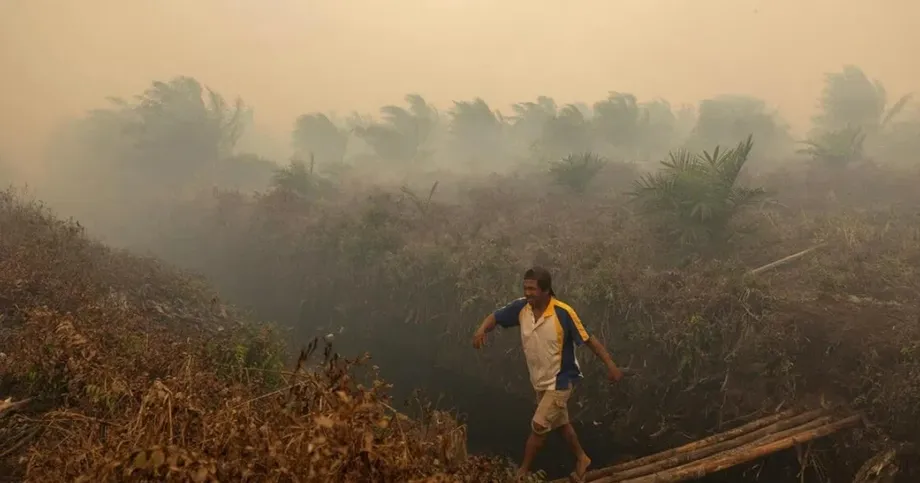
The enforcement drive comes during a much larger emergency. A satellite monitoring organisation estimates that nearly 1.92 million hectares burned nationwide between January and September. Communities face polluted air, disrupted transport and, in some areas, fuel shortages that make earning a living harder.
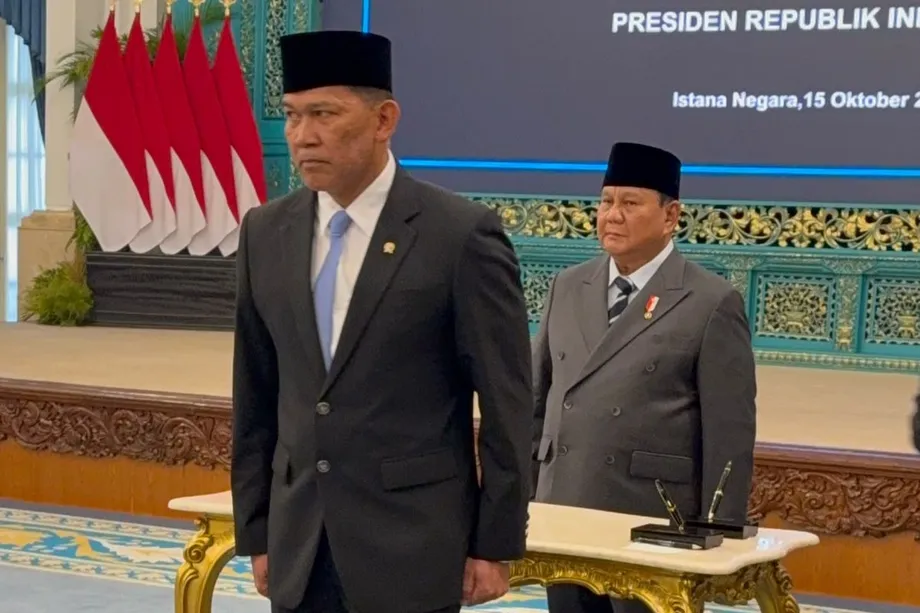
President Prabowo Subianto's government is combining ground operations, aircraft and weather modification with legal action. The Institute for Essential Services Reform (IESR), an energy think tank, is pressing for emergency measures that would also provide cleaner air, healthcare and reliable fuel supplies.
The immediate challenge is to protect people while fires continue. The longer task is to make companies meet restoration orders and establish who can be held legally responsible for the damage.
What the sanctions require companies to do
Nineteen companies have had their permits suspended and must restore forest ecosystems across 9,546.42 hectares of burned land. Eight other entities have been ordered to restore another 2,211.19 hectares. Five have had their permits revoked.
Together, the two groups subject to restoration orders account for 11,757.61 hectares, about 91 percent of the burned area identified in the sanctions announcement. Restoration means repairing the damaged ecosystem, rather than simply putting out the fire. The ministry says it is monitoring whether permit holders fulfil those obligations.
Administrative penalties deal with the permissions and duties attached to operating a business. Criminal proceedings follow a separate process to determine responsibility for suspected offences. The ministry is also considering compensation claims for forest damage where investigations establish a legal basis.
West Kalimantan has nine sanctioned companies and Central Kalimantan seven. Their combined 16 companies represent half of the total. The ministry identifies the businesses by these abbreviated names:
- West Kalimantan, nine: PT MRU, PT WE, PT HKI, PT MPM, PT MPK, PT DAS, PT WSP, PT FI and PT WLJ.
- Central Kalimantan, seven: PT PW, PT GPP, PT BHP, PT BWL, PT NES, PT DI and PT TI.
- South Sumatra, five: PT BMH, PT BPP, PT SAN, PT RHM and PT BA.
- South Kalimantan, five: PT IIP, PT HRB, PT DI, PT PM and PT KT.
- East Kalimantan, three: PT IITG, PT PSR and PT DPP.
- Jambi, two: PT REI and PT ALN.
- North Kalimantan, one: PT RKR.
The ministry's statement lists the companies by province and gives totals for each type of penalty, without assigning a specific sanction to each named business.
Investigators follow the ownership chain
The Forestry Ministry places 44 of the 125 individuals and corporations under preliminary inquiry and 79 under formal investigation. Within the formal investigations, 12 individuals and one corporation have been named as suspects. Two corporate subjects have reached the stage the ministry calls P-22, meaning the handover of suspects and evidence to prosecutors.
Dwi Januanto Nugroho, director general of forestry law enforcement, said investigators were pursuing accountability alongside firefighting and had uncovered suspected licensing violations.
"Addressing forest fires must reach the parties truly responsible. Alongside ongoing firefighting efforts, evidence of potential licensing violations has already been uncovered," he stated.
Investigators are developing evidence to trace beneficial owners. These are the people who ultimately own, control or benefit from a business, even when their names sit behind several companies in an ownership chain. Following that chain can extend an investigation beyond the company managing a particular concession.
Police are conducting their own inquiries. National Police Chief Suyudi Ario Seto said officers were examining 98 cases involving suspected corporate connections, including investment links to neighbouring countries. He spoke after a wildfire response meeting with Prabowo and senior government and military officials.
Suyudi did not identify the businesses or countries, or say how many cases involved foreign investment. Investigators were still gathering evidence to determine which individuals or companies could face criminal charges.
An October 14 police update had identified 223 individual suspects connected to 273 police reports involving more than 5,150 hectares. Police also named nine companies as suspects in corporate cases involving more than 25,600 hectares. Authorities said 57 business entities had been sealed over fire related violations. Those police figures cover a different enforcement caseload from the Forestry Ministry's 125 legal subjects; the agencies have not supplied a combined total accounting for overlap.
A national fire estimate approaches two million hectares
Nusantara Atlas, which analyses satellite observations, estimates that 1,916,588 hectares burned between January and the end of September 2026. Its estimate is 38 percent higher than the area it recorded at the same point in 2019, another severe fire year.
The 12,926.74 hectares in the ministry's sanctions announcement concern the affected company areas covered by that enforcement action. The Nusantara Atlas figure measures burning across the country over nine months, giving readers a broader picture of the emergency.
David Gaveau, founder of Nusantara Atlas, said the actual burned area could be larger because thick haze sometimes obscured satellite images. Smoke can therefore make both firefighting and measurement more difficult.
Forestry Ministry spokesman Ristianto Pribadi said the government was still calculating the national total and that the monitor's estimate "cannot be readily confirmed". The government's previously announced figure of 202,000 hectares covered the period through July, two months shorter than the satellite estimate.
Drought associated with a strong El Niño has worsened conditions since June. El Niño is a recurring warming of the tropical Pacific Ocean that can alter rainfall patterns and bring drier weather to Indonesia. Dry vegetation catches fire more readily, while prolonged burning creates smoke that winds can carry across borders.
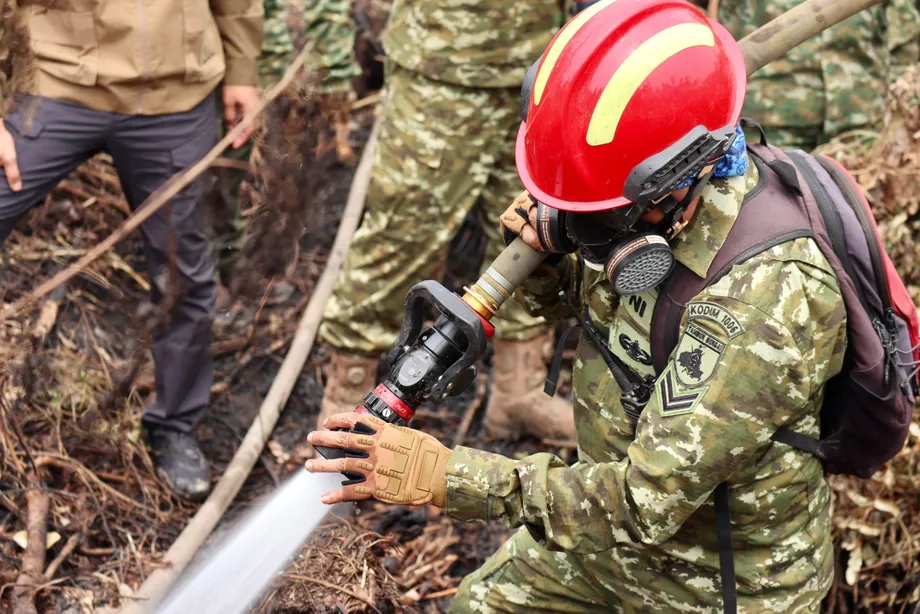
Prabowo ordered what the government described as a "massive deployment" of resources on October 19. Coordinating Minister for Political and Security Affairs Dudung Abdurachman said Indonesia had deployed 47 aircraft and 60,000 personnel.
Smaller fires continue as major habitats burn
Indonesia's National Disaster Management Agency (BNPB) reported fresh incidents in Sulawesi and the Bangka Belitung Islands over the days preceding October 19. In Central Sulawesi, about two hectares of cocoa and clove plantations burned in Parigi Moutong on October 18, while another two hectares of vegetation and undergrowth burned in Tojo Una-Una. Neither incident caused reported casualties.
In South Sulawesi's Sidenreng Rappang district, about one hectare burned. The district's extended emergency status for drought and forest and land fires runs through November 1. In East Belitung, fires affected approximately 2.22 hectares across Padang and Selingsing villages. Authorities said those fires had been extinguished, with no casualties reported.
Central Kalimantan's Tanjung Puting National Park faces a larger threat. Authorities said more than 500 hectares had been affected, putting wildlife habitat at risk in an important orangutan conservation and rehabilitation area. The response included 117 park personnel and 10 staff from Karimunjawa and Mount Halimun Salak national parks.
Forestry Minister Raja Juli Antoni described a strategy aimed at stopping the advancing front of a fire, using heavy machinery and approximately 30 planned borewells spaced about 50 metres apart. Borewells reach underground water, giving crews a supply closer to the flames.
Firefighters also face deadly conditions. A volunteer injured when a team was overwhelmed by flames in Bromo Tengger Semeru National Park in East Java died in hospital, park officials said. He was the fifth member of that group to die.
Dry ice operations target smoke trapped near the ground
South Sumatra is testing weather modification to help disperse haze as crews work on the fires themselves. Thomas Nifinluri, the Forestry Ministry's director of forest fire control, described operations using dry ice to influence conditions that trap smoke close to the surface.
A temperature inversion occurs when warmer air sits above cooler air near the ground. This arrangement restricts upward air movement, allowing smoke to accumulate below. Dry ice is solid carbon dioxide, and the operation aims to weaken that trapping layer and improve air movement.
The Forestry Ministry described an operation scheduled for October 16 to 25, beginning with one flight dispersing 800 kilograms of dry ice near Palembang. BNPB's account of the initial dry ice trial dated its start to October 15 and recorded two flights carrying 800 kilograms each that day.
BNPB also reported that airport visibility improved from about 650 metres to 2,800 metres during the initial trial. The Forestry Ministry reported improving visibility during the second day of the operation it described, with monitoring continuing.
Thomas said crews adjust flights to atmospheric conditions. When conditions support cloud growth, operations can include sodium chloride, or ordinary salt, to encourage rainfall. Ground crews, aircraft, the meteorology agency BMKG, the military and local governments are also working to control the sources of the fires.
Cleaner air and fuel supplies become urgent demands
IESR says communities are carrying a double burden: smoke threatens health while fuel shortages disrupt the work of drivers, fishermen, farmers and small businesses. Children, pregnant women, older people and people with respiratory conditions are particularly vulnerable to polluted air.
The Health Ministry recorded more than 280,000 people with respiratory problems between August 18 and October 13, according to the October 14 update discussed in coverage of families seeking safe air. For households near the fires, access to somewhere with cleaner air can be as urgent as food or transport.
IESR urged the government to declare emergency response status in affected areas, mobilise ground and aerial firefighting resources, distribute N95 masks, provide spaces with clean air and free health services, and publish air quality readings regularly.
The organisation also called on the government and state energy company Pertamina to increase allocations of subsidised fuels and fuels sold at assigned prices. It wants stock levels and the causes of shortages disclosed, distribution prioritised for the worst affected areas, and action against hoarding and diversion.
Fabby Tumiwa, IESR's chief executive, called for clear response plans, deadlines and named officials responsible for delivery. The organisation also sought emergency support for vulnerable workers and small businesses, alongside longer term measures including transport electrification, renewable energy and preventing fires at their source.
Neighbouring countries offer help and pursue accountability
Malaysia will assist with three aircraft and 52 personnel, Dudung said on October 19. Singapore will also provide assistance, although he gave no operational details. The announcement follows Malaysia's aircraft offer on October 18, when officials were still considering the safest and most useful deployment.
Malaysia's earlier proposal described one firefighting aircraft, three helicopters and 52 officers and personnel. Dudung's subsequent announcement specified three aircraft and 52 personnel. Poor visibility remains an operational constraint: smoke has already grounded some aircraft in Kalimantan and complicated efforts to reach fires.
Singapore's National Environment Agency warned three companies on October 19, after issuing notices to seven Indonesian companies the previous Friday. The notices directed businesses to deploy firefighting teams, stop burning or starting new fires, and submit action plans.
Singapore Senior Minister K. Shanmugam warned companies that authorities would pursue responsibility for the haze.
"Some companies may deny responsibility. They may think they can escape scrutiny. But they should not underestimate the Singapore government's determination to act," Shanmugam told reporters.
The Forestry Ministry points to two legal frameworks behind the regional response. Indonesia signed the ASEAN Agreement on Transboundary Haze Pollution in 2002 and ratified it through Law No. 26 of 2014. The agreement commits participating governments to cooperate on preventing and addressing haze.
Singapore's Transboundary Haze Pollution Act 2014 allows action against individuals or companies whose activities outside Singapore cause haze pollution inside the country. This power to address conduct beyond national borders is called extraterritorial jurisdiction.
The next dates for operations and legal action
Indonesia's response now has several tracks running at once: restoring company land, investigating suspected crimes, keeping firefighting operations supplied and protecting people from smoke. The key dates show how those efforts have developed:
- October 14: Police announced 223 individual suspects and nine corporate suspects; the Forestry Ministry's administrative sanctions total stood at 26 companies.
- October 15: BNPB dated the start of its Palembang dry ice trial to this day.
- October 16 to 25: The Forestry Ministry's stated schedule for dry ice operations in South Sumatra.
- October 19: The Forestry Ministry announced sanctions against 32 companies and criminal proceedings involving 125 individuals and corporations.
- October 21: Scheduled next hearing in a Pontianak lawsuit challenging the government's wildfire response.
- November 1: End date of Sidenreng Rappang's extended drought and fire emergency status.
The Pontianak case was brought by Indigenous representatives and civil society groups seeking stronger prevention, healthcare and a national disaster declaration. The wildfire response lawsuit adds a challenge over government responsibility to the investigations into companies and individuals.
The Forestry Ministry says it will continue firefighting, monitoring restoration orders and developing criminal evidence. For affected communities, the most immediate measures are practical: access to safer air, medical treatment, usable roads and airports, and enough fuel to work while the response continues.
Key Points
- The Forestry Ministry sanctioned 32 companies over fires affecting 12,926.74 hectares across seven provinces.
- Nineteen companies face permit suspensions and restoration orders, eight face restoration orders, and five have lost their permits.
- The ministry is pursuing 125 individuals and corporations, including investigations into beneficial owners.
- Nusantara Atlas estimates that 1,916,588 hectares burned nationwide through September; the government is still calculating its total.
- Indonesia says 47 aircraft and 60,000 personnel are deployed, with assistance coming from Malaysia and Singapore.
- IESR is seeking emergency health protection, transparent fuel distribution and assistance for vulnerable workers.