A doctor struggles to breathe as patients keep arriving
More than 280,000 people were recorded with respiratory problems between August 18 and October 13, Indonesia's Health Ministry said on October 14, as months of wildfires left Palangkaraya choking under smoke and pushed neighbouring Timor-Leste to close schools nationwide for three days.
Contents
- A doctor struggles to breathe as patients keep arriving
- What the respiratory figures reveal
- Parents ask for shelters equipped to treat children
- Outdoor workers face smoke or lost earnings
- Smoke obscures skylines across Southeast Asia
- Timor-Leste closes schools for three days
- Dry peat keeps the fires burning beneath the surface
- Firefighters continue as Indonesia plans a dry ice trial
- The dates shaping the next stage of the crisis
- Key Points
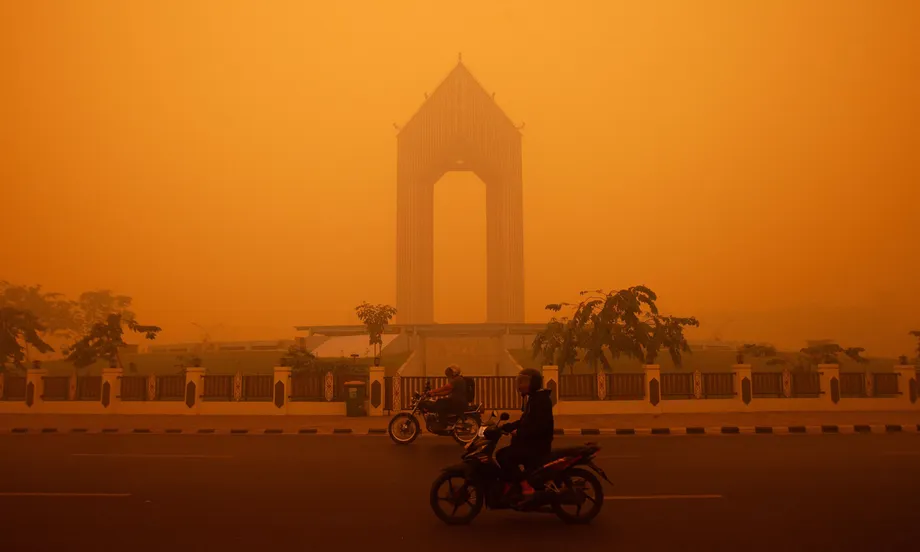
In Palangkaraya, the capital of Central Kalimantan on Borneo, visibility fell to a few dozen metres on Thursday, October 15. The Talawang roundabout and a nearby statue were barely visible through the haze. Skies that had turned deep orange on Wednesday remained a dirty yellow the following day.
Inside a public clinic, Irvan Maulana, a doctor aged 28, was treating people with symptoms he knew from his own illness. He described continuing to work despite coughing and struggling for breath:
I've been sick, I've been short of breath, I've had a cough too, but because I must provide care... I just carry on,
Fires have burned hundreds of thousands of hectares of forest and plantations across Sumatra, Kalimantan and Papua. Smoke has spread to Malaysia, Singapore, the Philippines and Timor-Leste, turning a prolonged Indonesian fire emergency into a regional health crisis.
For families closest to the fires, the immediate problem is finding somewhere to breathe. Smoke reaches into homes, outdoor work continues because households need income, and parents describe staying ready to rush children to emergency care. Their requests now extend beyond food assistance to shelters with cleaner air, oxygen and medical staff.
What the respiratory figures reveal
Indonesia's Health Ministry recorded more than 280,000 people with respiratory problems over the period ending October 13. Many others are likely to have experienced symptoms without seeking treatment, leaving clinics and hospitals with only part of the picture.
Irvan said adults and older people had been arriving more frequently at the general clinic. Children and elderly patients were particularly sensitive, he said, describing coughs, colds, mucus in the nose and throat, and sore throats.
Smoke contains tiny particles that can travel deep into the lungs. Some are known as PM2.5, meaning particles no more than 2.5 micrometres wide. Breathing this polluted air can irritate the airways and worsen existing breathing conditions, helping explain why exposure can be especially difficult for children, older people and people with asthma.
Indonesia had already recorded 50,891 acute respiratory infection cases linked to land and forest fires during July and August, including more than 12,000 children younger than five, during the September health emergency. Those earlier figures covered a different period and a narrower illness category. The latest ministry count covers respiratory problems recorded between August 18 and October 13.
Parents ask for shelters equipped to treat children
Dea Otavia, a security guard aged 30, brought her daughter to the clinic because breathing had become painful. She described smoke entering the family home as well as filling the streets:
She says it hurts when she breathes,
Dea said the haze left her family without a place to escape it:
It's so suffocating, especially on days like these. It reaches inside the house too. There's no place to breathe freely.
Zikri Yanto had brought his baby to the clinic. His child aged four was also ill, complaining of headaches and weakness. Work had become a constant balancing act between earning a living and being available when a child needed help.
Zikri described the emergency calls he sometimes received from home:
While I'm working, I'm also on alert. Sometimes my wife suddenly calls, saying we need to take the child to the ER.
He urged the government to provide more than rice and basic supplies. His proposal was for safe houses protected from haze, equipped with oxygen, nurses and facilities to care for sick children. Food aid helps households get through the disruption; his request addresses the separate need for a place where children can breathe and receive treatment.
Outdoor workers face smoke or lost earnings
Heri, a motorbike taxi driver who uses one name, said he had been struggling through haze for four months. His work kept him outside, where smoke and burned debris irritated his eyes despite his efforts to protect himself.
Heri described the conditions during the latest thick haze:
These past few days, the smoke has been thick, and since I work outdoors, I'm forced to breathe it in even though I wear a mask,
Stinging eyes added to the discomfort, while visibility of only a few dozen metres made the city harder to navigate. Roads and landmarks that normally help drivers find their way disappeared into the smoke.
Heri said stopping work would mean losing the money he needed:
I still have to work and have been struggling in the haze for four months now, if I don't work, I won't earn any money. Everyone is forced to fight against this dense smoke.
His experience and Irvan's account show how exposure continues during ordinary tasks. Transport workers remain on the roads, medical staff continue seeing patients, and parents travel to clinics even while the air is making them ill.
Smoke obscures skylines across Southeast Asia
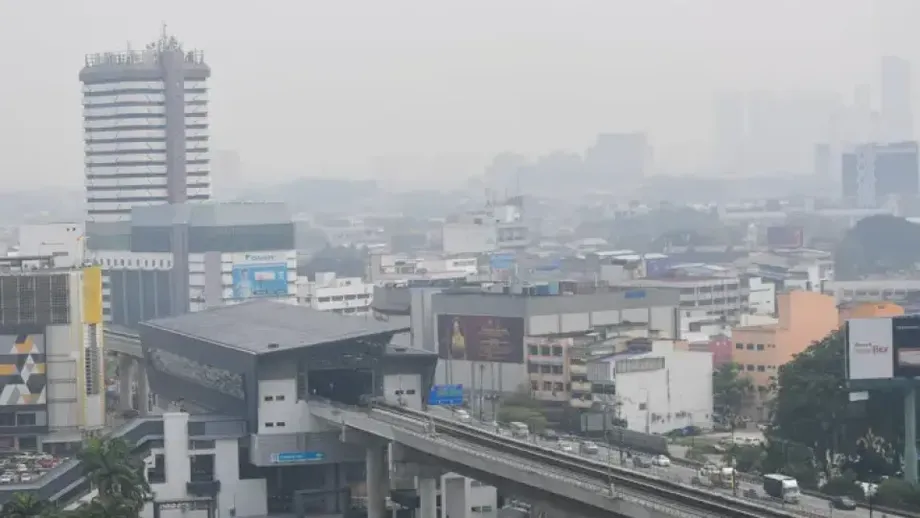
Singapore's Marina Bay Sands complex was nearly obscured by haze, while roads, bridges and passing vehicles were shrouded in smoke. The pollution had travelled far beyond the forests, plantations and peatlands where the fires were burning.
Kuala Lumpur topped IQAir's ranking of the most polluted major cities on Thursday, followed by Singapore, with Medan and Jakarta close behind. The ranking captured the spread of poor air across several urban centres during the same emergency.
Malaysia, the Philippines and Timor-Leste have also been reached by the haze. Wind carries smoke across borders, exposing people hundreds of kilometres from the flames and forcing governments outside Indonesia to make decisions about schools and public health.
Palangkaraya remains one of the places closest to the crisis. The contrast between its disappearing landmarks and Singapore's obscured skyline shows the geographic reach of the smoke, while the clinic accounts reveal its immediate human cost.
Timor-Leste closes schools for three days
Timor-Leste's government announced nationwide school closures on Wednesday, October 14, with the suspension beginning the following day and lasting three days. Authorities said the measure was intended to protect students, teachers and other members of the education community.
Families were advised to keep children indoors, and residents were urged to wear masks outside. People continued moving through Dili under a yellow sky, many wearing face coverings.
Sonya da Costa Soares, a midwife aged 30 living in Dili, described severe pollution that had hidden the sun:
We can't see the sun, the pollution is heavy,
Although her child was too young for school, she welcomed the closure as protection for children. Felicidade Alves dos Santos Martins, whose daughter Febrianti was home from middle school, said smoke had covered Dili and the surrounding mountains. Residents said conditions had been even worse earlier in the week.
Vitaliano da Costa Calapes, an 18-year-old student at St. Ignatius Loyola College, was preparing for upcoming examinations. He expressed hope that pollution would ease in the coming days so classes could return to normal. For students, the emergency has interrupted lessons at a time when preparation still has to continue.
Dry peat keeps the fires burning beneath the surface
Indonesia regularly experiences fires during its dry season. This year's strong El Nino has brought drought, drying vegetation and making fires harder to control. El Nino is a warming pattern in the tropical Pacific Ocean that changes weather far beyond the ocean, often reducing rainfall in parts of Southeast Asia.
Deforestation and the draining of peatlands for cultivation have also made landscapes more vulnerable. Peat is partly decomposed plant material that accumulates in wet ground. When the ground stays waterlogged, it is much harder to burn. Drainage removes that protection and allows the peat itself to become fuel.
Peat fires can travel underground, making them difficult to find and extinguish fully. Volunteers confronting underground peat fires in Kalimantan have dug into the soil and pumped water into buried channels, knowing that fire can return days after visible flames disappear.
Mark Parrington, a senior scientist at the Copernicus Atmosphere Monitoring Service, said estimated cumulative fire emissions remained below the levels reached in 2015. He also warned that several weeks of the fire season were still ahead and described the current pollution:
the air quality impacts have been very severe and persistent.
Emissions measure pollution released by the fires over time, while the air people breathe also depends on where smoke travels and how long it stays over a community. Palangkaraya's prolonged exposure has continued even with the cumulative emissions estimate below the 2015 level.
Firefighters continue as Indonesia plans a dry ice trial
Indonesia's government says tens of thousands of personnel are fighting the fires. The operation follows the August firefighting deployment, when nearly 50,000 firefighters and disaster personnel, supported by dozens of helicopters, were mobilised during the worsening dry season.
Chief security minister Dudung Abdurachman announced on Wednesday that Indonesia planned to drop dry ice over parts of South Sumatra on Thursday in an attempt to disperse smoke. Dry ice is the solid form of carbon dioxide.
Dudung said the government would consider using the approach elsewhere if the trial worked:
God willing, if it succeeds we will continue in other key regions,
No result from the planned trial has been announced in the accounts of Thursday's operations. The proposal concerns dispersing haze, while crews still face the task of extinguishing the fires producing it, including burning peat beneath the surface.
Residents' requests also extend beyond firefighting. Zikri's call for medical shelters concerns protection during exposure, while Irvan's clinic must continue treating people who are already unwell. Both needs persist while crews work to bring the blazes under control.
The dates shaping the next stage of the crisis
The health emergency has developed over months, with the latest treatment figures, school closures and proposed smoke dispersal trial arriving within days of one another. A court case is also putting the government's preparation and response under scrutiny.
- August 18 to October 13: Indonesia's Health Ministry recorded more than 280,000 people with respiratory problems.
- October 14: The ministry announced the health figure, Timor-Leste announced school closures, and Dudung announced the planned dry ice operation.
- October 15: Timor-Leste began its three days of school closures as dense haze continued over Palangkaraya and other regional cities.
- October 21: Proceedings in a lawsuit over Indonesia's wildfire response are scheduled to resume in Pontianak.
Indigenous representatives and civil society groups brought the wildfire response lawsuit in West Kalimantan, seeking a national disaster declaration, stronger prevention and healthcare for vulnerable communities. The plaintiffs allege that authorities failed to prepare adequately for a prolonged drought that had been forecast.
The next hearing gives that dispute a date beyond the immediate emergency. In Palangkaraya, families are focused on more immediate needs: treatment, income and somewhere to escape the smoke. Dea's description of missing the sun captures how deeply the haze has entered daily life.
Key Points
- Indonesia's Health Ministry recorded more than 280,000 people with respiratory problems between August 18 and October 13.
- Palangkaraya's visibility fell to a few dozen metres as residents described coughing, painful breathing and smoke entering homes.
- Timor-Leste closed schools nationwide for three days from October 15 and advised families to keep children indoors.
- Smoke reached Malaysia, Singapore, the Philippines and Timor-Leste as fires burned across several Indonesian regions.
- Indonesia deployed tens of thousands of personnel and planned a dry ice trial in South Sumatra to disperse haze.
- Families are calling for shelters with cleaner air and medical care, while a lawsuit over the government's response is scheduled to resume on October 21.