A week without water puts tourism under pressure
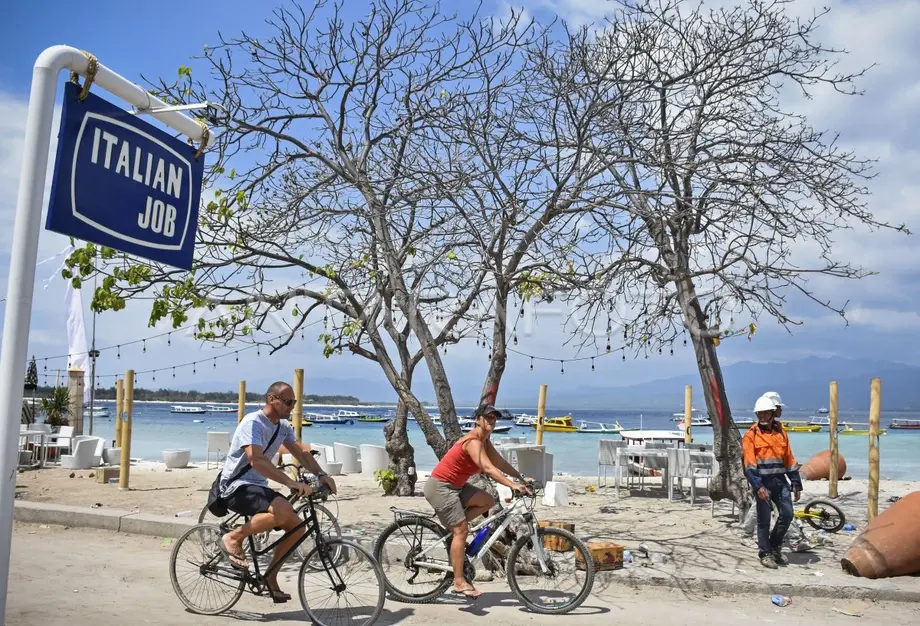
At least 10 hotels on Gili Trawangan stopped accepting guests during a September 2026 water crisis, according to Gili Hotel Association chairman Lalu Kusnawan, as the cost of buying replacement water overwhelmed their operations. Around 315 tourists, including hundreds of foreign visitors, were reported to have left their accommodation early from September 4, while regional tourism promotion chief Sahlan M Saleh said hundreds more had cancelled visits.
Contents
- A week without water puts tourism under pressure
- How the disruption unfolded
- Why hotels could not keep buying water
- Residents received emergency supplies
- Six months of permission, but unfinished permits
- What is holding up the seawater system?
- Conservation concerns predate the latest crisis
- A previous supplier faced criminal convictions
- The TCN partnership faces its own legal scrutiny
- October brings another demand for reliable service
- Key Points
The disruption on the island in North Lombok, West Nusa Tenggara, involved PT Tiara Cipta Nirwana (TCN), which supplies water in partnership with the local public water utility, Perumda Air Minum Amerta Dayan Gunung. Its system turns seawater into fresh water, but unresolved permits involving central government agencies left the company reluctant to operate because of possible legal consequences.
Local authorities responded with emergency water deliveries and permission for TCN to operate temporarily for six months while completing its paperwork. Water production reportedly restarted at about 5 a.m. Central Indonesia Time on September 10, after the provincial police chief communicated with the company. Distribution then resumed gradually.
The accounts of hotel closures require care. Kusnawan's remarks dated September 11 described at least 10 hotels as having stopped accepting guests; an account of the September 10 restart said restored water allowed 10 hotels to abandon plans to close. Those accounts leave the precise number of hotels that fully suspended operations unclear.
The crisis reaches beyond interrupted holidays. Residents need a dependable daily supply, hotels need much larger volumes, and the government must resolve permits in a protected marine area while several separate legal proceedings surround past and present water supply arrangements.
How the disruption unfolded
The interruption became a serious business problem during a busy tourism period. Kusnawan described the September crisis as worse than a similar disruption roughly two years earlier, with hotels, restaurants and other tourism businesses buying water from alternative sources.
One account dates TCN's supply halt to September 2, while another places the loss of clean water distribution in the early hours of September 3. The main developments that followed were:
- September 4: Tourists began leaving accommodation early, with approximately 315 departures reported.
- September 7: North Lombok Regent Najmul Akhyar announced six months of temporary operating permission following a coordination meeting with provincial leaders.
- September 8: Kusnawan said about five hotels could suspend operations, including three that would stop if water did not arrive the following day.
- September 9: Provincial marine and fisheries chief Muslim called for help from the Ministry of Marine Affairs and Fisheries to complete TCN's permits.
- September 10: TCN reportedly restarted water production at about 5 a.m., followed by gradual distribution.
- September 11: Remarks attributed to Kusnawan described at least 10 hotels as having stopped accepting guests.
- October 10: Najmul again publicly urged TCN to open its water supply while the government worked on central permits.
The October appeal shows that pressure to secure reliable service continued after the reported September restart. In those remarks, Najmul also called for scrutiny of the supply contract and said the district would oversee efforts to restore dependable service.
Why hotels could not keep buying water
Gili Trawangan has about 530 accommodation businesses, according to Kusnawan. During the interruption, operators bought tanker water, water from residents' wells and, in some cases, packaged water to meet immediate needs.
Kusnawan estimated that a hotel with 20 rooms and no swimming pool needed about 15 cubic meters of water each day for bathing and washing. In his September 8 remarks, he used a hotel with 22 rooms to illustrate the same volume. Fifteen cubic meters equals 15,000 liters, a substantial quantity to purchase and transport every day.
Five hotels using water at that illustrative rate would need 75 cubic meters daily. That is slightly more than the upper end of the utility's estimate of 60 to 70 cubic meters for the daily needs of around 600 households. The comparison explains why emergency deliveries aimed at residents could leave accommodation businesses struggling.
Hotels faced both rising costs and falling income. Some stopped taking new reservations, refunded guests or prepared to close temporarily. Kusnawan said he had been told that more hotels would be unable to operate by Saturday because they could no longer bear the expense of buying water.
Residents received emergency supplies
Najmul said the public utility was ready to supply 70 cubic meters of water to Gili Trawangan and that water had begun reaching residential areas. His estimate put household demand at 60 to 70 cubic meters a day for around 600 families. Another description of the emergency response included businesses within that same demand estimate.
The utility initially covered distribution costs through its internal arrangements. Najmul said water might be supplied free at the start, with charges adjusted later under the applicable rules. The district placed responsibility for meeting residents' immediate water needs with the utility.
Earlier in the disruption, the hotel association had received information that two water tanks were available for residents around the harbor. Tourism businesses requiring larger quantities had to collect water themselves from Muara Putat, near Bangsal Harbor in Pemenang on the Lombok mainland.
Kusnawan proposed another emergency measure: the utility could buy brackish water from residents' wells and distribute it to hotels. Brackish water contains some salt, so its treatment and intended use would matter. His proposal focused on organizing an alternative supply through the utility rather than leaving each hotel to arrange purchases independently.
Six months of permission, but unfinished permits
North Lombok and the West Nusa Tenggara provincial government chose a temporary administrative measure known in Indonesia as diskresi. In this case, it gave TCN room to resume supply while completing the central government permissions needed for its operations.
Najmul announced a six month arrangement after the September 7 coordination meeting. TCN was required to complete its permit documents during that period, with the provincial and district governments helping the process. He said the temporary arrangement would end earlier if the permits were completed within one or two months.
Muslim, head of the provincial Marine Affairs and Fisheries Office, described this as the third such temporary measure. The first two had each lasted six months. Together, those earlier arrangements had already provided a year in which to resolve the paperwork.
Muslim questioned why the licensing process remained unfinished after that time. His concern was practical: repeated temporary permissions could keep the water running for a while, yet leave the island vulnerable to another interruption when each period expired.
Provincial tourism and creative economy chief Ahmad Nur Aulia said officials were waiting for a central government decision and expected supply to resume within one or two days. He said finding another investor would take time, while residents and businesses needed water immediately. Najmul similarly said replacing the provider would involve administrative and tender procedures.
What is holding up the seawater system?
TCN uses seawater reverse osmosis, or SWRO. The process pushes seawater through membranes that separate much of its salt from the water. The resulting fresh water can then be processed and distributed through the supply system.
Najmul said the Ministry of Marine Affairs and Fisheries had no objection to the technology itself. He identified unfinished technical requirements and permits as the problem. Marine space falls under the ministry's responsibilities, while activities on land can require environmental approvals from other authorities.
Muslim called for ministry assistance with the application for approval to use marine space, known as Persetujuan Kesesuaian Kegiatan Pemanfaatan Ruang Laut. The application is handled through Indonesia's Online Single Submission system, a platform for business licensing.
According to Muslim's explanation of the process, approval for marine space must be settled before the company moves to subsequent basic licensing requirements, including environmental documents. These can include an environmental impact assessment, known as Amdal, or environmental management and monitoring documents known as UKL-UPL.
The ministry encouraged the permit files to be submitted again and welcomed efforts to speed up processing. Muslim asked officials and the company to identify exactly which technical methods or documents needed correction. He also cited the Job Creation legislation, including Law No. 11 of 2020, Government Regulation in Lieu of Law No. 2 of 2022 and Law No. 6 of 2023, alongside Government Regulation No. 43 of 2021 concerning the resolution of spatial planning and licensing irregularities.
Conservation concerns predate the latest crisis
TCN's marine permit difficulties trace back to activity in the Gili Matra national marine conservation area. In June 2024, the Kupang National Marine Conservation Area Office and marine and fisheries enforcement authorities temporarily stopped drilling associated with installing the company's pipes.
The intervention followed reports of mud deposits around the drilling location and concern about effects on the marine ecosystem. The Ministry of Marine Affairs and Fisheries subsequently revoked TCN's marine location permit, saying the company had failed to comply with requirements and its activities affected coastal ecosystems.
The island's supply problem therefore involves both public service and environmental responsibilities. Residents and tourism businesses depend on fresh water, while infrastructure in the conservation area must meet rules governing how protected marine space is used.
Muslim urged the district government, utility, TCN and ministry to examine the administrative requirements together. He wanted a permanent licensing solution and a clear explanation of the obstacles, rather than another cycle of temporary operation followed by uncertainty.
A previous supplier faced criminal convictions
An earlier water supply arrangement involved different companies: PT Gerbang NTB Emas (GNE), owned by the provincial government, and PT Berkat Air Laut (BAL). Their partnership served Gili Trawangan and Gili Meno and had been designed around treating seawater.
The criminal case concerned the extraction of groundwater without drilling and groundwater use permits. On October 31, 2024, the Mataram District Court sentenced GNE director Samsul Hadi and BAL director William John Matheson to one year in prison each, with fines of Rp1 billion each and three months of detention if the fines were unpaid.
The convictions were upheld on appeal, and the Supreme Court rejected cassation applications in July 2025. Samsul's sentence was enforced. Matheson was placed on the Mataram prosecutors' wanted list after failing to answer summonses for enforcement and was reported to be outside Indonesia.
Prosecutors in West Nusa Tenggara also opened a corruption investigation into the GNE and BAL partnership, working with the Financial and Development Supervisory Agency to calculate potential losses to the state. GNE received Rp1.25 billion in revenue sharing from water sales between November 2019 and October 2022; the state loss calculation was still being assessed separately.
The TCN partnership faces its own legal scrutiny
TCN's partnership with the North Lombok utility originated in a procurement process in 2017. On June 30, 2025, the Business Competition Supervisory Commission, or KPPU, found that the utility and TCN had breached Article 22 of Law No. 5 of 1999 in the tender for a business supplying water through SWRO technology.
The commission imposed fines of Rp8 billion on the utility and Rp4 billion on TCN. Its findings concerned arrangements over the tender winner, exclusive opportunities given to TCN and the company's designation as the project initiator without procedures and documents the commission considered valid.
The utility and TCN challenged the decision. The Surabaya Commercial Court upheld their objections and cancelled the commission's ruling. KPPU then sought cassation, taking the dispute to the Supreme Court.
The Corruption Eradication Commission, or KPK, has also examined the TCN partnership. A public complaint was submitted in May 2024, and documents were handed over in October 2024. Najmul said he gave information to the commission in August 2026 about why the district had entered the arrangement.
Najmul explained that the utility lacked the capacity to meet demand fully and had sought a private partner. The tender dispute, the scrutiny of this partnership and the earlier groundwater convictions involve separate proceedings, each with its own legal questions and participants.
October brings another demand for reliable service
Najmul's October 10 appeal again placed immediate water needs at the center of the district's response. He urged TCN to resume supply while officials worked with central ministries and said the cooperation contract should be evaluated to prevent repeated interruptions.
North Lombok is also processing a proposal to make Gili Trawangan, Gili Meno and Gili Air a separate subdistrict. Najmul said this would bring the three islands under a more unified local administrative structure. He also supported discussion of an authority to improve management and licensing across the islands.
Hotel operators sought both immediate relief and a permanent arrangement. Kusnawan said he had written to Indonesia's president on the Sunday before his September 8 remarks. Sahlan, chairman of the provincial tourism promotion body, urged decision makers to resolve the crisis and said some voices had not been heard.
The six month permission gives officials and TCN a defined period to complete the licensing work. No confirmed date for permanent approval or the Supreme Court's decision on the competition dispute was given, and the October appeal did not provide a complete account of supply continuity after September 10. For households and hotels, the immediate priority remains enough water each day, supported by permits that allow service to continue.
Key Points
- At least 10 hotels stopped accepting guests, according to the hotel association; restored supply also reportedly allowed 10 hotels to avoid planned closures.
- About 315 tourists left accommodation early, while hundreds of visit cancellations were reported separately.
- TCN reportedly restarted production on September 10, with distribution resuming gradually.
- The utility prepared emergency supplies of up to 70 cubic meters for residents, while an illustrative hotel needed 15 cubic meters daily.
- Authorities granted six months of temporary operation while TCN completed central permits.
- Marine conservation requirements, a contested tender ruling and scrutiny of the supply partnership remain central to a permanent solution.
- On October 10, the North Lombok regent again called for water supply to resume and for the contract to be evaluated.