November Tests Set the Pace for QRIS Expansion
Indonesia is targeting November 2026 for testing its QRIS payment connection with Timor-Leste, followed by a possible public launch in early 2027. Saudi Arabia is also being targeted for operation in 2027, while Hong Kong could reach testing or implementation by the end of 2026. Negotiations with India remain unfinished after more than two years of preparatory work.
Contents
- November Tests Set the Pace for QRIS Expansion
- What Paying Abroad With QRIS Means
- Why Saudi Arabia Is a Priority
- Hong Kong Moves From Agreement to Technical Work
- Timor-Leste Has the Next Specific Testing Date
- India's Negotiations Continue Without a Launch Date
- A Domestic Network of 67 Million Users
- The Dates That Matter Next
- Key Points
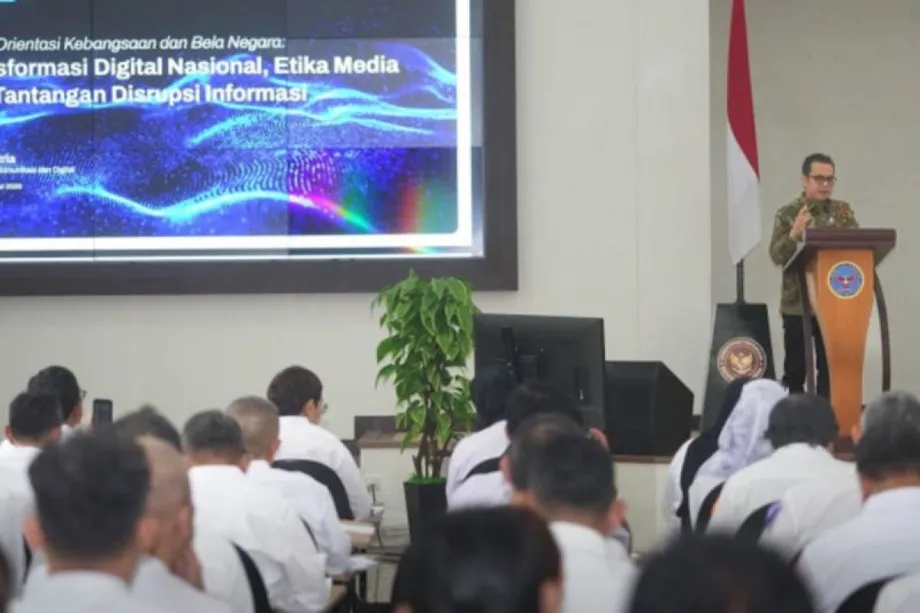
Santoso, chair of the Indonesian Payment System Association (ASPI), outlined the plans on October 14 at the 13th Indonesia Sharia Economic Festival in Jakarta. His timetable puts technical development and operational testing at the centre of the expansion: payment connections must work reliably before customers can use them.
ASPI's stated target for Saudi Arabia is operation in 2027, subject to system readiness and testing; an earlier account placed possible connectivity in 2026. For Hong Kong, Santoso described a possibility of activity before the end of 2026, while also including the territory among the connections expected to operate fully in 2027.
Bank Indonesia (BI) is pursuing those links as domestic adoption grows. Governor Destry Damayanti said QRIS had reached 67 million users, about one quarter of Indonesia's population. Transactions grew 67.2% in August 2026 compared with August 2025.
The expansion would extend a payment habit already familiar to millions of Indonesians into more destinations abroad. Saudi Arabia is a particular priority because of travel for Hajj and Umrah. Timor-Leste has the nearest specific testing milestone, while India's schedule depends on negotiations that have yet to produce an agreed implementation date.
What Paying Abroad With QRIS Means
QRIS stands for Quick Response Code Indonesian Standard. It provides a common standard for payments using QR codes, the square patterns that a phone can scan to identify a payment destination. A connection across borders allows participating payment services in different markets to work together.
Bank Indonesia Deputy Governor Filianingsih Hendarta described the practical benefit at the Lampung Financial Festival on September 5: Indonesians travelling to connected destinations can use their phones and available account balances for payments rather than first exchanging cash for those transactions.
China, South Korea, Thailand, Malaysia, Singapore and Japan are listed as the six existing connections for payments in both directions. Payments in both directions mean Indonesian customers can pay abroad through participating services, while visitors from connected markets can use participating services to pay in Indonesia.
The expansion depends on more than recognising a QR code. Payment providers need to exchange the right information, process the transaction and complete settlement, the movement of money between the institutions involved. Those requirements explain why agreements, testing and public operation appear as separate steps in the timetable.
Why Saudi Arabia Is a Priority
Saudi Arabia is being targeted for 2027 because Indonesian travel for Hajj and Umrah creates a practical use for payments through phones. Santoso pointed to the movement of people and their spending in the country when explaining ASPI's focus on that connection.
Technical development with partners in the Middle East is underway. Santoso said the Saudi connection would depend on system readiness and operational testing before a public launch. His October remarks expressed greater confidence in operation during 2027.
Filianingsih described the expected benefit for pilgrims as the ability to make purchases through a phone with sufficient funds, reducing the need to exchange cash for participating transactions. For travellers already accustomed to QRIS at home, the attraction is using a familiar payment method during their journey.
ASPI's target still requires the technical work and tests to be completed. Pilgrims planning travel before a confirmed launch will need to base their payment arrangements on the services actually available at the time. The proposed connection is aimed at making everyday spending easier once participating systems are ready.
Hong Kong Moves From Agreement to Technical Work
Bank Indonesia and the Hong Kong Monetary Authority (HKMA) signed a memorandum of understanding on September 24, 2026. BI Governor Destry Damayanti and HKMA Chief Executive Eddie Yue signed the agreement to strengthen cooperation on payments across borders using QR codes.
The agreement calls for dialogue on technical, operational and regulatory matters. It also provides for exploring interoperability, meaning that payment systems in the two markets would be able to communicate and process transactions together.
Hong Kong could enter testing during 2026, according to Santoso's October remarks. His comments also left open possible implementation by the end of the year, with full operation included in ASPI's plans for 2027. The schedule therefore has two stages to watch: whether testing begins before December ends, and when customers gain access.
BI's description of the agreement identifies faster, affordable, transparent and inclusive payments as goals. Technical discussions will determine how the connection works in practice, while regulatory discussions address the rules under which institutions in each market can provide the service.
Timor-Leste Has the Next Specific Testing Date
Bank Indonesia and Banco Central de Timor-Leste (BCTL) signed their memorandum of understanding on September 25, 2026, in Jakarta. Destry and BCTL Governor Hélder Lopes signed it during the Indonesia Digital Economy and Finance Festival and Indonesia Fintech Summit and Expo, known as FEKDI x IFSE 2026.
The agreement covers payment systems, settlement, digital financial innovation, information exchange and stronger relations between the two central banks. BI Communications Department Head Ramdan Denny Prakoso described it as the basis for developing payment connectivity between Indonesia and Timor-Leste, including exploring QRIS across borders.
ASPI hopes to begin a sandbox in November 2026. A sandbox is a controlled testing environment in which institutions can check how a service works before making it broadly available. Santoso said a smooth process could support a public launch in early 2027.
BI's September 5 description counted six connected countries; a subsequent account described Timor-Leste as the seventh after the September 25 agreement, while Santoso's October 14 timetable placed its sandbox in November and possible public operation in early 2027. For customers, the practical milestone is the start of a usable service following those tests.
Timor-Leste's development schedule is therefore more specific than India's: it has a signed agreement, a named testing month and a possible launch period. Each stage gives the institutions a chance to resolve operational issues before customers depend on the connection for purchases.
India's Negotiations Continue Without a Launch Date
India remains the least settled part of the expansion plan. Santoso said work towards the connection began more than two years ago, but negotiations over requirements and India's concerns have been difficult.
Santoso's description of development beginning more than two years earlier sits alongside his October explanation that the technical development itself had not yet begun comprehensively. He said discussions were still focused on requirements, demand conditions and matters India needed to consider internally.
Destry has also discussed the proposed connection with India's central bank. She said the meeting took place about a month before the September agreement with Timor-Leste, and pointed to tourism between Indonesia and India as a reason to make payments more convenient.
ASPI has not confirmed an implementation date for India. An earlier expectation of connection in 2027 remains subject to the unresolved negotiations. The immediate work is agreeing on the requirements needed to move into comprehensive technical development.
A Domestic Network of 67 Million Users
QRIS expansion abroad is taking place alongside a large domestic payment network. Filianingsih said on September 5 that QRIS had recorded 15 billion transactions through July 2026, with 45 million merchants accepting it and 67 million people using it.
She also listed 96 banks, 60 institutions outside banking and four switching companies supporting the service. Together, that is 160 organisations across those three categories. Switching companies help route payment information between participating institutions so that a transaction can reach the correct destination.
Destry said at a September 24 press conference that the 67 million users represented about one quarter of Indonesia's population. She described changing shopping habits, including a preference for QRIS over cash among customers making purchases at traditional markets.
Transaction growth of 67.2% in August compared with the same month a year earlier means that, for every 100 transactions in the earlier period, there were about 167 in the later one. The figure shows how quickly use was expanding as BI and ASPI pursued more international connections.
Filianingsih also recalled QRIS's role during COVID-19, when payments could continue without face to face contact. Around seven years after its introduction, the current expansion effort seeks to carry that established domestic payment method into more overseas transactions.
The Dates That Matter Next
September's central bank agreements and October's industry update establish the sequence for the next phase. Hong Kong and Timor-Leste have cooperation agreements in place, Saudi Arabia has technical development underway, and India remains in negotiations.
- September 5, 2026: Filianingsih outlined QRIS's domestic scale and six existing international connections at the Lampung Financial Festival.
- September 24, 2026: BI and HKMA signed their agreement on cooperation in payments across borders using QR codes.
- September 25, 2026: BI and BCTL signed their agreement covering payments, settlement and digital financial innovation.
- October 14, 2026: Santoso set out testing and implementation targets at the Indonesia Sharia Economic Festival in Jakarta.
- November 2026: ASPI targets sandbox testing with Timor-Leste.
- Late 2026: Hong Kong could reach testing or possible implementation.
- Early 2027: Timor-Leste could begin public operation if testing proceeds smoothly.
- 2027: ASPI targets Saudi operation and includes Hong Kong among the connections expected to operate fully.
November's proposed sandbox is the nearest dated milestone. Beyond it, the main task is completing tests and preparing systems for public use. That work will determine when the proposed convenience becomes available to travellers and businesses.
Key Points
- Saudi Arabia is targeted for QRIS operation in 2027, following technical development and operational testing.
- Hong Kong could reach testing or implementation by late 2026, with full operation also targeted for 2027.
- Timor-Leste's sandbox is planned for November 2026, with a possible public launch in early 2027.
- India's negotiations remain unresolved, and ASPI has not confirmed a launch date.
- BI reported 67 million QRIS users and transaction growth of 67.2% in August 2026 compared with August 2025.
- Saudi connectivity is intended to make payments easier for Indonesians travelling for Hajj and Umrah.