AI answers put news revenue and market access under scrutiny
Indonesia's competition regulator is examining whether digital platforms' control over news distribution, audience data and advertising could leave publishers increasingly dependent on companies that also use their journalism to generate AI answers. Competition commissioner Rhido Jusmadi warned that this concentration of control could strengthen platforms' market power while weakening publishers' ability to negotiate.
Contents
- AI answers put news revenue and market access under scrutiny
- How summaries can interrupt the publisher's business model
- A traffic warning with important limits
- Can publishers refuse AI use without losing search visibility?
- What KPPU needs before taking action
- Existing publisher rules meet concerns about compliance
- The policy work extends beyond traffic losses
- The timeline and the decisions still pending
- Key Points
The concern extends beyond falling website visits. When a platform decides which reporting audiences see, controls the data showing how they encounter it and sets commercial terms, publishers may have limited influence over the economic value of their own work. AI summaries add another pressure: readers can receive information without opening the article that supplied it.
The Indonesian Competition Commission, known as KPPU, is calling for greater transparency about news content use, ranking algorithms, referral data and commercial arrangements. It also wants meaningful negotiations between platforms and publishers. Enforcement remains conditional on sufficient evidence of a competition law violation, rather than on the existence of AI technology itself.
Two developments in 2026 give the debate a concrete institutional setting. KPPU signed a cooperation agreement with Indonesia's committee overseeing platform responsibilities for quality journalism on July 29. A separate account dated September 18 described concerns raised by the Indonesian Cyber Media Association, or AMSI, about AI Overviews and the consequences of refusing permission for AI content use.
How summaries can interrupt the publisher's business model
AI Overviews present generated summaries directly on a search results page. The commercial concern is that an answer can satisfy a reader before that person visits the publisher's website. This is commonly called a zero click search: the search produces useful information, but no visit to the underlying publication.
For a publisher that earns money from advertising on its pages, fewer visits can mean fewer opportunities to display advertisements. A summary may circulate information drawn from journalistic work without delivering the same audience or revenue that a conventional visit would bring. That explains why KPPU is looking at distribution and monetization together.
AMSI chair Wahyu Dhyatmika said the changing search pattern could substantially reduce traffic to news websites, increase operating costs and threaten media companies' business models. These are concerns about possible effects, not findings that a particular platform has broken the law. No quantified estimate of the operating cost increase was given.
The distinction matters because a decline in traffic, by itself, does not establish unlawful conduct. KPPU must determine whether platform behavior restricts competition, whether companies possess a position of dominance and whether the conduct being examined causes harm within the relevant market.
A traffic warning with important limits
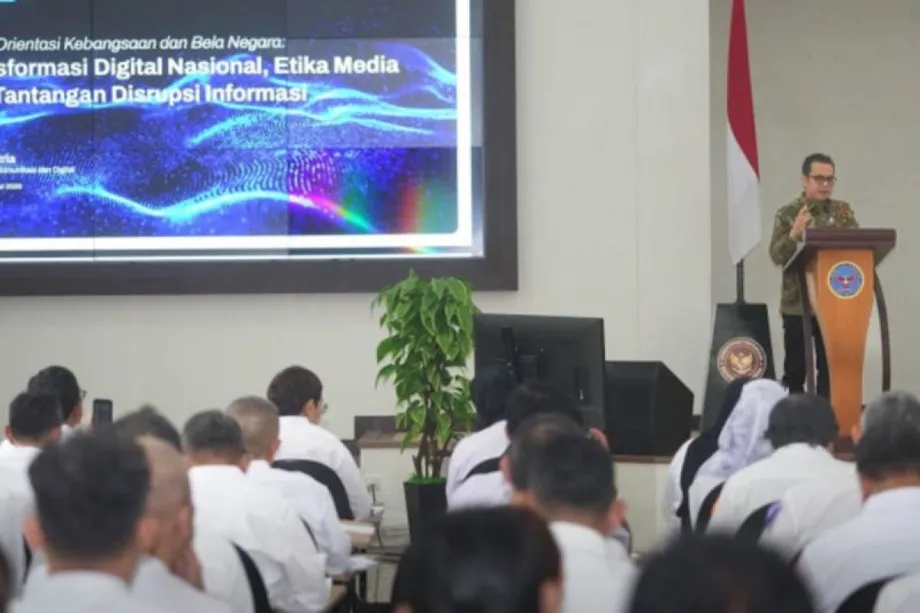
Deputy Minister of Communications and Digital Affairs Nezar Patria gave a separate warning at the 2026 Indonesian Journalists Association retreat. He said digital media traffic had fallen by more than 40 percent as audiences increasingly turned to AI platforms, search engines and automated news aggregation instead of original news websites.
That figure signals the scale of the concern, but its scope is not specified. Nezar did not identify the measurement period, the publications covered or whether the decline described Indonesian media, an international sample or another group. It therefore cannot be treated as a verified estimate of losses across Indonesia's entire publishing industry.
Nezar also referred to research by the Reuters Institute and the University of Oxford about declining optimism among media professionals. He did not name a specific report, preventing a direct connection between the traffic figure and a particular dataset.
Explaining how editorial control now shares space with platform decisions, Nezar described the forces shaping news distribution:
"Instead, it is also determined by platforms powered by artificial intelligence, which influence visibility, reach, and consumption patterns across global audiences," he said.
His warning places audience access at the center of the dispute. Publishing an article no longer guarantees that readers will encounter it through a direct relationship with the newsroom. Platforms can influence both whether it is seen and whether seeing its information produces a visit.
Can publishers refuse AI use without losing search visibility?
AMSI has asked KPPU to examine what happens when publishers opt out of having their content used by AI systems. According to the association, refusing that use can mean losing visibility in search results. This is an allegation that requires examination, not an established finding about every platform or every content control.
The competition issue is whether a publisher has a meaningful choice. Permission to use journalism in an AI product and access to ordinary search audiences are distinct commercial interests. If refusing one also restricts the other, a newsroom may face pressure to accept terms it would otherwise reject.
KPPU chair Gopprera Panggabean said the commission would examine whether the consequences of opting out discriminate against media companies or restrict their access. He asked AMSI to supply concrete data about changes in market structure and harm to the industry.
The precise controls, contractual terms and search effects will matter. The accounts do not identify which publishers exercised an opt out, how their visibility changed or how those changes were measured. Without that evidence, the concern can guide an investigation but cannot establish its outcome.
What KPPU needs before taking action
Gopprera said KPPU needs to assess the relevant market, the positions of the businesses operating within it and the possible harm. A relevant market is the set of products or services, and the geographic area, within which competition is being assessed. Defining it helps determine what alternatives publishers or customers actually have.
This makes the investigation more demanding than comparing website traffic before and after the introduction of AI summaries. The commission must connect the conduct under scrutiny to market power and competitive effects. Rhido's concerns about audience access, data, distribution and monetization identify several areas where that relationship could be examined.
KPPU has described two possible responses. Evidence indicating a violation could lead to enforcement. If the problem instead exposes a need for new rules, the commission could recommend policy changes to the government. Neither route has been announced as a completed decision.
AMSI also supports revising Law No. 5 of 1999 so that Indonesia's competition framework can address the business models of AI platforms operating across national borders. That is an advocacy position. No adopted amendment, legislative timetable or specific new provision is identified.
The agency's stated approach leaves room for technological innovation while testing whether commercial arrangements prevent other businesses from competing. Gopprera compared the challenge with earlier disruption involving transport applications, describing the need to balance new services with opportunities for other market participants.
Existing publisher rules meet concerns about compliance
Indonesia already has a policy framework addressing the relationship between platforms and journalism. Presidential Regulation No. 32 of 2024 establishes publisher rights rules and digital platform responsibilities intended to support quality journalism. Nezar pointed to it as a concrete government response to the pressures facing news organizations.
The regulation does not remove the separate need to establish a competition violation. Platform responsibilities under the journalism framework and KPPU's examination of market conduct are related, but they involve different questions: whether companies meet their obligations, and whether their behavior unlawfully restricts competition.
Suprapto Sastro Atmojo, chair of the Committee for Digital Platform Company Responsibility for Quality Journalism, known as KTP2JB, said the committee rated platform compliance with the regulation as low. He said companies had not fully carried out their responsibilities.
No numerical compliance score, list of assessed companies or detailed assessment method was given. The rating should therefore be understood as the committee's stated assessment, not a quantified measure of compliance across every platform.
The July 29 agreement between KPPU and KTP2JB, signed in Jakarta, is intended to strengthen coordination, data exchanges, studies and the execution of their respective duties. Suprapto said he wanted practical action supporting media sustainability, including KPPU assistance in monitoring platform compliance.
The policy work extends beyond traffic losses
Gopprera said platforms and AI affect how content is produced, distributed and used, as well as the economic value of journalistic work and the digital advertising market. His position is that AI should broaden access to information without narrowing the range of information sources or weakening the media businesses that produce it.
Nezar raised another dimension: technology companies' use of journalism to train and operate AI systems. That brings compensation and copyright into the discussion alongside search visibility. Permission to use content, payment for that use and the audience delivered back to publishers are separate matters, even when they arise in the same commercial relationship.
The government is drafting a National Artificial Intelligence Roadmap. Nezar said it aims to guide AI development and use in Indonesia while supporting cooperation between media organizations and platforms and protecting quality journalism. No publication deadline or detailed provisions were specified.
KPPU said media effects were a focus of its 2026 study, involving discussions with the Press Council and relevant government bodies. It is also comparing regulatory approaches in Australia, Canada, the European Union and the United States. Those comparisons are part of the study, not an announcement that Indonesia has selected any particular foreign model.
The timeline and the decisions still pending
The developments span an existing regulation, a cooperation agreement and requests for closer examination of AI search practices. The dated steps are:
- 2024: Presidential Regulation No. 32 of 2024 establishes publisher rights rules and responsibilities for digital platforms supporting quality journalism.
- July 29, 2026: KPPU and KTP2JB sign a cooperation agreement in Jakarta.
- September 18, 2026: An account of AMSI's concerns describes its request for scrutiny of AI Overviews, opt out consequences and potential abuse of dominance.
- During 2026: KPPU studies AI's effects on media through institutional discussions and international regulatory comparisons.
No date is specified for Nezar's retreat remarks beyond their occurrence on a Friday during the 2026 event. The September 18 date accompanies the account of AMSI's statement; it does not establish the exact date of the association's meeting with KPPU.
The next substantive step is evidence gathering. The commission has requested data from AMSI, while transparency over content use, rankings, referrals and commercial terms remains central to Rhido's warning. No formal violation finding, penalty, hearing date or deadline for the AI roadmap is identified.
Key Points
- KPPU warns that platform control over audiences, data, distribution and revenue could deepen publishers' dependence.
- AMSI wants scrutiny of AI summaries and claims that refusing AI content use can reduce search visibility.
- Nezar Patria cited a traffic decline of more than 40 percent, without specifying its timeframe or coverage.
- KPPU requires concrete evidence before determining whether competition law has been violated.
- A July 29, 2026 cooperation agreement supports coordination with the committee overseeing platform responsibilities for journalism.
- Indonesia is drafting an AI roadmap, but no release deadline or enforcement outcome is specified.