A quantum security experiment moves closer to ordinary telecom networks
A Chinese research team has demonstrated quantum key distribution with a noise tolerance of 425 kilohertz and tested transmission alongside conventional optical communications over 150 kilometers of shared fiber. The work addresses a practical obstacle to quantum secure networks: keeping fragile quantum signals usable when they encounter the much stronger light signals carried by telecommunications equipment.
Contents
- A quantum security experiment moves closer to ordinary telecom networks
- What is being secured?
- Why background light is a serious obstacle
- How advantage distillation changes the calculation
- What the performance figures actually show
- Thirty decibels of loss and 150 kilometers of shared fiber
- Publication dates and the limits of the deployment claim
- What this changes for practical quantum communication
- Key Points
The team, led by academician Guo Guangcan at the University of Science and Technology of China, worked with the Henan Provincial Key Laboratory of Quantum Information and Quantum Cryptography and Nanjing University of Posts and Telecommunications. Researchers involved include Han Zhengfu, Chen Wei, Yin Zhenqiang and Wang Shuang.
Their Physical Review Letters paper, published by the American Physical Society on September 30, 2026, describes a system operating at a repetition frequency of 2.5 gigahertz. It reports secure key generation under noise counts of 425 kilohertz, four orders of magnitude above the tolerance of isolated systems, and a secure key rate at the kilobits per second level under 30 decibels of channel attenuation.
Those results measure different aspects of performance. The repetition frequency describes how rapidly the system operates; the noise count describes unwanted detection events; and the secure key rate measures the usable secret key produced after processing. Keeping those figures separate is essential to understanding what the experiment demonstrates.
The central advance combines a method called advantage distillation with rapid signal encoding and compact semiconductor detectors. Instead of relying exclusively on shielding quantum signals from noise, the researchers also changed how noisy key data are processed.
What is being secured?
Quantum key distribution, or QKD, allows two parties to establish a shared secret key using quantum states. That key can then support encrypted communication. The experiment concerns the distribution of keys, rather than the transmission of ordinary messages at the system's 2.5 gigahertz operating frequency.
The attraction is information theoretic security: under the protocol's assumptions, secrecy does not depend on an attacker being unable to solve a difficult mathematical problem. Quantum signals and the checks performed during key generation allow the participants to assess whether they can extract a secret key from their measurements.
This study uses measurement device independent QKD, commonly shortened to MDI QKD. Its security does not require trusting the measurement equipment. That matters because detectors can otherwise introduce weaknesses into a practical implementation, even when the underlying quantum protocol is sound.
The term does not mean that every part of the network can be ignored or treated as secure. Signal preparation and the other assumptions of the protocol still matter. The specific benefit is removing the need to trust the measurement devices while maintaining secret key generation in a challenging optical environment.
Why background light is a serious obstacle
Quantum communication uses extremely weak optical signals. Conventional telecommunications equipment carries much stronger signals, which can generate additional light through nonlinear effects in the fiber. That unwanted light can contribute detection events that do not represent the intended quantum information.
The resulting problem is more than a noisy connection. If the measurement data contain too many errors or too little useful correlation, the participants may be unable to extract a secure key. A system can therefore operate optically without delivering usable secret material.
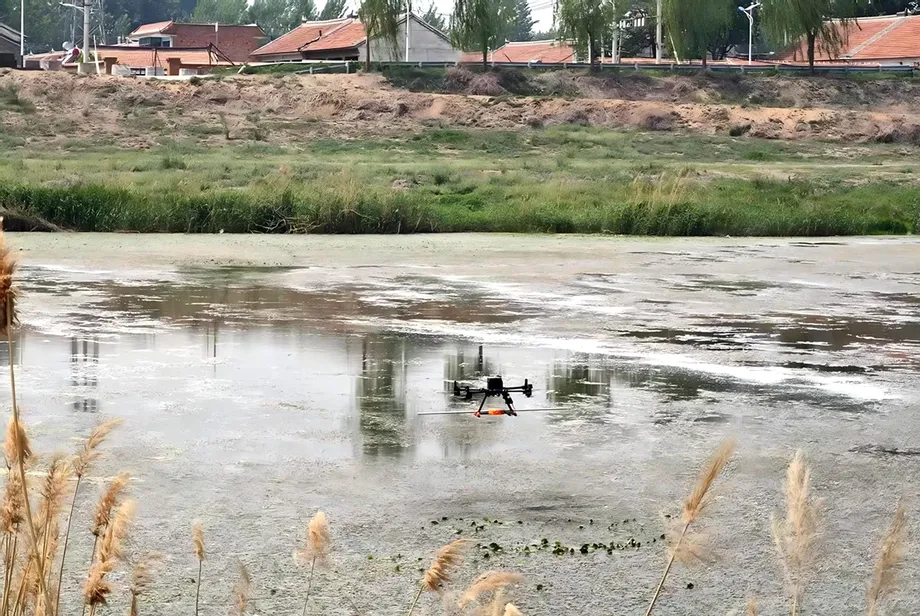
Free space links face a related challenge from a different source. Satellite connections and platforms such as drones can encounter strong ambient light, including sunlight. The research identifies these environments as motivations for greater noise tolerance, although the reported 150 kilometer coexistence experiment used optical fiber.
Filtering helps reject unwanted light, but it has limits. Filters can also discard useful signals and add equipment complexity. The team's approach tackles the problem at both the physical and data processing levels, combining low noise detection with a method intended to extract secret keys from noisier measurement records.
How advantage distillation changes the calculation
Advantage distillation processes raw key data in groups to improve the correlations that can be used for secret key generation. Raw data are the initial records produced before the participants finish the checks and processing needed to establish a usable secret key.
The principle is selective processing. Rather than treating every raw key element as equally useful, the method uses relationships within groups to retain data that are better suited to producing a secret key. It cannot make arbitrary noise harmless, but it can extend the conditions under which useful secrecy is recoverable.
The researchers developed a finite key length treatment of advantage distillation for their system. This addresses an important practical distinction: experiments collect a limited amount of data, while idealized calculations may assume arbitrarily large data sets. Security and performance must account for the statistical uncertainty associated with a finite collection.
The reported first is the practical implementation of MDI QKD based on advantage distillation, supported by this theoretical work and the experimental hardware. It is not a claim that advantage distillation itself was invented in this study.
The hardware matters because data processing cannot replace the need for usable measurements. Rapid parallel encoding supplies quantum signals at high speed, while compact semiconductor single photon detectors support low noise detection without the bulky, resource intensive detection equipment discussed in the paper.
What the performance figures actually show
The system's 425 kilohertz noise threshold corresponds to 425,000 noise counts per second. The paper reports that secure keys can still be generated under that noise load. This is a detection count rate, not a measure of optical power or the speed at which messages can be encrypted.
Four orders of magnitude means a factor of 10,000. The study's comparison therefore describes a very large increase in noise tolerance relative to the isolated systems used as its reference. It should not be read as a universal performance ratio against every existing QKD installation.
The reported improvement in secure key generation capability is two orders of magnitude, or a factor of 100. That is a separate result from the 10,000 times increase in noise tolerance. One describes the ability to produce secure keys; the other describes the amount of noise the system can withstand.
At 2.5 gigahertz, the system operates at 2.5 billion repetitions per second. Its final secure key output is much lower because optical losses, successful measurement events and security processing determine how much usable secret information survives. The paper reports output at the kilobits per second level under 30 decibels of attenuation, without giving an exact rate in its abstract.
Thirty decibels of loss and 150 kilometers of shared fiber
A channel attenuation of 30 decibels means optical power is reduced by a factor of 1,000, leaving one thousandth of the input power after the stated loss. Producing secure keys at the kilobits per second level under that condition demonstrates operation despite substantial signal loss.
The separate coexistence demonstration connected the quantum system to existing optical communications equipment provided by China Unicom. Quantum key distribution and conventional optical communications were transmitted over the same fiber across 150 kilometers, a distance relevant to connections between cities.
Sharing fiber is a practical test because a quantum network cannot always depend on having an optical route reserved exclusively for weak quantum signals. Coexistence brings the system into contact with the equipment and stronger light associated with conventional communications.
The published abstract and the experiment descriptions establish the noise threshold, the key rate under attenuation and the shared fiber distance. They do not establish that the maximum noise load, the stated attenuation benchmark and the 150 kilometer transmission all occurred simultaneously under one identical operating condition. Treating them as separate reported benchmarks avoids overstating the result.
Publication dates and the limits of the deployment claim
The research appeared in Physical Review Letters before a subsequent account of the collaboration and the China Unicom experiment. The publication sequence is:
- September 30, 2026: The paper was published in Physical Review Letters, reporting the 2.5 gigahertz system, 425 kilohertz noise tolerance and secure key generation under 30 decibels of attenuation.
- October 9, 2026: A further account described the participating institutions and the 150 kilometer shared fiber demonstration using China Unicom equipment.
The combination of compact detection, high operating speed, tolerance of background noise and shared fiber transmission addresses several practical requirements together. The academic paper presents the system as a solution for deploying quantum secure networks with strong security, useful key output and resilience to environmental noise.
That conclusion is broader than proof of routine commercial service. The reported details do not give equipment costs, continuous operating time, maintenance requirements or a schedule for network deployment. They also do not establish a satellite or drone demonstration. Those environments motivate the work, but the concrete network coexistence result concerns fiber.
What this changes for practical quantum communication
The most useful connection between the results is that noise tolerance and compatibility with existing infrastructure were addressed in the same research program. A fast system confined to an isolated environment solves a different problem from one able to share fiber with ordinary communications equipment.
The study also shows why the operating frequency alone is an incomplete measure of progress. Its practical value depends on whether that speed can translate into secure keys after loss, unwanted detections and finite data processing are taken into account. The advantage distillation method helps connect rapid hardware operation to useful output under noise.
The 150 kilometer test supplies a concrete example of where those advances may matter: communication between cities using shared optical infrastructure. The next assessment of deployment readiness would need the operating details absent from these results, including sustained performance and costs. No deployment deadline or further test date is specified.
Key Points
- The University of Science and Technology of China and its partners demonstrated MDI QKD using advantage distillation and compact semiconductor detectors.
- The system operates at 2.5 gigahertz and generates secure keys under 425 kilohertz of noise counts.
- Reported noise tolerance increased by four orders of magnitude, equivalent to a factor of 10,000 against the stated reference systems.
- The paper reports a secure key rate at the kilobits per second level under 30 decibels of channel attenuation.
- A separate demonstration used China Unicom optical communications equipment for shared fiber transmission over 150 kilometers.
- The results do not establish routine commercial operation, a deployment timetable or a demonstrated satellite link.