Five Greenhouses and an Unfulfilled Employment Promise
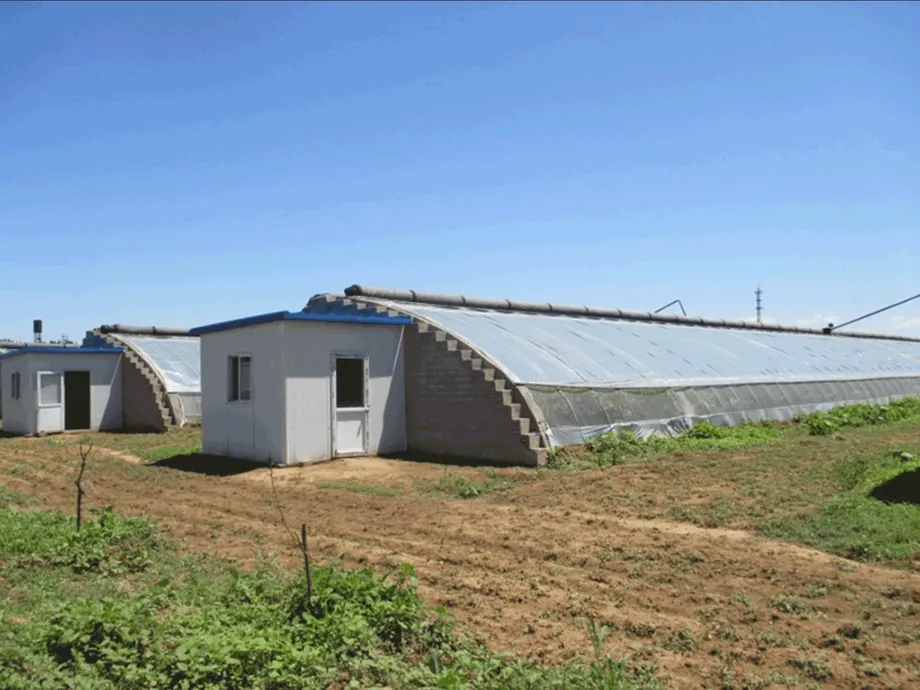
An agricultural park promoted with a planned investment of 120 million yuan and a promise of jobs for 300 villagers has stalled in Tongliao, Inner Mongolia. By late September 2026, the site in Qianjiadian Town, Horqin District, contained just three steel frame greenhouses and two insulated greenhouses. Plastic covering on the insulated structures was torn, and no construction workers were present.
Contents
- Five Greenhouses and an Unfulfilled Employment Promise
- What the Park Was Supposed to Deliver
- A Timeline That Extends Beyond the Launch Ceremony
- How Contractors Were Drawn Into the Project
- The Price Gap Needs a Proper Audit
- A New Company Carrying a Much Larger Promise
- The Cost to Villagers Is More Than Unpaid Bills
- Other Cases Show Why the Financing Model Matters
- What Authorities Have Promised and What Is Unresolved
- Key Points
The project had been launched at a ceremony in Kongjia Village on March 23, 2025. Its developer, Inner Mongolia Yuanfeng Agricultural Development Co., Ltd., was registered just nine days earlier, on March 14, with registered capital of 5.5 million yuan. Reports describe a company without an actual operating team or the capacity needed to deliver the development.
On October 12, 2026, Horqin District announced a special working group to investigate and address the abandoned project, following a television investigation broadcast the previous evening. The district also disclosed that the main people implicated in suspected contract fraud had already been detained in early April 2026.
Authorities said the principal facts of the suspected offenses had been established and the case transferred to prosecutors for review for prosecution. That is a step toward possible criminal charges, not a conviction. The announcement also changes the chronology: the criminal investigation was underway months before the abandoned greenhouses received wider public attention.
What the Park Was Supposed to Deliver
The proposed Smart and Efficient Agricultural Industrial Park covered 760 mu, approximately 50.7 hectares. Project information published on the district government website projected annual profit of 30 million yuan and employment for 300 nearby villagers. Its recorded construction period ran from March 2025 to March 2026.
Those figures described ambitions, not achieved results. The projected annual profit was equivalent to one quarter of the announced investment, but there is no disclosed operating record showing that the park generated that income. Villagers said the promised employment had not materialized.
The development was also a renovation project rather than the first agricultural use of the land. Vegetable greenhouses had been built there in 2010, then gradually abandoned after poor business performance. The new venture was intended to revive an already struggling site.
That history matters to the assessment of the failure. Completing construction would have been only one part of the task. The project also needed a viable business capable of producing crops, maintaining the facilities and paying workers. No detailed recovery plan addressing those operating needs has been disclosed.
A Timeline That Extends Beyond the Launch Ceremony
The description of a project abandoned after one year captures its missed construction deadline, but the September inspection came roughly 18 months after the launch. By then, the planned completion date had passed by about six months.
The sequence also separates the criminal case from the later public response:
- 2010: Vegetable greenhouses were established on the site and later fell into disuse following poor business performance.
- March 14, 2025: Yuanfeng was registered with capital of 5.5 million yuan.
- March 23, 2025: The park's launch ceremony took place in Kongjia Village.
- February 2026: The district's account places the suspected contract fraud matter at this point in the chronology.
- March 2026: The recorded construction period was due to end.
- Early April 2026: Police criminally detained the main people implicated in the case.
- Late September 2026: A visit found five greenhouse structures, damaged covering and no construction workers.
- October 11 and 12, 2026: The abandoned project received national attention, followed by the district's announcement of a special working group.
The February reference in the district's account is not accompanied by a detailed explanation of the procedural step taken that month. The April detentions and subsequent transfer to prosecutors are more explicit. No trial date or court judgment has been disclosed.
How Contractors Were Drawn Into the Project
Accounts from construction personnel describe a model in which the developer recruited teams online to supply both labor and materials. Yuanfeng advertised payment of 408 yuan per square meter, with each greenhouse covering about 5,000 square meters and settlement promised after every two greenhouses.
At those advertised dimensions and rates, one greenhouse represented approximately 2.04 million yuan of work. A pair represented about 4.08 million yuan. These are calculations from the recruitment terms, not verified amounts owed under individual contracts, but they show the scale of exposure a construction team could face before its first promised settlement.
Contractors were also required to purchase materials at designated locations. Construction personnel said teams advanced their own money, while the developer failed to settle bills as agreed. Work eventually stopped, and those responsible for the project became unreachable to villagers and local officials.
One construction participant said the company itself had put no money into the work. That remains a participant's account rather than a published forensic finding. Authorities have identified suspected contract fraud, but have not released a detailed explanation of payments, supplier relationships or the amount lost in Tongliao.
The Price Gap Needs a Proper Audit
The advertised rate of 408 yuan per square meter sits well above the cost described by construction personnel. One participant put normal procurement costs at a little over 100 yuan per square meter, with labor and profit adding roughly another ten or so yuan.
That comparison is a warning sign, but it is not a complete cost audit. The advertised contract price and the participant's rough estimate may not cover precisely the same equipment, specifications or responsibilities. The exact market benchmark therefore cannot be established from those figures alone.
The combination of a high quoted price, mandatory purchasing locations and delayed payment deserves scrutiny because it links the contractor's expected revenue to purchases made before reimbursement. Investigators would need contracts, invoices and bank records to determine whether suppliers were connected to the developer and where the advanced money went.
The distinction between planned investment and actual loss is equally important. The 120 million yuan figure was the announced size of the development. It does not establish that 120 million yuan was spent, stolen or drawn from public funds. No verified total for contractor losses or government expenditure has been disclosed.
A New Company Carrying a Much Larger Promise
Yuanfeng's registered capital of 5.5 million yuan amounted to about 4.6 percent of the park's announced 120 million yuan investment. Put another way, the proposed development was approximately 21.8 times the company's registered capital.
Registered capital is not the same as cash available in a bank account. It also does not, by itself, determine whether a company can undertake a large project. A developer may obtain outside financing or work with experienced partners. What matters is whether those resources exist and can be verified.
Here, the capital gap was accompanied by the company's very recent formation and reports that it lacked an operating team and suitable construction capacity. Those details make the approval and selection process a central part of the investigation, rather than treating the failure simply as a contractor payment dispute.
The public account does not establish exactly how Yuanfeng secured its role, whether a competitive tender took place or which financing checks were completed. Allegations of collusion or improper dealings should not be treated as findings without evidence. The immediate accountability task is to establish who approved the arrangement, what they checked and how progress was monitored.
The Cost to Villagers Is More Than Unpaid Bills
For nearby households, the park's most tangible promise was employment close to home. The projected 300 jobs offered the prospect of income without having to leave the area. Villagers instead described little construction activity after the launch ceremony and no delivery of the employment pledge.
The late September inspection found no signs that the insulated greenhouses had been used. Torn covering and an empty construction site are consistent with an unfinished development, but they do not provide a precise measure of lost wages, agricultural output or the cost of restoring the structures.
The land's earlier decline makes the current failure particularly consequential. A site that had already struggled to sustain greenhouse operations was offered a second start, then left idle again. Recovery therefore needs to address both the condition of the assets and the business arrangements that would make them productive.
Authorities have promised to reactivate assets connected with the case. That could help preserve value, but it is not yet a commitment to reopen the park on a specified date. No new operator, repair budget, employment schedule or arrangement for compensating affected contractors has been announced.
Other Cases Show Why the Financing Model Matters
The Tongliao investigation also drew attention to a vegetable greenhouse development in Zhouying Town, Zaozhuang, Shandong, which had reportedly been stalled for three or four years. The disclosed information does not establish that its legal circumstances or financing arrangements were identical to those in Tongliao.
A separate case disclosed by the People's Procuratorate of Xinyi in Jiangsu provides a more specific comparison. An agricultural company fabricated a government supported project supposedly worth 160 million yuan and obtained 8 million yuan in advance payments from nine construction companies.
In that case, the money extracted was 5 percent of the fictitious project's advertised value. The comparison shows why a large headline investment can be persuasive even when contractors, rather than the developer, supply the money needed to begin work.
The Jiangsu loss figure must not be transferred to Tongliao. What connects the accounts is the risk created when construction businesses advance substantial funds on the strength of a project's presentation and promised future settlement. Site offices, supervision offices and construction departments were reportedly set up in Tongliao, giving teams an appearance of organization that did not guarantee payment.
What Authorities Have Promised and What Is Unresolved
Tongliao's municipal party committee and government ordered verification and handling of the matter after the October 11 broadcast. Horqin District's special working group said it would accelerate case handling, reactivate assets involved, inspect agricultural projects and carry out corrective action.
Those commitments address both the suspected crime and the wider administration of agricultural developments. They do not yet explain why the project remained abandoned after the April detentions, or what steps were taken during the interval before the September inspection.
The case also illustrates the difference between supporting modern agriculture and verifying an individual developer. Central No. 1 documents had called for modern protected agriculture for four consecutive years. These annual policy documents set national priorities, but policy support does not certify a company's finances, construction capacity or payment promises.
Practical safeguards proposed in response include checking real staff and comparable completed projects, independently reviewing costs and releasing money against verified construction milestones. These are recommendations, not measures confirmed as implemented in Tongliao. The decisive next disclosures will be the amount lost, the movement of funds, any failures by responsible officials and a workable plan for the remaining assets. No public deadline for those findings has been announced.
Key Points
- The park was promoted with planned investment of 120 million yuan, annual profit of 30 million yuan and jobs for 300 villagers.
- By late September 2026, only three steel frame greenhouses and two insulated greenhouses were present, with no construction workers on site.
- Yuanfeng was registered nine days before the March 23, 2025 launch ceremony, with registered capital of 5.5 million yuan.
- Contractors were recruited at 408 yuan per square meter, required to use designated purchasing locations and promised settlement after two greenhouses.
- The main suspects were detained in April 2026, and the case has been transferred to prosecutors for review for prosecution.
- A special working group has promised asset recovery and wider inspections, but verified losses, a reopening timetable and court dates have not been disclosed.