A 48 Hour Response and Human Review for Account Bans
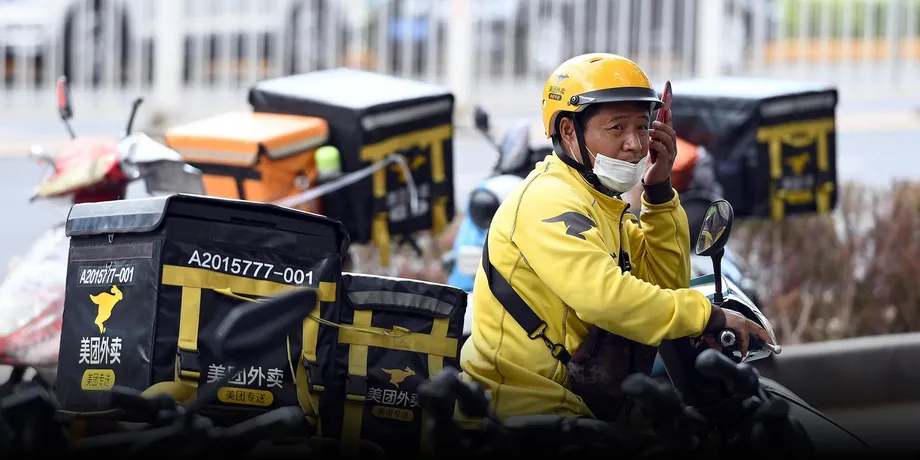
China's proposed labor rules would require platform companies to respond personally within 48 hours when workers challenge pay, working hours, performance assessments or account bans. The 54 article proposal, drafted by seven central government departments and released by the Ministry of Human Resources and Social Security on October 8, would also prevent algorithms alone from making decisions that seriously harm workers' interests.
Contents
- A 48 Hour Response and Human Review for Account Bans
- Who Would Be Covered?
- Why the Worker Counts Differ
- Minimum Pay Would Account for Work Costs
- Rest and Protection During Dangerous Weather
- Limits on Algorithmic Management
- Outsourcing Would Not Erase Responsibility
- Complaints, Records and Remedies
- From Earlier Guidance to Proposed Rules
- Key Points
The Measures on the Protection of the Rights and Interests of Workers in New Forms of Employment, Draft for Comments, is open for public feedback until November 8. If adopted, it would be China's first departmental regulation to bring workers managed by companies, but whose arrangements do not fully qualify as employment relationships, within the protection of the labor legal system.
That distinction is central to the proposal. A delivery rider or driver may work under a platform's instructions, payment rules and performance targets without being recognized as a conventional employee. The draft seeks to establish basic protections for these managed workers without treating every person earning money through an app as an employee.
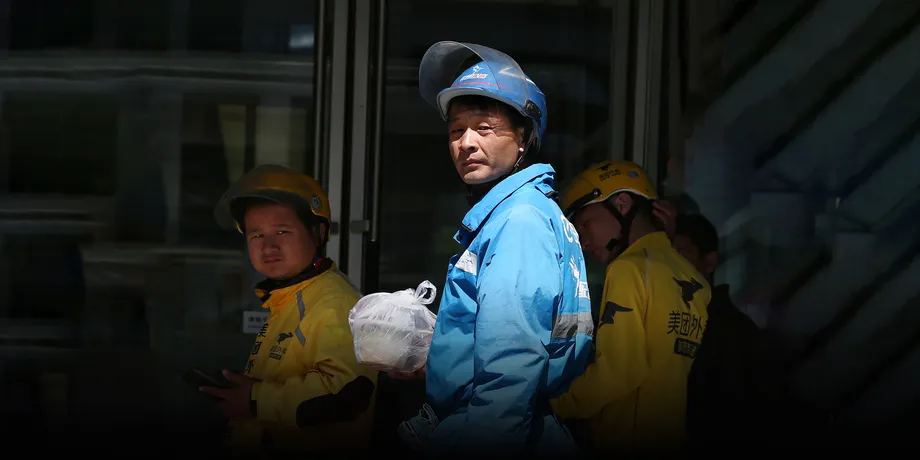
The proposal reaches beyond delivery riders to include drivers providing passenger and freight services, livestreamers and other platform workers. It addresses minimum earnings, rest, dangerous weather, social insurance, personal information, written agreements and access to remedies.
These are proposed requirements, not rules already in force. The consultation deadline is the next specified milestone; no adoption date or commencement date has been announced in the reports describing the draft.
Who Would Be Covered?
The draft divides platform work into three categories, with different legal arrangements for each. The dividing line is how work is organized and managed, rather than simply whether someone uses an app to earn money.
Workers whose arrangements meet the legal criteria for an employment relationship would remain covered by labor laws and regulations. Companies would have to sign labor contracts with them. The draft does not make a new written work agreement a substitute for a labor contract where an employment relationship actually exists.
A second category covers workers who do not fully meet those criteria but whose labor is organized through platform rules and instructions. They would receive written work agreements setting out matters including pay, labor protections and responsibility for breaching the agreement. Where a platform and a partner business jointly manage a worker, all three parties would sign an agreement defining their responsibilities.
The third category comprises people who independently operate businesses or provide freelance services through internet platforms on their own terms. The proposed measures would not apply to them.
Wang Tianyu, a researcher at the Chinese Academy of Social Sciences' Institute of Law, described the extension of protection to managed workers outside a conventional employment relationship as the draft's biggest breakthrough. Shen Jianfeng, a professor at the Central University of Finance and Economics' law school, identified unclear agreements and uncertainty about which business is responsible as major causes of disputes.
Why the Worker Counts Differ
The scale of the affected workforce is substantial, although reports use different figures. Several put the number of people working through online platforms or engaged in new forms of employment at approximately 84 million. Another describes the proposal as protections for 80 million gig workers. The reports do not explain the difference between those two counts.
A much larger projection, attributed to the China New Employment Research Center, puts flexible employment at 320 million people in the year of the proposal. That category includes people relying on internet platforms, but is broader than platform work alone. The 320 million projection should therefore not be presented as the number directly covered by the draft.
Using 84 million and 320 million, the smaller figure is about 26% of the larger one. This is a comparison of the reported totals, not a precise workforce share: one is an approximate count of platform or new forms of employment workers, while the other is a projection for a broader category.
Actual coverage would also depend on the draft's legal distinctions. An independently operating business owner and a driver subject to a platform's labor management could both earn money through apps, yet fall into different categories under the proposal.
Minimum Pay Would Account for Work Costs
The proposed pay floor would be tied to the minimum wage where the worker performs the work. It would account for the costs of production equipment or tools that workers provide themselves, rather than allowing those costs to count toward satisfying the minimum wage requirement.
That provision matters because a payment received through an app is not necessarily the same as earnings available to the worker. Someone supplying equipment to perform the job incurs costs that a headline payment figure can conceal. The draft seeks to prevent those costs from being treated as wages when checking compliance with the minimum.
Companies would have to pay remuneration in full and on time. Settlement and payment periods could not exceed one month, and workers would be able to withdraw earnings according to the agreed schedule without fees.
The draft would also restrict abusive fines and deductions, encourage positive incentives, and require reasonable pay above the normal rate for work on statutory public holidays. It does not establish a single nationwide wage amount in the accounts describing its provisions; the minimum would follow the applicable local standard.
Other basic protections include equal access to work and freedom to choose employment. Companies could not impose hiring conditions based on ethnicity, gender or religion, retain workers' identity documents, or charge fees beyond reasonable equipment deposits or rental payments.
Rest and Protection During Dangerous Weather
Platforms would have to set reasonable daily and weekly limits on working time and make their maximum hours public. They would also have to provide appropriate rest after four consecutive hours of work. The descriptions of the draft do not specify a universal duration for that break.
The proposal links working time to the way platforms manage performance. Companies would have to avoid targets and incentives that encourage excessive work, rather than relying only on a formal hours limit while rewarding workers for exceeding it.
For people working outdoors, the draft would require protection during severe weather and prohibit forcing workers into unsafe outdoor work. It also addresses subsidies for work in high temperatures and duties relating to occupational safety and health.
Companies would be required to participate in occupational injury protection programs, while the draft clarifies social insurance responsibilities. These provisions build on the expansion of occupational injury insurance for gig workers in July, rather than marking the first attempt to address coverage.
The proposed framework also includes vocational training, personal information protection and collective consultation. Together, these provisions extend the focus beyond the amount paid for an individual order to the conditions under which platform work is performed.
Limits on Algorithmic Management
Algorithms are the automated rules and calculations that platforms use to allocate tasks, assess performance and determine payments. For workers, those systems can function much like a manager: they influence which jobs appear, what the jobs pay and whether access to work continues.
The draft would require companies to explain the basic principles and main operating mechanisms of algorithms affecting workers' rights. Platforms would also have to explain relevant rules to authorities, prevent discrimination in order and payment allocation, and consult workers when developing labor rules.
One specific restriction would prohibit the use of markedly abnormal data as general performance benchmarks. The practical distinction is between an exceptional result and a reasonable standard for everyone: an unusual performance should not automatically become the target against which all workers are assessed.
Decisions affecting major interests, including stopping order assignments, banning accounts or demanding large compensation payments, would require human involvement rather than solely automated decision making. One account describes an emergency exception allowing an algorithm to act first, followed promptly by human review.
Huang Kun, a researcher at the Chinese Academy of Labor and Social Security Sciences, explained that the proposed algorithm oversight is confined to labor rules and matters connected with workers' rights. It is not described as a general review of every technological system a platform operates. The draft would give trade unions a supervisory role and relevant government departments authority to examine the reasonableness of algorithms within that scope.
Outsourcing Would Not Erase Responsibility
The draft seeks to prevent platforms from escaping labor obligations through layers of subcontracting, contractor agreements or pressure on workers to register as individual businesses. This makes the distinction between genuine independent work and managed work especially important: a registration label would not be a permitted device for avoiding responsibility.
Platforms would bear primary responsibility for selecting and supervising partner businesses involved in employing or managing workers. If a partner lacks lawful operating qualifications, the platform could bear responsibility as the employing entity.
Wang Tianyu, the Chinese Academy of Social Sciences law researcher, said the draft combines broader worker protection with measures against avoidance of employment duties:
"At the same time, it establishes mechanisms to hold companies accountable and prevent them from evading employment obligations, such as through subcontracting or inducing workers to register as individual businesses," he said.
The proposed agreements and accountability rules address different parts of the same problem. Written agreements would identify responsibilities at the start of work, while the rules on partner selection, supervision and subcontracting would make it harder to shift those responsibilities away afterward.
Workers in legal disputes would be able to name both the platform and its partner business as parties. That does not mean both would automatically be liable in every case, but it would allow the dispute process to examine their respective roles.
Complaints, Records and Remedies
Inside companies, the draft would require regular communication and appeal mechanisms. When workers object to remuneration, working time, assessments or account bans, businesses would have to investigate and address the complaint, with a human response within 48 hours. That response deadline should not be confused with a guarantee that every dispute will be finally resolved within two days.
Outside the company, workers could complain to the responsible authorities where they work, seek mediation, apply for arbitration or bring litigation as permitted by law. The proposal also provides for trade union supervision and legal assistance.
Platforms would have to preserve work records that workers can view and download for at least two years after they leave. Access to those records could help workers document the activity behind a disputed payment, assessment or restriction on work.
Violations would carry responsibilities and penalties under existing legislation. Depending on the circumstances, employers could have to pay outstanding wages, overtime pay or economic compensation. Where earnings fall below the applicable minimum wage, they would have to make up the shortfall.
Some platforms say they already have consultation structures. Taobao Flash Shopping says it operates a nationwide rider representative system and holds regional and network consultation meetings. Didi says it established a Driver Ecosystem Development Committee to hear drivers' concerns. Those company statements describe existing arrangements, not proof that the proposed requirements have been met.
From Earlier Guidance to Proposed Rules
The proposal follows several stages of policy development. Its distinctive step would be to use departmental rules to protect managed platform workers whose arrangements do not fully qualify as conventional employment relationships.
- 2021: China introduced guidelines clarifying platform responsibilities for employment, remuneration, social security and workplace safety.
- 2024: Authorities issued related guiding cases concerning workers in new forms of employment.
- July: Occupational injury insurance for gig workers was expanded.
- October 8: The Ministry of Human Resources and Social Security released the draft measures for public consultation.
- November 8: The public comment period is scheduled to close.
Members of the public can submit comments through the ministry's website, by post or by email. The consultation leaves room for changes before any final rules are adopted.
Several practical details are not settled in the descriptions of the proposal, including the final implementation timetable and how particular working arrangements will be classified in disputed cases. The central proposed shift is nevertheless specific: companies exercising labor management would face defined obligations even where workers fall outside the conventional employment category.
Key Points
- The 54 article draft was prepared by seven central government departments, with public comments open until November 8.
- It would extend basic labor protections to managed platform workers who do not fully qualify as conventional employees.
- Minimum pay would account for workers' own equipment costs, and payment periods could not exceed one month.
- Workers would receive appropriate rest after four consecutive hours and protection against unsafe work in severe weather.
- Major decisions affecting workers would require human involvement, with human responses to specified complaints within 48 hours.
- Platforms could not evade responsibilities through subcontracting layers or induced business registration.
- The measures remain a proposal, with no announced adoption or commencement date.