Nearly P199 billion in spending shifts face scrutiny
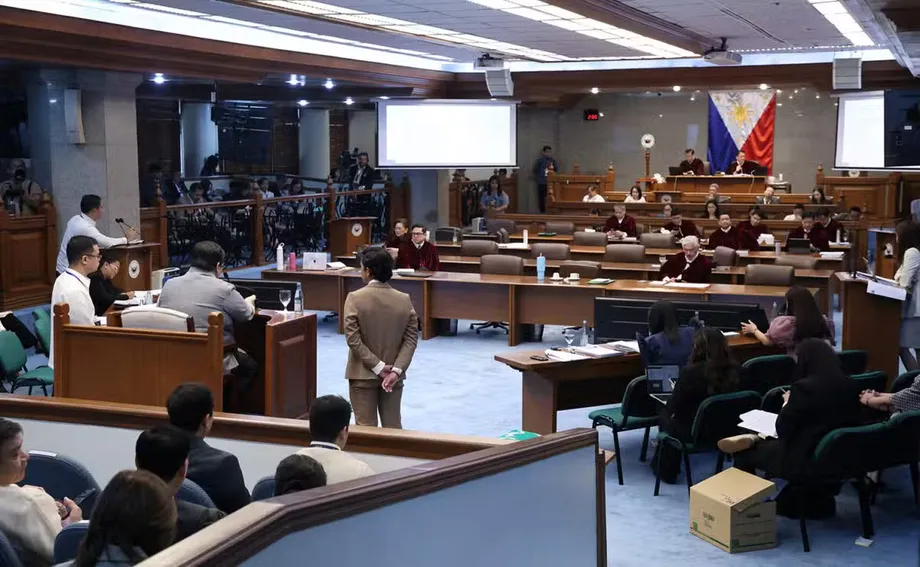
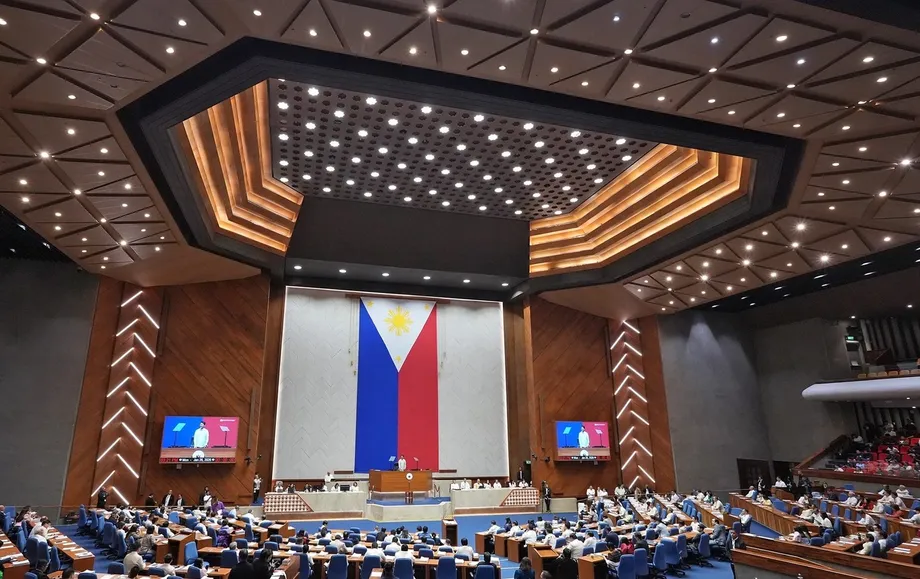
The Philippine House of Representatives approved the proposed P7.2 trillion national budget for 2027 on third and final reading on Monday, October 12, 2026, sending a spending plan to the Senate amid disputes over increased assistance funds, cuts to major transport projects and the disclosure of congressional amendments.
Contents
- Nearly P199 billion in spending shifts face scrutiny
- What the executive proposed before the amendments
- How the bill reached the final vote
- Why P116 billion and P199 billion are different
- Assistance grows, but the categories differ
- Railways and foreign assisted projects lose funding
- District allocations draw political objections
- House leaders cite readiness, critics demand disclosure
- What the Senate must now examine
- Key Points
House Bill No. 10858 passed with 13 lawmakers voting against it and one abstaining. Reports differ on the affirmative tally: two accounts give 281 votes in favor, while another gives 282. The discrepancy does not change the outcome, but the precise count requires confirmation from the official voting record.
The larger dispute concerns how much money the House moved. Publicly presented amendments totaled about P116.3 billion, while a technical assessment by People's Budget Coalition coconvener Adolfo Jose "AJ" Montesa identified P198.9 billion in increases across 123 budget lines, matched by reductions across 87 others.
That assessment points to a change in spending priorities rather than an expansion of the P7.2 trillion ceiling. Funds moved toward local infrastructure and assistance programs while appropriations for foreign assisted projects, disaster response and some health services fell. Critics argue that the resulting allocations could strengthen political patronage before the 2028 national elections. House leaders reject allegations that the amendments constitute pork barrel spending.
Among the lawmakers opposing the bill were ACT Teachers Representative Antonio Tinio, Mamamayang Liberal Representative Leila de Lima, Navotas Representative Toby Tiangco and Kamanggagawa Representative Elijah San Fernando. De Lima linked her opposition to the timing and direction of the assistance increases.
"This budget is not people-centered. It is election-centered," De Lima said.
What the executive proposed before the amendments
The Department of Budget and Management's budget submission statement describes the executive proposal as equivalent to 21.7% of gross domestic product and 6% larger than the 2026 budget. It records the start of congressional consideration, not the House's final approval.
Social services received P2.456 trillion in the proposal, while economic services received P1.833 trillion. The Build Better More infrastructure program was assigned P1.467 trillion, or 4.4% of GDP. Basic education, through the Department of Education, had the largest departmental allocation at P976 billion.
DBM also reported a consolidated health sector budget of P1.06 trillion, equivalent to 3.19% of GDP, compared with 2.68% in the current year. That broad sector figure should not be confused with the narrower P353.8 billion allocation listed for the Department of Health, specialty hospitals and PhilHealth.
Much of the budget increase was already committed to obligations including the National Tax Allotment for local governments and salary adjustments under Executive Order No. 64. The distinction matters: growth in the total budget does not mean Congress has the same amount available for entirely new programs.
The government's proposed fiscal framework assumed a deficit of 5.1% of GDP and a debt to GDP ratio of 64.6%. A deficit means spending exceeds revenue, requiring financing. These were planning figures presented during deliberations, not measured outcomes for 2027.
How the bill reached the final vote
The House completed final passage 62 days after receiving the executive spending plan, according to the account of its approval. The central transparency dispute developed during the amendment stage, after the general debate and before the final vote.
- August 11, 2026: DBM dated its publication of the 2027 Budget of Expenditures and Sources of Financing.
- September 15: The House debated the budget's general principles and provisions.
- October 1: The Budget Amendments Review Subcommittee presented proposed spending changes during a livestream.
- October 7: The House adopted amendments by acclamation and, according to several accounts, approved the bill on second reading.
- October 9: Further watchdog findings circulated ahead of the final vote.
- October 12: The House approved the bill on third and final reading.
One account places second reading on Thursday rather than Wednesday, October 7. Most accounts identify Wednesday as the date. The official DBM statement dated September 15 concerns the earlier debate and does not resolve that discrepancy.
Why P116 billion and P199 billion are different
Montesa's assessment found changes to 210 of 8,835 lines in the budget workbook. The P198.9 billion in increases exceeded the publicly presented P116.32 billion figure by approximately P82.58 billion. Critics described this as about P80 billion in adjustments beyond the disclosed amount.
The Department of Public Works and Highways accounts for much of the difference. The subcommittee presented an increase of approximately P11.49 billion for the department. The watchdog assessment instead counted about P98 billion added to some DPWH lines and about P86 billion removed from others.
These figures measure different things. Gross additions count increases before subtracting reductions elsewhere within an agency. A net increase subtracts those reductions. Large internal changes can therefore sit behind a relatively modest rise in the department's total allocation.
The assessment put DPWH's revised budget at P654.1 billion, compared with P643.95 billion in the executive proposal. Those figures produce an increase of about 1.58%, close to one reported estimate of 1.57%; another account gives 1.7%. The small change in the total does not capture the scale of the redistribution within it.
Four increases dominated the watchdog's findings: P42.7 billion for multipurpose buildings, P29.2 billion for access roads, P24.8 billion for crisis assistance and P24 billion for medical assistance. Together they amount to P120.7 billion, approximately 61% of the P198.9 billion in additions.
Assistance grows, but the categories differ
The account of final passage lists an additional P25 billion for the Department of Social Welfare and Development's Assistance to Individuals in Crisis Situations, or AICS, and P24.96 billion for the Department of Health's Medical Assistance for Indigent and Financially Incapacitated Patients, or MAIFIP.
The watchdog assessment gives slightly different increases: P24.8 billion for AICS and P24 billion for MAIFIP. A separate analysis puts their revised allocations at P58.1 billion and P48.2 billion respectively. The differences should not be treated as interchangeable without a reconciliation of the budget lines.
The coalition identified P69.5 billion in additions to programs it considered vulnerable to patronage, including P10 billion for Presidential Assistance to Farmers and Fisherfolk and P4.7 billion for the labor department's Tulong Panghanapbuhay sa Ating Disadvantaged Workers employment program.
That P69.5 billion estimate differs from the coalition's earlier classification of P99.41 billion, or approximately 85% of the publicly presented P116 billion amendments, as red flags. The earlier category also included infrastructure insertions. Neither estimate establishes that the entire amount is corrupt spending.
The concern is about access and discretion. Assistance can meet urgent needs, but critics argue that programs become instruments of patronage when beneficiaries depend on political referrals rather than transparent eligibility rules. Ibon Foundation also criticized the proposal as an austerity budget, arguing that increases in assistance did not compensate for cuts to essential public services.
Other additions included P8.12 billion for education, P20.86 billion for agriculture, P2.35 billion for public transit service contracting and the EDSA busway, and P500 million for school safety. The transit items reportedly had no funding in the initial proposal. One assessment identified 38 previously unfunded lines receiving P18.2 billion in total.
Railways and foreign assisted projects lose funding
The coalition identified a P130 billion reduction in appropriations for foreign assisted projects, from P414.8 billion to P284.8 billion. That is a reduction of approximately 31.3%, accounting for roughly 65% of the P198.9 billion removed from other budget lines.
Within DPWH, foreign assisted allocations reportedly fell from P117.7 billion to P44.7 billion, a decline of P73 billion, or approximately 62%. Reported cuts included P53.5 billion for bypass roads, alongside reductions affecting railways and flood mitigation projects.
Reports disagree on the railway breakdown. One assessment gives P34.7 billion as the combined reduction for the Metro Manila Subway and North South Commuter Railway. Another lists P19.7 billion for the subway and P34.7 billion for the commuter railway separately. A further account gives P42.8 billion in reductions for rail and transport loans. These figures cannot all describe the same scope and need clarification.
The coalition warned that reducing appropriations does not cancel signed loan agreements. It could instead delay construction or the withdrawal of loan proceeds, while leaving the government exposed to commitment fees on undrawn balances and possible penalties. The financial effect depends on the individual contracts, schedules and funding requirements; no quantified estimate of those costs has been established here.
DBM's expenditure and financing tables list foreign assisted projects by agency and creditor, infrastructure spending by region, debt service and a reconciliation of the proposed appropriations. These are the relevant executive budget categories against which congressional changes can be checked.
District allocations draw political objections
Tinio said his office identified 6,212 new infrastructure projects worth about P180 billion, bringing DPWH line items to 16,720. This measures newly inserted projects and should not be equated automatically with Montesa's P198.9 billion estimate of increases across the budget workbook.
The coalition found that DPWH's central office lost P42 billion while 158 district engineering offices gained a combined P54 billion. It also identified P54.6 billion removed from the network development program and P7.4 billion from flood infrastructure, alongside P74.1 billion added to the department's convergence program.
Tinio's figures put the Ilocos Norte 1st District Engineering Office allocation at P4.79 billion after a P4.38 billion increase. The office serves the congressional district of House Majority Leader Ferdinand Alexander "Sandro" Marcos. Other large total allocations included Nueva Ecija 1st at P3.91 billion, Bulacan 2nd at P3.5 billion, Isabela 4th at P3.1 billion and Metro Manila 3rd at P2.99 billion.
Separate rankings of increases placed Davao de Oro 1st at P1.68 billion, Misamis Occidental 2nd at P1.65 billion, South Cotabato 2nd at P1.58 billion and Isabela 4th at P1.52 billion. Tinio contrasted these with reported allocations of about P40 million each for Davao City's engineering offices.
One account assigns P53.7 billion to the Ilocos Norte office. That conflicts with the P4.79 billion total and with another account identifying P53.7 billion as the increase across district engineering offices. The larger figure cannot reliably be attributed to Ilocos Norte alone.
Tinio called for publication of the complete list of new projects, their locations and known proponents. Unequal district allocations warrant examination, but the differences alone do not establish political favoritism without information about project costs, needs and readiness.
House leaders cite readiness, critics demand disclosure
House Deputy Speaker Janette Garin denied the pork allegations and said infrastructure amendments considered implementation readiness, spending utilization, land access problems and design requirements. She said some major river basin flood projects still awaited designs and other preparatory work that could take between one and a half and two years.
Her explanation presents a different account of the cuts: money was shifted away from projects unable to proceed promptly toward urgent projects awaiting funding. Whether that explanation accounts for each contested amendment requires project details rather than agency totals alone.
A separate dispute concerns House Rule 9, Section 28-D, which requires a detailed report identifying realignments, modifications and their proponent lawmakers. Appropriations chair Mikaela Angela Suansing said amendments would be incorporated directly into the bill rather than issued in a separate report.
Sorsogon Representative Manuel "Wowo" Fortes Jr. defended the process, saying the committee had complied with the reporting requirement and provided the revised measure to lawmakers.
"The amendments, as approved by the BARSc, were incorporated to the substitute text of House Bill No. 10858 under Committee Report No. 638, as submitted to the plenary," Fortes said.
Tinio disputed whether the revised bill could substitute for the required report. San Fernando said the roughly 4,000 page measure reached lawmakers' offices at 2 a.m., leaving inadequate review time. He also questioned the October 1 meeting, whose livestream reportedly began at 5:07 p.m. rather than the announced 1 p.m. Tiangco sought disclosure of the programs cut to finance increases.
DBM's September budget statement had said amendment reports would include allocations by government agency and legislative district. It also described a P58.53 billion Local Government Support Fund for which local governments, rather than politicians or intermediaries, would request assistance directly.
What the Senate must now examine
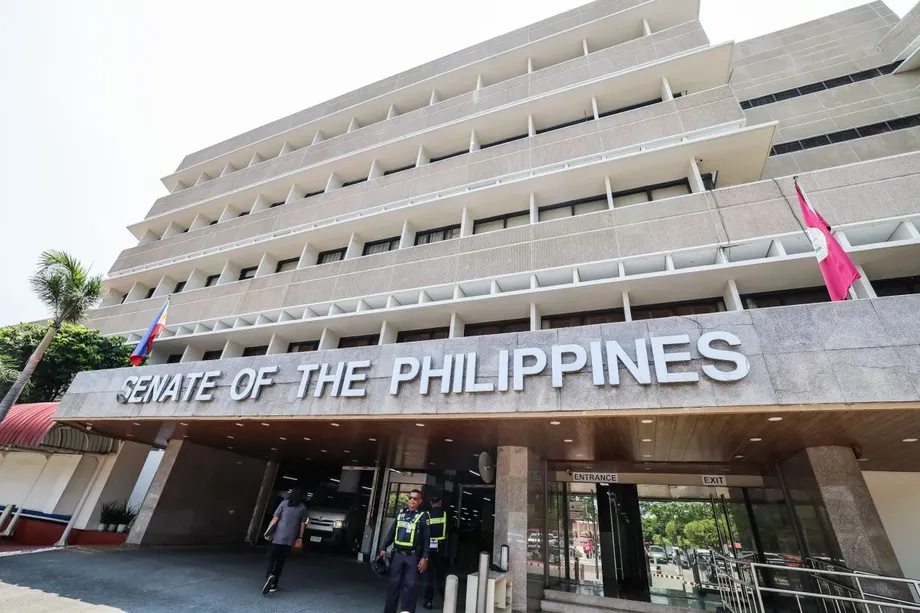
The bill now proceeds to Senate review. Differences between the chambers' versions must subsequently be reconciled through a joint congressional panel before the final measure goes to President Ferdinand Marcos Jr. No specific Senate vote, reconciliation deadline or signing date has been announced in these accounts.
Public finance specialist Zy-za Nadine Suzara cited a broader estimate of P541.4 billion in alleged pork allocations, exceeding the reported P407 billion increase in the total budget by P134.4 billion. That is a classification of spending across the proposed budget, not a finding that the House added P541.4 billion through its amendments. Its scope differs from both the P198.9 billion realignment estimate and the assistance figures.
Several service cuts also warrant scrutiny: reported reductions include P10 billion from the Pension and Gratuity Fund, P9.5 billion from the calamity fund, P4.9 billion from family health and immunization commodities, and P4.5 billion from health facilities. Increased medical assistance does not replace vaccines or hospital infrastructure, because those programs serve different needs.
University of Makati public administration professor Ederson Tapia cautioned that Congress can legally revise spending without those changes automatically constituting corruption. He distinguished that authority from the quality of the decisions behind it.
"The important distinction is between the legality of a realignment and the integrity of the process behind it," Tapia said.
Unprogrammed appropriations remain another point to clarify. DBM proposed P111.984 billion, about 1.6% of the expenditure program, as conditional spending authority rather than automatically available money. Its submission statement included funding cover for foreign assisted projects among the purposes. A separate analysis argues that affected projects lack standby coverage. The final provisions and release conditions will determine whether such coverage exists.
The Senate's immediate task is therefore more specific than deciding whether assistance or infrastructure deserves funding. It must examine which projects and services lost money, why replacement allocations were chosen, whether proponents and beneficiaries are disclosed, and whether contracted projects retain enough funding to proceed.
Key Points
- The House passed the P7.2 trillion 2027 budget on October 12, with 13 opposing votes and one abstention; affirmative vote counts differ between 281 and 282.
- A coalition assessment identified P198.9 billion in additions and matching reductions, compared with about P116.3 billion publicly presented.
- Assistance programs and local infrastructure gained funding, while foreign assisted appropriations reportedly fell by P130 billion.
- Railway cuts and some district allocation figures remain inconsistent across reports.
- House leaders cite project readiness and compliance with reporting rules; critics seek detailed amendments and project lists.
- The Senate must review the bill before congressional reconciliation and presidential consideration.