Billions in new investment, mounting costs for Halmahera
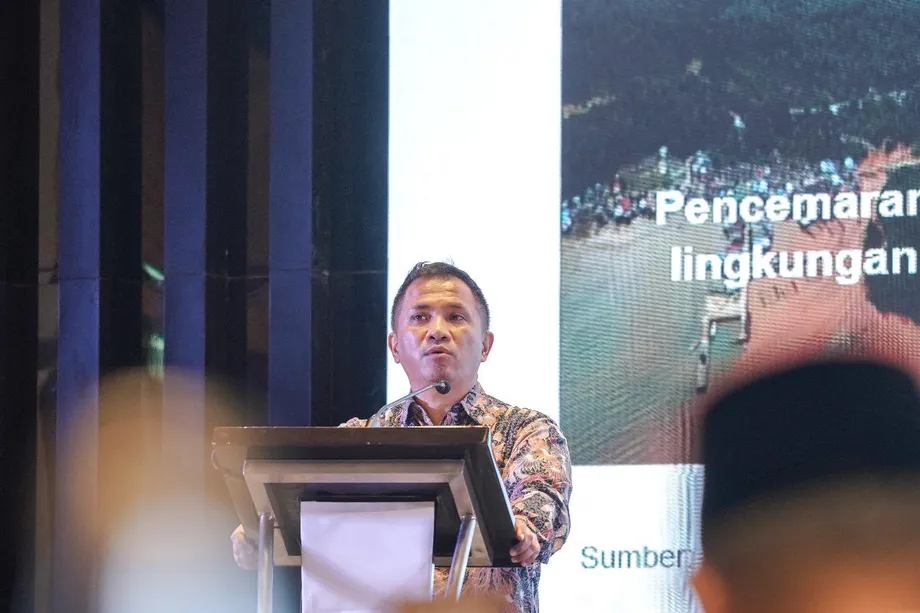
A US$10.2 billion industrial expansion at Indonesia Weda Bay Industrial Park is bringing more nickel processing, aluminium production and battery manufacturing to a coastline already struggling with forest loss, polluted waterways and flooding. President Prabowo Subianto launched the package on October 8, 2026, as residents and campaigners called for an independent assessment of what further development would mean for Halmahera.
Contents
- Billions in new investment, mounting costs for Halmahera
- How the export ban transformed the coast
- What residents and forest mapping reveal
- Fishing moves farther from home
- Floods and water supplies face growing pressure
- Health warnings need wider investigation
- Jobs come with living costs and safety concerns
- Coal undercuts the clean energy promise
- A national roadmap meets Halmahera's constraints
- Who pays for industrial growth?
- Key Points
The Indonesian government announcement confirms 11 nickel downstreaming projects with total investment of US$10.2 billion, or about 180 trillion rupiah. Prabowo said four industrial projects had entered commercial operation and seven new projects were starting construction, alongside a first export of electric vehicle batteries. Investment and Downstreaming Minister and Danantara CEO Rosan Perkasa Roeslani put investment in the four completed projects at US$3.4 billion.
The four commercialised projects cover mixed hydroxide precipitate (MHP) from PT Blue Sparking Energy, nickel manganese cobalt (NMC) and lithium ferro phosphate (LFP) battery materials from PT REPT Batero Indonesia, electrolytic aluminium from PT Pioneer Aluminium Industries, and electric heavy-equipment components from PT XCMG Indonesia Manufacturing.
The seven projects starting construction are PT Guang Ching Nickel Cobalt, PT Inno Prima Material, PT Tinci Materials Indonesia, PT Weda Bay Aluminium, PT Bintang Karya Aluminium, PT Flat Solar Energy Indonesia and PT Foton Guangqing Motor Indonesia. Rosan described the new lineup as including nickel-based battery materials, electric vehicle battery separators and electronics, aluminium products, electric heavy equipment and photovoltaic glass for the solar energy industry.
The economic stakes are substantial. Indonesia's investment minister says the park employs around 117,000 workers and nickel processing accounts for about half of North Maluku's economy. The expansion includes companies involved in machinery, trucks, batteries, solar glass and chemicals, extending the industrial chain beyond ore processing.
The environmental stakes are equally concrete. A 2025 study of 46 Weda Bay residents found about 47 percent had blood mercury above the researchers' reference value, while about 32 percent had arsenic above their reference value. Those findings warrant further investigation, but do not by themselves establish the source of exposure or the prevalence across the wider population.
For Abdullah Ambar, a 64-year-old fisherman in Lelilef Sawai, the transformation has reached his doorstep. After decades working on foreign fishing vessels, he returned to build a fleet of three boats. Each could carry up to half a tonne of skipjack tuna and mackerel from a 12-hour trip. He now describes noise, difficult fishing, uncomfortable water and rising prices where his family has lived for generations.
How the export ban transformed the coast
Indonesia's policy of downstreaming means processing minerals domestically instead of exporting raw ore. Partial nickel export restrictions began in 2014, with exceptions for companies committing to local refineries. A full raw nickel ore export ban followed in 2020, helping draw capital into smelters and battery material plants.
Indonesian Nickel Industry Forum figures show ore production rising from 7.8 million tonnes in 2015 to 265 million tonnes in 2025, about 34 times the earlier volume. Refineries increased from six to 79 over the same period, with another 90 under construction. Processed nickel output rose from 368,000 tonnes to 2.2 million tonnes. Ore tonnage and processed nickel output are different measures and should not be treated as interchangeable.
Across Halmahera, mining concessions cover about 2,560 square kilometres, roughly one-seventh of the island. Around Weda Bay, industrial facilities have spread across 11 kilometres of shoreline, turning Lelilef, Kobe, Gemaf and Sagea into settlements of dormitories, hostels, busy roads and industrial lighting.
Reports differ on the industrial park's early chronology. One account places the start of a processing facility in 2018. Climate Rights International records construction beginning in 2018 and IWIP operations starting in 2020. The distinction may concern different facilities, but the dates should not be merged into a single opening date.
- 2014: Indonesia introduced partial restrictions on raw nickel exports.
- 2018: Construction began on IWIP, according to Climate Rights International.
- 2020: The full nickel ore export ban took effect, and CRI dates IWIP's operational start to this year.
- July 21, 2024: A major flood struck communities around Weda Bay.
- June 12, 2025: Bappenas and WRI Indonesia launched the national nickel decarbonisation roadmap.
- October 8, 2026: Prabowo launched the new industrial investment package.
What residents and forest mapping reveal
Climate Rights International's January 2024 Nickel Unearthed report draws on field research conducted from February to September 2023. Researchers interviewed 45 residents, including 39 who identified as Indigenous: 20 Sawai and 19 Tobelo people.
Working with the University of California, Berkeley's AI Climate Initiative, CRI estimated that at least 5,331 hectares of forest had been cleared within Halmahera nickel concessions. The lost forests had stored approximately 2.04 million tonnes of carbon dioxide equivalent, a measure that expresses different greenhouse gases on a common scale.
Separate figures attributed to the environmental organisation Walhi put forest loss in mining areas above villages affected by the July 2024 floods at 7,167 hectares. Central Halmahera had about 109,000 hectares of forest in 2016, while 26 mining permits cover 57,627 hectares. These figures concern different boundaries and assessment periods from CRI's analysis, so they cannot be added together.
CRI also documented allegations of land acquisition without consent, inadequate compensation and intimidation. Maklon Lobe, a Sawai farmer from Gemaf, said IWIP representatives cleared his trees and blocked access to his land in 2018. Despite a certificate covering 38 hectares, he said he eventually received payment for only eight hectares. These are allegations recorded through interviews, not court findings.
The report identifies Tsingshan Holding Group, Huayou Cobalt and Zhenshi Holding Group as IWIP shareholders. It also discusses facilities proposed at the time by Eramet and BASF, and by POSCO. Those proposals are a record of plans described in January 2024, not confirmation that every facility subsequently proceeded.
Fishing moves farther from home
Abdullah recalls a coast where people could find fish just metres from shore. He says cargo traffic has driven away migratory fish, while anchors have damaged coral. Rain now carries red and orange soil from cleared hills into the bay.
Max Sigoro, a Sawai fisherman from Gemaf interviewed by CRI on February 8, 2023, described how degraded waters and restricted access changed his work:
We used to row our boats close to the shore to fish, now we have to go further out. It's more dangerous to go further out and we have to calculate the tides. It's also more expensive.
The ecological mechanisms extend beyond Weda Bay. In a June 12, 2026 IPB University statement about Buli Bay in East Halmahera, fisheries and marine sciences lecturer Dr Meutia Ismet explained that clearing land makes topsoil easier for rainfall to carry into coastal waters.
Suspended sediment blocks sunlight and can reduce oxygen as organic material decomposes. Sediment covering coral disrupts the algae that help sustain it, potentially causing stress, bleaching and death. Seagrass and mangroves can also suffer. Her explanation identifies risks relevant to coastal mining, but is not a measurement of Weda Bay's water conditions.
Meutia also warned that metals such as nickel, iron, manganese and cadmium can accumulate in marine organisms and pass through the food chain. She recommended regular testing of water, sediment and metals, stronger sediment controls, revegetation, and support for affected communities.
Floods and water supplies face growing pressure
The July 2024 floods reportedly displaced 1,726 people and killed one. Residents believed company operations and forest clearance worsened the disaster. In Kobe, 65-year-old Adrian Patapata says flooding existed before mining, but was previously confined to a few areas beside the river and rarely rose above knee level.
He describes more recent water reaching his chest. During an August flood, for which the year is not specified, red and orange sludge submerged his neighbourhood for six days. His family slept on makeshift platforms in the rafters, and repeated inundation left his cocoa, cassava and banana plants weak and unproductive.
Sagea residents fear damage to the forests feeding Sagea Lake and the Boki Maruru cave and underground river system. Save Sagea spokesman Mardani Harid says deterioration in neighbouring villages shows why those water sources need protection. A September 2024 investigation reported heavy metal contamination in the Sagea River, allegedly connected to upstream nickel activity, and salty groundwater in Lelilef.
Later reporting on 2025 Nexus3 Foundation tests describes chromium and nickel above safe levels in the Ake Jira and Ake Sagea rivers, and arsenic in bay fish at 20 times the level recorded in 2007. The comparison indicates a reported increase, but does not alone establish whether every fish sample exceeded a food safety limit.
The study's river assessment used class 1 water standards for Ake Jira because local communities use it as a source of drinking and clean water. Its 2024 results for biochemical oxygen demand (BOD5) and chemical oxygen demand (COD) exceeded class 1 thresholds and fell within class 3 standards, suitable for uses such as freshwater fish farming, livestock and agricultural irrigation.
Indonesia's environment ministry reported in July 2025 that PT Weda Bay Nickel had opened about 3,099 hectares through 2024. It identified approximately 2,791 hectares with low water retention capacity and called for faster rehabilitation. The ministry also said PT Huafei Nickel Cobalt produces more than 3.4 million tonnes of hazardous tailings annually. Tailings are processing residues, and storage near surface drainage creates a risk of contaminated runoff if containment fails.
Health warnings need wider investigation
The 2025 Nexus3 Foundation and Tadulako University study used reference values of 9 micrograms per litre for blood mercury and 12 micrograms per litre for arsenic. Its 46 respondents provide evidence of possible exposure requiring follow-up, rather than a representative survey of all Weda Bay residents.
Released on May 26, 2025, the study drew on fieldwork conducted in July 2024 around Weda Bay in Central Halmahera, North Maluku. According to the Nexus3 Foundation summary, blood samples came from IWIP workers, fishers' families, farmers and local health-centre staff and were tested for six metals: arsenic, mercury, nickel, cadmium, thallium and lead. Residents who were not IWIP workers had higher blood mercury and arsenic concentrations than workers. Interviews recorded average seafood consumption of two to six portions in the two days before blood sampling.
Nexus3 and Walhi North Maluku also randomly collected 16 samples of fish caught by Weda Bay fishers. All tested positive for mercury and arsenic in their flesh. Mercury concentrations ranged from 0.02 to 0.28 milligrams per kilogram, with the highest finding in barracuda, while arsenic ranged from 0.43 to 3.03 milligrams per kilogram. The highest arsenic result was in a sorihi fish caught by a Gemaf fisher. The summary cites WHO fish limits of 0.5 milligrams per kilogram for mercury and 2 milligrams per kilogram for arsenic: the reported mercury range was below that limit, while the arsenic range extended above it.
The comparison with 2007 baseline data from the Weda Bay Nickel environmental impact assessment found that the lowest fish arsenic concentration measured in 2024 was 20 times higher than the earlier level. The lowest chromium result among two Nexus3 fish samples was 13 times higher than the maximum in the 2007 baseline. The available summary does not include the full study, detailed sampling protocols or an explanation of how the blood reference values were selected.
Separately, figures attributed to Lelilef Waibulan health centre record 813 acute respiratory infection cases between January and August 2026. Environmental dust and industrial emissions were identified as possible contributors, but the case count does not establish that industry caused all or any particular case.
CRI's January 2024 report similarly recorded residents' concerns about respiratory and skin problems while acknowledging that studies directly attributing those illnesses to IWIP activities were lacking. It also said residents could not readily access public air and water quality information from the park or government.
Meutia's academic warning identifies potential consequences of prolonged exposure to high metal concentrations, including skin and neurological disorders, reduced kidney function and cancer risk. These are possible health effects, not diagnoses of Halmahera residents. Establishing exposure routes, concentrations and causes requires environmental testing and clinical assessment.
The burden is not confined to Halmahera. CRI's separate report, Busy Surviving: Women on Indonesia's Nickel Frontier, documents disproportionate health, livelihood and cultural impacts on women near and downstream of operations in Southeast and Central Sulawesi. It provides a comparison across Indonesia's nickel regions, not a direct study of women in Weda Bay.
Jobs come with living costs and safety concerns
Employment has attracted workers from across Indonesia, including Ambon and Manado. Yet job totals do not reveal wages after housing and transport expenses, working conditions, or how much income remains within nearby communities.
A Conflict Resolution Unit account describes the experience of Mirna, a pseudonym used for a former IWIP worker. She reported monthly earnings of about 6 million rupiah, with pay tied closely to attendance. Rental rooms outside company dormitories can cost around 1.5 million rupiah a month, equivalent to a quarter of that reported wage before other expenses.
Mirna described strict security, drone surveillance, restrictions on visitors and movement, and possible salary deductions for rule violations. She also recounted long hours, holiday shifts and reports of fatal accidents and exhaustion. These remain worker testimony, not a verified accident register or an independent finding about every facility in the park.
Mirna said she continued working during illness because absence meant losing income. National health insurance covered subsequent treatment. Residents and workers also described cloudy, unpleasant-smelling well water, industrial dust and unreliable electricity outside the company complex.
The earlier estimate of 80,000 Indonesian workers across four Weda Bay villages, plus thousands from China, differs from the later figure of approximately 117,000 park workers. Differences in timing and geographic coverage prevent a reliable calculation of workforce growth.
Coal undercuts the clean energy promise
Nickel is used in stainless steel and in some electric vehicle battery chemistries, where it supports greater energy storage and driving range. Indonesia's expansion therefore serves several markets, not just electric cars. Its environmental performance depends heavily on how ore is processed and the electricity supplying that processing.
A June 2025 Bappenas paper puts coal's share of electricity used for Indonesian nickel processing at 97 percent. The industry consumed about 100 billion kilowatt-hours in 2023. It estimated average emissions of 93 tonnes of carbon dioxide equivalent for each tonne of battery grade nickel produced.
Published estimates of Weda Bay's coal fleet differ. CRI's January 2024 report described at least five plants built and twelve ultimately planned, with estimated total capacity of 3.78 gigawatts. Later reporting describes eleven operating and three under construction. A coalition cites Global Energy Monitor data for fourteen units totalling 4,540 megawatts. Another account describes a six-gigawatt coal facility. These figures reflect different dates or definitions and are not a single verified capacity total.
Indonesia's share of global nickel supply also varies across accounts. The original estimate is about 40 percent, CRI cites 48 percent of global demand in 2022, and Bappenas describes Indonesia as supplying 60 percent. Those percentages should not be treated as equivalent observations for the same year.
The central problem is less ambiguous: captive power plants, built to supply factories rather than the public grid, dominate the industry's electricity. Cleaner vehicle technology does not automatically mean cleaner mineral production.
A national roadmap meets Halmahera's constraints
Bappenas and WRI Indonesia launched the national decarbonisation roadmap on June 12, 2025. Its development began in early 2024 and involved more than 30 mining and smelting companies, 15 ministries and agencies, and academics.
Leonardo A. A. T. Sambodo, Bappenas deputy for food, natural resources and the environment, described its target:
This roadmap targets an emissions reduction of up to 81 percent in the nickel industry by 2045, in line with Indonesia's commitment to achieving Net Zero Emissions before 2060.
WRI Indonesia estimates that emissions could instead rise by as much as 86 percent by 2045 without intervention. The roadmap recommends 47.3 gigawatts of renewable capacity, including 5.1 gigawatts of generation based on green hydrogen in North Maluku. Green hydrogen is produced using renewable electricity, rather than fossil fuels.
The strategies include energy and material efficiency, fuel and material substitution, and electricity with lower emissions. Proposed policies include competitive clean energy pricing and a national green nickel standard. Bappenas' roadmap library entry identifies limited infrastructure, high costs and regulatory uncertainty as obstacles. Its description gives a different long term planning period from the launch statement, which cites the 2025–2045 national plan.
Halmahera faces particular constraints. A WRI paper dated January 6, with the year unspecified, says the region lacks grid infrastructure and large rivers suitable for hydropower, while solar and wind face land constraints. That complicates a national electricity mix described as 61 percent hydropower, 30 percent solar and 9 percent wind.
IWIP says it plans up to two gigawatts of solar capacity and 500 megawatts of wind, aiming to reduce annual emissions by four million tonnes. It also proposes tree planting across more than 40,000 hectares of river catchments, electric ore trucks and hazardous waste treatment. Operational dates remain unclear. Installed solar capacity is also not equivalent to continuous electricity supply.
Who pays for industrial growth?
Indonesia's energy minister says the nickel industry has brought in US$47.36 billion and created 180,600 jobs nationally. Chinese financing and technology helped build refineries quickly, but the full public cost of attracting that investment has not been consolidated.
The Finance Ministry projected total tax expenditure of 564 trillion rupiah in 2026, compared with 293 trillion in 2021. This covers tax relief across the economy, not nickel alone. Large investors can receive tax holidays lasting up to 20 years, while firms in special economic zones can receive equipment import duty and value added tax exemptions.
A World Bank study found that an earlier version of the export restrictions increased domestic value added in exports but also attracted small, inefficient firms. Much production remains nickel pig iron for stainless steel rather than finished batteries. Indonesia's application of a 15 percent global minimum tax since 2025 further complicates the value of long tax holidays for large multinational companies.
The difficulty of replicating nickel's expansion is visible in bauxite. When its raw ore export ban began in 2023, refinery capacity was about 13.9 million tonnes annually against mine production of around 30 million tonnes, less than half the mined volume. Indonesia plans to extend downstream processing to 27 other minerals and commodities by 2040, but capital, electricity and market scale remain constraints.
Koalisi Indonesia Timur coordinator Muhammad Al Amien has called on Prabowo to meet affected residents, order an independent environmental and social audit, require corporate restoration and delay expansion that adds ecological pressure until its suitability is demonstrated. Fourteen Sagea and Kiya residents were reportedly summoned by police in February 2026 after opposing mining. The coalition says residents must be able to participate without intimidation.
No completion date is given for an independent audit or IWIP's promised restoration and energy facilities. For Abdullah, the question is whether his community can still live from the land and sea when mining ends. He explains why leaving is difficult:
Our ancestors entrusted this land to us. When the mines are finished, we will be the ones still here.
Key Points
- Prabowo launched 11 industrial projects worth US$10.2 billion, or about 180 trillion rupiah, at Weda Bay on October 8, 2026: four entered commercial operation and seven began construction.
- CRI and UC Berkeley estimated at least 5,331 hectares of forest loss within Halmahera nickel concessions.
- Water tests, blood sampling and respiratory case counts warrant investigation, but do not establish every exposure source or illness cause.
- Bappenas targets up to an 81 percent reduction in nickel industry emissions by 2045.
- IWIP's proposed solar, wind, restoration and waste facilities have no clear operational dates.
- Residents and campaigners are seeking an independent audit, public pollution data and protection for affected livelihoods.