Seoul denies a broad cutoff but acknowledges nuclear intelligence limits
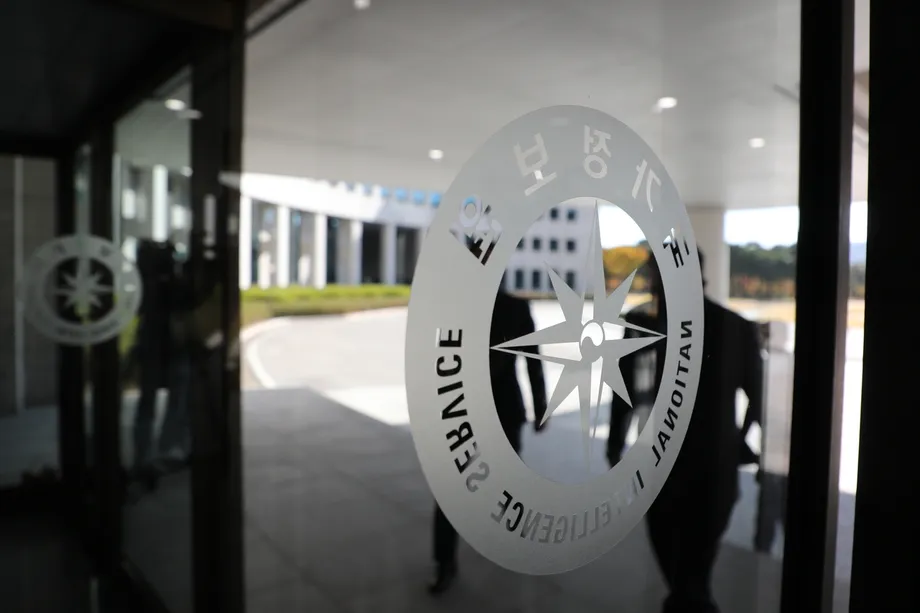
South Korea's National Intelligence Service said on Sunday, October 11, that the United States continues to share intelligence on North Korean conventional forces, developments inside the country, cybersecurity and counterintelligence, rejecting a claim that exchanges have been reduced to missile information alone.
Contents
- Seoul denies a broad cutoff but acknowledges nuclear intelligence limits
- What remains shared, and what is reportedly restricted?
- Why the March 6 Kusong disclosure matters
- How the dispute developed
- Military readiness and nuclear monitoring are different tests
- South Korea points to its own surveillance capacity
- The June cyber meeting and Washington's warning
- Other allegations draw denials and dismissal demands
- Policy differences inside Seoul complicate the response
- Analysts disagree about the main cause and remedy
- Public pressure grows, but no restoration deadline is set
- The Bottom Line
The denial did not mean that all restrictions had been lifted. The NIS acknowledged that some information remains subject to limits, while South Korea's top military commander told lawmakers on October 8 that cooperation had not fully recovered. The dispute centers on intelligence about North Korea's nuclear facilities following Unification Minister Chung Dong-young's public identification of Kusong as a uranium enrichment site on March 6.
The agency also rejected a separate allegation that the total volume of intelligence supplied by Washington had fallen. Its position draws a distinction between restrictions on particular information and the continued operation of a much broader intelligence partnership.
In its Sunday statement, the NIS described the exchanges as reciprocal rather than a one way flow from Washington to Seoul:
We once again clarify that, apart from some of the intelligence that prompted the restrictions on information sharing previously confirmed by the government, Korea and the US continue to actively cooperate on intelligence across a wide range of areas.
That leaves two separate issues at the heart of the controversy: how much intelligence the allies continue to exchange, and whether South Korea still lacks access to particular nuclear information that its officials want restored. An unchanged total volume does not, by itself, establish that every category of information remains available.
What remains shared, and what is reportedly restricted?
The NIS listed six broad areas of continuing cooperation: North Korean missiles, conventional military capabilities, developments in North Korea, international relations, cybersecurity and counterintelligence. Conventional capabilities include military forces and weapons distinct from nuclear arms. Counterintelligence concerns detecting and preventing espionage and protecting sensitive information.
The report challenged by the agency alleged that missile information was effectively the only remaining category of American intelligence reaching Seoul. It also argued that missile exchanges continued because they formed part of cooperation among South Korea, the United States and Japan.
South Korean authorities rejected that wider claim while confirming narrower restrictions. Those limits reportedly include some American satellite images of North Korea and associated analysis, particularly concerning nuclear facilities. Washington has not publicly detailed the exact information being withheld.
The NIS statement did not specifically include North Korean nuclear development among the fields it named as active areas of cooperation. That omission is not proof that all nuclear exchanges have stopped, especially because the military described only some nuclear information as restricted. It does, however, leave the scope of that category unresolved.
Why the March 6 Kusong disclosure matters
Chung named Kusong alongside Yongbyon and Kangson during a National Assembly session on March 6. His remarks marked the first public identification of Kusong as an enrichment location by a senior South Korean official, according to accounts of the dispute.
Uranium enrichment increases the proportion of a uranium isotope that can sustain a nuclear chain reaction. Depending on the degree of enrichment, the material can be used in reactor fuel or nuclear weapons. Information about the location and operation of enrichment facilities therefore helps governments assess North Korea's ability to produce nuclear material.
Washington reportedly considered Chung's disclosure to involve classified intelligence shared with Seoul and protested before restricting some exchanges. South Korea's Unification Ministry disputed that interpretation, saying the remarks were based on information already in the public domain.
The ministry pointed to a 2016 Institute for Science and International Security report, a 2024 interview with researcher Bruce Bennett and a 2025 Center for Strategic and International Studies report. Before Chung's statement, South Korean authorities and the International Atomic Energy Agency had publicly named Yongbyon and Kangson as enrichment locations, but had not officially identified Kusong.
The disagreement is therefore about more than whether Kusong had previously appeared in public discussion. It concerns whether a minister's public confirmation disclosed protected information. No detailed American explanation of that assessment has been made public.
How the dispute developed
The controversy has unfolded over several months, with renewed scrutiny during the National Assembly's annual audits. The principal developments are:
- March 6: Chung publicly named Kusong, Yongbyon and Kangson as uranium enrichment locations. Washington reportedly protested and subsequently restricted some intelligence exchanges.
- June: The NIS was excluded, at Washington's request, from a trilateral working group meeting on North Korean cyberthreats involving South Korea, the United States and Japan.
- October 8: The NIS acknowledged the June exclusion. At a parliamentary audit, the Joint Chiefs of Staff chairman confirmed that some intelligence restrictions remained.
- October 9: A senior US administration official said Washington expected Seoul to uphold alliance standards, particularly in intelligence and counterintelligence.
- October 10: A report alleged that American intelligence sharing had been narrowed to North Korean missiles. The Defense Ministry rejected the claim that evening.
- October 11: The NIS issued its detailed denial, saying cooperation remained broad and the total volume of American intelligence had not declined.
Reports differ on the duration of the restrictions. One describes them as lasting six months, while another attributes a period of more than seven months to the NIS. Both place the origin of the dispute in March, and the October statements confirm that some limits were still in force.
Military readiness and nuclear monitoring are different tests
The Defense Ministry said intelligence sharing needed to maintain a strong military readiness posture against North Korea remained unrestricted. It also said South Korea's improved independent intelligence capabilities sufficiently compensated for information subject to limits.
Joint Chiefs of Staff Chairman Gen. Jin Young-seung gave a more specific account at the October 8 audit. Asked about missile launch warning signs and trajectories, he said that information was being shared. He also said exchanges continued concerning imminent warning indicators and other situations.
Asked about key nuclear information, however, Jin acknowledged that some remained restricted while maintaining that readiness was unaffected. He said the exchanges had not been completely restored.
Jin told lawmakers that restoring access was the preferred outcome:
Ultimately, the best course of action is to resolve this situation as quickly as possible, and we are working toward that.
These statements address different needs. Immediate military readiness depends on detecting threats and preparing a response. Monitoring nuclear development also involves assessing facilities, production activity and changes over time. The assertion that troops remain ready does not settle whether access to every desired nuclear assessment has returned.
Neither the ministry nor the NIS published measurements showing how domestic collection compensates for particular missing American information. Their assurance is an official assessment, not a publicly demonstrated comparison of intelligence coverage.
South Korea points to its own surveillance capacity
Seoul's claim that it can compensate for restricted information rests partly on investment in independent reconnaissance. Under its 425 program, South Korea secured five military reconnaissance satellites and completed their operational deployment in April 2026.
The program, pursued since 2013, was designed to strengthen South Korea's ability to detect and monitor signs of North Korean nuclear and missile activity and observe major strategic targets. It gives Seoul collection assets of its own rather than relying entirely on American systems.
A separate Earth observation satellite, Arirang 7, launched in December 2025 with a stated resolution of 30 centimeters. Resolution describes the scale of detail an imaging system can distinguish; it does not mean an image alone can establish what is happening inside a facility. Arirang 7 is not part of the military reconnaissance program.
South Korea also plans to develop and launch about 20 small satellites and 40 ultralight satellites by 2030, together with a domestic solid fuel launch vehicle. Those plans represent roughly 60 future satellites, compared with the five secured under the 425 program, although their capabilities and missions should not be treated as interchangeable.
The investments explain why the military points to stronger national capabilities. They do not establish that South Korean imagery replaces every restricted American image, analytical product or other form of intelligence.
The June cyber meeting and Washington's warning
The NIS acknowledged that it had been excluded from the June trilateral cyberthreat working group following an American request. It attributed the incident to misunderstandings that it said had since been resolved, and maintained that current cooperation with Washington was close.
The public record does not establish that South Korea as a whole was excluded from the meeting. The acknowledged exclusion concerned the NIS. Nor has the agency published the specific misunderstanding or the terms on which it was resolved.
A senior US administration official, responding in writing on October 9, set out Washington's expectation:
We expect the ROK to uphold the standards of our decadeslong alliance, in particular concerning matters of intelligence and counterintelligence.
ROK stands for Republic of Korea, South Korea's official name. A separate senior State Department official also said Washington expected all allies to handle intelligence and counterintelligence matters appropriately.
Neither statement identified a particular breach, described the restrictions or provided a timetable for restoring access. Washington's language therefore does not substantiate the claim of a broad cutoff. It also offers less reassurance than Seoul's assertion that misunderstandings are already resolved.
Other allegations draw denials and dismissal demands
The intelligence dispute has been accompanied by allegations about visas, travel and American concerns over NIS activities. The agency acknowledged delays affecting some personnel assigned to the South Korean Embassy but attributed them to tighter US entry procedures, not a breakdown in intelligence cooperation.
It denied that NIS Director Lee Jong-seok had planned a March visit to Washington that American authorities refused to accommodate. It also rejected a claim that agents involved in responding to a major Coupang data breach had been placed on an American entry restriction list.
The government separately denied that US Commerce Secretary Howard Lutnick had raised concerns about the NIS with Industry Minister Kim Jung-kwan during investment negotiations. These denials should be distinguished from the nuclear restrictions and June meeting exclusion, which officials acknowledged.
People Power Party leader Jang Dong-hyeok called for the dismissal of Chung and Lee, portraying the restrictions, meeting exclusion and visa difficulties as evidence of damage to the alliance. Reports differ on whether one dismissal demand concerned the defense minister or the unification minister, although the detailed accounts identify Chung, the unification minister.
The NIS responded with unusually sharp criticism of inaccurate reporting, warning that false claims could harm national interests and the alliance. Its criticism does not remove the need to resolve the restrictions that the government itself has confirmed.
Policy differences inside Seoul complicate the response
Reports of internal disagreement point to differing priorities among officials who favor closer coordination with Washington and those who place greater weight on South Korean autonomy and renewed dialogue with Pyongyang.
Chung has supported improving relations with North Korea and a staged approach that first seeks to stop further nuclear expansion before pursuing denuclearization. That approach differs in emphasis from pressure through sanctions and demands for denuclearization.
One reported disagreement arose during National Security Council discussions about a demilitarized zone mine explosion attributed to North Korean mines. Foreign Minister Cho Hyun reportedly raised possible unilateral sanctions over North Korean cyber activity. Chung reportedly opposed the proposal because he considered it insufficiently connected to the incident and inconsistent with the government's approach to North Korea.
Cho denied that there had been a clash while acknowledging that differences of opinion were possible. The account does not establish that this disagreement caused American intelligence restrictions, but it illustrates the challenge of presenting a consistent policy across ministries.
Lee Kwan-se, director of the Institute for Far Eastern Studies, urged officials to distinguish the basic foundations of security from matters negotiable in talks, and to ensure that foreign affairs, security and unification ministries share a common goal and message.
Analysts disagree about the main cause and remedy
Nam Sung-wook, a chair professor at Sookmyung Women's University, argued that American mistrust of Chung and NIS Director Lee would make a quick resolution difficult. He said replacing them might ease tensions, although he considered President Lee Jae Myung unlikely to do so. That is an analyst's judgment, not a personnel condition publicly announced by Washington.
Nam urged Seoul to seek a prompt settlement:
It will not be beneficial for South Korea to let the situation continue and the restriction on intelligence sharing should be resolved as early as possible. But given the severity of Washington's skepticism, it may not be settled soon.
Jun Bong-geun of the Korea National Diplomatic Academy offered a different explanation, describing friction as the alliance shifts toward a more equal strategic partnership. He urged sustained discussions and a shared South Korean consensus on strategic priorities.
Jun also cautioned against merging distinct disputes into a single political argument:
With the narrative surrounding South Korea-U.S. relations being weaponized for domestic political gain in both Seoul and Washington, it is necessary to take a sober approach. The conflicts need to be decoupled and resolved individually.
Kim Jae-chun of Sogang University linked the tensions to delayed investment commitments, the Kusong disclosure and disputes involving Coupang. Other issues cited include Alaska liquefied natural gas investment and stalled nuclear cooperation talks concerning submarines, uranium enrichment and spent fuel reprocessing.
Park Won-gon of Ewha Womans University pointed to perceptions among some figures associated with Donald Trump's MAGA movement that Seoul is too close to China. Reports also described pastor Son Hyun-bo criticizing the Lee government after meeting Trump at the White House in August. These political perceptions have not been publicly established as reasons for the intelligence limits.
Separate concerns involve the expansion of South Korea's espionage law to cover foreign countries and comparable organizations, and July allegations by the US House Judiciary Committee concerning Coupang. Those allegations do not establish wrongdoing or a confirmed connection to the nuclear restrictions.
Public pressure grows, but no restoration deadline is set
A Korea Gallup survey conducted October 6 to 8 among 1,000 adults found approval of President Lee's performance at 37%. Among respondents who approved, diplomacy was the most frequently cited reason, at 24%.
Separate policy ratings showed 43% approval and 38% disapproval for diplomacy. North Korea policy received 24% approval and 55% disapproval, a negative gap of 31 percentage points, compared with a positive gap of five points for diplomacy.
The telephone survey had a response rate of 9.7% and a stated margin of error of 3.1 percentage points at a 95% confidence level. It ran before the October 11 denial, so it cannot measure the effect of that statement or establish that intelligence concerns caused the ratings.
Min Jung-hoon of the Korea National Diplomatic Academy proposed visits to Washington by senior foreign affairs and security officials before an anticipated meeting between Lee and Trump at the November Asia Pacific Economic Cooperation summit. That was a recommendation for coordination, not an announced restoration deadline.
Lim Eul-chul of Kyungnam University's Institute for Far Eastern Studies argued that intelligence exchanges already provide substantial mutual benefits and should be restored to a higher level quickly. Cho Han-beom of the Korea Institute for National Unification likewise pointed to unresolved trust issues in intelligence and counterintelligence.
No public timetable has been given for lifting the remaining restrictions. The unresolved questions concern their precise scope, the conditions Washington expects Seoul to meet and how the allies will verify that cooperation has fully recovered.
The Bottom Line
- The NIS denies that US intelligence sharing is limited to North Korean missiles or that the total volume has declined.
- South Korean officials acknowledge continuing restrictions on some intelligence, including information concerning North Korea's nuclear program.
- The dispute followed Chung Dong-young's March 6 public identification of Kusong as a uranium enrichment location.
- The military says missile warning information remains shared and readiness is unaffected.
- The NIS acknowledges exclusion from a June trilateral cyberthreat meeting but says the underlying misunderstandings were resolved.
- Washington has called for alliance standards in intelligence and counterintelligence without detailing a restoration timetable.
- South Korea's growing surveillance capacity supports independent monitoring, but does not demonstrate that every restricted American product has been replaced.