A 50 day voyage puts Busan’s Arctic ambitions to the test
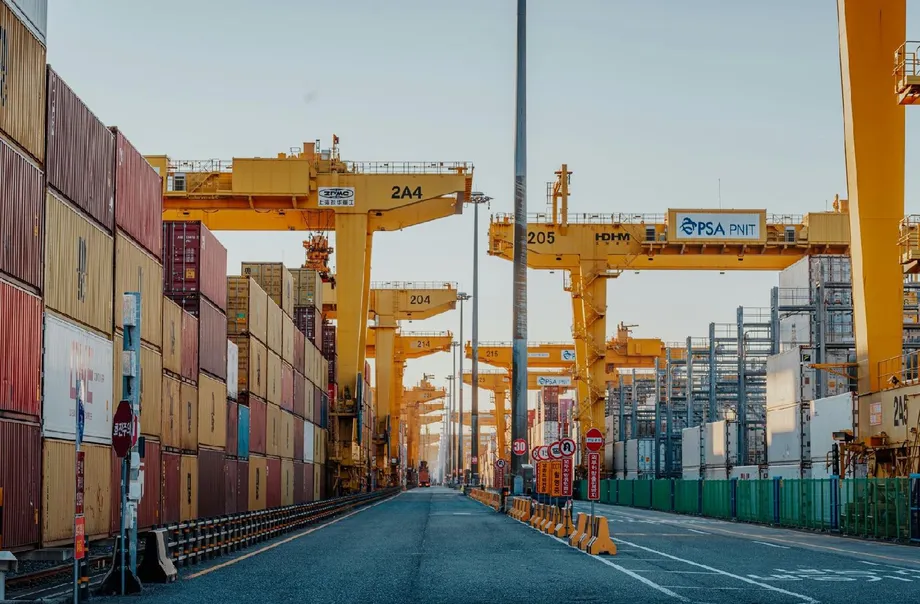
The PanStar Acro returned to Jaseongdae Pier in Busan Port at 8:24 a.m. on October 11, completing South Korea’s first commercial container ship round trip to Europe through the Arctic. The 2,758 TEU vessel had departed on August 22 and spent 50 days at sea, calling at Felixstowe in Britain, Rotterdam in the Netherlands and Gdansk in Poland before returning along Russia’s northern coast.
Contents
- A 50 day voyage puts Busan’s Arctic ambitions to the test
- How the voyage unfolded
- What the shorter journey actually shows
- Cargo figures differ, but both fall below the target
- Reliability matters as much as speed
- Why a shorter route may still cost more per container
- Russia presents a separate political risk
- Environmental concerns divide the shipping industry
- What the government plans to decide next
- Key Points
The trial produced a concrete result for a government seeking regular Arctic services by 2030: the journey from Busan to Rotterdam took approximately 22 days, compared with a reported 30 to 34 days through the Suez Canal. It also exposed the distance between completing a voyage and establishing a dependable shipping business. The ship arrived six days after its scheduled October 5 return, while reported cargo figures differed and fell below the operator’s departure target.
Reports identifying the year date the completion to October 11, 2026. South Korea’s Ministry of Oceans and Fisheries said the vessel returned safely, and accounts of the voyage describe no major incidents. The achievement concerns a Korean container ship making a commercial round trip, rather than the first Korean vessel of any kind to use Arctic waters.
President Lee Jae Myung has made the route part of a plan to develop Busan and the southeastern region into a southern maritime capital region. Whether that ambition becomes a regular service will depend on cargo demand, ice conditions, operating costs and the political risks of working along Russia’s coast.
How the voyage unfolded
The PanStar Acro’s itinerary tested more than a direct passage between two ports. It crossed Arctic waters, served three European destinations and retraced the northern route to South Korea. Earlier Korean Arctic voyages included journeys by bulk carriers in 2013, but this trial examined container shipping through calls at major European ports.
The reported sequence was:
- August 22: The ship departed Busan New Port for Europe.
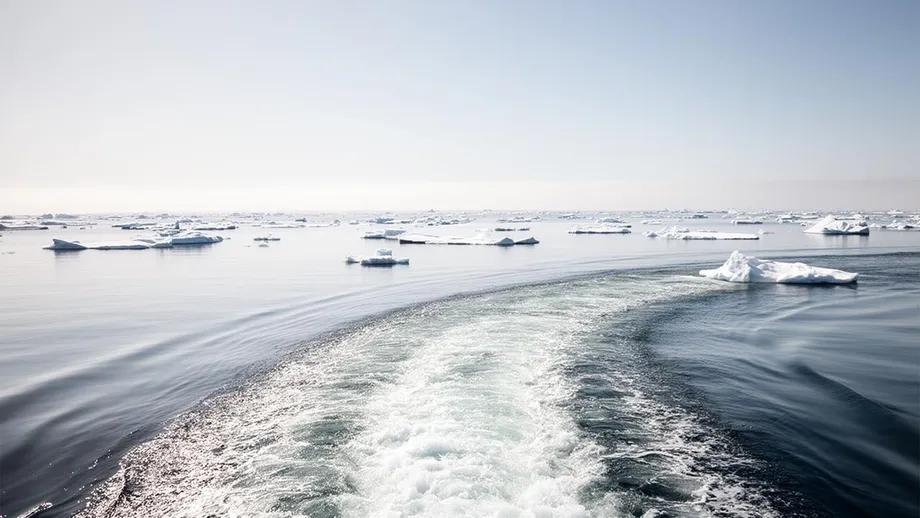
- August 31: It entered the Arctic Ocean, travelling through waters including the Chukchi, East Siberian, Laptev and Barents seas.
- September 12: It called at Felixstowe, its first European destination.
- September 13: It called at Rotterdam.
- September 18: It called at Gdansk before returning through the Arctic.
- October 5: The originally scheduled return date passed.
- October 11: The vessel docked at Jaseongdae Pier in Busan.
- October 13: The ministry planned a welcome ceremony at Busan Port.
One account says the ship travelled without an icebreaker escort and encountered minor weather and ice delays in the Chukchi Sea. That account is consistent with a voyage completed without major incidents, but does not establish how much of the six day delay resulted from ice, weather or other parts of the itinerary.
What the shorter journey actually shows
The strongest comparison is the reported Busan to Rotterdam passage: approximately 22 days through the Arctic against 30 to 34 days through Suez. Those figures indicate a saving of eight to 12 days, or roughly 27% to 35% of the conventional transit time. They support the authorities’ estimate that the northern route could shorten typical voyages by around a third.
Lee, South Korea’s president, described the time saving in a social media statement:
"shortened the one-way sailing time by 10 days compared with the conventional route via the Suez Canal".
The Busan to Rotterdam route through the Arctic is also reported to be about 7,000 kilometres shorter than the Suez alternative, a distance reduction of approximately 35%. A shorter passage can get cargo to customers sooner and reduce the distance a vessel must travel.
Those benefits should not be confused with a demonstrated reduction in total shipping costs. Fuel consumption depends on operating conditions as well as distance, while insurance, specialist crews and possible assistance add separate costs. The 22 day passage also measures one leg of the voyage, not the full 50 day itinerary with several port calls and the return journey.
Cargo figures differ, but both fall below the target
PanStar sought approximately 1,300 TEU of cargo before departure. TEU means twenty foot equivalent unit, a standard measure of container capacity. A forty foot container counts as two TEU, so the figure does not necessarily equal the number of individual containers aboard.
Reports differ on the cargo actually carried. One group of accounts gives 737 TEU of cargo, plus empty containers. Another gives 837 TEU and describes the cargo as mainly chemical products and used cars. The difference is 100 TEU, and the reports do not explain whether it reflects different counting methods or another discrepancy.
At 737 TEU, the cargo amounted to about 57% of the stated target. At 837 TEU, it reached approximately 64%. Either figure leaves a substantial gap between the cargo sought and the cargo reported as loaded.
Against the ship’s nominal capacity of 2,758 TEU, those cargo figures represent approximately 27% or 30%. These are cargo to capacity comparisons, not complete measurements of occupied space, because empty containers were also carried and their number was not given. The trial therefore demonstrated that cargo could move through the route, without establishing demand sufficient to fill a regular service.
Reliability matters as much as speed
The six day delay is a central part of the commercial assessment. Container services connect factories, warehouses, ports and onward transport around expected arrival dates. A fast passage is valuable, but customers also need a schedule they can use repeatedly.
The Northern Sea Route, the section running along Russia’s Arctic coast, is generally more accessible during warmer months as sea ice retreats. Conditions remain unpredictable, and some vessels require icebreaker assistance. A successful voyage from August to October does not demonstrate that the same ship could maintain an equivalent timetable throughout the year.
Operating more slowly to avoid ice can affect both transit time and costs. A restricted sailing season also creates a separate planning problem: operators must decide where to deploy vessels during months when the northern passage is unavailable or unsuitable.
The reported absence of an icebreaker escort on this voyage is useful operating experience, but it cannot be treated as a permanent feature of future services. Different ice conditions could change the assistance required. Regular operations will need a workable schedule for difficult voyages as well as successful ones.
Why a shorter route may still cost more per container
The PanStar Acro is small compared with the vessels commonly deployed on major Asia to Europe routes, where container ships of 20,000 TEU or more carry cargo. A 20,000 TEU ship has more than seven times the nominal capacity of the 2,758 TEU trial vessel.
That difference matters because large ships spread operating expenses across more containers. The Arctic route faces restrictions from water depth and ice conditions in some sections, which can limit the size of vessels that can use it. A shorter distance does not automatically compensate for carrying fewer containers.
The route also has fewer intermediate ports able to supply enough cargo to support the same operating model as established services. Securing steady volumes in both directions is therefore part of the challenge, alongside ship size and sailing frequency.
Insurance premiums, additional fuel use under difficult conditions and the cost of specialist personnel must also be included. Polar navigation requires crews trained to assess ice, respond to rapidly changing weather and handle emergencies. Korean demand for such skills has previously been limited because domestic Arctic operations were uncommon.
The government is placing weight on developing operating conditions and a future market rather than immediate profitability alone. Private shipping companies still need revenues that cover costs. One potential market is cargo whose owners are willing to pay more for a shorter journey, but the trial has not established the scale of that demand.
Russia presents a separate political risk
The route’s geography brings Russia into South Korea’s shipping plans. Seoul consulted Moscow about the voyage, including arrangements for assistance if the ship encountered problems such as becoming trapped in ice.
That practical coordination creates potential friction with Western allies seeking to isolate Russia over its war in Ukraine. The reports identify exposure to sanctions risks, but do not establish that this voyage breached sanctions or describe a specific prohibited transaction.
The distinction matters. Sailing through Russian Arctic waters, discussing emergency help and violating a sanctions measure are not interchangeable actions. Any assessment of legal exposure would require details about the organisations involved, payments and services, which have not been set out.
South Korea is also seeking alternatives amid disruption to shipping through the Red Sea and Suez corridor. Reports connect that uncertainty to Middle East conflict, including US and Israeli strikes on Iran. The Arctic offers a different geographic route, but it does not remove political risk. It changes the countries and operating arrangements on which the journey depends.
Environmental concerns divide the shipping industry
Declining Arctic sea ice is making northern waters accessible for longer periods, creating the opening that South Korea hopes to use. Environmental advocates warn that expanding commercial traffic could threaten the Arctic ecosystem and contribute to further ice loss.
Major container shipping companies CMA CGM, MSC and Hapag Lloyd have pledged to avoid Arctic routes because of environmental concerns. Their positions show that a navigable passage does not necessarily become an accepted choice across the industry.
A shorter sailing distance may reduce fuel requirements under some conditions, but the trial’s fuel consumption and environmental results have not been published in the reports. Distance alone is not enough to establish the environmental balance of the service.
Lee’s statements welcomed the voyage’s operating experience and economic potential without addressing the environmental objections. Those objections therefore remain distinct from the government’s commercial assessment, rather than questions resolved by the ship’s safe return.
What the government plans to decide next
The Ministry of Oceans and Fisheries plans to analyse voyage distance, routing, sailing time, fuel consumption and logistics costs. It intends to release an economic assessment the following month, meaning November in the reported October chronology. No exact publication date is given.
That assessment is the next substantive checkpoint. It should help determine whether the shorter passage can compete on actual transport costs, rather than distance and sailing time alone. The reported schedule delay and cargo shortfall are also relevant to whether the service could operate regularly.
Lee said the trial had produced experience and navigation information as well as a faster passage:
It also allowed us to gain valuable experience operating a South Korean container ship in polar waters and to collect navigational data,
Oceans and Fisheries Minister Hwang Jong Woo similarly said the accumulated polar operating data and experience would provide a foundation for commercial development. The government’s stated plan is to launch regular services by 2030 and progressively use larger container ships by 2035.
Those dates are development goals, not proof that a commercially viable service has been secured. The reports do not establish future sailing frequency, freight prices, committed cargo volumes or the vessel sizes that Arctic conditions would permit. For Busan, the trial supplies evidence of a possible faster European connection. The next task is to show that the connection can be reliable, competitive and acceptable within its political and environmental constraints.
Key Points
- The PanStar Acro completed a 50 day commercial Arctic round trip from Busan to Europe, returning on October 11.
- The Busan to Rotterdam passage took about 22 days, compared with 30 to 34 days through Suez.
- The vessel returned six days later than scheduled, with no major incidents reported.
- Reports give conflicting cargo totals of 737 and 837 TEU, both below the approximately 1,300 TEU target.
- Ice conditions, ship size, insurance, crew costs and Russian coordination remain commercial and political concerns.
- The ministry plans an economic assessment in November, regular services by 2030 and larger vessels by 2035.