A pause with measurable costs on both sides
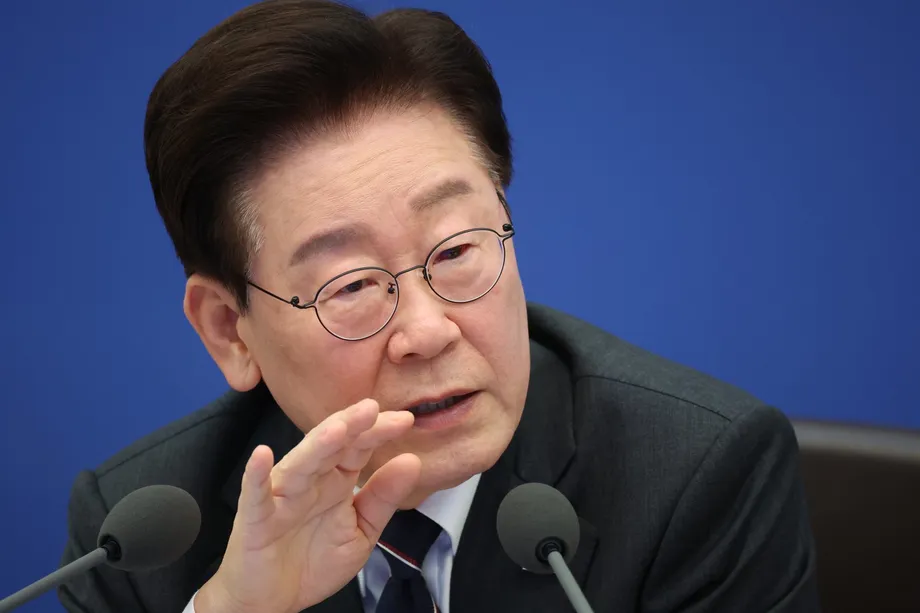
South Korea has put its planned application to the Comprehensive and Progressive Agreement for Trans-Pacific Partnership on hold, despite a government assessment projecting annual manufacturing output gains of 6.3 trillion to 6.7 trillion won. President Lee Jae Myung instructed ministries on October 8 not to apply within the year, putting consultations with farmers and fishers ahead of a November ministerial meeting in Vietnam.
Contents
- A pause with measurable costs on both sides
- How the timetable came apart
- A parliamentary briefing, not an approval vote
- What the economic forecast does and does not show
- Why farmers fear deeper market opening
- Fishers are divided, not uniformly opposed
- An old support pledge weighs on new promises
- Export opportunities extend beyond factory goods
- More members mean more consent to secure
- What must be settled before another bid
- Key Points
The decision follows the September 28, 2026 release of a provisional economic assessment by the Ministry of Trade, Industry and Energy, three other ministries and the Korea Forest Service. It projects annual average production losses of 710 billion won in agriculture, 81.7 billion won in fisheries and 60.6 billion won in forestry over the first 15 years after the agreement takes effect.
Those figures explain the central dispute. Membership could expand manufacturing and export opportunities while concentrating losses in industries already worried about their financial security. The government says rebuilding trust must come first. Businesses fear another delay will repeat an earlier accession effort that never reached the application stage.
Senior presidential spokesperson Kang Yu-jung explained the government's position in a statement:
Trade policy, however, is directly connected to people's livelihoods. In particular, it must be pursued on the basis of trust and consensus with farmers and fishers who are already facing difficulties.
The instruction does not permanently rule out membership. It does remove the application deadline that had driven preparations since late August. With 12 existing members required to agree to any new entrant, the consequences of waiting also depend on how quickly other applicants advance.
How the timetable came apart
The government had revived accession discussions at an external economic ministers' meeting in late August. Its intended next opportunity was the CPTPP ministerial meeting scheduled for November 23 to 27 in Hanoi, where it hoped to discuss South Korea's entry.
Domestic procedures made that a tight timetable. At the October 6 Cabinet meeting, officials raised the need to publish a public hearing notice by the middle of October. Lee instead told ministries to restart discussions without assuming a conclusion. His subsequent instruction ruled out an application that year.
The latest reversal sits within a much longer sequence:
- 2013: South Korea began discussing participation in the emerging Pacific trade framework.
- 2021: The Moon Jae-in administration formally announced plans to pursue CPTPP membership.
- April 15, 2022: Ministers approved an accession plan, but the government did not complete the National Assembly briefing or submit an application before leaving office.
- 2024: Britain joined, increasing membership from 11 countries to 12.
- Late August 2026: The Lee administration began a renewed public discussion of accession.
- September 28, 2026: Five government bodies released provisional economic estimates.
- October 6 and 8: Lee ordered fresh consultations, then instructed ministries not to apply within the year.
- November 23 to 27: CPTPP ministers are scheduled to meet in Hanoi.
The 2022 effort stalled amid parliamentary scheduling disputes, resistance from agricultural and fisheries groups, opposition from some lawmakers and approaching local elections. Accession discussions subsequently made little progress under President Yoon Suk Yeol. This time, the president intervened before the government reached the equivalent formal approval stage.
A parliamentary briefing, not an approval vote
South Korea's trade treaty procedures require several domestic steps before negotiations can proceed. These include an economic feasibility assessment, a public hearing, preparation of a negotiation plan and a report to the relevant National Assembly standing committee.
The distinction between briefing and approval matters. Under the Act on the Procedures for Conclusion and Implementation of Trade Treaties, the committee does not have to approve the plan. Nevertheless, the briefing is a prerequisite in the application process described by government officials. Its absence helped prevent the Moon administration from submitting an application.
A public hearing also requires advance notice, including publication through the official gazette at least two weeks beforehand. Officials therefore treated mid October as the practical deadline for announcing a hearing, while mid November was the target for completing domestic preparations ahead of Hanoi. These are different stages, rather than competing descriptions of the same deadline.
Even an application would not deliver immediate membership. Existing members must agree to begin the accession process, and South Korea would then negotiate market access and other conditions. Negotiations, alongside efforts to reconcile domestic farming and fishing interests, have been estimated to require at least another one to two years. No replacement application date has been announced.
What the economic forecast does and does not show
The September assessment projects that real gross domestic product would be 0.38 percentage points higher 10 years after the agreement takes effect than under a scenario without membership. That is a comparison with remaining outside the pact, not a promise of an extra 0.38 percentage points of growth every year.
Over 15 years, the projected annual average manufacturing production gain is 6.3 trillion to 6.7 trillion won. Small and medium enterprises are expected to gain 1.1 trillion to 1.2 trillion won in annual average production. The figures should not simply be added together as separate benefits because smaller businesses can also be manufacturers.
The three projected rural sector losses total 872.3 billion won a year: 710 billion in agriculture, 81.7 billion in fisheries and 60.6 billion in forestry. One account gives the combined loss as 852.3 billion won and describes manufacturing gains as 7.9 times that amount. That total does not match the individual figures published in the government assessment.
Using the official components, manufacturing gains would be approximately 7.2 to 7.7 times the combined rural production losses. This comparison shows the scale of the forecast, but it is not a complete measure of welfare or a compensation budget. Production gains in one industry do not automatically pay the losses of households in another.
The government explicitly describes its estimates as provisional predictions based on an economic model reflecting recent market conditions and trade policy changes. Actual results would depend on negotiated entry terms and other conditions. It plans to explain the findings through briefings and discussions while collecting public views.
Why farmers fear deeper market opening
Agricultural opposition centres on additional access for products from major exporters such as Australia and New Zealand. The concern is not simply whether imports increase, but whether domestic producers can withstand competition after tariffs and other restrictions are reduced.
Existing CPTPP members are reported to have liberalized 99.1% of goods markets, with agricultural liberalization averaging 96.1%. Another comparison puts agricultural tariff elimination above 90%, against rates in the 70% range under other free trade agreements. These descriptions point to extensive opening, but they do not establish the exact concessions South Korea would negotiate.
Food safety and plant health procedures are another sensitive issue. Sanitary and phytosanitary rules, commonly called SPS rules, govern risks such as animal disease and plant pests. Reviews cited in the accession debate include apples from New Zealand and Japan, pears from Japan and peaches from Australia.
Membership could increase pressure to resolve such restrictions, but the cited reviews do not establish that every product would automatically enter the Korean market on accession. That would depend on the relevant safety assessments, rules and negotiated arrangements.
Rules of origin also affect who receives lower tariffs. Fresh agricultural products generally face strict requirements, such as being wholly obtained in a member country, which limit simple rerouting through another member. For processed food exports, allowing qualifying ingredients from across the bloc could create opportunities for Korean producers. The agriculture ministry is collecting industry views and examining possible damage and responses.
Fishers are divided, not uniformly opposed
A survey commissioned by Seo Sam-seok, chair of the National Assembly's Agriculture, Food, Rural Affairs, Oceans and Fisheries Committee, complicates the picture of blanket rural opposition. The 2026 survey of 1,200 fisheries cooperative members found 33% supported CPTPP membership and 29% opposed it. The reported difference was within the survey's margin of error.
Age groups differed. Among respondents in their twenties through forties, opposition stood at 31.1%, compared with support of 26.9%. Among those aged 50 and above, support was 34.4% and opposition 28.5%. Those results suggest consultations need to account for different business prospects and stages of working life.
Asked about responses to possible damage, 42.5% selected expanded business closure assistance and direct payments for losses. Among older fishers, 45.6% prioritised expanded closure assistance. Younger respondents expressed stronger demand for development of the fisheries food industry and support for entering overseas markets.
The concerns extend beyond trade. A pessimistic view of fisheries 10 years ahead was held by 50.6%, up from 46.2% in 2020, a rise of 4.4 percentage points. Income stability and business safety nets were the most frequently selected government priority, at 47%, followed by disaster response and compensation at 39%, and resource management and conservation at 37%.
The survey also found 55% supported creating a dedicated fisheries vice minister position. Its results do not demonstrate that CPTPP caused the wider anxiety. They show why a trade consultation focused only on aggregate economic gains would miss much of what fishers want addressed.
An old support pledge weighs on new promises
The government's attempt to rebuild trust includes a plan to use public finances to provide about 700 billion won toward the Rural-Urban Cooperation Fund. The fund was pledged when the National Assembly ratified the Korea-China free trade agreement in 2015.
It was intended to raise 1 trillion won over 10 years for rural communities and agricultural and fisheries sectors affected by trade liberalization. By July, accumulated contributions were about 325.5 billion won, according to government data cited by a lawmaker.
That represents 32.55% of the original target, leaving a shortfall of 674.5 billion won. The proposed contribution of about 700 billion won is therefore roughly the size of the outstanding gap, although the exact funding schedule and implementation arrangements have not been specified.
This is an existing support commitment, not a newly agreed CPTPP compensation package. The distinction is central to the trust problem: producers are being asked to assess another trade agreement while an earlier promise remains substantially underfunded.
The fund should also not be confused with the projected annual agricultural loss of 710 billion won. One is a proposed financial contribution to an established programme; the other is an annual average output estimate over 15 years. Their similar size does not make them equivalent.
Export opportunities extend beyond factory goods
For manufacturers, Mexico is a prominent reason to pursue membership. South Korea has no free trade agreement with Mexico, and amendments to Mexico's General Import and Export Tax Law are reported to have raised tariffs by up to 50% on imports from countries without such an agreement. The maximum increase does not mean every Korean product faces that rate.
Accession could give qualifying Korean exports preferential treatment and strengthen supply chain cooperation. Any relief would depend on product coverage, tariff schedules and origin requirements agreed through the accession process, rather than taking effect merely because South Korea applied.
At an October 8 consultation hosted by the trade ministry, the Korea Cosmetic Association and Korea Fashion Association pointed to opportunities for consumer goods distribution in Mexico and Vietnam. Banking and financial investment associations anticipated greater demand for corporate finance, trade finance and foreign exchange services if trade and investment expanded.
Content and intellectual property businesses identified a different potential benefit: stronger protection against illegal distribution, trademark misuse and theft of technology. They cited CPTPP provisions concerning famous trademarks, online infringement, damages and trade secrets as potentially useful in markets including Mexico and Chile.
These are industry expectations, not quantified results in the September production assessment. Their inclusion broadens the debate beyond tariff cuts. Ministry trade official Kwon Hye-jin said the government would collect views across sectors and had not decided whether or when to apply, underscoring that consultations were continuing even as the application timetable stopped.
More members mean more consent to secure
The CPTPP began in 2018 after the United States withdrew from its predecessor, the Trans-Pacific Partnership. Its 12 members now include Japan, Britain, Canada, Australia, Mexico, New Zealand, Singapore and Vietnam. Their economies account for roughly 15% of global GDP.
Britain's entry in 2024 already increased the number of governments South Korea would need to win over from 11 to 12. Costa Rica's accession negotiations were reported to have been substantially concluded in May 2026, while Uruguay's talks were ongoing. Indonesia, the Philippines and the United Arab Emirates were pursuing preliminary discussions.
China applied in 2021, and Taiwan has also applied. Neither China nor the United States is currently a member. South Korea's government had reportedly wanted to enter before China as part of a response to protectionism from the two largest economies, but that objective now lacks a working application timetable.
Each additional member would become another party whose consent South Korea must secure. That does not prove every delay will produce tougher terms, but it increases the number of interests that negotiators may have to reconcile. A former official who handled CPTPP matters under the Moon administration also warned that repeated announcements without an application could weaken confidence in South Korea's intentions.
Huh Yoon, a professor at Sogang University's Graduate School of International Studies, described the pact's strategic purpose:
With the existing multilateral trading order in retreat, it needs to be supplemented by plurilateral trade negotiating frameworks. The CPTPP is a good vehicle for that function.
Kim Tae-hwang, a professor of international trade at Myongji University, likewise argues that the government should prepare protection for affected industries without extending the delay. A government official has also said Japan wants to host a CPTPP secretariat and expand the bloc's influence, making discussions with Tokyo another element of the accession calculation.
What must be settled before another bid
The immediate task is domestic rather than diplomatic: explain the provisional forecast, identify which producers face losses and determine what credible support would look like. The fisheries survey points to differing needs, from income protection and assistance with leaving the industry to export support for younger operators.
The government must also distinguish fulfilment of the old cooperation fund promise from any future CPTPP measures. No detailed accession compensation package, revised application deadline or negotiated Korean market access schedule has been announced.
The Hanoi meeting remains a dated milestone, but it is no longer the government's application target. Any renewed bid would still require the hearing, negotiation plan and parliamentary briefing, followed by agreement among existing members and substantive negotiations.
The choice is therefore not between a guaranteed manufacturing windfall and a guaranteed rural loss. It is whether South Korea can turn conditional economic gains into an accession strategy that affected communities find credible, before an expanding membership makes the negotiating task more complex.
Key Points
- President Lee Jae Myung ordered ministries on October 8 not to apply for CPTPP membership within the year.
- The official provisional assessment projects annual manufacturing gains of 6.3 trillion to 6.7 trillion won over 15 years.
- Official agriculture, fisheries and forestry loss estimates add up to 872.3 billion won annually, not the 852.3 billion won stated in one account.
- A survey of 1,200 fisheries cooperative members found 33% support and 29% opposition, with differences by age.
- The government plans about 700 billion won in public funding toward an earlier rural support pledge that remains below its target.
- CPTPP admission requires unanimous consent from its 12 members, and further expansion could add negotiating counterparts.
- No replacement application date or detailed CPTPP compensation package has been announced.