Four major ports expose a gap in domestic equipment supply
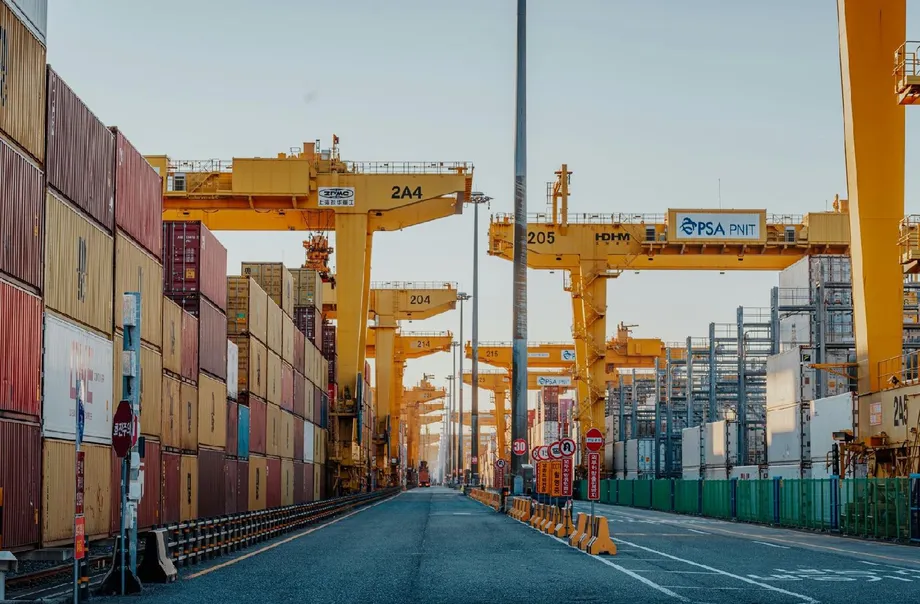
Chinese manufacturers supplied 1,278 of the 3,325 pieces of equipment installed at Busan New Port, Incheon New Port, Ulsan New Port and Gwangyang Port, exceeding the share made in South Korea. Figures submitted by the Ministry of Oceans and Fisheries to Democratic Party lawmaker Seo Sam-seok put Chinese equipment at 38.4% of the total and domestic equipment at 35%.
Contents
- Four major ports expose a gap in domestic equipment supply
- Busan has the lowest domestic share across the four ports
- Incheon's expansion and Busan's Terminal 7 took different routes
- Connected machinery puts remote access under scrutiny
- Earlier inspections did not establish surveillance
- Crane inventories show concentration, with a numerical discrepancy
- Purchases affect steel demand and decades of maintenance
- Jinhae will test how future equipment is purchased
- What the dates establish and what remains undecided
- Key Points
The findings, reported on October 11, 2026, come from a ministry dataset titled Equipment Introduction Status in New Port Areas of the Four Port Authorities. They show especially heavy import dependence in two essential categories: 178 of the 237 container handling cranes introduced from 2015 through 2026 were made in China, while all 672 yard tractors were imported.
The issue extends beyond the country printed on a machine's identification plate. As South Korea builds automated terminals, cranes and vehicles increasingly exchange instructions and cargo information with port operating systems. Procurement decisions therefore affect access to operational data, the ability to repair equipment and whether port investment generates orders for domestic machinery and steel producers.
Separate figures on individual terminals show that high domestic participation is possible. At Busan New Port Terminal 7, 100 of 117 cranes and automated guided vehicles were domestically produced. By contrast, contracts for the next automated expansion at Incheon New Port went to Chinese suppliers for all 37 cranes and 54 automated guided vehicles.
Those contrasting results make the central policy question more specific: how much influence should public port authorities have over equipment purchases, and what security requirements should apply before connected machinery enters service?
Busan has the lowest domestic share across the four ports
Busan New Port, South Korea's largest container port, had the lowest domestic equipment share in the ministry figures, at 30%. Incheon New Port followed at 35%, Ulsan New Port at 49% and Gwangyang Port at 51%. Gwangyang was the only one of the four where domestically produced equipment accounted for more than half the total.
The difference between Busan and Gwangyang was 21 percentage points. Across all four ports, the rounded domestic share of 35% means roughly 65% of equipment came from abroad. China alone accounted for a larger share than South Korea.
Other overseas suppliers were spread across several countries. Sweden supplied 262 pieces of equipment, Germany 200, the United States 163, Japan 112, Malaysia 92 and the Netherlands 30. Together, those six countries supplied 859 units, fewer than China's 1,278.
The concentration was sharper for container handling cranes. China's 178 units out of 237 represent about 75.1%, consistent with the reported rounded share of 75%. Yard tractors, which move cargo within container terminals, were entirely imported, although the figures do not identify the manufacturing country of each of the 672 vehicles.
Incheon's expansion and Busan's Terminal 7 took different routes
Incheon New Port Phase 1-2, scheduled for completion in 2028, awarded contracts in May for 37 cranes to Shanghai Zhenhua Heavy Industries, known as ZPMC, and 54 automated guided vehicles to Chinese company WestWell. These vehicles, commonly called AGVs, move loads around a terminal without a driver onboard.
The contracts cover 91 cranes and vehicles, all from Chinese manufacturers. That finding concerns the specified equipment for the new phase, not every machine already installed throughout Incheon New Port. It therefore does not contradict the broader figure showing a 35% domestic equipment share at Incheon.
Busan New Port Terminal 7 presents a different procurement outcome. Of its 117 cranes and AGVs, 100 were domestically produced and 17 were made in the Netherlands, giving domestic manufacturers an 85.5% share. This terminal result also has a different scope from Busan New Port's 30% domestic share across its wider equipment inventory.
Busan Port Authority reportedly intervened directly in Terminal 7 equipment purchases to prioritize domestic production. At Incheon's expansion, a private operator working under a consignment arrangement reportedly prioritized cost. The comparison points to the importance of purchasing arrangements, but it does not establish that one terminal's equipment is more secure than the other's. No comparative security assessment or purchase prices were disclosed.
Connected machinery puts remote access under scrutiny
Automated port equipment depends on more than motors, cables and steel structures. Remote or unmanned cranes communicate with terminal systems that coordinate cargo movements and work schedules. Security checks must therefore consider how machinery connects to those systems and who can access it for operation or maintenance.
In responses to People Power Party lawmaker Kim Yong-tae, the Ministry of Oceans and Fisheries said current laws and regulations do not stipulate security standards for handling equipment. Asked about manufacturers' remote access, the ministry said it did not possess the data.
Kim argued that public responsibility for port security should extend to equipment contracts managed by private operators. He called for checks before the contracted machinery for Incheon enters the country.
In the era of smart ports, the security of national gateway ports cannot be left solely to private price competition.
Kim also called for comprehensive technical security standards and a domestic industry combining equipment, operating systems and security. His proposals distinguish two related tasks: checking machinery already ordered and setting rules for future purchases.
The absence of ministry data on manufacturer access leaves a specific information gap. It does not prove that suppliers can enter terminal networks, but it means the ministry's responses did not establish which access arrangements exist or how they are controlled.
Earlier inspections did not establish surveillance
Security concerns over ZPMC cranes had already prompted government action in March 2023. The ministry planned inspections of cargo cranes nationwide in cooperation with the National Intelligence Service after allegations in the United States that Chinese crane software could be used for surveillance.
At that time, ministry data submitted to People Power Party lawmaker An Byung-gil showed that ZPMC had manufactured 427 of 809 cranes operating at South Korea's 10 ports, about 52.8%. At Pyeongtaek, near the U.S. Army's Camp Humphreys, ZPMC supplied 21 of 28 cranes, or 75%.
A ministry official described the planned cooperation with the intelligence agency:
Along with the National Intelligence Service, our department in charge of port security will conduct the inspections.
A ZPMC Korea official denied the surveillance allegation and said Korean ports operated delivered cranes independently.
Korean ports independently operate cranes we deliver to them, so it is impossible for us to leak their data.
The company official also said the ministry had raised no issues after its first inspection. That account is not a published technical finding covering every crane, and it should not be treated as proof that all equipment was secure. Equally, the concerns described in the reports do not establish that surveillance occurred.
A later account of ministry responses identified just one official communication concerning handling equipment security over three years: a cybersecurity study commissioned through the National Intelligence Service in March and April 2023. The announced inspection plans and the later communication count measure different activities. Neither provides a complete public record of inspection results or corrective measures.
Crane inventories show concentration, with a numerical discrepancy
Another ministry inventory, submitted to People Power Party lawmaker and former oceans minister Cho Seung-hwan, listed 510 Chinese cranes among 893 port cranes as of March. The reported percentage was 56.9%, although dividing 510 by 893 gives approximately 57.1%. The figures therefore contain a small unresolved discrepancy.
The same account put the Chinese share of container cranes at 58.2%. Among 770 cranes introduced after 2000, 510 were Chinese and 247 were domestically produced. Those counts leave 13 cranes outside the two stated categories. Chinese units outnumbered domestic units by slightly more than two to one in that group.
These figures should not be combined into a single uninterrupted trend. The 2023 inventory counted cranes made by one company, ZPMC, across 10 ports. The inventory submitted to Cho counted Chinese cranes, while the figures submitted to Seo covered several equipment types at four ports and a separate crane purchasing period. The year of the March inventory was not specified in the account.
Despite their different scopes, the inventories point to substantial reliance on Chinese crane suppliers. They do not support an exact calculation of how quickly that reliance grew between the reporting dates.
Purchases affect steel demand and decades of maintenance
Crane procurement also reaches into South Korea's manufacturing economy. Large container cranes combine steel structures, machinery and electrical controls. A single large container crane can require roughly 1,500 tons of high grade steel plate, although that estimate should not be applied to every crane type in the inventories.
The Korea Iron & Steel Association estimates that Chinese cranes installed at South Korean ports used more than 240,000 tons of steel. Its import figures also show that China supplied 4,864 tons of the 4,922 tons of cranes imported in the preceding year, a reported share of 98.8%. These are measurements by weight, not counts of machines, and the account does not specify the calendar year.
Korean crane manufacturers once supplied customers internationally, but their combined global quay crane market share has remained below 1% since 2013. Quay cranes are the large machines positioned beside the water to transfer containers between ships and the terminal.
Kim Yul-seong, a professor at Korea Maritime & Ocean University, linked earlier purchasing choices to the decline of domestic suppliers.
Two decades ago, most cargo-handling equipment was produced domestically, but companies scaled back or exited the business due to weak competitiveness. Initial choices can shape market leadership for decades, so a strategic approach is essential.
Cranes typically operate for more than 20 years. Their purchase can therefore establish a lengthy relationship involving parts, repairs and specialist support. Dependence on overseas manufacturers may delay restoration when equipment breaks down or parts supplies are disrupted, although no quantified repair delays were disclosed.
Jinhae will test how future equipment is purchased
Jinhae New Port is the next major procurement decision identified in the reporting. Its first phase is projected to require 12 container cranes and 54 transfer cranes, a total of 66 machines. Transfer cranes move and stack containers within the terminal yard rather than lifting them directly between ship and shore.
Busan Port Authority is reviewing whether to leave those purchases to terminal operators or take a more direct role. The contrast between Busan Terminal 7 and Incheon's expansion gives that decision practical weight: public involvement was associated with a high domestic share in one project, while private procurement produced contracts entirely with Chinese manufacturers for the specified cranes and AGVs in the other.
Cost remains a central constraint. Chinese manufacturers have competed on lower prices, and only three Chinese firms reportedly participated in a recent Incheon cargo equipment tender. Calls for greater domestic participation include proposals for operators and port authorities to share the financial burden.
No tender prices, domestic price premium or agreed funding arrangement were disclosed. Without those figures, it is not possible to calculate the additional cost of choosing domestic equipment or determine who would ultimately pay it. Jinhae's procurement method was still under review, and no decision date was given.
What the dates establish and what remains undecided
The record spans earlier security checks, equipment introduced over more than a decade and a terminal expansion still awaiting completion. The main dated developments are:
- 2015 through 2026: China supplied 178 of 237 container handling cranes in the four port dataset.
- March 2023: The ministry described plans for nationwide crane inspections with the National Intelligence Service.
- March and April 2023: A cybersecurity study was commissioned through the intelligence agency.
- October 11, 2026: The four port equipment figures submitted to Seo Sam-seok were reported.
- 2028: Incheon New Port Phase 1-2 is scheduled for completion.
The Incheon contracts were described as having been awarded in May, following concerns raised in late April, but the account did not specify the year. Those dates cannot reliably be placed more precisely on the timeline.
Seo called for support for domestic production and technology development, alongside checks on external communications, remote access and maintenance arrangements for imported equipment. Kim's request for verification before importation adds a nearer operational priority for Incheon.
The unresolved issues are concrete: whether comprehensive equipment security standards will be adopted, whether the finalized Incheon contracts will undergo the requested checks, and how Jinhae's purchases will be managed. No confirmed timetable was given for those decisions. The disclosed information also does not establish a verified surveillance incident involving cranes at South Korean ports.
Key Points
- Domestic equipment represented 35% of 3,325 units at four major South Korean ports; Chinese equipment represented 38.4%.
- China supplied 178 of 237 container handling cranes introduced from 2015 through 2026. All 672 yard tractors were imported.
- Incheon's next phase contracted 37 cranes and 54 automated guided vehicles from Chinese suppliers ahead of planned completion in 2028.
- At Busan New Port Terminal 7, 100 of 117 cranes and automated guided vehicles were domestically produced.
- The ministry said handling equipment security standards were not stipulated in current regulations and it lacked manufacturer remote access data.
- Earlier surveillance allegations were denied by ZPMC; no verified surveillance incident was established in the disclosed reporting.
- Jinhae's first phase is projected to need 66 cranes, with procurement arrangements still under review.