A vast copper deposit meets a divided mountain
The proposed $5.9 billion Tampakan mine could produce an average of 375,000 tonnes of copper and 360,000 ounces of gold each year over 17 years. Yet more than three decades after its deposits were identified, the project in southern Mindanao remains caught between national mining ambitions, a provincial prohibition and disputes over Indigenous land and water.
Contents
- A vast copper deposit meets a divided mountain
- Why copper makes Tampakan valuable
- National policy changed, but the provincial barrier survived
- Local officials want a different agreement
- Blaan consent does not mean unanimity
- What the promised benefits actually amount to
- The watershed risk extends beyond the pit
- Conflicting footprints and a history of violence
- A minerals strategy still needs buyers and accountability
- Key Points
For the Philippines, Tampakan represents a possible foothold in the supply chains serving electric vehicles, electricity networks and renewable energy. For affected Blaan communities, it means decisions about ancestral territory, relocation and whether promised payments and jobs can compensate for losing access to land.
The Philippine Institute for Development Studies, in its 2022 mining policy paper, described the provincial ban as an obstacle even after proponents had met legal requirements to begin operations. That assessment did not settle the local dispute. Tampakan officials continue to seek clearer terms, while opponents question both environmental safeguards and the process used to secure community consent.
The project's scale also requires careful reading. Roughly three billion tonnes of ore is not three billion tonnes of copper. Ore is the rock containing the minerals, most of which would become waste after processing. The value of metal underground is therefore not the same as the revenue, profit or public benefit a functioning mine would generate.
Those distinctions matter because the economic forecasts are large, but so are the proposed physical changes. Earlier plans described an excavation hundreds of metres deep, extensive waste storage and the relocation of thousands of people. Neither rising copper demand nor national approval resolves who bears those costs.
Why copper makes Tampakan valuable
Copper carries electricity efficiently, making it useful in motor windings, battery connections, cables and charging equipment. Charles Cooper, head of copper research at Wood Mackenzie, said an electric vehicle can use up to four times as much copper as a conventional car. An electric bus or truck can contain up to four times as much as an electric car.
Cooper expects demand associated with the energy transition to double by 2040. He put the share of total copper consumption attributable to electric vehicles at about 6 percent in the year preceding his comments, rising to 12 percent by 2040. That is a doubling of the share, not simply a forecast that vehicle numbers will double.
Wood Mackenzie's analysis indicates that roughly 900,000 tonnes of new copper capacity must be added annually just to slow the widening shortfall. Tampakan's projected annual output of 375,000 tonnes would equal about 42 percent of that figure. This comparison illustrates its scale, rather than suggesting that one proposed mine could resolve a global supply deficit.
Demand also extends beyond transport to power grids, renewable generation, data centres and digital infrastructure. Copper from Tampakan would not necessarily go into Philippine electric vehicles, or exclusively into products associated with cutting emissions. Its eventual customers and processing destinations have not been publicly established.
National policy changed, but the provincial barrier survived
The Department of Environment and Natural Resources imposed its national ban on prospective open pit projects for copper, gold, silver and complex ores on April 27, 2017. It lifted that ban through Administrative Order 2021-40 on December 23, 2021. The interval was about four years and eight months, rather than nine years.
The PIDS paper explains that the original order identified acidic water, heavy metals, erosion from mine waste dumps and the vulnerability of tailings dams to geological hazards. The reversal cited economic recovery after the pandemic and made stronger technical, social and environmental practices conditions for using the method.
South Cotabato's separate prohibition remained central. Reports date it to 2010, while an earlier environmental assessment describes the provincial code as enacted in July 2011. These accounts differ on the date, but agree that the local restriction preceded the national ban and continued to obstruct Tampakan after Manila changed policy.
The dispute has moved through several distinct decisions:
- 1994: Mineral reserves were confirmed, followed by the grant of mining rights in 1995.
- January 9, 2012: DENR rejected an environmental clearance application pending resolution of the provincial dispute.
- May 6, 2019: A decision restoring the project's environmental clearance took effect, according to information disclosed in 2020.
- August 10, 2020: Tampakan's council resolved to cancel its municipal agreement with SMI.
- October 2020: The National Commission on Indigenous Peoples issued a certification precondition for the project.
- December 23, 2021: DENR lifted the national open pit prohibition.
- May 16 and June 3, 2022: South Cotabato's provincial board voted to lift its ban, then the governor vetoed the change.
An August 2020 account described a court challenge to the provincial ban as unresolved. A separate account says a Koronadal court upheld the ban later in 2020. The earlier description should therefore not be treated as a statement of the present legal position.
Local officials want a different agreement
National permissions and municipal acceptance are separate issues. Tampakan's council canceled its municipal principal agreement with Sagittarius Mines, Inc. (SMI) in a resolution made public on August 14, 2020, but left open the possibility of negotiating a new agreement.
Council members said the 2009 agreement had not received its required review every four years and that municipal representatives had been excluded from review discussions. They considered provisions vague and disadvantageous to residents. A 2013 state audit recorded at least 40 million pesos in payments to the municipality since 1997.
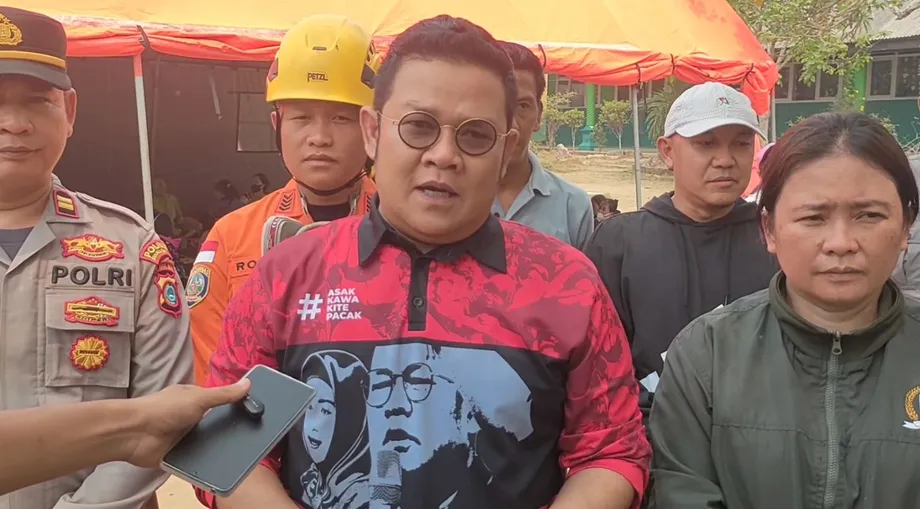
Mayor Leonard Escobillo has said he previously supported the project but now wants benefits, operational details and contingency plans explained before local permits are issued. He also said he had been unable to hold a conversation with SMI.
Escobillo described his position as a responsibility to balance the interests of a small municipality, rather than a rejection of mining itself:
We have to protect ourselves, even from ourselves.
A financial or technical assistance agreement was extended to allow operations through 2032, with a possible renewal through 2057, according to information disclosed in 2020. Those dates concern the contract's duration. They are not confirmed dates for construction or production.
Blaan consent does not mean unanimity
The mine would affect ancestral territory associated with five tribal councils. The Indigenous Peoples Rights Act of 1997 requires free, prior and informed consent for projects affecting Indigenous territory. In practical terms, consent must be obtained before the project proceeds, without coercion and with information sufficient to understand its consequences.
The October 2020 certification precondition from the National Commission on Indigenous Peoples is an important formal step, but opponents disputed the adequacy of consultation. Formal certification and agreement among every affected family are not the same thing.
Accounts of Blaan leader Nora Puli Sukal also conflict. One describes her refusing to lease her land and opposing the mine. Another, describing a February visit in the context of events in 2022, records her publicly supporting SMI after seeing relatives receive company assistance and lease payments.
In the account recording her support, Sukal explained that relatives had benefited from financial help and scholarships:
I now declare I am pro-mining. I will support the operations of SMI.
She also expressed concern that continuing her opposition might affect payments still due to relatives. That was her stated concern, not proof that SMI had threatened to withhold money. The contrasting accounts do not establish when, or whether, her position changed again.
Sukal estimated that about 90 percent of her community's ancestral land had been leased. By contrast, Blaan leader Daguil Capion put the leased share in Bong Mal at 10 percent, with at least 200 hectares under negotiation. These figures concern different communities and cannot be combined into a single estimate for the entire project.
What the promised benefits actually amount to
The reported lease rate of 160,000 pesos per hectare over 25 years works out to 6,400 pesos annually, or about 533 pesos monthly. A large initial payment can be attractive in an impoverished community, but the calculation shows how limited it becomes when spread across a quarter of a century.
Company support has also included scholarships, health services and livelihood programmes. SMI reportedly provided 3 million pesos annually to each of five tribal councils for community initiatives. Supporters, including local Indigenous People's Mandatory Representative Domingo Collado, see the project as a source of opportunities and want operations to begin.
SMI representative Roy Antonio said in December 2021 that the company had invested 32 billion pesos and paid 2.6 billion pesos in taxes. He projected 6.6 billion pesos in Indigenous royalties during the first decade of operations. These were company statements and forecasts, not independently established future receipts.
The PIDS paper gives a different royalty projection: 4.8 billion pesos over ten years, alongside 68 billion pesos in national taxes, 4 billion pesos in local taxes and 2.6 billion pesos for a Social Development and Management Program. The two royalty estimates differ by 1.8 billion pesos. No explanation establishes whether they use different assumptions or project versions.
PIDS also identifies weaknesses in tracing how Indigenous royalties reach beneficiaries. Aggregate payments do not show whether benefits are distributed fairly among households. For Tampakan, the distinction between promised community revenue and verifiable individual benefit is central to judging the proposed bargain.
The watershed risk extends beyond the pit
Environmental Science for Social Change, in its 2012 assessment Opening the Tampakan box, placed the deposit on a ridge between the Pula Bato River and the Tukay Mal and Bong Mal rivers. It identified high groundwater vulnerability and seismic risk, making the location itself part of the argument against the project.
The assessment described a proposed pit covering 500 hectares and reaching 800 metres deep, a facility holding 1.35 billion tonnes of waste rock and a dam containing 1.1 billion tonnes of tailings. Tailings are the material left after valuable minerals have been separated from ore. These figures describe historical plans, not a verified current construction design.
One concern is acid mine drainage. When certain rocks containing sulfides are exposed to air and water, they can generate acidic water that carries metals into streams or groundwater. Treatment may be needed long after extraction ends.
Cirilo Casicas, bishop of the Diocese of Marbel, argues that the proposed waste facilities could leave lasting burdens:
They will leave a problem of acid mine drainage there in the open pit, in the waste rock facility, in the tailings ponds. It's a permanent footprint. It's a perpetual footprint.
ESSC warned that water extraction and contamination could affect the livelihoods of more than 100,000 farmers. It also described a worst case involving the release of 2.5 billion tonnes or more of material if major storage facilities failed. These are assessments of possible harm, not events that have occurred at an operating Tampakan mine.
SMI has previously said modern engineering and safeguards can control environmental risks. Following the 2012 clearance rejection, then SMI president Peter Forrestal argued that the decision had not been made on the merits of the project's environmental impact statement. SMI declined an interview for the latest account of the dispute.
Conflicting footprints and a history of violence
Different project descriptions give different areas and displacement estimates. ESSC described a concession of roughly 23,600 hectares across South Cotabato, Sarangani, Sultan Kudarat and Davao del Sur. Later accounts describe a proposed final mine area of around 10,000 hectares. A concession boundary and a final mine area measure different things, so neither should automatically be described as the area that would be excavated.
The forest figures are harder to reconcile. ESSC cited plans to clear 3,935 hectares of forest and displace 4,000 Blaan people. Another account described about 4,000 hectares of disturbance, including approximately 1,300 hectares of forest, and around 5,000 people requiring relocation. Without an updated plan using common definitions, these remain different reported estimates.
ESSC also cited 2.4 billion tonnes of ore containing 13.5 million tonnes of copper and 15.8 million ounces of gold, compared with the roughly three billion tonnes of ore in later descriptions. The difference should not be treated as a confirmed resource increase without a dated technical assessment.
Conflict has already exacted a human cost. Historical reporting records at least two dozen deaths within the mining tenement, including security personnel and Indigenous residents. Tribal leader Gurilmin Malid and a young companion were killed in July 2002. Daguil Capion's wife and two sons died during a military operation in 2012.
Military deployments, armed Indigenous resistance, company security and communist insurgents have all formed part of this history. The deaths occurred in a complex conflict setting; they cannot all be assigned to a single actor or cause.
A minerals strategy still needs buyers and accountability
The Philippine government wants mining to support the transition to cleaner energy and attract investment in domestic processing. Indonesia offers a regional comparison: it accounted for about 4.5 percent of global mined copper production in 2024 and has attracted major smelting investment. The Philippines remains largely an extractor and exporter rather than a manufacturer of finished products.
Duo Fu, vice president of battery market research at Rystad Energy, said 92 percent of Philippine copper reserves lack mining permits. He described mine development periods of eight to 15 years, during which financing, inflation, policy changes and commodity prices can undermine projects.
Tampakan's ownership history adds another unresolved issue. Glencore withdrew in 2015. Accounts describe subsequent control through Philippine interests, including Alsons and Indophil Resources Philippines linked to the Sy family; the Mines and Geosciences Bureau described SMI as entirely Filipino owned by December 2017. Reports in 2024 suggested China's Chinalco was considering an investment in a holding structure reportedly valued at about $2 billion. No deal has been publicly confirmed.
China is already a major destination for Philippine minerals. United Nations trade data covering 2020 to late 2024 showed roughly 90 percent of Philippine nickel ore exports going to Chinese ports. That does not establish where Tampakan copper would go, although regional smelters, including those in China, are likely potential buyers.
Ellen Moore, mining programme director at Earthworks, argues that recycling, reuse and greater material efficiency can reduce demand for new extraction. The Lead the Charge coalition's assessment of automakers also found uneven progress on environmental protection, labour and Indigenous rights, with implementation lagging behind some corporate commitments.
Emily Iona Stewart, head of policy and advocacy at Global Witness, warned that mineral demand increasingly serves AI and defence as well as cleaner energy. Europe's Carbon Border Adjustment Mechanism adds pressure over production emissions, although its initial sectors include steel, aluminium and cement, not copper. It does not resolve Tampakan's land or water disputes.
No firm production date, new hearing date or deadline for a replacement municipal agreement is established. The decisions still needed concern enforceable local terms, the provincial prohibition, consent, current engineering plans and responsibility for managing waste after closure.
Key Points
- Tampakan's projected annual production is 375,000 tonnes of copper and 360,000 ounces of gold over 17 years.
- The national open pit ban ended in December 2021, but South Cotabato's separate restriction remained an obstacle.
- Tampakan canceled its municipal agreement with SMI in August 2020 while leaving room for a new deal.
- Blaan communities are divided, and accounts conflict over Nora Sukal's position on the mine.
- Reported forest clearance, relocation and royalty estimates differ and need reconciliation.
- Water protection, waste storage and accountability after closure are central unresolved issues.
- No Chinalco investment or firm production start date has been publicly confirmed.