School protests bring clothing rules into focus
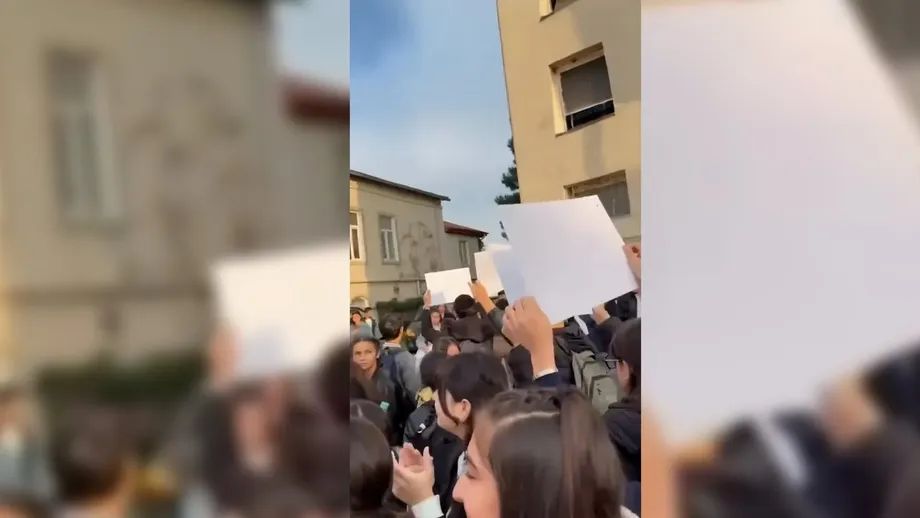
Students at School No. 69 in Baku and B. Shiriyev Secondary School in Mollaoba, in Azerbaijan's Masally district, have reportedly boycotted classes to demand the return of classmates barred from school for wearing the hijab. Separate reports from Jalilabad district describe several girls being stopped at school entrances and sent home because of their headscarves.
Contents
- School protests bring clothing rules into focus
- What happened at the schools?
- What the clothing requirements say
- Teachers face a separate standard
- A hunger strike brings a family's complaint into the dispute
- Two competing arguments about equal access
- The NGO Forum frames the debate as a defense of secularism
- How the school dispute enters a wider security debate
- A recurring dispute, with a new regulatory sequence
- What still needs to be established
- Key Points
The dispute also involves teachers. A woman wearing the hijab was reportedly dismissed from Richard Sorge Secondary School No. 90 in Baku, while imprisoned journalist Polad Aslanov announced a hunger strike over restrictions he says have affected his own child's education.
The reported exclusions have brought a practical question to the center of Azerbaijan's debate over secular education: whether enforcing a common clothing standard can justify keeping pupils out of lessons. Supporters describe the rules as a way to protect equality and a neutral school environment. Opponents say their application forces girls and female teachers to choose between religious dress and access to education or employment.
The legal measures are described in reports as a September 21, 2026, Cabinet of Ministers decision on student uniforms and separate requirements for teachers adopted on October 6, 2026. Authorities have not publicly announced a blanket school hijab ban. The reported student clothing provisions do not explicitly use the word hijab, making their interpretation and enforcement central to the dispute.
The scale of the exclusions remains uncertain. Azerbaijani authorities had not officially confirmed the Jalilabad incidents, and neither the number of affected pupils there nor the precise measures taken was established.
What happened at the schools?
Videos circulating online show schoolchildren protesting outside schools and refusing to attend classes after reports that pupils wearing headscarves had been denied entry. At the schools in Baku and Mollaoba, the reported demand was specific: allow their classmates to return.
Jalilabad represents a separate set of allegations. Several female students were reportedly turned away and sent home, but no confirmed count or school names were given. Those reports cannot be treated as a verified national total or combined with other incidents to establish how many children have lost access to lessons.
An earlier incident was reported at Secondary School No. 3 in Mehdiabad. On March 10, 2026, director Afat Jamalova reportedly expelled 23 students for wearing the hijab. That account predates the September uniform amendment, so it does not establish that the later decision was the legal basis for the March action.
The teacher's reported dismissal at School No. 90 adds another dimension. Circulating footage reportedly showed pupils crying and embracing her following her removal. The accounts do not establish the formal employment grounds, whether a written dismissal decision was issued, or whether she challenged it.
What the clothing requirements say
Cabinet Decision No. 309, dated September 21, 2026, is identified as the measure amending student clothing requirements. Reports describe it as prohibiting clothing elements that break the uniform standard or conflict with the secular principle of general education.
Secular education means that public schooling operates separately from religious authority. The contested issue is how that institutional principle applies to an individual's clothing. A rule about the school environment and a decision to exclude a particular pupil are related, but they are not the same administrative action.
Reports differ in how they describe the regulatory package. One account presents the September 21 changes as covering both uniforms and teachers' clothing. More detailed descriptions identify two separate documents: the September student amendment and October 6 teacher requirements. Those descriptions should not be collapsed into a single order.
The student rules also contain a reported exception. A school's Pedagogical Council may permit national clothing or elements of it at events connected with Azerbaijani history, culture and national moral values. This is a limited permission for particular events, not a reported general exception for religious clothing during ordinary lessons.
Teachers face a separate standard
The October 6, 2026, requirements describe teachers' clothing as suitable for the season, clean, neat, simple and in a business style. Clothing elements must comply with the secular principle of general education and must not interfere with the teacher's work.
The rules also allow functional, comfortable clothing appropriate to particular lessons and working conditions. The subjects listed include physical education, preparation before military service, technology, physics, chemistry and biology. These allowances show that the reported teacher standard takes account of practical classroom duties rather than prescribing identical clothing for every activity.
The National NGO Forum of Azerbaijan says the teacher requirements are intended to preserve professional appearance and the secular character of the educational environment. That is the Forum's explanation of their purpose, not confirmation of the circumstances surrounding the reported dismissal in Baku.
The Baku City Education Department has announced plans to monitor implementation in public schools. No inspection timetable, findings or detailed enforcement procedure is described. Monitoring may clarify how schools are applying the requirements, but it does not by itself resolve whether particular exclusions or dismissals were justified.
A hunger strike brings a family's complaint into the dispute
Polad Aslanov, the imprisoned head of the Xeberman news website, reportedly began a hunger strike on October 8, 2026. His wife, Gulmira Aslanova, announced the action in a Facebook post and said he was being held at Penitentiary Facility No. 15.
Aslanov said the restrictions had affected his own child's right to education. In explaining his protest, he addressed both pupils denied schooling and female teachers facing restrictions on their clothing:
"I declare that I have begun a hunger strike to defend the rights of my own child and all hijab-wearing students whose right to education is restricted, as well as all hijab-wearing female teachers who are being forced to choose between education and wearing the hijab," he said.
He also said he had appealed several days earlier to Allahshukur Pashazadeh, head of the Caucasus Muslims Board, and received no response. No response from Pashazadeh or update on the hunger strike's duration or Aslanov's health is described.
Aslanov was arrested in 2019 on treason charges and initially sentenced to 16 years in prison. His sentence was later reduced to 13 years. He denies the charges and says his imprisonment is connected to his journalism.
Two competing arguments about equal access
Aslanov argues that the clothing restrictions violate Article 48 of Azerbaijan's Constitution, which guarantees freedom of conscience. Reports also describe the Constitution as guaranteeing free and compulsory general secondary education, while noting that it contains no specific provision expressly granting a right to wear the hijab in schools.
The absence of an explicit reference to the hijab does not, by itself, settle how broader protections apply. No court ruling on these particular school exclusions is identified. The dispute therefore involves both the interpretation of general rights and the practical consequences of school enforcement.
Supporters of uniform requirements use equality in a different sense. Education expert Mazahir Mammadli says applying the same principles to everyone can protect equality among pupils, keep attention on lessons and reduce disputes or discrimination. He also calls for parents to approach the established rules with understanding.
Jasarat Huseynzade, head of the QHT.az platform, argues that uniforms reduce visible social differences and stereotypes. In remarks dated October 11, 2026, he says the clothing debate is pushing more substantial education issues into the background.
Member of parliament Elnara Akimova similarly argues that common clothing standards support equality, neutrality, responsibility and respect for shared rules. She says symbols worn by pupils can disrupt school neutrality and calls for cooperation between families and schools.
These arguments address different outcomes. Uniform supporters focus on a common appearance and reduced comparison based on wealth or clothing. Protesters focus on whether children can attend school while observing their beliefs. Evidence that a uniform reduces social distinctions would not, on its own, answer the separate question of how exclusion affects educational access.
The NGO Forum frames the debate as a defense of secularism
The National NGO Forum of Azerbaijan, which describes itself as an umbrella organization bringing together hundreds of NGOs, supports consistent, transparent and equal enforcement of school clothing requirements. Its statement cites a relevant Cabinet of Ministers decision and rejects the suggestion that the rules target religious values.
The Forum sets out that position in its statement:
The application of these rules is neither directed against religious values nor intended to regulate citizens' private lives outside of school.
It describes secularism as a historical achievement and national asset, while recognizing Islam as part of Azerbaijan's cultural heritage. It points to mosques, churches and synagogues operating alongside one another and to the protection and restoration of places of worship. Its examples include restoration at the Aghdam Juma Mosque and the call to prayer at the time of Shusha's capture.
The Forum also alleges that online resources in Iran and other foreign countries are conducting information attacks against Azerbaijan's secular state model, promoting a state based on Sharia principles and exploiting religious sensitivities. It condemns what it calls deliberate politicization of the clothing debate and attempts to turn it into religious confrontation.
Those allegations are the Forum's position. They do not establish that the pupils taking part in school boycotts were directed by foreign actors. The statement supplies no specific evidence connecting the named school protests to such campaigns, and it is not a government confirmation of the reported exclusions.
How the school dispute enters a wider security debate
The clothing controversy is also being framed as a matter of ideological security, meaning protection against ideas and information that officials believe threaten public unity or political independence. That framing shifts attention from individual school decisions toward the state's concerns about foreign influence.
President Ilham Aliyev discussed those concerns at the eighth congress of the New Azerbaijan Party. In remarks on the relationship between national security and influence inside society, he said:
Ideological security is just as important as physical security. Because ideological subversion is directed into the country. We are protecting our borders, and that too is one of our tasks. We have secured the protection and defense of our state borders by using modern technologies.
Aliyev also identified education and patriotism as defenses against ideological influence and called for modern public communication rather than formal events and familiar templates. His remarks provide the broader political setting for arguments about foreign online campaigns. They are not described as a ruling on the specific school incidents.
The distinction matters for assessing the dispute. Concerns about manipulation online can coexist with genuine complaints from pupils and parents. Establishing why a student was turned away still requires information about the school's decision, the rule it applied and the options available to the family.
A recurring dispute, with a new regulatory sequence
Reports place the latest confrontation within a longer history of protests over school headscarves. In November 2010, the Education Ministry reportedly attempted to introduce a school hijab ban and reversed the decision after demonstrations in Baku, Ganja and other cities. Hundreds protested in Baku in December, with demonstrations also reported in Masally and Nardaran.
On May 6, 2011, police dispersed a protest outside the Education Ministry in Baku. The Interior Ministry reported 45 detentions. A demonstration involving approximately 200 people on October 5, 2012, developed into clashes and reportedly resulted in 65 detentions. Some participants later received prison sentences of up to six and a half years.
The reported sequence for the current dispute is:
- Late February 2026: claims of a possible nationwide school hijab ban began circulating.
- March 10, 2026: 23 pupils were reportedly expelled from Secondary School No. 3 in Mehdiabad.
- July 2026: amendments to the Law on General Education reportedly reinforced secular schooling and requirements for pupils' and teachers' appearance.
- September 21, 2026: Cabinet Decision No. 309 reportedly amended student uniform requirements.
- October 6, 2026: separate teacher clothing requirements were adopted.
- October 8, 2026: Aslanov reportedly began his hunger strike.
A demographic estimate cited in reporting puts Muslims at approximately 96% of Azerbaijan's population, with about 65% of Muslims identified as Shia and 35% as Sunni. Those figures describe religious affiliation, not support for either side of the clothing dispute, and no survey of pupils' or parents' views is identified.
What still needs to be established
No confirmed national count of excluded pupils or affected teachers is given. The status of the children reportedly sent home in Jalilabad, the 23 pupils in Mehdiabad and the teacher removed from School No. 90 is not resolved in the accounts of the dispute.
There is also no announced hearing, appeal deadline, review date or schedule for releasing the Baku monitoring results. The immediate issues are whether affected pupils can return to lessons, what written reasons schools have given for their decisions, and whether families and teachers have access to a review process.
The central distinction is between the stated purpose of the rules and their reported effects. The Forum and other supporters defend common standards as protecting secular education and equality. The boycotts and Aslanov's protest challenge enforcement that they say removes children and teachers from the classroom. Resolving those specific cases requires more than a general declaration for or against secularism.
Key Points
- Class boycotts were reported at School No. 69 in Baku and B. Shiriyev Secondary School in Mollaoba.
- Several girls in Jalilabad were reportedly denied entry, but authorities had not confirmed the incidents or the number affected.
- Reports identify a September 21, 2026, student uniform amendment and separate October 6 teacher clothing requirements.
- A teacher wearing the hijab was reportedly dismissed from Baku's Richard Sorge Secondary School No. 90.
- Polad Aslanov reportedly began a hunger strike on October 8, citing his child's education and freedom of conscience.
- The National NGO Forum supports equal enforcement and alleges foreign politicization, without establishing a link to the named school protests.
- No blanket school hijab ban, national exclusion total or timetable for resolving the individual cases has been publicly established in the reports.