
Rural girls remain far behind despite national gains
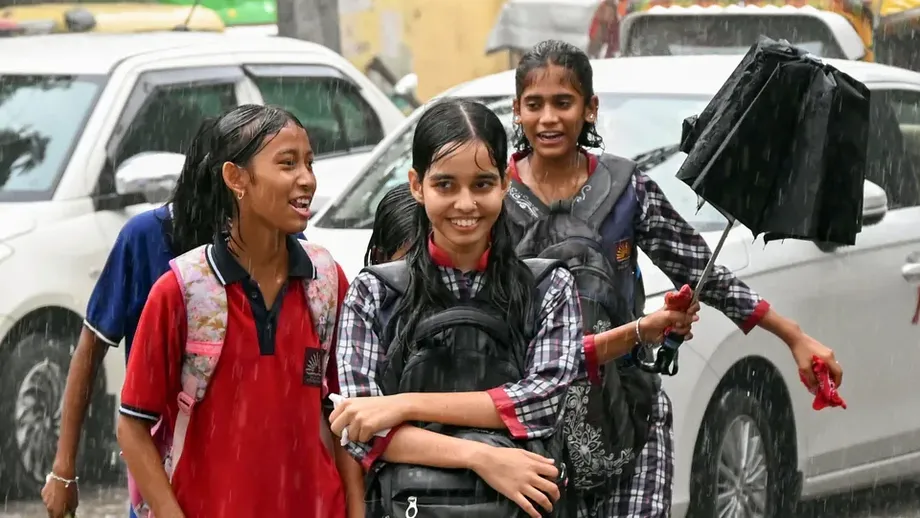
Girls in rural India complete upper secondary education at just 59 for every 100 boys, while urban areas have reached gender parity, according to UNESCO's 2026 Global Education Monitoring Gender Report. The contrast reveals a deep geographical divide beneath India's progress in expanding schooling and reducing disadvantages faced by girls.
Contents
- Rural girls remain far behind despite national gains
- What the completion figures actually measure
- Progress since 2000 has been substantial but uneven
- School costs extend beyond tuition
- Toilets and local support also affect attendance
- Early primary entry can obscure preschool access
- Marriage and motherhood remain barriers beyond India
- Legal rights need practical support
- Better comparisons require better data
- Key Points
UNESCO confirms the rural figure in its Gender Report announcement. India's national adjusted gender parity index for upper secondary completion is reported as 0.89, compared with 0.59 in rural areas. A value of 1 represents equal completion rates for girls and boys. The rural result therefore describes a much larger relative disadvantage than the national average suggests.
These ratios are not the percentage of all rural girls who finish Class 12. They compare female and male completion rates. Without the underlying rates for each group, they cannot establish how many rural children of either sex finish school.
The findings also complicate a simple account of educational progress. India is classified as making fast progress after closing more than 65% of its initial gender gap, yet poverty, schooling costs and insufficient practical support continue to restrict access for disadvantaged girls. The central issue is whether improvements reach children whose circumstances make staying in education hardest.
A separate concern involves the start of schooling: the India figures describe 51% of five year olds as entering primary education rather than preschool. Together, the findings point to weaknesses at both ends of the school journey, from preparation for Class 1 to completion of Class 12.
What the completion figures actually measure
The report's general definition measures completion among people aged three to five years above the official graduation age who have reached the final grade of an education level. It is therefore not simply a count of pupils passing examinations during one academic year.
This approach allows some delayed completion to be captured. The report also distinguishes timely completion from ultimate completion, with the latter including students who finish up to eight years late. India is placed in the fast progress category under both measures.
That distinction matters when interpreting success. A child who repeats grades or starts late may eventually finish, even though an examination result or an enrolment snapshot would not capture the full journey. Conversely, eventual completion does not establish that students progressed at the expected age.
UNESCO also warns against treating parity as a complete measure of fairness. A ratio can move closer to 1 because girls improve, because boys stagnate or decline, or through a combination of changes. Equal rates can also coexist with low completion for both groups. Curriculum, teaching practices, violence and treatment within schools fall outside a simple numerical comparison.
Progress since 2000 has been substantial but uneven
India was among 47 countries with the largest disadvantages for girls in upper secondary completion in 2000. Its subsequent reduction of more than 65% of the initial gap is evidence of substantial change, but it does not mean that the remaining disadvantage is small or evenly distributed.
The regional record helps explain why progress and inequality can appear together. Across Central and Southern Asia, girls' primary completion rose from 42% in 2000 to 90% in 2024, an increase of 48 percentage points. Their upper secondary completion rose from 12% to 57%, a gain of 45 points.
- 2000: India was among 47 countries with the largest upper secondary completion gaps disadvantaging girls.
- 2020: India's National Education Policy set a framework placing entry to Class 1 at age six.
- 2024: Girls' upper secondary completion reached 57% across Central and Southern Asia, compared with 60% for boys.
- 2026: UNESCO's reporting documents urban gender parity in India alongside the rural ratio of 59 girls for every 100 boys.
The regional figures show how far access has expanded. India's rural result shows why those gains must also be examined by location and household circumstances.
School costs extend beyond tuition
The evidence discussed in the report identifies several expenses that can affect whether girls remain in school: books, uniforms, transport, meals and accommodation. There is also the opportunity cost of attendance, meaning the household work or paid work a child cannot do while studying.
Free school lunches had nearly twice the effect on girls' primary enrolment as on boys' enrolment in disadvantaged rural communities in India. The intervention helped close the gender gap in those communities. Early and consistent meal support was also associated with lower dropout rates, particularly among girls.
These findings support a specific conclusion: reducing the daily cost of attendance can benefit girls especially strongly where household resources are limited. They do not establish that meals alone will eliminate the rural Class 12 completion gap, since the enrolment evidence concerns primary education.
UNESCO's broader financing assessment reinforces the need to look beyond the existence of a programme. Its new index considers the intended coverage and volume of policies directed at disadvantaged groups, and finds that fewer than one in ten countries have a sufficiently strong equity focus. A measure can exist without reaching enough children or providing enough support.
Toilets and local support also affect attendance
India's national latrine construction initiative increased enrolment among adolescent girls, particularly where schools provided separate toilets for girls. The finding connects school infrastructure with educational access: sanitation, privacy and safety can affect whether a school is practically usable for pupils.
The report also discusses a randomised trial in 121 Karnataka villages. Local clubs designed to build girls' life skills and social networks produced modest improvements in secondary completion, although early marriage continued to threaten educational continuity.
That trial should not be confused with a scholarship programme. The India account also refers to a rural Karnataka scholarship model, but the detailed evidence here concerns clubs, and does not establish the scholarship scheme's design, coverage or results.
The distinction matters for policy choices. Financial assistance, school facilities and social support address different barriers. The findings point toward coordinated measures rather than assuming that one intervention can account for every reason a girl leaves school.
Early primary entry can obscure preschool access
The India account reports that 51% of five year olds enter primary school rather than preschool, despite the age six entry framework under the National Education Policy 2020. It also describes preschool enrolment exceeding 90% in some states, suggesting substantial variation within the country.
UNESCO's 2026 GEM Report identifies a related global measurement problem. Although the international indicator says 75% of five year olds are in education, 27% of those children are already in primary school. Being enrolled somewhere does not necessarily mean a child received preschool education before starting primary classes.
The report estimates that only 60% of primary school students worldwide had at least one year of preschool. This is a different measure from the share of five year olds currently attending an educational institution.
The Indian 51% figure and UNESCO's global 27% figure should not be treated as directly comparable without checking their denominators. The global figure explicitly refers to five year olds already counted as being in education; the India account describes five year olds more broadly.
For families and policymakers, the practical distinction is between access to an institution and access to the appropriate stage of education. High participation figures can conceal children entering primary classes without the preparation that preschool is intended to provide.
Marriage and motherhood remain barriers beyond India
UNESCO's gender assessment places India's rural divide within a wider pattern in which national averages conceal disadvantages linked to wealth, location and social circumstances. In Angola, for example, the richest households have gender parity, while among the least privileged households only 30 girls complete upper secondary education for every 100 boys.
Globally, the share of girls married before age 18 fell from 25% in 2000 to 18% in 2025, a reduction of seven percentage points. It remains 25% in Central and Southern Asia and 31% in sub Saharan Africa. These are regional figures, not estimates of the causes of India's rural completion gap.
UNESCO Director General Khaled El-Enany said progress in enrolment had not removed the barriers girls face in completing education:
However, too many girls still face barriers to accessing, completing and thriving in school.
The scale of interrupted education is especially severe in sub Saharan Africa, where an estimated six million pregnant girls and young mothers aged 10 to 19 were out of school in 2024. UNESCO says fewer than 5% of pregnant and parenting girls in the region return to school.
Legal rights need practical support
In 2026, 58% of countries guarantee education without discrimination based on sex or gender in their legal frameworks, but only 35% explicitly protect the educational rights of pregnant and parenting girls. The 23 percentage point difference shows that broad legal protections do not always address a specific reason for exclusion.
The Central African Republic, Tanzania, Cameroon, São Tomé and Príncipe, Sierra Leone and Togo have ended bans on education for married, pregnant and parenting girls and women. Nine in ten surveyed countries in Eastern and Southern Africa have policies allowing pregnant and parenting adolescents to continue or resume education.
Permission to return, however, does not pay for transport or provide childcare. UNESCO identifies financial constraints, stigma, unsuitable water and sanitation facilities, unsafe travel and insufficient practical support as continuing barriers.
Evidence from Burkina Faso shows the value of addressing the school environment: schools designed to meet girls' needs raised enrolment by 19 percentage points, with larger gains for girls. That result is not an estimate for India, but it supports the report's argument that access depends on the conditions surrounding a child's legal right to attend.
Better comparisons require better data
Nepal provides a useful neighbouring comparison. In 1990, 8% of girls completed lower secondary education, compared with 41% of boys, a gap of 33 percentage points. By 2024, both rates had reached 89%. Parity there accompanied strong gains for both groups rather than a decline in boys' completion.
The report links Nepal's progress to education rights, free and compulsory basic education, scholarships, expanded secondary provision, free textbooks, and improved water and sanitation. These measures address several barriers at once, although the figures do not isolate the contribution of each policy.
Internationally, upper secondary completion rose from 37% in 2000 to 61% in 2024. Yet UNESCO estimates that, at current expansion rates, 95% completion would not be achieved until 2105. Meanwhile, 273 million children and young people were out of school in 2024, equivalent to one in six worldwide.
India's rural finding also illustrates a monitoring weakness. One in three countries does not report education disparities by urban and rural location, and one in two does not report disparities by wealth. Without those breakdowns, national improvements can conceal the groups making the least progress.
For India, the figures do not establish the absolute rural completion rates for each sex, quantify each cause of the gap, or give a deadline for closing it. Those missing details limit what can be concluded about the size of the required response and how success should be measured.
Key Points
- Rural India's upper secondary completion ratio is 59 girls for every 100 boys, while urban areas have reached parity.
- India's national adjusted gender parity index is 0.89, compared with 0.59 in rural areas.
- India has closed more than 65% of its initial gender gap, but large geographical differences persist.
- Evidence connects school meals, separate toilets and local support clubs with improvements in girls' access or completion.
- Preschool participation must be distinguished from early entry into primary school.
- Parity ratios alone cannot show absolute completion levels, school conditions or whether every disadvantaged group is benefiting.