
A deadly legacy falls hardest on children
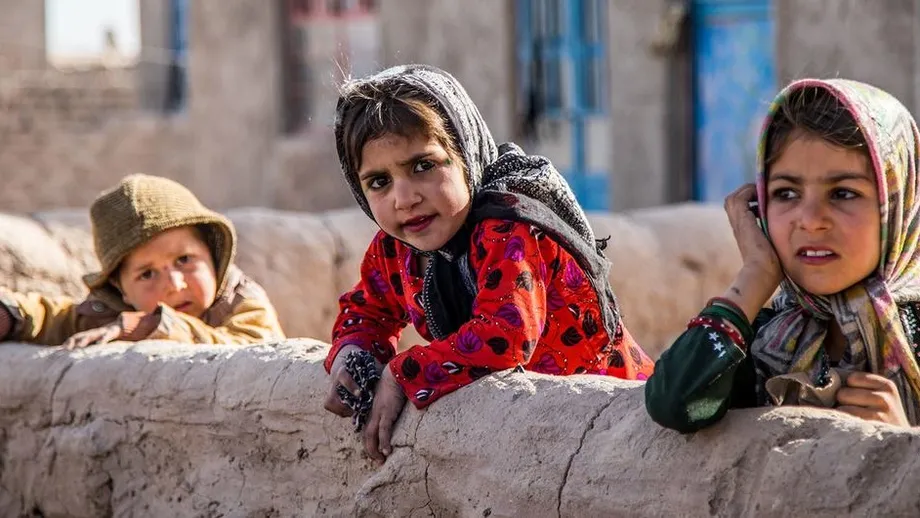
Children account for around 80 percent of casualties from explosive hazards in Afghanistan, according to the United Nations Assistance Mission in Afghanistan (UNAMA), which says the country ranks third globally for casualties caused by unexploded ordnance. The warning describes a threat that persists across large areas contaminated by landmines and ammunition left behind by more than four decades of conflict.
Contents
- A deadly legacy falls hardest on children
- What the third place ranking does and does not establish
- Two child casualty estimates, with different limits
- Why reduced fighting has not removed the danger
- Funding is needed for clearance, education and survivor care
- UNAMA's immediate advice: do not touch suspicious objects
- The reporting timeline and what remains unknown
- Key Points
The child casualty share means roughly four out of every five people killed or injured by these hazards are children. UNAMA said many encounter unexploded ammunition while playing, turning an ordinary childhood activity into a potentially fatal incident. Its message calls for public awareness, cooperation with authorities and financial support for organizations removing explosive remnants.
A separate warning attributed to the UN Office for the Coordination of Humanitarian Affairs (OCHA) puts children at 78 percent of casualties caused by unexploded ordnance from January through August 2026. That figure is close to UNAMA's estimate, but the two cannot be treated as identical measurements: UNAMA's roughly 80 percent figure has no stated reporting period, while the OCHA figure covers a defined eight months.
The scale of the danger is evident in both warnings. The precision of Afghanistan's global ranking is less certain. No underlying dataset, comparison period or supporting casualty totals were identified alongside UNAMA's statement, and reports differ on whether the ranking concerns all casualties or deaths alone.
What the third place ranking does and does not establish
Most accounts describe Afghanistan as third worldwide for casualties from unexploded ordnance or explosive remnants of war. One describes the ranking as third for fatalities. These are different measures: casualties generally include people killed and people injured, while fatalities count deaths only.
A United Nations statement delivered by Nick Pond, Chief of UNAMA's Mine Action Section, at a noon briefing in New York on April 4, 2026, describes Afghanistan as having the world's third highest explosive ordnance casualty rate. It gives a rate of around 50 people killed or injured each month, with at least one casualty every day, and says 90 percent of casualties are caused by unexploded ordnance and abandoned munitions. It does not identify the dataset, reporting period or country-by-country casualty totals used to establish the ranking.
That distinction matters when assessing the burden on families and health services. A ranking based on deaths would not capture the same population as one that also counts survivors with injuries. Without the underlying figures and reporting period, neither Afghanistan's casualty total over the comparison period nor its distance from other countries in the ranking can be calculated from the monthly rate.
UNAMA's warning nevertheless makes a specific claim about the people most exposed: children constitute around 80 percent of casualties. The statement does not break that share down by age, sex, province or type of explosive device. It also does not establish whether the percentage has risen or fallen compared with an earlier period.
The defensible conclusion is therefore narrower than a complete statistical assessment. UNAMA places Afghanistan among the countries with the greatest casualty burden and identifies children as the overwhelming majority of victims, but the published warning does not explain how the international comparison was produced.
Two child casualty estimates, with different limits
OCHA's reported figure of 78 percent covers January through August 2026. The figure was attributed to an OCHA statement on October 7, 2026, and concerns casualties caused by unexploded ordnance, rather than all victims of explosive hazards. The supplied reporting does not reproduce an original OCHA statement or dataset defining the casualty count, including how deaths and injuries were recorded. The agency described mines and unexploded weapons as a daily danger for civilians, including children playing or moving through contaminated areas. Its warning connects continuing casualties with the explosive material that remains after military activity has declined.
The difference between 78 percent and approximately 80 percent is two percentage points. That small numerical gap does not establish a change over time. The reporting periods and categories would need to match before the figures could support a conclusion that children's share of casualties was increasing or decreasing.
Save the Children separately reported that at least 338 children were killed or injured by mines and unexploded ordnance during a previous monitoring period. The dates of that period are not specified in the reporting, so the figure cannot be converted into a reliable monthly average or directly compared with the eight months covered by the OCHA warning.
The number is also a combined count of deaths and injuries, not a death toll. Read together, the figures show a heavy burden on children, but they do not provide enough information to calculate a national trend or a current annual total.
Why reduced fighting has not removed the danger
Landmines and unexploded ordnance present related but distinct threats. A landmine is designed to explode when triggered, often by a person's presence or contact. Unexploded ordnance is ammunition that did not detonate when used and can remain dangerous afterward. Explosive remnants of war is a broader term for explosive material left by conflict.
The warnings describe contamination in residential areas, farmland and other spaces used by the public. This places the danger within daily life, rather than restricting it to locations where fighting is still taking place. Children may encounter hazardous objects while playing or passing through those areas.
A decline in military operations does not make ammunition already lying in the ground harmless. The distinction explains why clearance remains necessary even where active fighting has ended: the threat is tied to the continued presence of explosive devices, not solely to current combat.
UNAMA describes contamination resulting from more than four decades of conflict. Its message does not provide a current estimate of the affected land area, a list of the most contaminated provinces or a timetable for making those areas safe. The warning establishes the continuing danger without measuring the full clearance task.
Funding is needed for clearance, education and survivor care
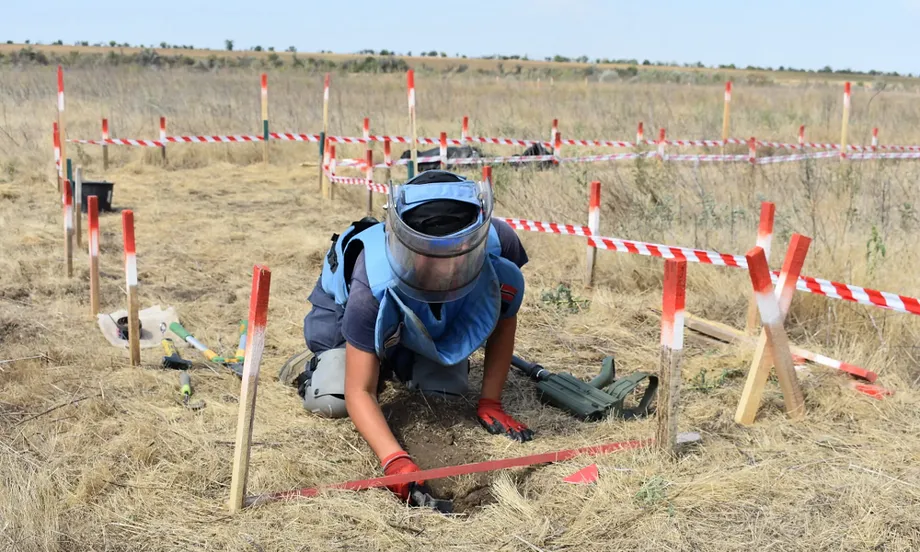
UNAMA said efforts are continuing to secure financial support for organizations that remove landmines and other explosive remnants. Those teams work daily on clearance and also conduct campaigns to inform communities about the risks in different parts of Afghanistan.
Clearance and public education address different parts of the problem. Removing a device eliminates that particular hazard. Teaching people to avoid suspicious objects can reduce exposure while contaminated areas await clearance. UNAMA's warning presents both activities as necessary to prevent further casualties.
OCHA also warned of a substantial funding gap affecting mine removal and safety education. The reporting does not state the amount needed, the funding already secured or how many clearance activities have been delayed. It therefore supports the conclusion that funding is insufficient, but not a calculation of the shortfall.
The UN's appeal extends to victim support and rehabilitation services. Those needs are separate from preventing the next explosion: survivors may require treatment and continuing care after the immediate emergency. The call for rehabilitation recognizes that the human cost includes injuries as well as deaths, although no figures are given for service capacity or unmet treatment needs.
UNAMA's immediate advice: do not touch suspicious objects
UNAMA urged people to avoid unfamiliar or suspicious objects and report them promptly. The mission's public message gave two telephone contacts, a number for notifying local authorities and the Awaaz centre:
“If you encounter an unfamiliar or suspicious object, never touch it. Immediately inform the local authorities by calling 0708606060 or contact the Awaaz centre on 410,” it said.
The instruction is straightforward: do not handle the object, keep away and notify the relevant authorities. It does not ask members of the public to identify the ammunition, move it or attempt to make it safe. The warning focuses on avoiding contact and reporting the location.
Public awareness is especially relevant to the circumstances UNAMA describes, in which children are injured or killed after encountering explosive material during play. Information can help communities recognize that an unfamiliar object may be dangerous, while clearance teams address the physical contamination.
UNAMA also called for cooperation among communities and authorities. Reporting a suspected hazard is one part of that effort, but a report alone does not establish that an area has been cleared. The financial appeal concerns the trained organizations needed to identify and remove the devices.
The reporting timeline and what remains unknown
The warnings cover different periods and should be read in that order. The dated account of UNAMA's message places its publication on October 11, 2026, while the official statement delivered on April 4, 2026, also gives the third-place ranking and roughly 80 percent child casualty share. The separate child casualty percentage attributed to OCHA covers January through August of that year and was reported in a statement dated October 7.
- A previous monitoring period, with dates unspecified: Save the Children reported at least 338 children killed or injured by mines and unexploded ordnance.
- April 4, 2026: Nick Pond delivered the UN statement placing Afghanistan third globally for its explosive ordnance casualty rate, with around 50 people killed or injured each month and almost 80 percent of casualties among children.
- January through August 2026: children reportedly accounted for 78 percent of casualties caused by unexploded ordnance, according to the warning attributed to OCHA on October 7.
- October 11, 2026: a dated report carried UNAMA's warning that Afghanistan ranked third globally and that children made up around 80 percent of casualties.
This sequence is a timeline of the reporting, not proof of a rise or fall in casualties. The earlier monitoring period cannot be placed precisely, and the UNAMA estimate lacks a stated measurement period. Neither warning gives a date for a new statistical release.
Other unresolved details include the dataset and comparison period behind the global ranking, the total number of people killed and injured over that period, the size of the funding gap and the extent of land still requiring clearance. UNAMA's estimate of around 50 casualties each month is a rate, not a total for a specified reporting period. No new funding commitment, clearance completion deadline or scheduled decision is identified. The immediate priorities stated by the UN remain funding clearance, providing safety education and supporting victims.
Key Points
- UNAMA says children account for around 80 percent of casualties from explosive hazards in Afghanistan.
- The April 4, 2026, UN statement places Afghanistan third globally for its explosive ordnance casualty rate and gives around 50 people killed or injured each month, but identifies no supporting dataset, comparison period or casualty totals for that ranking.
- A separate warning attributed to OCHA on October 7 puts children at 78 percent of casualties caused by unexploded ordnance from January through August 2026; the original statement and its casualty-counting definition were not available in the supplied sources.
- Save the Children reported at least 338 children killed or injured during an unspecified previous monitoring period.
- The UN is seeking support for explosive clearance, public safety education, victim assistance and rehabilitation.
- UNAMA advises people not to touch suspicious objects and to report them through 0708606060 or the Awaaz centre on 410.