
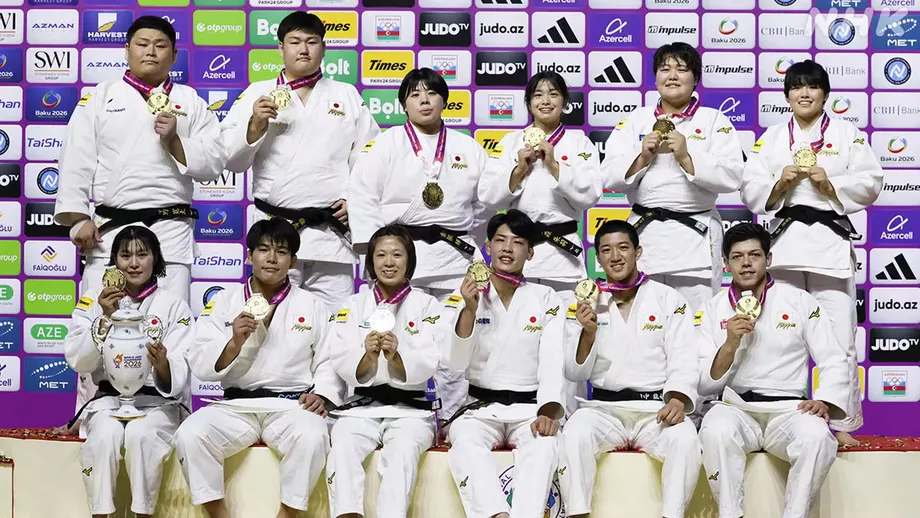
Japan returns to gold as Russia reaches its first final
Japan reclaimed the world judo mixed team title in Baku, Azerbaijan, on October 11, 2026, winning its eighth gold in the event after Akari Omori secured the decisive victory against Russia. Georgia and Uzbekistan took the two bronze medals, bringing eight days of competition at the National Gymnastics Arena to a close.
Contents
- Japan returns to gold as Russia reaches its first final
- How Japan built its decisive lead
- Omori closes the final after Bashaev responds
- Four victories carry Japan through the draw
- Russia survives two deciding contests
- Georgia recovers from losing its title
- Uzbekistan earns bronze against Mongolia
- Joint training links world success to an Olympic target
- The championship timeline and next scheduled event
- Key Points
The European Judo Union recorded Japan's victory as 4-1 in its championship closing report. The International Judo Federation gave a different final score, 4-2, although its description of the individual contests lists four Japanese victories and one Russian victory. Both institutions identify Japan as champion and Russia as the silver medallist.
Shiho Tanaka, Sanshiro Murao and Mao Arai put Japan 3-0 ahead before Tamerlan Bashaev earned Russia a point. Omori then defeated Irina Zueva to settle the final. Russia's appearance was its first in a world mixed team gold medal match, following two demanding victories that required deciding contests.
Japan's success followed a strong individual competition, which ended on October 10. Its athletes won seven weight categories, three for men and four for women, and collected 12 individual medals. Murao and Omori carried that success into the team competition after winning the men's under 90 kg and women's under 57 kg individual titles.
How Japan built its decisive lead
The final began in the women's under 70 kg category, where Tanaka, the 2025 world champion, faced world and Olympic medallist Madina Taimazova. Their contest went into golden score, the extra period used when neither athlete has secured victory during regulation time. Tanaka earned a yuko, a scoring award below a waza ari or an ippon, to put Japan ahead.
Murao then faced Egor Andoni. According to the International Judo Federation's medal match account, Andoni kept the contest level for roughly two and a half minutes before Murao scored with an inner thigh throw. A second yuko extended his advantage and delivered Japan's second team point.
Arai's meeting with Daria Rechkalova was less straightforward. The Japanese athlete attacked early on the ground, but Rechkalova defended and became more active after the contest returned to standing exchanges. Arai conceded two penalties, leaving her under pressure as the bout continued.
In extra time, Rechkalova attacked without sufficient preparation and Arai countered to win. Japan now led 3-0, with three different athletes contributing the points. The sequence demonstrated why individual medals alone do not settle a team title: Tanaka needed extra time, Murao built a scoring advantage, and Arai recovered from a difficult position.
Omori closes the final after Bashaev responds
Russia selected Bashaev for the men's heavyweight contest against Kenta Nakano. Bashaev scored a yuko and protected that narrow lead. With 44 seconds remaining, Nakano launched a large wheel throw, but Bashaev defended successfully and kept Russia in the match.
Omori then met Zueva in the women's under 57 kg contest. Zueva began aggressively, threatened on the ground and continued attacking from standing positions. Omori initially struggled to establish herself but found an opening for a yuko.
The Russian athlete remained dangerous during the transition to groundwork, coming close to securing a strangle. Omori gradually gained control and, with about a minute left, added a waza ari with a sleeve lifting hip throw. Her victory delivered Japan's fourth team point and the championship.
The reported order of those five contests supports a 4-1 result. The IJF article nevertheless ends its final account at 4-2 without describing a second Russian victory. That discrepancy cannot be reconciled from the published contest descriptions. A similar difference appears in the bronze medal reporting, making it necessary to distinguish the agreed medal winners from the disputed scores.
Four victories carry Japan through the draw
Japan won four team matches, beginning with its opening appearance in the second round. The first opponent was host nation Azerbaijan, which had already beaten Austria. Azerbaijan earned one point against Japan, but the visitors advanced 4-1.
Japan repeated that score against Mongolia in the quarterfinals, then met China in the semifinals. That match offered a chance to reverse the previous year's semifinal defeat, when China had stopped Japan's title defence.
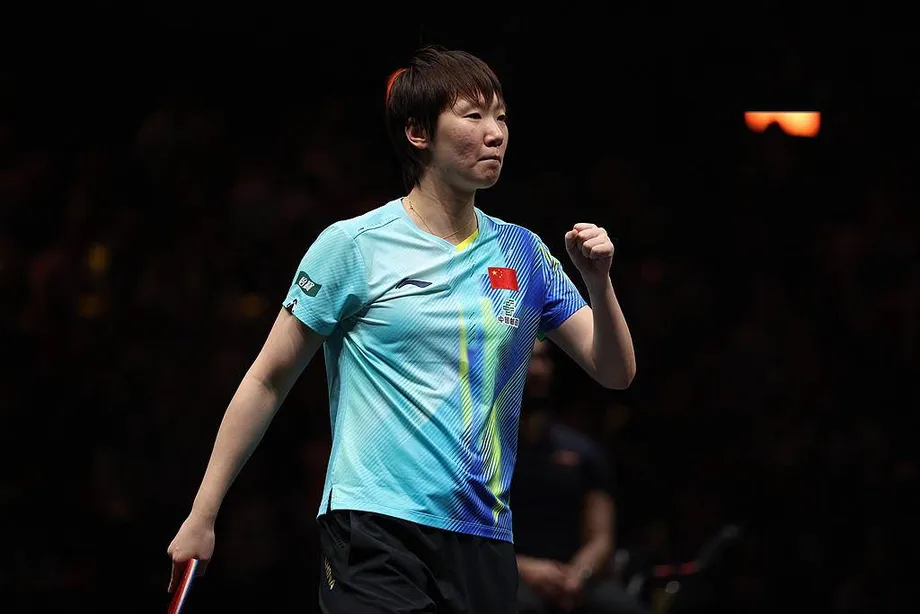
The semifinal included an unusual incident: China's Lu Liu and Japan's Tanaka were both disqualified for a lack of attacking. Japan had already taken the lead through Uchimura. Murao then won by ippon, a decisive score that ends an individual contest immediately, and Arai secured another victory with a hold on the ground.
Japan advanced 3-0. The result was both a route back to the final and a direct response to the defeat that had ended its championship run in 2025. Across the first two rounds and the semifinal, Japan won through different combinations of throwing, groundwork and disciplined contest management.
Russia survives two deciding contests
Russia's route to silver was more precarious. In the quarterfinals, it faced France, the reigning Olympic mixed team champion. With the tie level, Mansur Lorsanov defeated Aleksa Mitrovic by scoring a yuko in golden score, taking Russia through 4-3.
The semifinal against Uzbekistan also reached 3-3. Ahadov gave Uzbekistan an early lead with an ippon, Lishchenko equalised with a yuko, and Murtozoev restored Uzbekistan's advantage. Rechkalova then won by submission to make it 2-2.
Inal Tasoev, a three time individual world champion in the men's over 100 kg category, put Russia ahead against Uzbekistan's 2022 under 100 kg world champion, Muzzafarbek Turoboyev. Tasoev had trailed early before turning the contest around with a foot blocking throw. Aminova subsequently levelled the team score, forcing a deciding contest.
The men's over 90 kg team category was drawn, sending Tasoev and Turoboyev back onto the mat. Tasoev won again by ippon and secured Russia's first world mixed team final. His two victories against the same opponent were central to Russia's breakthrough.
Seventeen teams competed in Baku, and five ties went to a deciding contest. Russia had to survive two of them before facing Japan. The format gives teams a chance to recover from individual defeats, but a single selected rematch can ultimately determine whether a country advances.
Georgia recovers from losing its title
Georgia arrived as the defending world champion but lost 4-3 to Uzbekistan in the quarterfinals. Umida Nigmatova supplied Uzbekistan's deciding victory in golden score in the women's over 70 kg category, sending Georgia into the repechage, the route through which eligible defeated teams can still contest bronze.
Georgia then beat France 4-3. Double Olympic champion Lasha Bekauri played a decisive role despite having suffered an injury earlier in the match. Called back for the deciding contest, he returned to the mat and earned the score Georgia needed. His individual championship campaign had ended with a defeat to Murao.
Georgia's bronze medal contest against China produced another disagreement between official accounts. The European Judo Union recorded a 4-0 Georgian victory. The IJF described Georgia starting a point down because Sophio Somkishvili could not compete and no reserve was listed. Its sequence of subsequent victories indicates a 4-1 result.
In that detailed account, Nino Gulbani equalised by defeating Lu Liu with a strangle. Luka Maisuradze then held Heblige Bu for ippon, and Irakli Demetrashvili beat Fuchun Huang to extend Georgia's lead.
Eteri Liparteliani, the 2025 world champion and a 2026 individual silver medallist, completed the win against Nan Wang. Wang scored first with a yuko, but Liparteliani countered for a waza ari and later added another yuko. Both official accounts agree that Georgia secured bronze, even though they differ on the score and whether China began with a point.
Uzbekistan earns bronze against Mongolia
Uzbekistan recovered from its semifinal defeat to Russia by beating Mongolia in the other bronze medal contest. Its path to the podium included eliminating defending champion Georgia and ending Germany's campaign.
Shirinjon Yuldosheva opened the medal match with a yuko in extra time against Enkhriilen Lkhagvatogoo, a Mongolian world medallist in the individual under 63 kg category. Murtozoev then scored an ippon in the men's under 90 kg team contest, giving Uzbekistan a 2-0 lead.
Adyasuren Amarsaikhan pulled a point back for Mongolia with a strangle in the women's over 70 kg category. Turoboyev restored Uzbekistan's two point advantage by defeating Gonchigsuren Batkhuyag, but Sosorbaram Lkhagvasuren kept Mongolia in contention when Aminova lost through penalties.
At 3-2, Ahadov faced Uranbayar Odgerel with the chance to finish the match. He scored a yuko and defended his lead, securing Uzbekistan's fourth victory and the bronze medal. Unlike Russia's semifinal win over Uzbekistan, this tie did not require a deciding rematch.
Mongolia had reached the bronze contest after eliminating Türkiye 4-3 in the repechage. Türkiye had earlier lost its quarterfinal to China 4-1. France's defeat to Georgia and Italy's earlier loss to the same opponent further illustrated the strength of the draw.
Joint training links world success to an Olympic target
Japan's eighth title came in the ninth edition of the world mixed team event since its introduction in 2017. Japan has won a medal at every edition. Eight golds in nine tournaments amount to nearly 89 percent of the titles, although its Olympic record is different: France won both Olympic mixed team competitions, leaving Japan with two silvers.
After missing an eighth consecutive world title in 2025, Japan held joint training sessions for men and women from the spring. The sessions placed athletes together for much of the programme, from warmups to randori, the practice bouts used to develop contest skills.
Keiji Suzuki, Japan's men's head coach, said preparation had previously given too little attention to the team event. In remarks translated from Japanese, he explained the problem:
There were many environments where we trained separately, and preparation with team competition in mind was not sufficient.
The athletes also wore shirts carrying the English slogan "One Team Heart", which they had designed themselves for the team competition. Suzuki connected that effort to Japan's ambition for the Los Angeles Olympics. In translated remarks, he said:
Gold at the Los Angeles Olympics is a long held goal. If individuals who are among the best in the world unite, there is no team this strong.
The Baku result supports the sporting case for that preparation, but it does not establish that joint training alone caused the victory. Japan also brought considerable individual strength, including seven newly won world titles, and received decisive contributions from both its men's and women's athletes.
The championship timeline and next scheduled event
The return to gold followed a sequence stretching from the event's introduction to Japan's renewed team preparation:
- 2017: The world mixed team event began. Japan has reached the podium at all nine editions through 2026.
- 2025: Georgia won the world title, ending Japan's run of seven consecutive gold medals. Japan lost to China in the semifinals and took bronze.
- Spring 2026: Japan held joint training sessions for its men's and women's athletes.
- October 10, 2026: The individual competition ended, with Japan taking seven titles and 12 medals.
- October 11, 2026: Japan defeated Russia in the mixed team final in Baku.
- June 2027: The next World Championships are scheduled for Astana, Kazakhstan.
IJF President Marius Vizer presented the gold trophy, while Harvest Group chief executive Almaz Alsenov presented the silver trophy. Russia left Baku with its first world mixed team final appearance, while Georgia and Uzbekistan completed the podium.
The next championships are scheduled for June in Astana, but an exact competition date is not given. The immediate unresolved issue is the inconsistent official scoring of the final and Georgia's bronze contest. Those differences do not change the medal order, although they matter for an accurate record of the individual team points.
Key Points
- Japan won its eighth world mixed team title in Baku on October 11, 2026.
- Akari Omori secured the decisive victory after wins by Shiho Tanaka, Sanshiro Murao and Mao Arai.
- The European Judo Union recorded the final as 4-1; the IJF stated 4-2, despite describing only one Russian victory.
- Russia reached its first world mixed team final after deciding victories against France and Uzbekistan.
- Georgia and Uzbekistan won bronze. Official accounts also differ on Georgia's winning score against China.
- Japan finished the individual competition with seven titles and 12 medals.
- The next World Championships are scheduled for June 2027 in Astana, Kazakhstan.