
Convictions and victim identification drive Brunei's upgrade
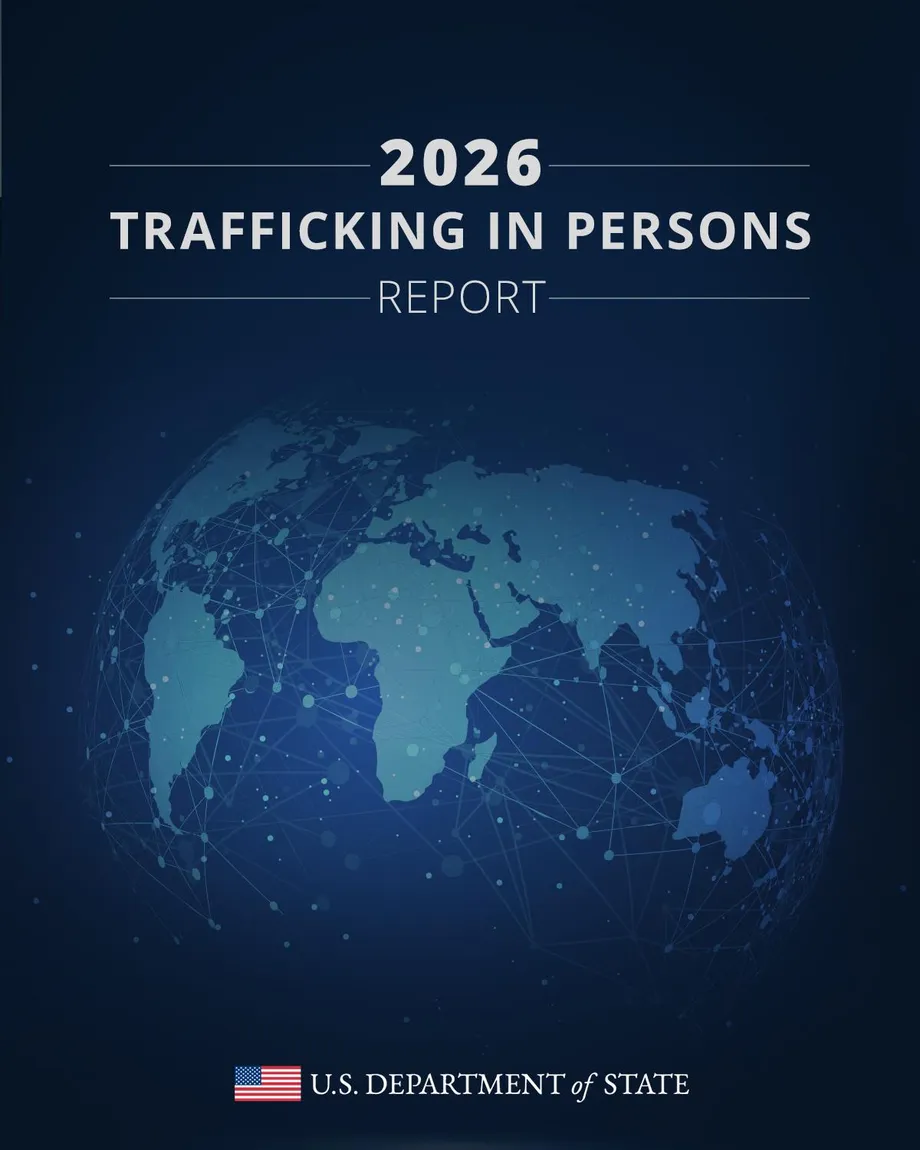
Brunei Darussalam has been upgraded from the Tier 2 Watch List to Tier 2 in the United States' 2026 Trafficking in Persons Report, according to a U.S. Embassy announcement dated October 9, 2026. The assessment credits Brunei with convicting traffickers under its trafficking law for the first time since 2016, investigating more cases and identifying more victims of labor trafficking.
Contents
- Convictions and victim identification drive Brunei's upgrade
- What changed in enforcement
- Why identifying victims matters
- A national plan running through 2029
- U.S. cooperation will continue
- Scam operations widen the regional threat
- Protection must distinguish coercion from criminal intent
- What remains unresolved before Tier 1
- Key Points
The embassy says U.S. Secretary of State Marco Rubio released the report at 2 a.m. on October 9 in Brunei, corresponding to 2 p.m. Eastern Daylight Time on October 8 in Washington. Its announcement of the upgrade describes increasing government efforts compared with the previous reporting period.
Brunei's government describes the change as its second consecutive annual improvement and says the country is the only member of the Association of Southeast Asian Nations (ASEAN) upgraded in this year's report. It attributes the progress to cooperation among security, enforcement and prosecution agencies under the National Committee on Anti Trafficking in Persons, known as JKAPO, at the Prime Minister's Office.
The upgrade recognizes progress, but it is not a declaration that Brunei has met every requirement. Tier 2 means the government does not fully meet the minimum standards for eliminating trafficking but is making significant efforts to do so. That distinction matters as Brunei sets its sights on Tier 1.
What changed in enforcement
The clearest enforcement milestone is the return of convictions under Brunei's trafficking law. The embassy identifies these as the first such convictions since 2016, making the development more specific than a general increase in police activity.
The assessment also credits authorities with investigating more cases and screening more people for signs of trafficking. These measures address different stages of the same process: screening can reveal exploitation that would otherwise go unrecognized, while investigation and prosecution determine whether offenders can be held accountable.
Neither the embassy announcement nor Brunei's statement gives the number of convictions, defendants, investigations or people screened. They also do not provide sentences or details of the cases. The reported increases therefore establish the direction of change, but do not allow a calculation of its size or a comparison of conviction rates.
That limit is particularly relevant to the gap since 2016. The announcement says convictions under the trafficking law resumed after that period; it does not establish that authorities undertook no other enforcement activity during the intervening years.
Why identifying victims matters
The embassy says Brunei identified more labor trafficking victims, while Brunei's government also points to improvements in victim protection. These are separate achievements from securing convictions. Finding someone who has been exploited creates an opportunity to provide safety and assistance, whether or not a prosecution immediately follows.
The State Department's 2026 trafficking report explains that forced labor can involve withheld wages, confiscated identity documents, manipulated debts, threats against relatives or psychological coercion. Physical confinement is not necessary for exploitation to qualify as trafficking.
This helps explain why broader screening matters. A person may appear to have accepted a job or may be able to leave a workplace occasionally, yet still be compelled to work through threats or debts. Initial agreement to employment does not make later coercion lawful.
The report also identifies particular difficulties in detecting domestic servitude. People working in private homes may be isolated, with employers controlling their food, transport and housing. Foreign domestic workers can face language barriers and a lack of local support. These are risks described in the global report, not findings that every such condition exists in Brunei.
A national plan running through 2029
Brunei's government says continuing implementation of its National Action Plan on Trafficking in Persons for 2025 to 2029 contributed to the progress recognized in the assessment. It presents the plan as an important part of prevention, alongside enforcement and protection.
JKAPO coordinates the work through the Prime Minister's Office. The government credits closer cooperation among security agencies and collaboration with enforcement and prosecution bodies. In practical terms, this links the agencies that may encounter a potential victim with those responsible for investigating exploitation and bringing a case to court.
The government also grounds its approach in Hifz al Nafs, the preservation of life under Maqasid Syariah, or the objectives of Islamic law. It describes an approach involving the whole government and the wider nation to protect people from trafficking.
The dated milestones outlined in the announcements are:
- 2016: The last previous convictions under Brunei's trafficking law, according to the U.S. Embassy.
- 2025 to 2029: The period covered by Brunei's current National Action Plan on Trafficking in Persons.
- October 8, 2026, in Washington, and October 9 in Brunei: The report's release, as dated in the embassy announcement.
The plan supplies a continuing policy timetable, but the announcements do not set out annual spending, numerical targets or a date for a further domestic review.
U.S. cooperation will continue
Laura Brown, Charge d'Affaires at the U.S. Embassy in Bandar Seri Begawan, welcomed the change in ranking on behalf of the embassy:
On behalf of the U.S. Embassy, I warmly congratulate the Government and people of Brunei Darussalam on this well-deserved upgrade to Tier 2,
Brown also said cooperation would continue, connecting the recognition of Brunei's progress with work on prosecutions, protection and international criminal networks:
We will continue working side by side to hold traffickers accountable, protect vulnerable people, and dismantle the transnational criminal networks that threaten the security and prosperity of both our nations.
Brunei's government similarly says JKAPO will strengthen prevention, victim protection and law enforcement while expanding cooperation with national, regional and international partners. Neither announcement identifies a new bilateral agreement, a funding commitment or a scheduled joint operation.
Scam operations widen the regional threat
The 2026 report assesses government efforts in 188 countries and gives special attention to trafficking in online scam operations. Its regional figures show why trafficking investigations increasingly intersect with financial crime and digital recruitment.
The State Department says Americans lost at least $18.2 billion to scam operations based in Southeast Asia in 2025. It also says criminal operations recruited hundreds of thousands of people from at least 80 countries, exploiting many through forced labor and forced criminal activity. People in more than 125 countries were defrauded.
Those figures describe different groups. The recruitment figure concerns people brought into the operations, including trafficking victims. The figure for more than 125 countries concerns people targeted by fraud. The $18.2 billion estimate concerns American losses, not total global losses and not money attributed to operations in Brunei.
The report describes recruitment through false job advertisements on employment websites, social media and messaging applications. People expecting legitimate work can instead be forced to conduct cryptocurrency investment fraud, romance scams or other financial crimes.
Some victims are confined in guarded compounds and subjected to violence, intimidation or sexual exploitation. Others receive salaries or retain some freedom of movement but still face coercion. The report warns that treating physical restraint as a requirement for trafficking can cause officials to miss victims.
This regional threat gives greater weight to Brunei's reported improvements in screening and cooperation. It does not establish that Brunei hosts scam compounds, or that the convictions cited in the upgrade involved online fraud.
Protection must distinguish coercion from criminal intent
Scam operations create a difficult problem for enforcement: someone participating in fraud may also be a trafficking victim forced to commit it. The State Department's report sets out a principle that victims should not be inappropriately penalized solely for unlawful acts committed as a direct result of being trafficked.
This does not mean every worker in a criminal operation is automatically a victim. It means authorities must examine force, deception and coercion before deciding how to treat someone found carrying out unlawful activity.
The report explains trafficking through three elements: what the trafficker does, the means used to control another person and the intended exploitation. Recruitment or harboring may be the act; force, fraud or coercion may be the means; compelled labor or commercial sex may be the purpose.
There is an important exception for children in commercial sex. Under the U.S. Trafficking Victims Protection Act, when the person is younger than 18, proof of force, fraud or coercion is not required. The report also explains that trafficking does not require movement across a border. Exploitation can occur where a victim already lives.
These distinctions connect victim protection with effective investigations. A person who fears punishment for acts committed under coercion may be reluctant to disclose exploitation. Assistance that prioritizes safety and informed choices can support participation in a case without making prosecution the sole measure of success.
What remains unresolved before Tier 1
Brunei's stated ambition is to reach Tier 1. The immediate significance of Tier 2 is narrower: the United States recognizes substantial efforts while still finding that the government does not fully meet minimum standards.
The announcements do not specify every remaining deficiency or provide a timetable for meeting those standards. They also leave unanswered how many victims received assistance, what services were provided and how the new convictions were distributed between labor and sex trafficking cases.
The national plan continues through 2029, but neither announcement gives a hearing, vote or deadline for another change in ranking. There is no stated guarantee that Brunei will reach Tier 1 in the next report.
The strongest evidence of progress is therefore concrete but bounded: convictions have resumed under the trafficking law, investigations and screening have increased, and more labor trafficking victims have been identified. Sustaining those gains while addressing remaining gaps is the task attached to the new ranking.
Key Points
- Brunei moved from the Tier 2 Watch List to Tier 2 in the 2026 assessment.
- The U.S. Embassy says convictions under the trafficking law were the first since 2016.
- Authorities investigated more cases, screened more people and identified more labor trafficking victims.
- Tier 2 recognizes significant efforts, but means minimum standards are not yet fully met.
- Brunei's national action plan covers 2025 to 2029, with Tier 1 its stated goal.
- The global report highlights forced criminal activity in scam operations; its regional figures are not specific to Brunei.