
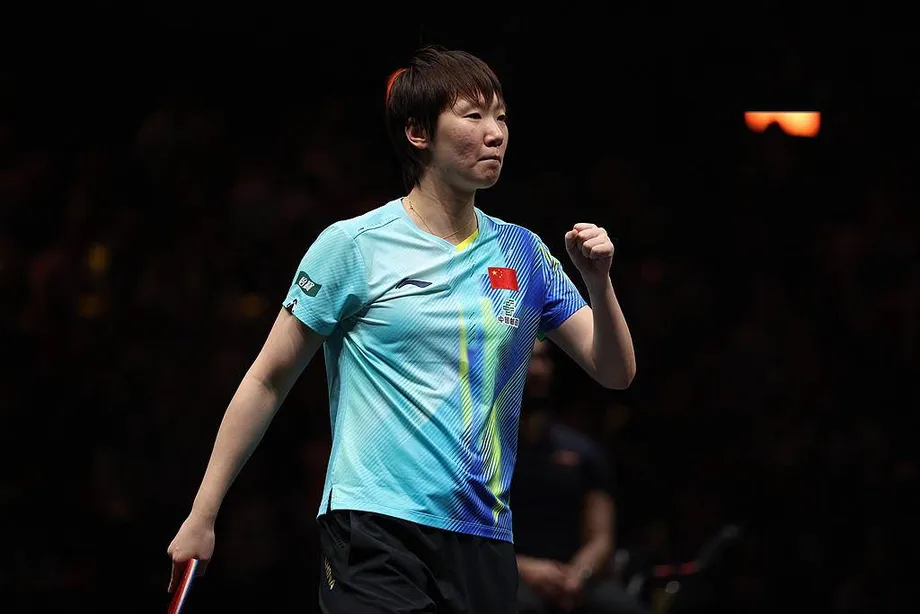
Two titles in two days for Wang Manyu
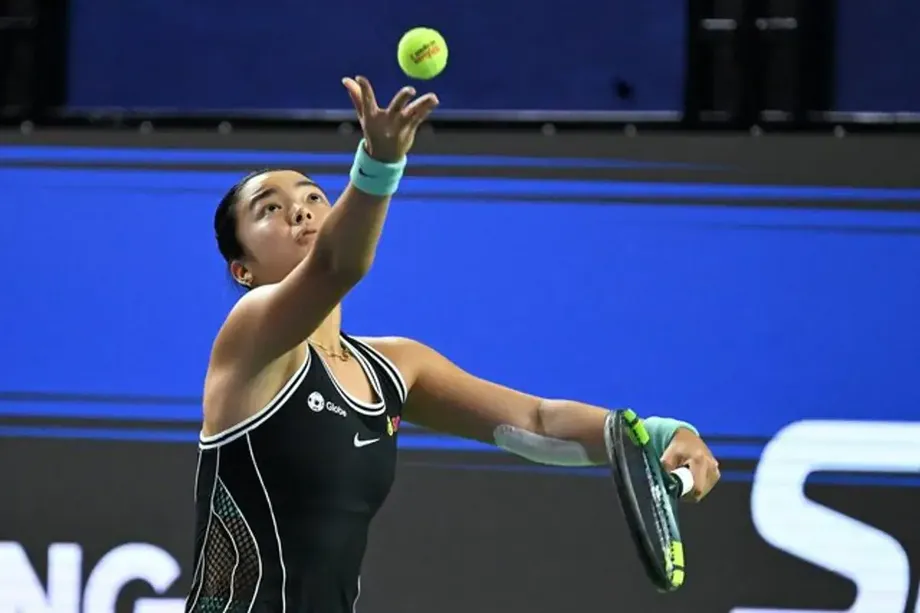
Wang Manyu retained the WTT China Smash women's singles championship in Beijing on October 11, 2026, beating Japan's Hitomi Sato 4-0 just one day after successfully defending the women's doubles title with Kuai Man. Her 11-2, 11-8, 11-3, 11-9 victory completed a second consecutive China Smash with both trophies and secured her fourth WTT Grand Smash singles title.
Contents
- Two titles in two days for Wang Manyu
- How Wang kept control of the final
- Why the second game required a different rule
- Sato's breakthrough despite the defeat
- A difficult route before the decisive win
- The doubles defense came first
- Matsushima survives a seven game final
- Zhou's best Grand Smash run ends in the semifinal
- Five titles shared by three teams
- Key Points
Japan's Sora Matsushima won the men's singles championship, recovering from a 3-2 deficit to defeat Chinese Taipei's Lin Yun-ju in seven games. China finished with two of the tournament's five titles, compared with all five in 2025. South Korea took both men's doubles and mixed doubles, with Lim Jong-hoon appearing in each winning partnership.
The tournament ran from October 1 to 11 at Shougang Park in Beijing's Shijingshan district, with the main draw beginning on October 4. The International Olympic Committee's China Smash results tracker records the daily results, Wang's two successful title defenses and the final championship list.
The women's final was more than a meeting between a defending champion and a first Grand Smash finalist. Sato had beaten Wang 3-0 in their previous encounter at the WTT United States Smash three months earlier. Wang entered the Beijing final with a 6-1 record against her, but that recent defeat gave this meeting a different edge.
How Wang kept control of the final
Wang established a commanding lead immediately, taking the opening game 11-2. Against Sato's defensive chopping, she maintained pressure through repeated attacks while adjusting to the spin coming back across the table.
A chopper uses strokes that put backspin on the ball, often returning attacks from farther behind the table. That can force an attacking player to build points patiently rather than expect a single powerful shot to finish a rally. Wang's ability to keep attacking without repeatedly making mistakes was central to the result.
Sato changed her serving approach in the second game, which became the closest contest before the fourth. Wang led 9-8 when the expedite system came into operation, then won the next two points to take the game 11-8. She followed with an 11-3 third game, putting herself one game from the championship.
The final game offered Sato a narrower margin to work with. Wang used successive forehand attacks to close it out 11-9. Across the four games, Wang scored 44 points to Sato's 22, twice her opponent's total, although the final game's two point margin showed that the match did not end as comfortably as it began.
Wang, the defending champion and top seed, said afterward that the result exceeded her own expectations:
"I had not expected the score to be 4-0. I had a stable mindset and resolutely executed my tactics in the match," Wang said.
Why the second game required a different rule
The expedite system was a distinctive feature of the final. It is designed to prevent a game from continuing indefinitely when long rallies and defensive exchanges slow the scoring.
The trigger described for this match was a game reaching 10 minutes without the players having scored a combined 18 points. Rules 2.15.1 and 2.15.2 of The Laws of Table Tennis, in the ITTF Statutes 2025, pages 43–44, specify that the system comes into operation after 10 minutes of play, or at any time when requested by both players or pairs, but is not introduced if at least 18 points have been scored. At 9-8 in the second game, Wang and Sato had scored 17. Once the system began, service alternated after every point instead of following the usual sequence of two serves each.
The system also places a limit on how long the server can continue a rally before the receiver is awarded the point. More precisely than the match account's description of requiring the server to win within 13 strokes, Rule 2.15.4 awards the point to the receiving player or pair after 13 correct returns in a rally. That changes the tactical balance because keeping the ball in play can itself become a route to a point for the receiver. Under Rule 2.15.6, once introduced, the system remains in operation until the end of the match.
Wang said she had prepared fully for the rule and remained firm and patient in executing her tactics. The second game showed the value of that preparation: the procedural change arrived at a tight score, but she won both remaining points rather than allowing Sato to draw level.
Sato's breakthrough despite the defeat
Sato became the first chopper to reach a WTT Grand Smash women's singles final. Her defeat therefore ended a tournament that had already produced a milestone for her playing style.
Her route included a 3-0 victory over China's Liu Ziling in the second round and a 4-1 win over qualifier Zhu Sibing in the quarterfinals. Against Zhu, Sato lost the second game but won the next three to advance.
In the semifinal on October 10, China's Chen Xingtong took the opening game 11-2. Sato then reversed the match, winning four consecutive games, 11-8, 11-7, 11-9 and 11-8, to reach the final.
Those results show why Wang's victory cannot be explained by their historical record alone. Sato had eliminated several Chinese opponents in Beijing and had won their previous meeting in straight games. Wang's final performance reversed that recent result while preventing the defensive rallies from becoming a sustained source of pressure.
A difficult route before the decisive win
Wang's final was a clean sweep, but her singles campaign included a much tighter encounter. She opened with a 3-0 victory over Wang Amy on October 4, then beat India's Manika Batra 3-1 on October 6.
Her round of 16 match against Shi Xunyao on October 8 went the distance. Wang lost the opening game 8-11, won the next two 11-7 and 11-8, then lost the fourth 14-16. She needed an 11-7 deciding game to secure a 3-2 victory.
From that point, she won 12 of the 13 games she played across the quarterfinal, semifinal and final. She defeated South Korea's Shin Yu-bin 4-0 in the quarterfinal, Japan's Miwa Harimoto 4-1 in the semifinal and Sato 4-0 for the title.
Wang described the championship as especially meaningful because she had handled pressure and overcome difficulties. She also credited the support surrounding her. Speaking as the tournament's singles champion, she said:
"I carried my momentum after the Asian Games into the China Smash, while facing difficulties and challenges during this process. Thanks to my coaches and teammates for their support, which helped me embrace these challenges with a positive mentality," Wang said.
The doubles defense came first
Wang and Kuai secured the women's doubles championship on October 10, beating Japan's Miwa Harimoto and Hina Hayata 3-1. They won the first game 13-11 and the second 11-2, lost the third 9-11, then finished the match 11-7.
Their route to the final included a 3-0 win over Liu Yangzi and Wan Yuan, a 3-0 quarterfinal victory over Gao Yuxin and Xiang Junlin, and a 3-1 semifinal win against Chen Yi and Li Yiwei. Several games required extra points, including a 15-13 finish to their quarterfinal.
China had three of the four women's doubles semifinal places. Wang Yidi and Jiang Yiyi lost the other semifinal to Harimoto and Hayata, leaving Wang and Kuai to defend the title against the Japanese pair.
Wang thanked her physical conditioning team after completing the two title defenses. She said she had been mentally and physically tired during the tournament, while also crediting the team with helping her maintain a healthy condition for sustained competition. She thanked spectators for their encouragement and urged them to keep supporting China's team.
The distinction matters in understanding her week: fatigue did not mean she reported an injury or an inability to compete. Her comments instead described the demands of playing deep into both draws and the support that allowed her to finish both successfully.
Matsushima survives a seven game final
Matsushima, identified as the world No. 1 in the tournament report, began the men's final by winning the first two games 11-7 and 11-9. Lin then took control, winning three consecutive games 11-7, 11-8 and 11-5 to move within one game of the title.
Matsushima answered with an 11-7 sixth game and an 11-9 deciding game. The complete sequence was 11-7, 11-9, 7-11, 8-11, 5-11, 11-7, 11-9 from his perspective.
The result illustrates why game totals, rather than accumulated points, decide a table tennis match. Lin scored 65 points across the final to Matsushima's 62, yet Matsushima won four games to Lin's three. Lin's larger margins in some of his winning games did not offset losing the deciding game.
Both finalists had played semifinals earlier on October 11. Matsushima beat China's Zhou Qihao 4-2, while Lin defeated Brazil's Hugo Calderano 4-3. Lin came back from losing the opening two games against Calderano and won the seventh 11-5 before returning for another match that went the full distance.
Zhou's best Grand Smash run ends in the semifinal
Zhou was China's only men's singles semifinalist, reaching that stage at a Grand Smash for the first time. His run included several recoveries before Matsushima stopped him.
Against Xiang Peng in the second round, Zhou lost the first two games before taking the next three, including a 13-11 deciding game. He then beat Japan's Tomokazu Harimoto 3-0 in the round of 16, with scores of 11-9, 11-8 and 11-9.
In the quarterfinal, Zhou recovered from a 2-1 deficit to beat South Korea's Jang Woo-jin 4-2. A 14-12 fifth game helped him move ahead before an 11-6 sixth game completed the victory.
His semifinal followed a similar pattern initially. Matsushima won the first two games 11-6 and 11-9, but Zhou responded with 12-10 and 11-7 wins to draw level. This time the comeback stopped there: Matsushima took the next two games 11-7 and 11-5.
China's men's singles field had been affected before play began. The IOC tracker records that Wang Chuqin and Lin Shidong withdrew from singles because of injuries. It also lists withdrawals by Wang Chuqin and Sun Yingsha from mixed doubles, Lin Shidong and Kuai Man from mixed doubles, and Lin Shidong and Huang Youzheng from men's doubles.
Five titles shared by three teams
China's two championships represented 40 percent of the five events, down from its five title sweep in 2025. Both victories involved Wang, with Kuai sharing the women's doubles crown. The comparison describes this tournament's results, but the withdrawals and individual match outcomes caution against treating it as a complete measure of each team's strength.
South Korea matched China's title count. Lim Jong-hoon won men's doubles with Oh Jun-sung and mixed doubles with Shin Yu-bin. In the mixed doubles final, Lim and Shin beat Lin Yun-ju and Cheng I-ching 3-2 after trailing 2-1. Their scores were 12-14, 11-9, 16-18, 13-11 and 11-8.
China's mixed doubles challenge ended in the quarterfinals, when Huang Youzheng and Chen Yi lost 3-2 to Matsushima and Miwa Harimoto. In men's doubles, Wen Ruibo and Yuan Licen reached the semifinals before losing 3-1 to the Lebrun brothers of France.
The closing stages unfolded across three days:
- October 9: Lim Jong-hoon and Shin Yu-bin won mixed doubles; Wang and Kuai reached the women's doubles final.
- October 10: Wang and Kuai retained women's doubles; Wang and Sato advanced to the women's singles final.
- October 11: Wang retained women's singles, and Matsushima won men's singles after defeating Zhou in the semifinal.
The tournament is complete, with all five champions decided. The results tracker does not set out a next tournament appearance for Wang, Matsushima or the other champions, or a return date for the injured Chinese players.
Key Points
- Wang Manyu beat Hitomi Sato 4-0 to retain the China Smash women's singles title.
- Wang and Kuai Man also defended women's doubles, defeating Miwa Harimoto and Hina Hayata 3-1.
- Wang won both events at the China Smash for the second consecutive year.
- Sato became the first chopper to reach a WTT Grand Smash women's singles final.
- Sora Matsushima recovered from 3-2 down to beat Lin Yun-ju 4-3 in the men's final.
- Zhou Qihao reached his first Grand Smash men's singles semifinal.
- China and South Korea won two titles each, while Japan took men's singles.