
Rs 4.99 Trillion Spending Plan Shifts Toward Running Costs
Sri Lanka’s 2027 Appropriation Bill proposes government expenditure of Rs 4,992,773,388,000, with recurrent spending rising by about a fifth while capital expenditure falls by 5.4 percent. The split puts more of the proposed spending envelope toward the continuing costs of government rather than investment in assets and development projects.
Contents
- Rs 4.99 Trillion Spending Plan Shifts Toward Running Costs
- A Larger Budget, With Less Capital Spending
- Where the Largest Allocations Go
- Transport Stands Out for Its Investment Share
- Health and Education Gain, but Running Costs Dominate
- Provincial Funding and Public Administration Are Separate
- Security Spending Rises Amid Disputes Over Land
- Why the Borrowing Ceiling Is Not the Deficit
- Votes Scheduled for November 20 and December 14
- Key Points
The official appropriation bill sets recurrent expenditure at Rs 3,240.242388 billion and capital expenditure at Rs 1,752.531 billion for January 1 to December 31, 2027. These amounts represent approximately 64.9 percent and 35.1 percent of the total respectively.
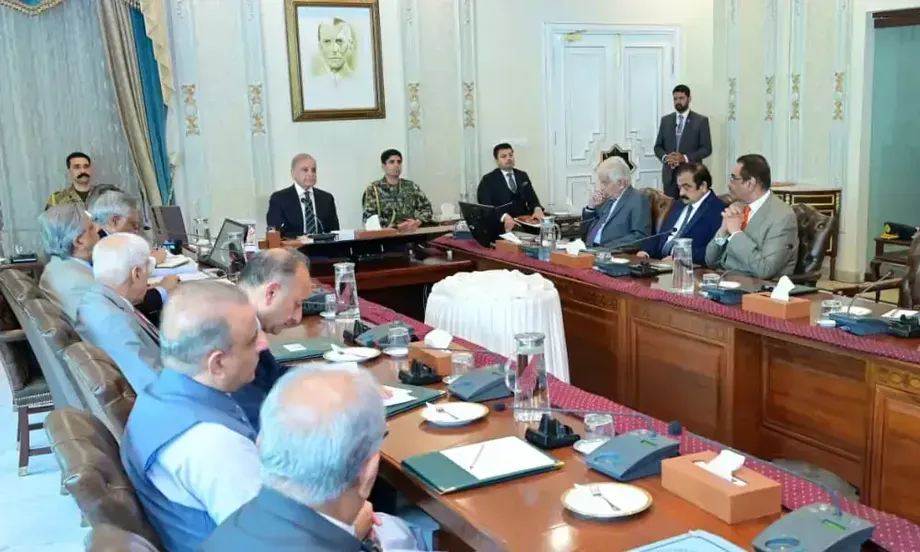
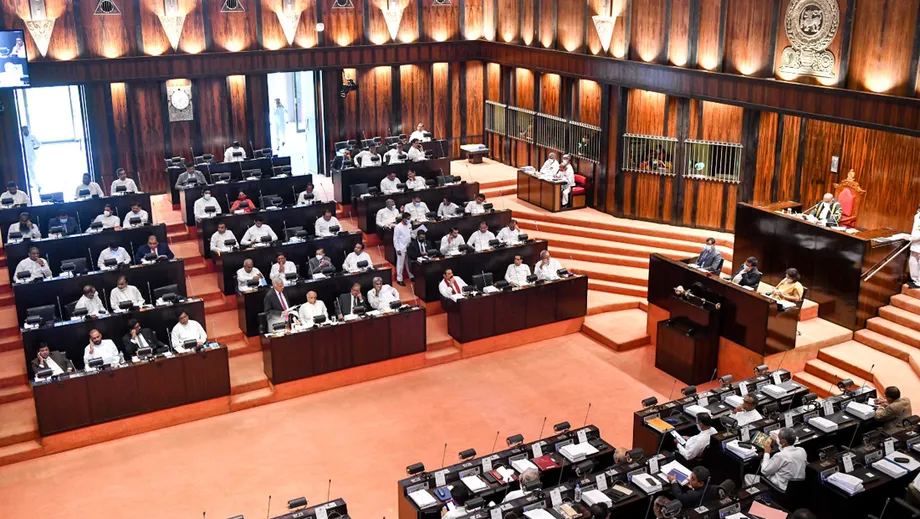
Dr. Anil Jayantha, Minister of Labour and Deputy Minister of Finance and Planning, presented the bill to Parliament on October 7, 2026. President Anura Kumara Dissanayake, who also holds the finance portfolio, is scheduled to deliver the budget speech on November 12. That speech will begin the second reading and set out the government’s budget proposals.
The bill also provides a Rs 3,800 billion borrowing ceiling. That figure includes borrowing associated with replacing maturing debt and should not be read as the amount of new financing needed to cover the annual budget deficit.
The distinction matters throughout the proposal: a ministry’s allocation is not necessarily its investment budget, a borrowing limit is not a deficit estimate, and the bill is not yet an approved spending law. Parliament still has to debate its principles, examine ministry allocations and vote on passage.
The government’s first reading announcement confirms the exact expenditure total and identifies the bill as the legal framework for spending and borrowing during 2027.
A Larger Budget, With Less Capital Spending
Total expenditure is reported to rise from about Rs 4,545 billion in 2026 to nearly Rs 4,992.8 billion in 2027. Using those figures, the increase is approximately Rs 447.8 billion, or 9.9 percent. The comparison is approximate because the 2026 total is rounded.
Within that larger envelope, the reported increase of about a fifth in recurrent expenditure contrasts with the 5.4 percent reduction in capital expenditure. Recurrent spending generally covers continuing expenses such as salaries, supplies, maintenance and transfers. Capital expenditure generally finances assets and development work whose benefits extend beyond the current year.
The two categories serve different purposes. More recurrent funding can support the operation of public services, while capital funding can pay for construction, equipment and other investment. Neither category alone establishes whether a service will improve, because the result also depends on what is purchased and whether planned expenditure is carried out.
The reported capital allocation differs from the figure in the formal budget presentation, but no alternative amount or reconciliation is specified. With the November 12 speech still scheduled, the precise presentation being compared is also unclear. The bill’s Rs 1,752.531 billion capital total is therefore the stated figure, rather than a reconciled total across budget documents.
Where the Largest Allocations Go
The Ministry of Finance, Planning and Economic Development receives the largest reported allocation, at about Rs 856.8 billion. Another account puts it at Rs 856.9 billion. That small difference should be retained as a reporting discrepancy rather than treated as an exact agreed amount.
The official schedule provides a narrower breakdown under Head 102, the Minister of Finance, Planning and Economic Development. Operational activities receive Rs 233.26534 billion in recurrent funding and Rs 35.4585 billion in capital funding. Development activities receive Rs 12 million recurrent and Rs 9.02 billion capital. Together, those entries total about Rs 277.756 billion, so Head 102 alone should not be mistaken for the broader reported ministry allocation.
The other large allocations show the scale of spending outside the finance portfolio. Provincial Councils receive Rs 659.95 billion in the official schedule, while the Ministry of Public Administration, Provincial Councils and Local Government receives Rs 651 billion. Health and Mass Media receives about Rs 590.5 billion, followed by Transport, Highways and Urban Development at Rs 500 billion.
Defence receives Rs 458 billion, and Education, Higher Education and Vocational Education receives Rs 328 billion. Agriculture, Livestock, Land and Irrigation is reported to receive Rs 218 billion. These totals describe proposed funding, not completed expenditure or a measured change in service delivery.
Transport Stands Out for Its Investment Share
The Ministry of Transport, Highways and Urban Development has one of the clearest investment profiles among the allocations detailed in the bill. Of its Rs 500 billion total, Rs 432 billion is capital expenditure and Rs 68 billion is recurrent expenditure.
Capital spending therefore represents 86.4 percent of the ministry’s allocation. Its Rs 432 billion also accounts for approximately 24.7 percent of the bill’s entire Rs 1,752.531 billion capital envelope. Nearly one quarter of proposed government capital spending is consequently assigned to this portfolio.
That concentration helps explain why the national capital reduction cannot be read as an equal cut across ministries. Transport retains a large investment allocation even though capital expenditure falls in aggregate. The figures do not establish which individual projects will proceed, their construction schedules or whether their allocations have changed.
Agriculture, energy and housing are also reported to receive more capital than recurrent funding. Exact category totals for those portfolios are not specified here, so their investment shares cannot be calculated on the same basis as transport’s.
Health and Education Gain, but Running Costs Dominate
The Ministry of Health and Mass Media receives Rs 470.499998 billion in recurrent funding and Rs 120 billion in capital funding, making a total of approximately Rs 590.5 billion. Recurrent spending accounts for about 79.7 percent of that allocation, with capital spending making up 20.3 percent.
Against a reported 2026 health allocation of Rs 514 billion, the proposed total is approximately Rs 76.5 billion higher, an increase of 14.9 percent. The comparison uses the reported earlier figure and the 2027 ministry total; it does not establish how much of the increase goes to any particular hospital, programme or media institution.
Education, Higher Education and Vocational Education receives Rs 250 billion recurrent and Rs 78 billion capital. Its Rs 328 billion total is Rs 27 billion above the reported Rs 301 billion allocation for 2026, a rise of about 9 percent.
Capital expenditure represents approximately 23.8 percent of the education allocation. Both health and education therefore have larger proposed totals than their reported 2026 allocations, but most of their 2027 funding is assigned to continuing expenditure. The category breakdown alone does not show staffing levels, equipment purchases or the distribution between institutions.
Provincial Funding and Public Administration Are Separate
The bill lists Provincial Councils separately from the Ministry of Public Administration, Provincial Councils and Local Government. Provincial Councils receive Rs 574.95 billion recurrent and Rs 85 billion capital, totaling Rs 659.95 billion. Public Administration receives Rs 608 billion recurrent and Rs 43 billion capital, totaling Rs 651 billion.
Together, these two allocations amount to Rs 1,310.95 billion, approximately 26.3 percent of total proposed expenditure. Their spending profiles are heavily weighted toward recurrent expenditure: about 87.1 percent for Provincial Councils and 93.4 percent for Public Administration.
The separate entries matter because the ministry’s name includes Provincial Councils, but its allocation should not be substituted for the distinct provincial funding heads. Combining them can illustrate their scale, provided readers are told that they remain separate allocations.
Parliament’s budget procedure guide explains that Article 154R of the Constitution assigns the Finance Commission a role in recommending provincial funding. Its recommendations take account of population, income and disparities between provinces. The aggregate provincial allocation does not, by itself, show how those considerations translate into funding for each province.
Security Spending Rises Amid Disputes Over Land
Defence receives Rs 388 billion in recurrent expenditure and Rs 70 billion in capital expenditure. Its Rs 458 billion total is Rs 3 billion above the reported Rs 455 billion allocation for 2026, an increase of approximately 0.7 percent. About 84.7 percent of the proposed defence budget is recurrent spending.
Public Security and Parliamentary Affairs is reported to receive Rs 230.5 billion. Combined with defence, that produces Rs 688.5 billion, or approximately 13.8 percent of total proposed expenditure. The combined allocation is about 2.1 times the Rs 328 billion education allocation, although these portfolios perform different functions and the security portfolio also includes parliamentary affairs.
Reports disagree on the public security comparison. One gives a rise from Rs 193 billion to Rs 230.5 billion, an increase of about 19.4 percent. Another gives a rise from Rs 183 billion to a rounded Rs 230 billion, approximately 25.7 percent. The different starting figures prevent a single confirmed growth rate.
The defence allocation comes alongside continuing disputes over military control of land in the north. Deputy Defence Minister Aruna Jayasekara reportedly told Parliament in July 2026 that 1,661 acres inside the Valikamam North High Security Zone would be permanently acquired rather than released. Landowners at Myliddy were reported to have held weekly protests for 23 consecutive weeks.
Military recruitment has also reportedly continued despite a government pledge to reduce the size of the armed forces. The budget totals do not establish staffing targets or identify spending tied to the disputed land. Those issues should therefore be distinguished from what the allocation figures themselves demonstrate.
Why the Borrowing Ceiling Is Not the Deficit
The bill states that the balance outstanding of borrowing authorized under its provisions must not exceed Rs 3,800 billion at any time during 2027 or at the end of that financial year. This is a legal limit on the borrowing covered by the bill, not a statement that the annual deficit will equal Rs 3,800 billion.
A deficit measures the gap between expenditure and revenue over a period. Borrowing can also replace debt that falls due. For example, issuing a new loan to repay an old loan requires borrowing authority even though it does not represent the same amount of additional financing for new spending.
The distinction prevents an incorrect reading of the ceiling as either the deficit or Sri Lanka’s entire public debt stock. The borrowing provision and the expenditure total answer different questions and cannot, on their own, establish the revenue needed or the final financing gap.
The allocations also do not specify the full tax package that Dissanayake will announce. Reports place the President’s allocation at Rs 11.2 billion against Rs 8.2 billion in 2026, although the comparison’s wording is unclear. The Prime Minister’s allocation is reported at Rs 1.02 billion against Rs 898 million. These smaller entries do not resolve the wider questions about revenue and financing.
Votes Scheduled for November 20 and December 14
The parliamentary budget programme sets out seven allotted days for the second reading debate and 19 for the committee stage. The sequence moves from consideration of the budget’s principles to examination of ministry spending heads before the final vote.
- September 18, 2026: Date of the Gazette part carrying the bill supplement, issued on September 21.
- October 7, 2026: Anil Jayantha presents the bill for its first reading.
- November 12, 2026: Dissanayake is scheduled to deliver the budget speech.
- November 13 to 20, 2026: Seven allotted debate days, with the second reading vote scheduled for 6 p.m. on November 20.
- November 21 to December 14, 2026: Nineteen allotted committee debate days, with the third reading vote scheduled for 6 p.m. on December 14.
- January 1, 2027: Start of the financial year covered by the proposed law.
One entry in Parliament’s programme prints the second reading vote date as November 20, 2025. The surrounding schedule uses 2026, and the government’s first reading announcement confirms the November 2026 timetable. The isolated entry is inconsistent with the rest of the programme.
Parliament is scheduled to meet at 9:30 a.m. during the budget debates, including Saturdays but excluding Sundays and public holidays. The programme reserves 11 a.m. to 6 p.m. for debate.
Under the procedure described by Parliament, introduction is the first reading, while the budget speech begins the second reading. Approval at that stage sends the bill to a committee of the whole House for scrutiny of spending heads. Final passage, with or without amendments, authorizes the allocations for the following year.
Parliament’s guide places control of public finance under Article 148 of the Constitution and explains the authorization needed to withdraw money from the Consolidated Fund under Article 150. It also states that rejection of the Appropriation Bill dissolves the Cabinet under Article 48(2). The scheduled votes are therefore decisions about both spending authority and the government’s continuation.
Key Points
- Total proposed expenditure is Rs 4,992.773388 billion for 2027.
- Recurrent expenditure is Rs 3,240.242388 billion, rising by about a fifth, while capital expenditure falls 5.4 percent to Rs 1,752.531 billion.
- Transport receives Rs 432 billion in capital funding, about one quarter of the national capital allocation.
- Defence and public security together are reported at Rs 688.5 billion, approximately 13.8 percent of proposed expenditure.
- The Rs 3,800 billion borrowing ceiling includes refinancing and is not the annual deficit.
- The budget speech is scheduled for November 12, 2026, followed by votes on November 20 and December 14.
- The bill remains subject to parliamentary debate, possible amendments and approval.