
A rating recovery after $1 billion in repayments
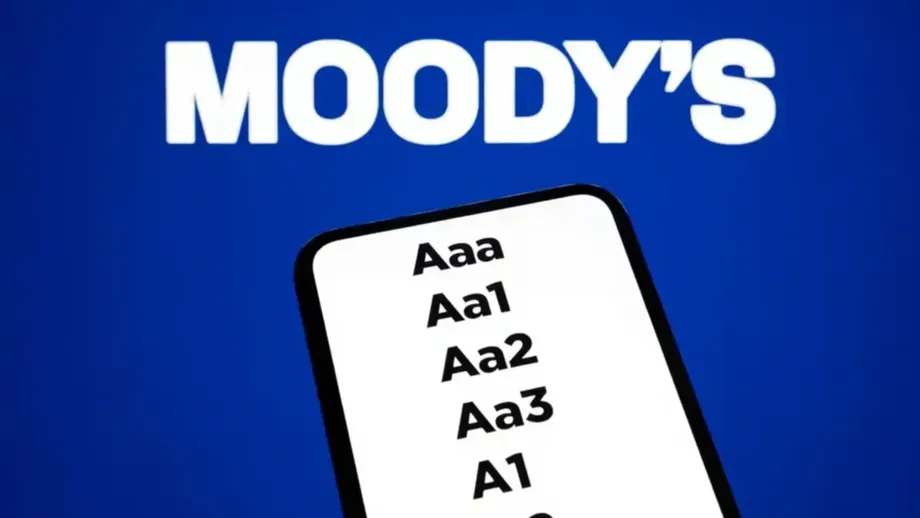
Moody's has upgraded the Maldives' sovereign credit rating from Caa2 to Caa1 with a stable outlook after the government settled a $500 million sukuk, a $400 million currency swap with the Reserve Bank of India and $100 million in Treasury bills. The decision, announced on October 8, 2026, reflects a reduction in the risk that the government will fail to meet its debt payments in the near future.
Contents
- A rating recovery after $1 billion in repayments
- What Caa1 and a stable outlook mean
- The payments behind the decision
- How the payment schedule changed
- The next debt test is already scheduled
- Debt falls relative to GDP, but remains high
- Foreign currency rules strengthen buffers, with limits
- New financing provides support, not debt cancellation
- Historical ratings and energy risks qualify the recovery
- Key Points
The upgrade comes with substantial warnings. Moody's expects the fiscal deficit to reach 8% to 8.5% of gross domestic product this year and government debt to remain above 100% of GDP over the next few years. It also identifies higher energy costs, weaker tourism receipts and limited usable foreign currency reserves as continuing pressures.
The Finance Ministry presents the decision as recognition of debt repayments, stronger financial buffers and government policies introduced from 2024. Its figures show public debt falling from 129.2% of GDP at the end of 2025 to 122.6% by the end of July 2026.
These developments describe an easing of immediate payment pressure, rather than the end of the country's debt difficulties. Nearly $1.9 billion in external debt service was due during 2026, with $411 million still scheduled for the final quarter. That remaining amount includes a separate Indian currency swap denominated in rupees, due in October.
What Caa1 and a stable outlook mean
A sovereign credit rating assesses the risk that a government will not repay its borrowing as agreed. Moving from Caa2 to Caa1 is an improvement of one rating step, but Caa1 remains a low rating within the speculative category. Moody's assessment continues to reflect substantial credit risk.
The stable outlook is distinct from the rating itself. It signals that Moody's does not currently anticipate a change in the rating's direction, rather than promising stable economic conditions or guaranteeing repayment. The agency's forecasts for deficits, debt and reserves explain why a better rating can coexist with a difficult financial position.
The decision reverses the downgrade Moody's made in September 2024. It also returns the Maldives to the Caa1 level recorded during the pandemic in 2021. Those comparisons show a recovery to an earlier assessment, not a return to the country's stronger initial ratings.
The payments behind the decision
The largest individual obligation settled was the $500 million sukuk in April 2026. A sukuk is an Islamic financing instrument that serves a similar funding purpose to a conventional bond but uses a structure designed to comply with Islamic finance principles.
The government also repaid a $400 million currency swap with the Reserve Bank of India. A currency swap provides access to another currency under an agreement that includes repayment obligations. Settling it removes that particular payment from the schedule, although it does not establish that every Indian financing arrangement has been repaid.
A further $100 million in Treasury bills owed to the State Bank of India was repaid across May and September. Treasury bills are government securities generally used to borrow for shorter periods. Together, the sukuk, dollar swap and Treasury bill repayments amount to $1 billion.
The description of the State Bank of India transaction differs between accounts. The Finance Ministry used the term securities investments for the $100 million, while the account of Moody's decision identifies repayments of Treasury bills owed to the bank. One account describes the government receiving investment. Those descriptions should not be treated as proof of a separate $100 million cash inflow alongside the repayments.
How the payment schedule changed
The developments span policy changes, repayments and an extension of a future obligation. The main dates are:
- 2024: Foreign currency measures were introduced, with an expansion reported in 2026.
- September 2024: Moody's lowered the Maldives' rating to Caa2.
- April 2026: The $500 million sukuk and $400 million Reserve Bank of India swap were repaid.
- May and September 2026: Treasury bill repayments to the State Bank of India totalled $100 million.
- End of July 2026: The Finance Ministry recorded public debt at 122.6% of GDP.
- October 8, 2026: The Moody's upgrade to Caa1 with a stable outlook was announced.
- October 2026: An INR30 billion Indian currency swap falls due.
- 2031: The revised repayment deadline applies to the $100 million obligation described by the ministry as a Eurobond.
The extension to 2031 reduces pressure on the immediate repayment calendar, but it is not equivalent to paying off the debt. It moves the obligation into a later period, leaving a future administration to address it.
There is also a difference in how that obligation is identified. The ministry describes a $100 million Eurobond maturity extension, while another account identifies the transaction as an extension of an Abu Dhabi Fund loan. Both describe deferred repayment, but the instrument's identity is disputed. The revised interest terms and detailed repayment conditions are not specified.
The next debt test is already scheduled
Of nearly $1.9 billion in external debt service due in 2026, $411 million remains for the final quarter. Using those figures, roughly 22% of the year's scheduled external payments were still outstanding when the upgrade was announced. External debt service includes scheduled principal and interest, so it should not be compared directly with a list of principal repayments alone.
The remaining schedule includes an INR30 billion currency swap with India due in October. This is separate from the $400 million Reserve Bank of India swap already repaid in April. The different currencies and payment dates matter: settlement of the dollar facility does not mean that the rupee obligation has also been discharged.
The rating decision therefore arrives between major payments already completed and another substantial obligation approaching. No confirmed settlement date within October, or detailed financing plan for the remaining $411 million, is specified. The government's ability to meet that schedule is a more immediate test than the deferred 2031 payment.
Debt falls relative to GDP, but remains high
The Finance Ministry's reported decline from 129.2% to 122.6% of GDP equals 6.6 percentage points. Relative to the starting ratio, that is a reduction of about 5.1%. It is a measurable improvement, although public debt still exceeds the value of one year's economic output.
A debt ratio compares the amount owed with the size of the economy. It can fall because debt declines, GDP rises, or both. Without the corresponding debt totals and GDP figures, the ratio alone does not show how much debt was removed in dollar terms. The ministry attributes the improvement to repayments and its fiscal policies.
Moody's expects government debt to remain above 100% of GDP over the next few years. Its forecast of a fiscal deficit of 8% to 8.5% of GDP in 2026 also points to continuing financing needs. A fiscal deficit means government spending exceeds revenue during the year, creating a gap that must be covered through borrowing or other funding.
That distinction helps explain the rating decision. Repaying obligations can reduce the immediate risk of default even while deficits create new borrowing requirements. The fall in the debt ratio and the continued deficit are different measures of financial health, and neither cancels out the other.
Foreign currency rules strengthen buffers, with limits
Moody's credited foreign currency rules requiring tourism earnings to be converted through local banks. The Finance Ministry says measures introduced in 2024 and expanded in 2026 increased foreign currency entering the domestic banking system, supporting official reserves and deposits in the Sovereign Development Fund.
For a government with foreign currency obligations, access to dollars and other external currencies matters separately from the ability to raise domestic revenue. More money passing through local banks can improve access to the currencies needed for debt payments. The ministry also points to increased Sovereign Development Fund deposits as part of the country's stronger financial buffers.
Moody's nevertheless describes usable reserves as weak compared with countries carrying similar ratings. Growth in reported reserves does not necessarily mean that enough funds are readily available to meet every upcoming payment. The assessment does not give a reserve total or specify how much can immediately be used for debt service.
Stronger reserves and weak usable reserves are therefore not necessarily conflicting statements. One concerns improvement over time; the other concerns whether the remaining buffer is adequate. That distinction is central to understanding why the upgrade stops at Caa1.
New financing provides support, not debt cancellation
The government has secured $130 million from three development institutions: $40 million from the World Bank, $50 million from the Asian Development Bank and $40 million from the OPEC Fund for International Development. The Finance Ministry cites this support as evidence of continued access to external financing.
The funding is described as assistance in the ministry's account and as borrowing in the account of the government's debt programme. It should not be assumed to consist of grants. Loan financing can help cover immediate needs, but also brings future repayment obligations. The interest rates, repayment periods and conditions for these facilities are not detailed.
The government is discussing further loans or concessional financing with development partners. Concessional financing generally offers more favourable terms than ordinary market borrowing, such as lower interest or longer repayment periods. No additional amount or agreement date has been announced.
The distinction between access to financing and a reduction in debt is important here. The former can help prevent a payment failure even when the latter has not occurred. Moody's upgrade reflects greater confidence in meeting obligations, while its low rating recognises that reliance on continued financing remains a vulnerability.
Historical ratings and energy risks qualify the recovery
The Finance Ministry's credit rating page, dated December 20, 2022, records Moody's rating as Caa1 with a stable outlook, reviewed on August 17, 2021. It also records the country's first Moody's rating as B2 in September 2016 and its first Fitch rating as B+ in May 2017. This is a historical record, not confirmation of the October 2026 decision.
The same page lists Fitch at B- with a negative outlook, reviewed on October 13, 2022. Accounts of Fitch's more recent position differ: one describes a downgrade driven by sukuk repayment concerns, while another gives a June 2026 upgrade from CC to CCC-. Without a current official Fitch notice, the precise rating sequence cannot be established from those accounts.
Energy costs are another constraint. Moody's identifies higher energy prices and weaker tourism receipts as risks to the balance of payments, which tracks money flowing between the Maldives and the rest of the world. Higher external costs alongside weaker foreign earnings can make it harder to build the currency buffers needed for debt payments.
The Finance Ministry linked rising energy prices to conflict in the Middle East. In its statement, the ministry set out the spending priorities it intends to maintain despite that pressure:
"The government's priorities are to protect the essential needs of the public, support economic activity and maintain public expenditure within the budget, while remaining attentive to potential challenges arising from instability in the Middle East and rising energy prices," the ministry said.
The government also lists stronger external finances, macroeconomic stability, faster adoption of renewable energy and improved business infrastructure among its priorities. No new implementation deadlines or quantified savings accompany those commitments. For now, the clearest change is reduced immediate default risk, with substantial debt, reserve constraints and another payment deadline still in place.
Key Points
- Moody's upgraded the Maldives from Caa2 to Caa1 with a stable outlook, reversing its September 2024 downgrade.
- The government repaid a $500 million sukuk, a $400 million Indian dollar swap and $100 million in Treasury bills.
- Public debt fell from 129.2% to 122.6% of GDP, a decline of 6.6 percentage points.
- Moody's forecasts a 2026 fiscal deficit of 8% to 8.5% of GDP and debt above 100% of GDP for the next few years.
- Some $411 million in external debt service remains for the final quarter, including an INR30 billion swap due in October.
- A $100 million repayment was extended to 2031, though accounts differ on the instrument involved.
- Weak usable reserves, higher energy costs and weaker tourism receipts remain risks despite the upgrade.