
561 Projects, With Gold Refining Dominating Output
Kazakhstan's special economic zones have attracted 11.5 trillion tenge in investment across 561 completed projects, created more than 38,000 jobs and produced goods worth 15.9 trillion tenge, according to figures released by the Ministry of Industry and Construction. Exports accounted for 1.1 trillion tenge of that production.
Contents
- 561 Projects, With Gold Refining Dominating Output
- How the Latest Totals Compare With 2025
- Exports Account for About 7% of Production Value
- Polypropylene Adds a New Industrial Product
- Gold and Industrial Pipes Show Different Roles
- Textiles Move From Cotton to Finished Goods
- Corn Processing Starts With a 500,000 Tonne Phase
- Why the Official Zone Counts Differ
- Infrastructure and Oversight Remain Central
- What the Next Assessment Needs to Establish
- Key Points
The largest disclosed contribution comes from the Tau-Ken Altyn precious metals refinery in the Astana New City zone. Its reported production value exceeds 8.8 trillion tenge, equivalent to more than 55% of the nationwide total if the figures cover the same reporting period. That concentration matters when assessing how much the headline output reflects a broad industrial expansion.
The ministry describes a network of 18 special economic zones, including four established during 2025 and 2026. However, QazIndustry, the institution coordinating these zones, lists 17 on its official website. Neither account explains the difference or provides a common reference date.
The latest figures appear in a report dated October 10, 2026. They combine totals accumulated across the zone network with individual factory figures measured over different periods. One example is Kazakhstan Petrochemical Industries Inc., whose 366.2 billion tenge in production specifically covers the first half of 2026. The national totals should therefore not be read as production or investment achieved in that half year alone.
The expansion includes petrochemicals, precious metals, industrial pipes, cotton textiles and corn processing. Several factories are operating only their first phase, making it necessary to distinguish production already achieved from capacity and employment expected after further construction.
How the Latest Totals Compare With 2025
At a government meeting on September 9, 2025, chaired by Prime Minister Olzhas Bektenov, Industry and Construction Minister Yersayin Nagaspayev discussed reforms to the zone system. At that time, the zones had launched 532 projects worth approximately 10 trillion tenge.
The latest count of 561 projects is 29 higher, an increase of about 5.5%. Investment of 11.5 trillion tenge is approximately 1.5 trillion tenge, or 15%, above the earlier rounded figure. These comparisons indicate a larger project portfolio, although they do not establish that every additional project or investment commitment arose between the two announcements.
The September 2025 figures included 85 projects with foreign participation and nearly 800 billion tenge in direct foreign investment. Those 85 projects represented about 16% of the 532 projects then reported. The latest update does not provide an equivalent breakdown, so it cannot establish whether the foreign participation share has increased.
The main dates show how the announcements fit together:
- July 3, 2019: Government Resolution No. 469 designated QazIndustry as the unified coordinator of special economic and industrial zones.
- 2021: QazIndustry reported annual zone production of 1.2448 trillion tenge and investment of 905.3 billion tenge.
- September 9, 2025: The government discussed zone reforms alongside a portfolio of 532 launched projects.
- December 2025: The first phase of the Turkistan Tokyma cotton textile complex began operating.
- First half of 2026: Kazakhstan Petrochemical Industries Inc. produced goods worth 366.2 billion tenge.
- October 10, 2026: The latest reported network totals reached 561 projects and 11.5 trillion tenge in investment.
Exports Account for About 7% of Production Value
The 1.1 trillion tenge export figure represents approximately 6.9% of the reported 15.9 trillion tenge in production. This is a share calculated from monetary values, not a measure of the physical volume of goods sold abroad.
The figures show that exports account for a relatively small portion of recorded production value, even as the ministry presents several major factories as opportunities to expand overseas sales. No breakdown identifies which zones or products generated those exports, and no comparable earlier export total is given.
The 16 trillion tenge production figure used in one headline is a rounding of the 15.9 trillion tenge stated in the accompanying account, rather than a separate estimate. More consequential uncertainties concern reporting periods and the balance between existing output and future capacity.
Polypropylene Adds a New Industrial Product
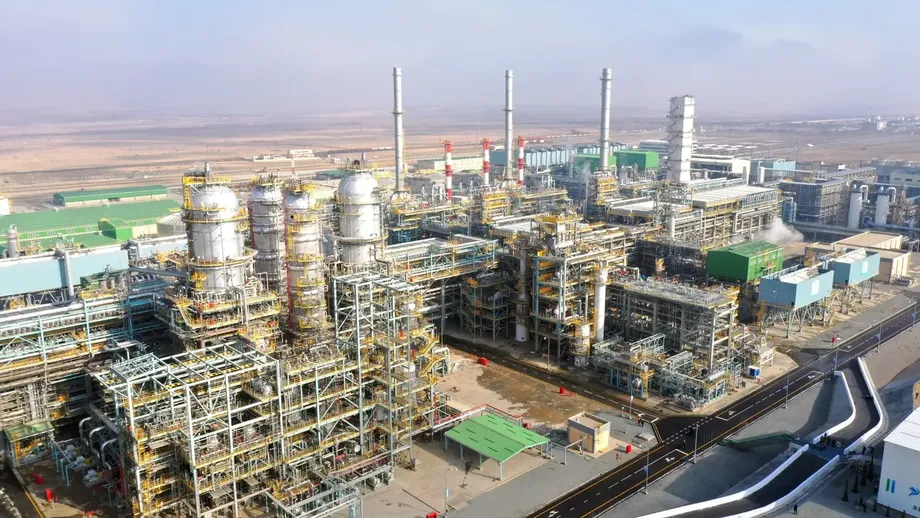
In Atyrau Region, Kazakhstan Petrochemical Industries Inc., known as KPI, operates the country's first gas chemical complex in the National Industrial Petrochemical Technopark special economic zone. Its design capacity is 500,000 tonnes of polypropylene a year.
Polypropylene is a plastic used in products such as packaging, fibres and manufactured components. Producing it turns hydrocarbon feedstock into an industrial material rather than selling that feedstock without further processing. The ministry presents the complex as a step in building Kazakhstan's oil and gas chemical cluster.
KPI recorded production worth 366.2 billion tenge in the first half of 2026. That establishes a monetary output figure for a defined period, but the update does not state how many tonnes were produced, what proportion of capacity was used or how much was exported.
The intended benefits are to meet part of domestic demand and increase export opportunities. The annual capacity figure alone cannot show whether those goals have been met. Capacity describes what a plant is designed to produce, while actual production depends on operating time, feedstock availability and demand.
Gold and Industrial Pipes Show Different Roles
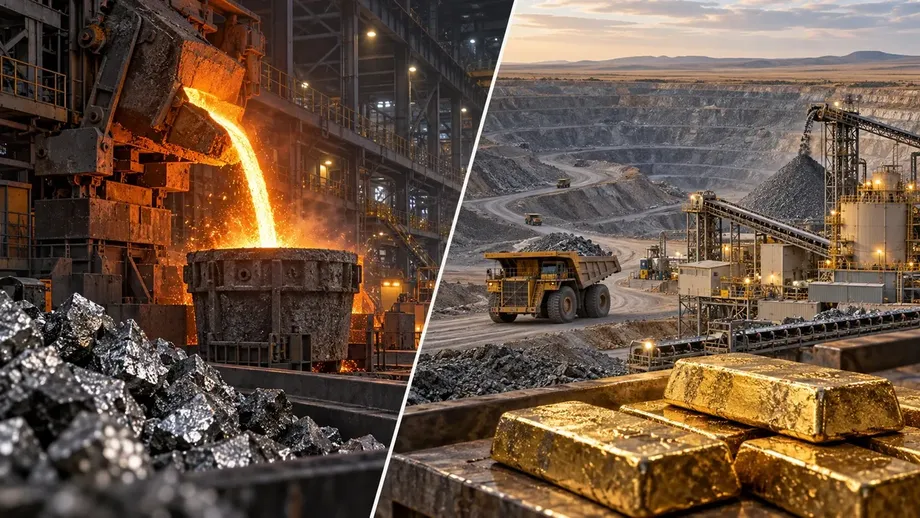
Tau-Ken Altyn, located in the Astana New City special economic zone, can produce 25 tonnes of refined gold and 50 tonnes of silver annually. Refining removes impurities so that precious metals can meet the standards required for further use or sale.
The plant's accumulated production value has exceeded 8.8 trillion tenge. Against national zone output of 15.9 trillion tenge, that is a very large contribution. However, the update does not identify a matching start date for both totals or give annual output volumes for the refinery. Its share should therefore be treated as a conditional comparison, not a precise measure of its contribution in a particular year.
Precious metals also carry high values per tonne. Their weight in a monetary production total does not mean they account for a similar share of employment, physical output or the number of businesses operating in the zones.
In the Saryarka zone, SMIT Central Asia supplies pipes and fittings for oil and gas operations, utilities and the energy industry. The factory has capacity for 30,000 tonnes a year and reported accumulated output worth 33.64 billion tenge.
Its products include thermally insulated pipeline systems described as meeting international quality requirements. These serve a different industrial need from gold refining: supplying equipment for networks that transport fluids and heat. The update does not identify the specific standards or give a separate export figure for the factory.
Textiles Move From Cotton to Finished Goods
The first phase of Turkistan Tokyma, a Lihua Group cotton textile complex in the Turan special economic zone in Turkistan Region, opened in December 2025. It created 430 jobs.
At full capacity, the complex is expected to produce 11,400 tonnes of yarn, 47.3 million square metres of fabric, 2 million bedding sets and 4 million blankets annually. These are planned production levels for the completed complex, not reported output from its first operating phase.
The project connects several stages of manufacturing. Cotton is processed into yarn, yarn into fabric, and fabric into finished household textiles. Keeping more of those stages within Kazakhstan allows domestic cotton to be sold as manufactured goods rather than only as agricultural raw material.
The ministry identifies export growth as a goal, but the update gives neither a date for reaching full capacity nor figures for current textile production and overseas sales. The confirmed employment figure is 430 jobs; no separate employment target for the completed complex is stated.
Corn Processing Starts With a 500,000 Tonne Phase
In Zhambyl Region, Shengtai Biotech, part of Fufeng Group, has launched the first phase of a corn processing plant in the Jibek Joly special economic zone. That phase is designed to process 500,000 tonnes of corn annually.
The planned products include starch, amino acids and feed additives. Processing separates or converts components of the crop into ingredients used by other industries, giving the corn a route into products beyond unprocessed grain.
The project is intended to increase the processing of agricultural raw materials and exports of goods with greater added value. Added value means the value created through processing, rather than the selling price of the crop alone. The announcement does not quantify that value or identify confirmed export destinations.
Approximately 1,500 permanent jobs are planned after all phases are completed. That figure is an employment target for the finished complex, not a count of people already working at the first phase. No completion timetable for the remaining stages is given.
Why the Official Zone Counts Differ
QazIndustry's official zone overview identifies the institution as Kazakhstan's coordinator for special economic and industrial zones. It lists 17 special economic zones and 67 industrial zones operating nationwide, compared with the ministry's latest figure of 18 special economic zones.
The two categories are listed separately. The 67 industrial zones should not be added to the special economic zone count or treated as covered by the same production totals without further clarification.
QazIndustry describes its responsibilities as developing and promoting zones, improving their appeal to investors, supporting management companies and residents, and improving legal regulation and business processes. Its coordination role was established by Government Resolution No. 469 of July 3, 2019.
The ministry's figure may reflect a different reporting date from the website, but that explanation has not been confirmed. The four zones described as newly created during 2025 and 2026 are not individually identified in the national summary, preventing a direct reconciliation of the two counts.
Infrastructure and Oversight Remain Central
QazIndustry's 2021 annual report records production of 1,244.8 billion tenge against a target of 1,244.7 billion tenge. It also reports investment of 905.3 billion tenge and 387.1 billion tenge allocated from the state budget for zone infrastructure.
Infrastructure was at different stages of completion, with six zones or specified subzones listed as fully completed. The report also recorded 226 registered participants during the reporting period, more than 42% associated with Astana New City. These participant figures are not directly comparable with the latest count of completed investment projects.
The report says each special economic zone underwent a review. Proposed changes included reconsidering the duration of zone regimes, revising conditions for benefits, improving administration with a focus on manufactured exports, and strengthening control over project implementation.
Those concerns reappeared at the September 2025 government meeting. The government planned another comprehensive performance review, stronger monitoring of investor obligations and a framework allowing foreign companies to manage certain zones.
Industry and Construction Minister Yersayin Nagaspayev described the purpose of those proposed reforms:
"Our goal is to create a more competitive environment by improving management models, expanding partnerships with foreign investors and ensuring efficient monitoring of obligations," Nagaspayev said.
The repetition of reviews and monitoring proposals makes delivery a key issue alongside investment attraction. The latest project totals do not establish whether the proposed management framework has been adopted or what the subsequent performance review found.
What the Next Assessment Needs to Establish
The latest figures document a larger industrial portfolio, but they leave several measures unresolved: common reporting periods, annual output by zone, export destinations, factory utilisation and the number of jobs already filled at projects still under development.
The 2021 annual production figure cannot be used as a direct baseline for calculating growth to the latest 15.9 trillion tenge total. One measures a single year's output; the other is presented as an accumulated result without a defined starting date. Comparing them as equivalent periods would overstate what the figures demonstrate.
The September 2025 meeting also placed zone reform alongside plans for at least three major projects in critical materials, including battery materials, alloys, semiconductor components and permanent magnet processing. Those plans show a wider industrial agenda, but the announcement does not establish that these projects are included in the latest 561 zone projects.
No future hearing, review publication date or deadline for reaching full capacity at the textile and corn processing complexes is specified. The next meaningful assessment will need to separate completed investment and operating output from targets, while reconciling the official count of zones.
Key Points
- The ministry reports 561 completed projects, 11.5 trillion tenge in investment and more than 38,000 jobs.
- Recorded production totals 15.9 trillion tenge, including 1.1 trillion tenge in exports, approximately 6.9%.
- The latest project count is 29 above the 532 reported in September 2025.
- Tau-Ken Altyn reports more than 8.8 trillion tenge in production, though matching reporting periods are not specified.
- KPI produced goods worth 366.2 billion tenge in the first half of 2026.
- The textile and corn processing complexes have launched initial phases; their full production and employment targets remain prospective.
- The ministry counts 18 special economic zones, while QazIndustry's official overview lists 17.