
Assembly Approves Budget Tax Package Amid Opposition Protests
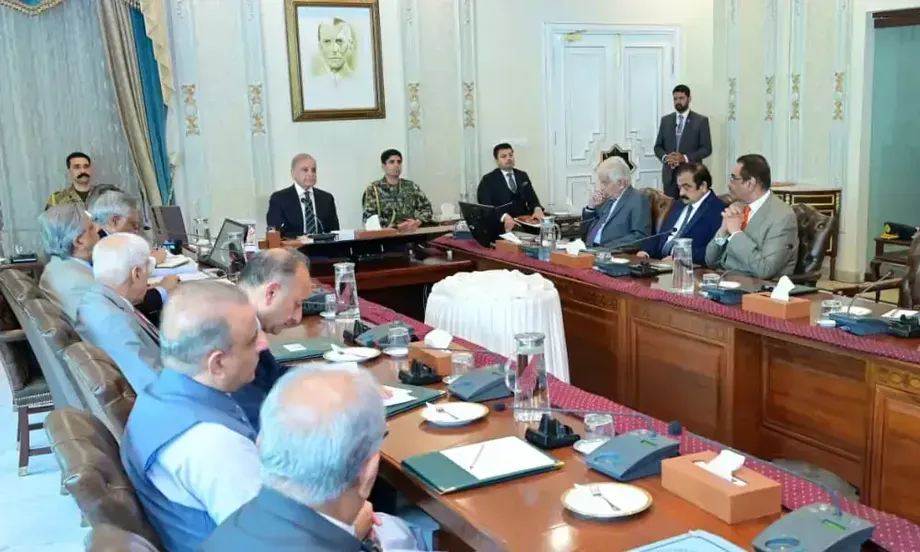
Pakistan's National Assembly passed the Finance Bill, 2026, on Tuesday, approving the government's tax package for fiscal year 2026-27 after several days of debate. Coalition support secured a majority vote, while all 63 opposition amendments across seven clauses were rejected. Government amendments presented by Finance Minister Muhammad Aurangzeb were accepted.
Contents
- Assembly Approves Budget Tax Package Amid Opposition Protests
- What Parliament Decided and What Comes Next
- The Spending Plan Leaves a Large Financing Gap
- Revenue Ambitions Depend on Collections and Provincial Grants
- How the Proposed Salary Tax Brackets Work
- Property Relief and a New Insurance Payout Tax
- Algorithms Would Assign Cases and Offer Settlements
- Digital Earnings and Compliance Face Closer Monitoring
- Electric Transport and Premium Air Travel Receive Different Treatment
- Tax Concessions Carry a Measurable Cost
- Key Points
The vote supports a federal spending plan of Rs18.771 trillion and a tax revenue target of Rs15.264 trillion. That collection target is Rs2.281 trillion above the outgoing year's revised estimate of Rs12.983 trillion, an increase of about 17.6%, despite an estimated revenue shortfall of around Rs1 trillion in the outgoing fiscal year.
The package combines relief for salaried workers and property transactions with new digital tax procedures, changes affecting insurance payouts, and stronger enforcement penalties. The government is seeking economic growth of 4%, while relying on higher collections and borrowing to finance expenditure.
The Federal Board of Revenue's Finance Bill 2026 sets July 1, 2026, as the general commencement date, unless a provision specifies otherwise. However, the published proposal and the legislation approved with amendments are not necessarily identical. The exact effect of changes accepted during the final debate requires confirmation against the final enacted text.
What Parliament Decided and What Comes Next
Aurangzeb moved the bill for consideration during a session marked by opposition protests. The House considered its clauses and rejected the opposition's proposed changes by majority vote. The session was adjourned until 11am on Wednesday.
Assembly approval is a major legislative step, but it should not be confused with confirmation that every proposed provision is already in force. A.F. Ferguson's institutional memorandum states that the changes require National Assembly approval and presidential assent, and generally take effect on July 1. No date for presidential assent has been announced in the accounts of the vote.
The budget's parliamentary sequence includes these milestones:
- June 12, 2026: Aurangzeb presented the federal budget. The FBR published the proposed Finance Bill following the presentation, and a copy was moved in the Senate.
- June 15: The Senate began debating the proposed federal budget.
- Sunday before passage: The National Assembly Standing Committee on Finance warned against legislative changes without sufficient technical examination and parliamentary scrutiny.
- Tuesday: The National Assembly passed the bill with government amendments and rejected 63 opposition amendments.
- Wednesday, 11am: The Assembly was scheduled to reconvene.
- July 1, 2026: The bill's general commencement date, subject to the legislative process and any separate dates specified in its provisions.
The committee's warning matters because amendments introduced near the end of consideration can alter how tax rules operate. It cautioned that insufficient scrutiny could create legal uncertainty and difficulties in implementation. Committee chairman Syed Naveed Qamar also called for a balanced approach across sectors in discussing competition and efficiency in aviation.
The Spending Plan Leaves a Large Financing Gap
The Federal Budget memorandum published by A.F. Ferguson gives a detailed financial breakdown: Rs17.495 trillion in current expenditure and Rs1.276 trillion in development expenditure, making a total of Rs18.771 trillion. Current expenditure accounts for about 93.2% of that total, while development expenditure represents about 6.8%.
The memorandum lists Rs15.264 trillion in tax revenue and Rs5.336 trillion in revenue outside taxation, producing gross receipts of Rs20.6 trillion. After deducting Rs8.849 trillion as the provincial share of federal taxes, receipts fall to Rs11.751 trillion. Adding Rs161 billion in privatization proceeds brings net receipts to Rs11.912 trillion.
Against expenditure of Rs18.771 trillion, those figures produce a deficit of Rs6.859 trillion, equivalent to about 36.5% of planned spending. Reports of the budget debate describe a Rs7 trillion deficit. That figure is close to, but not identical with, the memorandum's more precise total.
The spending envelope is also described as approximately Rs18.8 trillion, about Rs3.1 trillion or 20% above the outgoing year's revised outlay. Foreign borrowing plans total $23.4 billion, including $2 billion through Euro and Panda bonds. These are financing plans, rather than evidence that those funds have already been secured.
Revenue Ambitions Depend on Collections and Provincial Grants
The government has proposed more than Rs306 billion in tax measures, alongside Rs360 billion in relief and Rs354 billion in enforcement measures. These figures describe different components of the package, not guaranteed receipts. In particular, revenue expected from enforcement depends on whether authorities can turn compliance measures into actual payments.
The budget arrangements also include Rs1.035 trillion in grants from three provinces, excluding Balochistan. These grants are tied to the Rs15.264 trillion collection target and would automatically decline if collections fall short. This gives the federal government another reason to meet the target: a shortfall could affect both tax receipts and the grant amount.
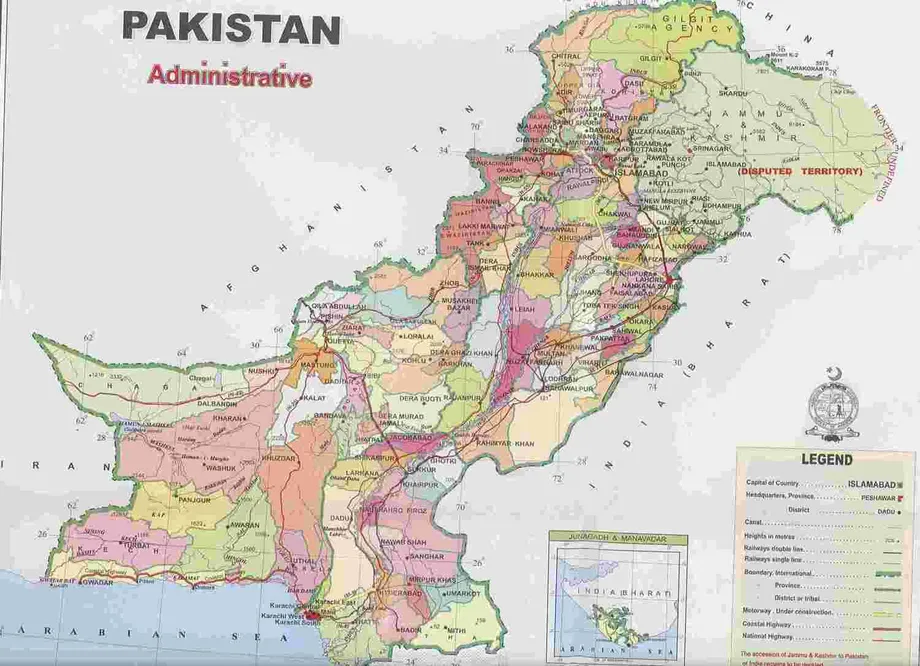
The four provinces are expected to receive approximately Rs8.85 trillion in federal tax shares before the return of Rs1.035 trillion in grants. Reported gross allocations include Rs4.4 trillion for Punjab, Rs2.2 trillion for Sindh and Rs1.44 trillion for Khyber Pakhtunkhwa. These gross shares should not be read as the amounts each province will retain after grants.
Other major budget measures include a petroleum and carbon levy target of Rs1.748 trillion, based on a levy of Rs80 per litre, and a 7% increase in government salaries and pensions. The FBR's tax collections are projected to remain around 10.5% of gross domestic product, even with the higher nominal revenue target.
How the Proposed Salary Tax Brackets Work
The published bill keeps annual taxable income of up to Rs600,000 exempt. Above that threshold, the proposed salary schedule applies progressively, meaning the higher percentage is charged only on the income exceeding the relevant bracket threshold, rather than on the person's entire income.
- Rs600,000 to Rs1.2 million: 1% of the amount above Rs600,000.
- Rs1.2 million to Rs2.2 million: Rs6,000 plus 11% of the amount above Rs1.2 million.
- Rs2.2 million to Rs3.2 million: Rs116,000 plus 20% of the amount above Rs2.2 million.
- Rs3.2 million to Rs4.1 million: Rs316,000 plus 25% of the amount above Rs3.2 million.
- Rs4.1 million to Rs5.6 million: Rs541,000 plus 29% of the amount above Rs4.1 million.
- Rs5.6 million to Rs7 million: Rs976,000 plus 32% of the amount above Rs5.6 million.
- Above Rs7 million: Rs1.424 million plus 35% of the amount above Rs7 million.
For example, annual taxable salary income of Rs1.2 million produces Rs6,000 in tax under this schedule. Income of Rs7 million produces Rs1.424 million, or about 20.3% of the total. The 35% top rate applies to the portion above Rs7 million, not to every rupee earned by someone crossing that threshold. These calculations use the published schedule without adding other taxes or adjustments.
Property Relief and a New Insurance Payout Tax
The published bill sets advance tax on the sale or transfer of immovable property under section 236C at 2.75% of the gross consideration received. On purchases under section 236K, it sets advance tax at 1.25% of the property's fair market value. The two provisions use different tax bases, so their percentages cannot simply be combined into one transaction rate.
It also proposes omitting section 7E of the Income Tax Ordinance. This is a separate legislative change from the advance taxes collected when property is bought or sold. Removal of one provision does not mean that property transactions become free of tax.
A proposed new section 7G would tax certain life insurance and family takaful payouts from tax year 2026 onward. Family takaful is an insurance arrangement structured according to Islamic finance principles. The taxable amount would be the payout minus the total premiums or contributions paid, rather than the full amount received.
The proposal exempts benefits paid because of death or disability, as well as payouts made after completion of seven years from the policy's issuance. Tax deducted under the provision would be final tax on the income arising from the payout. The quoted provision refers to a rate elsewhere in the schedule, but that rate is not specified in the excerpt detailing the new section.
Another proposed power would allow the federal government to reduce specified withholding taxes that operate as minimum taxes to as low as 1%, subject to conditions. The power excludes minimum tax under section 113, and rate changes made under it must be placed before the National Assembly. It is therefore a conditional power to change selected rates, not an automatic reduction of all withholding taxes.
Algorithms Would Assign Cases and Offer Settlements
Some of the bill's most consequential administrative proposals concern a National faceless centre. Under the proposed jurisdiction rules, algorithms developed by the FBR would assign functions and powers to Inland Revenue authorities for specified taxpayers and tax periods.
The authority's identity would be kept confidential from the registered taxpayer, the taxpayer's authorized representative and unauthorized persons. Separate provisions would permit designated income tax audits and assessments to proceed without direct identification of the handling official, while appeals could also be processed through the centre under prescribed rules.
The bill additionally proposes an algorithmic settlement mechanism for tax proceedings before orders under specified sections. A taxpayer choosing to use that mechanism would have ten days from the settlement offer to accept it through IRIS, the FBR's online system, and deposit the settlement amount.
Payment within the prescribed process would end the issues raised through the relevant notice or audit report. The proposal does not say that every dispute would automatically qualify or that an offer could be accepted without payment. The ten day period is therefore a practical deadline for both the taxpayer's decision and the required deposit.
These provisions give the FBR a legal basis for new procedures, but operating details still depend on rules and decisions by the Board. The published text does not establish a confirmed rollout date for each digital process or explain how taxpayers would be selected across all categories.
Digital Earnings and Compliance Face Closer Monitoring
Accounts of the approved package describe mandatory electronic income tax filing through the FBR system and a 5% income tax on earnings from social media. The treatment of digital earnings broadens the package beyond conventional salaries, corporate income and property transactions.
The precise scope of the social media levy, including who must deduct it and whether it settles a person's complete tax liability, is not established by the detailed official excerpts. Those questions require the relevant final provisions rather than an assumption that every online payment is treated identically.
The package also includes penalties of up to Rs1 million for a first compliance violation and up to Rs2 million for repeat offences. Reports describe stronger action against people who do not file returns or comply with FBR notices, and penalties that can include imprisonment for tampering with tax monitoring systems. These maximum amounts should not be read as automatic fines for every error.
Corporate changes cover banking, fertilizer and large businesses, with rates depending on income thresholds. Reports also describe revised treatment of certain agricultural and industrial income, and exemptions for named welfare institutions, including the Pakistan Red Crescent Society. Exact rates and eligibility conditions for these categories cannot be established from the provisions detailed here.
Electric Transport and Premium Air Travel Receive Different Treatment
The electric vehicle measures distinguish public and commercial transport from expensive vehicles imported for personal use. The published bill lists a 1% rate for specified fully assembled electric buses with at least 25 seats and electric trucks. The memorandum separately details federal excise duty on fully assembled personal electric vehicle imports by value.
Under that proposed excise schedule, vehicles valued at no more than Rs20 million face a 0% rate. Those worth more than Rs20 million and up to Rs30 million face 30%, while those exceeding Rs30 million face 40%. A zero excise rate does not, by itself, mean an import is exempt from every other applicable tax.
The memorandum also describes extending a reduced 1% sales tax rate on qualifying locally manufactured or assembled electric vehicles until June 30, 2027. The categories include small cars and sport utility vehicles with batteries of 50 kilowatt hours or below, and light commercial vehicles with batteries of 150 kilowatt hours or below.
For club, business and first class air tickets issued from July 1, 2026, proposed federal excise duty falls from Rs300,000 to Rs50,000 for the Americas, and from Rs150,000 to Rs25,000 for the Middle East and Africa. For Europe and the region covering the Far East, Australia, New Zealand and Pacific Islands, it falls from Rs210,000 to Rs40,000. These are reductions in a tax component, not guaranteed reductions of the same amount in final fares.
The bill also includes import provisions for machinery used to modernize and expand existing refineries. Listed equipment includes reactors, heat exchangers, pumps and compressors. The imports must serve the specified refinery purposes, and quantities require approval by the Ministry of Petroleum and Natural Resources.
Tax Concessions Carry a Measurable Cost
The bill's accompanying statement identifies a Tax Expenditure Report 2026 covering fiscal year 2024-25. It lists estimated tax expenditure of Rs1,273.98 billion for sales tax, Rs499.14 billion for customs duty and Rs579.70 billion for income tax, with a stated total of Rs2,352.81 billion.
Tax expenditure is revenue forgone through concessions, exemptions or preferential treatment, rather than a direct cash payment from the budget. The stated total is about Rs2.353 trillion, equivalent to roughly 15.4% of the new Rs15.264 trillion tax revenue target. That comparison indicates scale, but the figures refer to different fiscal years and do not measure the cost of this bill's new relief.
The central test is whether higher collections and stronger compliance can support relief without widening the financing gap. Assembly passage establishes parliamentary approval of the amended package. Confirmation of the enacted wording, presidential assent and the FBR's operating rules will determine precisely what taxpayers must do when the new fiscal year begins.
Key Points
- The National Assembly passed the Finance Bill, 2026, accepting government amendments and rejecting 63 opposition amendments.
- Federal expenditure is Rs18.771 trillion, against a tax revenue target of Rs15.264 trillion.
- The institutional budget table puts the deficit at Rs6.859 trillion; reports describe approximately Rs7 trillion.
- The published salary schedule exempts annual taxable income up to Rs600,000 and applies a 35% marginal rate above Rs7 million.
- Proposals cover property advance taxes, certain insurance payouts, algorithmic settlements and tax proceedings through a National faceless centre.
- Electric vehicle treatment varies by use, value and battery capacity, while premium air ticket excise duties would fall.
- The general commencement date is July 1, 2026, with final enacted provisions and implementation rules requiring confirmation.