
Almost all the increase goes to operating costs
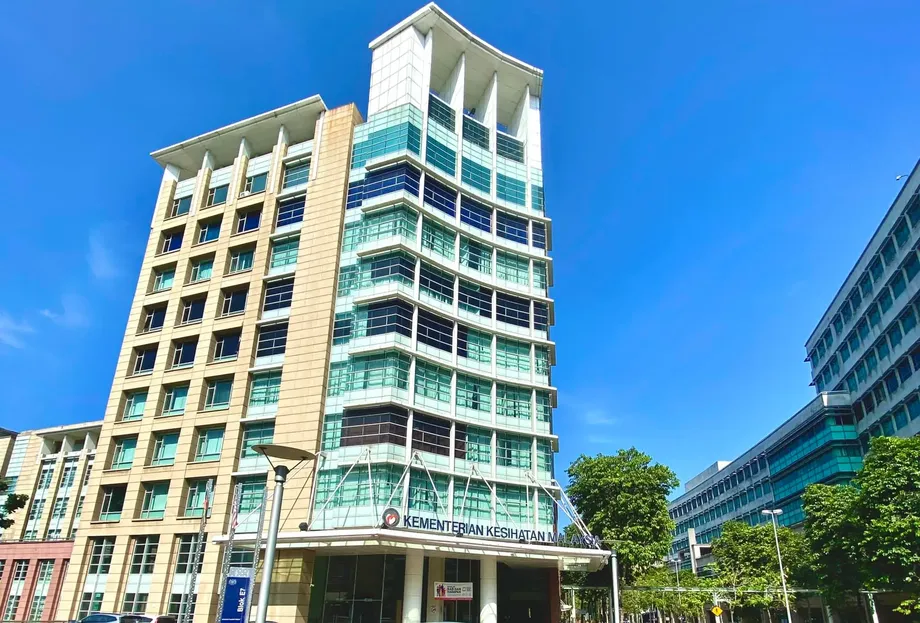
Malaysia’s Health Ministry will receive RM47.704 billion under Budget 2027, but just RM5 million of its RM1.184 billion increase is added to development funding. The allocation, presented by Prime Minister and Finance Minister Anwar Ibrahim on October 9, 2026, combines a promise of permanent appointments for more than 9,000 contract doctors with the smallest annual funding increase in five years.
Contents
- Almost all the increase goes to operating costs
- Growth slows after larger increases
- Where the additional money is directed
- Permanent appointments do not guarantee retention
- Staff shortages extend beyond doctors’ contracts
- Allowance increases offer targeted relief
- Equipment rises while some construction lines fall
- Outsourcing expands as a clinic scheme loses funding
- Digital records move toward hospital implementation
- MediAsas brings questions about affordability
- Prevention proposals remain outside the budget
- Key Points
The Ministry of Finance’s 2027 federal expenditure estimates put health operating expenditure at RM40,954,794,000 and development expenditure at RM6,749,504,800. Together, they represent an increase of about 2.55 per cent from RM46,520,215,600 in 2026, commonly rounded to 2.5 per cent.
About 99.6 per cent of the additional allocation goes to operating expenditure, which pays recurring costs such as salaries, medicines, supplies and the running of hospitals and clinics. Development funding rises by approximately 0.07 per cent against the original 2026 estimate.
Health Minister Dzulkefly Ahmad welcomed the allocation, pointing to permanent doctor appointments, equipment purchases, patient assistance and repairs. Medical organisations also welcomed individual measures, while warning that employment security alone would not solve staff departures, uneven placements or specialist shortages.
The central distinction is between funding posts and keeping people in them. The operating budget lists 333,000 positions for 2027, unchanged from 2026. That figure does not establish how many posts are occupied, and the budget documents do not explain how the promised permanent appointments will translate into additional staff treating patients.
Growth slows after larger increases
The health allocation has increased every year under Anwar’s administration, but its rate of growth has fallen since Budget 2024. The first Madani budget, tabled in February 2023, raised the allocation by about 12 per cent to RM36.3 billion. Growth reached 13.5 per cent in Budget 2024, then slowed to 9.8 per cent in 2025 and 2.8 per cent in 2026.
Budget 2027 continues that slowdown. Its approximately 2.55 per cent increase is the smallest since Budget 2022, when the ministry received RM32.4 billion, up RM468 million or 1.5 per cent. That comparison needs context: the government also allocated a separate RM4 billion for pandemic management in Budget 2022, which was presented in October 2021.
The development comparison also depends on the baseline. The official estimates show RM6.7445 billion originally budgeted for 2026, making the 2027 increase approximately RM5 million. Against the revised 2026 estimate of RM6.6148 billion, however, the increase is approximately RM134.7 million, or 2 per cent. The near stagnation refers to the comparison between original annual allocations, not the revised spending estimate.
Where the additional money is directed
Several detailed allocations show how the ministry plans to support existing and new services. Funding for operating new facilities rises from RM50 million to RM753.59 million, an increase of RM703.59 million. Approximately RM703.6 million of the 2027 allocation is identified for emoluments, meaning staff salaries and related payments.
Medical supplies for health facilities rise by RM350 million, from RM4.403 billion to RM4.753 billion. Across the ministry’s operating budget, emoluments increase from RM24.842 billion to RM25.290 billion, a rise of RM448.84 million or about 1.8 per cent. They account for approximately 53 per cent of the ministry’s total allocation.
These figures answer different questions and should not be added together as separate new commitments. The new facility allocation describes spending for a particular purpose, while the emoluments total groups expenditure by type. A salary payment can appear within both descriptions.
The documents do not specify how much of the increase in emoluments will improve existing staff remuneration, rather than pay for appointments or facility operations. That limits what can be concluded about retention from the larger payroll allocation alone.
Permanent appointments do not guarantee retention
Anwar announced that more than 9,000 contract doctors would be offered permanent positions in 2027, including doctors who successfully complete housemanship, the supervised clinical training undertaken before working as medical officers.
Speaking during the budget presentation, Anwar described the announcement as ending the contract doctor issue:
For 2027, more than 9,000 contract doctors will be offered permanent positions, meaning that after this, doctors who successfully complete housemanship will be offered permanent appointments as medical officers.
The government said it had permanently appointed more than 15,000 contract doctors since 2023, including 4,000 in 2026. The contract system began in 2016, when the government was responding to a surplus of doctors. The present challenge includes doctors declining permanent posts.
The proportion failing to report for permanent appointments rose from 2 per cent, or 78 doctors, in 2022 to 20 per cent, or 1,118 doctors, in 2023, and about 40 per cent in 2025. Those figures show why offers and actual staffing cannot be treated as equivalent.
Malaysian Medical Association president Dr Sivanaesan Letchumanan welcomed the announcement as providing greater job security and career certainty. The association nevertheless sought clearer implementation details, fairer placements and training pathways, including clarification on whether former contract doctors who left public service could return.
Staff shortages extend beyond doctors’ contracts
The Galen Centre for Health and Social Policy estimates that the public health sector has more than 50,000 health worker vacancies. Its chief executive, Azrul Mohd Khalib, said only about 500 medical graduates applied for 5,000 trainee doctor positions earlier in 2026, roughly one applicant for every ten advertised positions.
That recruitment figure concerns entry into training, not the separate promise of permanent posts for existing contract doctors. It nevertheless points to a problem that changing employment status alone cannot address: maintaining the flow of people into public service.
The MMA separately cited a shortage of nearly 11,000 specialists and called for investment in specialist training, career progression, remuneration and working conditions. These estimates describe different staffing gaps and should not be added together as though they were separate, nonoverlapping totals.
Regional recruitment is also a concern. On October 8, Dzulkefly told Parliament that 382 of 1,055 medical officers offered permanent posts in Sabah and Sarawak in 2026 failed to report for duty, approximately 36 per cent. The MMA called for better incentives and career opportunities in both states, restoration of the previous Regional Incentive Payment based on a percentage, and a national dashboard showing staffing needs at individual facilities.
Azrul called for a funded recruitment and retention programme covering several years and an independent Health Services Commission to manage recruitment, deployment, pay, welfare and career progression. He also said Pasir Gudang Hospital remained unable to operate fully because of insufficient staff.
Allowance increases offer targeted relief
Budget 2027 doubles the monthly incentive for nurses and paramedics with post basic qualifications from RM100 to RM200. The measure covers 47,000 workers. At RM100 extra per person each month, the increase would amount to RM56.4 million annually if all 47,000 receive it for a full year.
The Air Health Service Incentive Payment also rises from RM30 to RM100. That announcement follows the September 8 helicopter crash at Long Lellang in Miri, Sarawak, which killed all five people aboard a Flying Doctor Service flight, including four Health Ministry workers.
No broad new remuneration package for retaining health workers was announced during the budget presentation, and no comparable new pay measure for doctors was identified. The targeted allowance increases therefore sit alongside, rather than replace, the unresolved demands for better pay and working conditions across professional groups.
Equipment rises while some construction lines fall
The government announced RM1.2 billion for hospital and clinic maintenance and repairs, including dilapidated clinics and staff quarters. The MMA said that allocation was unchanged from 2026. Nine new health facilities were also announced, including a specialist clinic complex and daycare centre at Sultanah Aminah Hospital in Johor Bahru, a specialist dental clinic in Kuching, and allied health complexes in Gerik and Rembau.
Within detailed development estimates, equipment and vehicles rise from RM717.5 million in the revised 2026 figures to RM968.7 million. Upgrading and repairs rise from RM367 million to RM429.5 million. Hospital facilities funding, however, falls from RM878.1 million to RM823.7 million, while new hospital funding falls from RM624.1 million to RM462 million.
Accounts of the equipment announcement differ. The budget speech was described as allocating more than RM770 million, while Dzulkefly subsequently cited RM968 million and the detailed equipment and vehicles allocation stands at RM968.7 million. The figures should not be treated as identical; a reconciliation of their scope has not been given.
The announced purchases include 400 ambulances and upgrades to haemodialysis equipment, used to filter blood when kidneys cannot do so adequately. Other items include robotic technology for Universiti Sains Malaysia’s specialist hospital and laboratories and clinical simulation equipment at 18 ministry training institutes.
Outsourcing expands as a clinic scheme loses funding
Budget 2027 raises funding for outsourced public patient care to RM200 million. ProtectHealth said the allocation supports its Hospital Services Outsourcing Programme, which sends public patients to participating private hospitals for selected treatments and services to reduce waiting times.
The expanded arrangements include private facilities, specialised treatment and sessions provided by private specialists. Association of Private Hospitals Malaysia president Dr Kuljit Singh welcomed the allocation and the extension of the maximum engagement period for private specialists.
A separate service faces a different outcome. The Madani Medical Scheme has no allocation listed in the ministry’s 2027 estimates, after its funding fell from RM100 million to RM50 million in 2026. Introduced as a pilot in June 2023 under former health minister Dr Zaliha Mustafa, it subsidises treatment for acute minor illnesses at private general practitioner clinics for eligible people on lower incomes. It does not cover routine follow up care for chronic diseases.
The absence of funding has been described as the scheme’s abolition. However, Kuala Lumpur Hospital director Dr Harikrishna K R Nair referred on October 10 to outsourcing simpler cases under Skim Perubatan MADANI and said its allocation had increased. That description conflicts with the missing budget line and may concern a different outsourcing arrangement. The scheme’s status and the distinction between the two programmes require clarification.
Funding remains unchanged at RM80 million for PeKa B40, RM20 million for the Malaysia Healthcare Travel Council and RM21.6 million for the National Centre for Excellence in Mental Health. The Medical Assistance Fund rises to RM60 million, while free thalassaemia screening will extend to carriers’ spouses and children.
Digital records move toward hospital implementation
The Malaysian Communications and Multimedia Commission will invest RM1 billion in electronic medical records across health facilities. This is a separate institutional commitment from the ministry’s stated RM47.7 billion allocation and should not simply be assumed to form part of that total.
At Kuala Lumpur Hospital, Harikrishna said infrastructure work includes replacing lifts and modernising electrical systems as the 156 year old hospital moves toward a fully computerised Health Information System. He said HKL was among 16 hospitals scheduled to implement the system in 2027, with RM200 million allocated for the initiative. The relationship between that allocation and the wider RM1 billion commitment was not specified.
Harikrishna explained that electronic information would be accessible to specialists across disciplines, reducing the need for patients to repeat the same medical details at successive consultations. He also said additional funding would support newer medicines and more procedures.
Private facility administration is due for a separate digital change. Kuljit said the e-CKAPS portal is expected to enable fully online licensing from 2027, targeting processing times up to 65 per cent faster. That is a target, not a measured result.
MediAsas brings questions about affordability
The government has announced MediAsas as an affordable health protection plan, with introduction scheduled for January 2027. Its proposed hospital payments are based on diagnosis and treatment type, an approach intended to make costs more predictable than billing separately for every service.
The Galen Centre opposes allowing people below 55 to use savings in the Employees Provident Fund’s Account Sejahtera to pay premiums, arguing that doing so would weaken financial security in retirement. It also questioned the proposed RM200 subsidy for eligible employees of small and medium enterprises during the first year.
Azrul said the subsidy might encourage enrolment without resolving affordability after it expires. Questions also remain about exclusions, premium increases, patient contributions toward bills and expenses that insurance does not cover. The announcement does not settle those concerns or establish the plan’s continuing cost for individual households.
Other measures include expanding income tax relief to postnatal care and reducing service tax on aged care from 8 per cent to 6 per cent, with full exemption for annual care fees up to RM96,000. The Galen Centre welcomed the relief but said it offered limited help to households unable to afford paid services or benefit from income tax deductions.
Azrul called for a national framework covering care at home, community nursing, rehabilitation, temporary relief for family caregivers, residential services and palliative care, supported by sustainable financing. The distinction is between reducing the cost of an existing paid service and making care accessible to families who cannot purchase it.
Prevention proposals remain outside the budget
The Galen Centre criticised the absence of a further cigarette excise increase and a commitment to remove sugar subsidies. It proposed raising cigarette duties from 42 sen to 65 sen per stick in 2027, followed by annual increases to 95 sen by 2031.
The centre estimated that its proposed tobacco tax schedule could generate more than RM2 billion in additional revenue by 2031. It also estimated annual sugar manufacturer subsidies at RM400 million to RM500 million. These are the centre’s estimates and recommendations, not adopted revenue measures or confirmed savings in Budget 2027.
The MMA called for a stronger role for private general practitioners in prevention, early detection and continuing management of chronic illness. That proposal matters alongside the loss of the Madani Medical Scheme’s budget line, although the scheme itself covered acute minor conditions rather than routine chronic disease care.
The next steps span several dates:
- September 8, 2026: The Flying Doctor Service helicopter crash killed five people in Sarawak.
- October 8, 2026: Dzulkefly disclosed the number of doctors who did not report for permanent posts in Sabah and Sarawak.
- October 9, 2026: Anwar presented Budget 2027 and announced permanent appointments for more than 9,000 contract doctors.
- October 10, 2026: HKL outlined its infrastructure and digital system plans.
- January 2027: MediAsas is scheduled for introduction.
- During 2027: Permanent doctor appointments, the 16 hospital information system rollout and online private facility licensing are expected to proceed.
Implementation details still needed include actual appointment take up, opportunities for former contract doctors to return, MediAsas premiums and protections, and the status of the Madani Medical Scheme. Patient waiting times and staffed service capacity will show whether the announced measures deliver more care.
Key Points
- The ministry receives RM47.704 billion, approximately 2.55 per cent more than in 2026.
- Almost all additional funding goes to operating expenditure; development funding rises by about RM5 million against the original 2026 allocation.
- More than 9,000 contract doctors will be offered permanent posts, but staffing and retention gaps persist.
- The budget funds 400 ambulances, facility repairs and RM200 million in outsourced patient care.
- The Madani Medical Scheme has no listed 2027 allocation, while a hospital account of its continued use requires clarification.
- MediAsas is scheduled for January 2027, with affordability and retirement savings concerns unresolved.