
A century of life, a career rooted in care
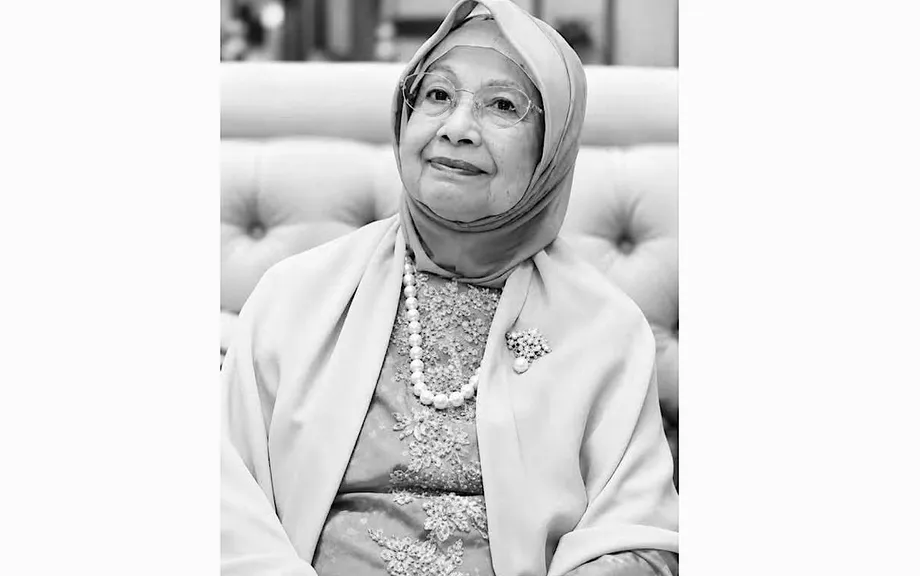
Tun Dr Siti Hasmah Mohd Ali, a pioneering Malaysian doctor whose work brought maternal care, vaccination and health education to rural communities, died at the National Heart Institute (IJN) in Kuala Lumpur at 9.20 am on September 28, 2026. She was 100. Her son, Tan Sri Mokhzani Mahathir, confirmed her death.
Contents
- A century of life, a career rooted in care
- A family remembers her final days
- From Klang to medical school in Singapore
- Taking healthcare into rural Kedah
- The figures behind her public health legacy
- Health advocacy beyond Malaysia
- Education, sport and public honours
- Milestones across eight decades
- The Essentials
She was buried at 6.20 pm that day at Pusara Negara in Precinct 20, Putrajaya, following a state funeral. Her husband, former prime minister Tun Dr Mahathir Mohamad, their children and other family members attended. The couple had married on August 5, 1956, marking 70 years together shortly before her death.
Known nationally as the prime minister's wife during Mahathir's terms from 1981 to 2003 and from 2018 to 2020, Siti Hasmah had established her own record in public service long before he took office. She became the first woman appointed to a medical officer position in the Maternal and Child Health Department in 1965 and the first woman to hold Kedah's state maternal and child health officer post in 1974.
Her career extended from village clinics and midwife training to international conferences on drug abuse, rural women and women's rights. She also served as chancellor of Multimedia University from 1997 to 2012 and maintained a close association with Malaysian badminton.
She had celebrated her 100th birthday on July 12. In August 2026, ASEAN Records recognised her as the oldest living spouse of a former prime minister. Her survivors include Mahathir, their seven children, comprising three daughters and four sons, 18 grandchildren and four great grandchildren.
A family remembers her final days
Mokhzani said the family was shocked by her death because she had been cheerful when relatives visited her at IJN the previous day. He described recent family gatherings as a source of comfort, giving them repeated opportunities to spend time together.
Speaking after the funeral, Mokhzani rejected the idea that one final moment could capture his relationship with his mother.
"There's no one last memory. There's a million memories," he said.
He also spoke of his gratitude for the time the family had shared with her in the months, weeks and days before her death.
"I'm very happy that we had so much time to share with her. We've had many family gatherings in the last months, weeks, days. So, we had a lot of memories," he said.
Mokhzani thanked security personnel, the military, the Royal Malaysia Police and government agencies for helping with the funeral arrangements. He said the family planned to hold tahlil prayers at home after Isyak, the Muslim night prayer, and possibly on the following two days. Tahlil gatherings include prayers and recitations in remembrance of the deceased.
No cause of death was specified in the accounts of her passing. Her son's description of the previous day's visit establishes the family's experience of her final hours, but does not explain the medical circumstances.
From Klang to medical school in Singapore
Born on July 12, 1926, in Kampung Jawa, Klang, Selangor, Siti Hasmah was the sixth of 10 children of Mohd Ali Taib and Siti Khadijah Ahmad. Her family moved to Kuala Lumpur when she was three. She later recalled that her parents gave their three daughters and seven sons equal access to education.
Her schooling included Methodist Girls School, St Mary's School and Pudu English Girls School in Kuala Lumpur. She initially wanted to become a journalist because she enjoyed reading and writing. Her mother's illness during the Japanese occupation helped turn her attention towards medicine.
In 1947, she entered King Edward VII College of Medicine in Singapore on a government scholarship. She was the only Malay woman in her cohort and graduated in June 1955. It was at medical school that she met Mahathir, a fellow student from Kedah.
Accounts describe different milestones in her entry into medicine. One identifies her as the first Malay woman offered medical studies at the college, while another records her own description of herself as the third Malay woman to become a doctor in the country. Those claims concern different stages, admission and qualification, rather than establishing that she was Malaysia's first Malay woman doctor.
After graduating, she undertook supervised hospital training at Kuala Lumpur Hospital. Following her marriage in 1956, she moved to Alor Setar and worked as a medical officer at the city's general hospital. Kedah became the centre of the public health work that would define her professional career.
Taking healthcare into rural Kedah
Siti Hasmah's work in Kedah addressed problems that could not be solved through hospital treatment alone. Rural families faced gaps in health knowledge and access to care, while poverty and some traditional practices complicated pregnancy, childbirth and infant care.
In 1962, she became acting medical superintendent for northern Kedah. She later served as principal of the Rural Health Training School in Jitra, alongside her responsibilities in maternal and child health.
Her teams travelled to villages to provide treatment, immunisation and health education. Their work covered nutrition, infectious disease prevention, malaria eradication and care for pregnancies carrying greater medical risk. Childhood illnesses of concern included tuberculosis, polio, whooping cough, diphtheria and tetanus.
Training traditional village midwives was another practical part of that effort. Rather than treating existing birth attendants as separate from government healthcare, health workers taught safer delivery practices and supplied sterilised UNICEF birth kits. The aim was to improve care where women were already giving birth.
Acceptance took time. As a doctor from Selangor who did not speak the local dialect, Siti Hasmah initially needed an interpreter and encountered suspicion in some villages. She later described being accepted by Kedah's communities as one of her proudest achievements.
The figures behind her public health legacy
Kedah's infant mortality rate reportedly fell from 75 to seven deaths per 1,000 births during her tenure, a change attributed in a tribute to figures from the Perdana Leadership Foundation. That represents 68 fewer deaths per 1,000 births, or a reduction of about 91 percent.
The comparison gives a measure of the scale of improvement associated with that period, but the exact starting and ending years were not specified. It should not be treated as a controlled measure of her individual contribution. Doctors, nurses, midwives, vaccination programmes and wider improvements in living conditions all form part of the context for changes in infant survival.
Siti Hasmah herself placed value on communities accepting public health programmes. Recalling her Kedah years in a speech at the opening of R.I. District 3300 in Kuala Lumpur in 1997, the former public health doctor said:
"By the time I left Kedah, it was with deep satisfaction that the people had chosen to accept the government's health programmes and had benefitted from them," she said.
Her professional interests also included writing about family medicine and the social and economic factors affecting pregnancy and childbirth. Kedah awarded her its Excellent Service Medal in 1964 for her role in tackling a cholera outbreak.
She retired from government service in 1979, then taught social medicine part time at Universiti Malaya's Faculty of Dentistry until 1981. Her transition to national public life therefore followed a substantial clinical, administrative and teaching career.
Health advocacy beyond Malaysia
As president of BAKTI, the welfare association of ministers' and deputy ministers' wives, Siti Hasmah promoted education about the dangers of drug abuse among Malaysian youth. In 1985, US First Lady Nancy Reagan invited her to the First Ladies' Conference on Drug Abuse in Washington. She represented Malaysia at the International Conference on Drug Abuse and Illicit Trafficking in Vienna in 1987.
Her interests included mental health. Former US First Lady Rosalynn Carter invited her to participate in the National Committee of the World Federation of Mental Health.
She also served as patron of the Malaysian branch of the Pan Pacific and Southeast Asia Women's Association, giving keynote addresses at conferences in Tokyo in 1984, Bangkok in 1991 and Tonga in 1994. At the 1992 First Ladies Summit for the Economic Advancement of Rural Women in Geneva, she was selected as one of six Asia Pacific core group initiators.
In September 1995, she led Malaysia's delegation to the Fourth United Nations World Conference on Women in Beijing. Her speech carried the theme Equality, Development and Peace: A Caring World, linking her domestic work on health and welfare with an international agenda for women.
In 2001, she led a 15 member humanitarian delegation to Iraq. The group included doctors, educators, writers and academics, and visited to observe conditions affecting the population, particularly children living under United Nations economic sanctions.
Education, sport and public honours
Siti Hasmah served as chancellor of Multimedia University for 15 years, from 1997 to 2012. Her public roles also included leadership of the Malaysian Girl Guides Association and advocacy for literacy, family planning and community welfare.
Sport was both a personal interest and a sustained public commitment. She played competitive badminton until the age of 75 and served for more than two decades as patron of the Badminton Association of Malaysia, including during Malaysia's 1992 Thomas Cup victory. National players regarded her as a maternal figure.
She was also a former patron of the Malaysian Wheelchair Tennis Association. Her interests continued into later life: she learned French in her seventies, returned to the violin in her eighties and took up the erhu, a Chinese bowed string instrument, in 2015.
On October 31, 2003, she received the Seri Setia Mahkota Malaysia (SSM), a federal honour carrying the title Tun. She was the first wife of a Malaysian prime minister to receive that award. Later recognition included the Asia HRD Lifetime Achievement Award in 2019 and the National Anti Drug Icon Special Award in 2020.
Her relationship with politics was more complicated than a simple description of distance from it. She described following the civil service principle of avoiding political participation, yet biographical accounts also record membership in Wanita UMNO. She left the women's wing on May 19, 2008, and rejoined in April 2009.
Milestones across eight decades
Her life connected medical training before Malayan independence with public service extending into the 21st century. The main dates show how much of her professional record preceded her years as the prime minister's spouse.
- 1947: Entered King Edward VII College of Medicine in Singapore on a government scholarship.
- June 1955: Graduated in medicine and began hospital training in Kuala Lumpur.
- August 5, 1956: Married Mahathir Mohamad and subsequently worked in Alor Setar.
- 1965 and 1974: Reached pioneering appointments in maternal and child health, including Kedah's state post.
- 1979 to 1981: Left government service and taught social medicine at Universiti Malaya.
- 1981 to 2003 and 2018 to 2020: Was the spouse of Malaysia's prime minister during Mahathir's two periods in office.
- September 1995: Led Malaysia's delegation to the UN women's conference in Beijing.
- July to September 2026: Turned 100, received ASEAN Records recognition and died on September 28.
After her burial, Mahathir visited her grave with PAS president Tan Sri Abdul Hadi Awang. Photographs shared on Mahathir's Facebook page showed him laying flowers and praying. Their son, Datuk Seri Mukhriz Mahathir, greeted Abdul Hadi at the graveside. The date of that visit was not specified.
The Essentials
- Siti Hasmah died at IJN in Kuala Lumpur at 9.20 am on September 28, 2026, aged 100.
- She received a state funeral and was buried at Pusara Negara in Putrajaya at 6.20 pm that day.
- Her medical career centred on maternal and child health, vaccination, rural healthcare and midwife training.
- She held pioneering public health appointments in 1965 and 1974, before Mahathir became prime minister.
- Her international work addressed drug abuse, rural women's welfare and women's rights.
- She is survived by Mahathir, seven children, 18 grandchildren and four great grandchildren.