
Foreign outreach budget faces scrutiny over domestic spending
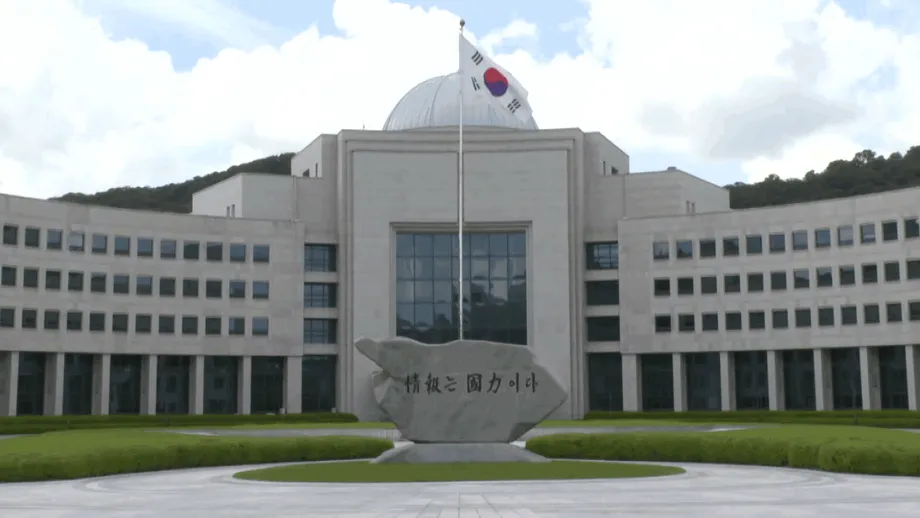
South Korean police have searched the National Intelligence Service twice over allegations that roughly 170 million won intended to build diplomatic support for South Korea instead paid largely for domestic meetings, consultations and meals involving the presidential National Security Office under former President Yoon Suk Yeol.
Contents
- Foreign outreach budget faces scrutiny over domestic spending
- How the program was approved
- What the spending breakdown reveals
- Meals, consultations and internal meeting costs
- The safeguards and the legal question
- A lawmaker demands questioning and repayment
- What the agency and Kim's lawyers have said
- A separate search concerned election allegations
- Key Points
The Seoul Metropolitan Police Agency's anticorruption investigation unit obtained documents and computer records and questioned around 20 current and former intelligence employees, including a former head of the agency's planning and coordination office. Reports differ slightly on the number questioned, with some describing 20 people and others saying about 20 or several dozen.
The spending covered 50 activities between July 2022 and June 2023. According to Democratic Party lawmaker Yoon Kun young's office, which checked the intelligence agency's internal investigation, only eight activities involved actual contact with foreigners. Thirty eight involved domestic contacts or advisory work, three supported academic conferences and one fell into another category.
The National Intelligence Service, or NIS, reportedly concluded during its internal review under President Lee Jae Myung's administration that the program departed from its original plan and produced limited results. It nevertheless took no further action because it considered the legality uncertain.
That distinction is central to the case: an internal finding that a program performed poorly or served a different purpose does not itself establish a criminal offense. Police are investigating whether the agency unlawfully used its budget to cover another government office's expenses. No finding of criminal liability in this budget case has been announced.
How the program was approved
The initiative was described as a program to increase influence in support of South Korea. Its stated purpose was to build diplomatic support abroad, rather than to finance the National Security Office's routine domestic activities.
Yoon Kun young, the governing party's lead member on the National Assembly Intelligence Committee, gave two specific dates for its creation. He said the NIS prepared the plan and reported it to the National Security Office on July 8, 2022. Kim Kyou hyun, then director of the intelligence agency, approved it on July 18.
Kim Tae hyo, then first deputy national security adviser, allegedly led the activities that followed. The agency's review identified roughly a year of spending, ending in June 2023. The reported sequence is:
- July 8, 2022: The NIS prepared the program plan and reported it to the National Security Office, according to Yoon's account.
- July 18, 2022: Then NIS director Kim Kyou hyun approved the plan.
- July 2022 to June 2023: About 170 million won was spent across 50 activities.
- October: Democratic Party lawmaker Park Sun won filed the complaint that prompted the police investigation. Reports differ in how they date this filing.
- January and September: Police searched the NIS, according to accounts that identify both months explicitly.
The complaint date needs qualification. Two reports identify it as October 2025, while others describe it only as October of the preceding year. Several accounts similarly describe the second search as taking place in the preceding month, while others specify September. Those descriptions do not establish a single, consistently dated year for the searches.
What the spending breakdown reveals
The activity count provides a clearer picture of the program's direction than the total alone. Foreign contacts represented eight of 50 activities, or 16%. Domestic contacts and advisory work accounted for 38, or 76%. Academic conference support represented 6%, and the remaining category 2%.
The spending figures show a different balance. According to Yoon's account, about 12.8 million won went to foreign contacts and consultations, about 90 million won to domestic academic conferences and about 66 million won to consultations involving domestic experts.
Using the reported total of 170 million won, foreign contacts and consultations absorbed approximately 7.5% of the budget. Domestic academic conferences accounted for about 53%, despite representing only three of the 50 activities. Domestic expert consultations accounted for roughly 39%.
These figures are approximate. The three stated amounts add up to 168.8 million won, slightly below the rounded total, and no separate monetary figure is given for the remaining activity category. They should not be treated as a complete audited reconciliation.
The average expenditure was about 3.4 million won per activity, calculated from 170 million won divided by 50. That average also conceals substantial differences: the three academic conference activities accounted for more money than the 38 domestic advisory activities combined. Describing the entire budget as meal spending would therefore go beyond the detailed breakdown.
Meals, consultations and internal meeting costs
The examples identified through Yoon's office include a discussion of major diplomatic and security issues with a journalist, an economic security advisory meeting involving a company vice president, a semiconductor discussion organized by the Korean Association of International Studies, and a meal with an emeritus professor.
Other reported expenses included boxed lunches for the National Security Office's own meetings and meals involving journalists, businesspeople, former senior officials and professors. Yoon alleges that NIS employees accompanied Kim Tae hyo and paid costs that the security office should have covered itself.
Those examples require a distinction between subject matter and budget responsibility. A semiconductor discussion or consultation on economic security can concern national security. The allegation is not simply that domestic experts were consulted, but that money approved for a particular NIS program was used to meet another office's expenses.
One account also attributes to complainant Park Sun won the claim that no intended cooperation project with foreigners materialized. Yoon's figures, by contrast, record eight activities involving actual foreign contacts. These statements measure different things: holding a meeting is not necessarily the same as completing a cooperation project. The precise outcomes of those eight contacts have not been detailed.
The safeguards and the legal question
The program reportedly came with three conditions: no cash transfers, spending only with an NIS employee present, and expenditure only when working with another institution or the private sector.
The conditions appear to have been intended to distinguish the arrangement from earlier NIS special activity fund cases involving the administrations of Lee Myung bak and Park Geun hye. Yoon has cited convictions in those cases when arguing that the current allegations deserve criminal scrutiny.
Payment by an accompanying intelligence employee, however, does not by itself settle whether an expense properly belonged to the NIS. The central question is what the payment funded and whether the agency had lawful authority to pay it.
Park's complaint cites Article 47 of the National Finance Act. Reports describe that provision as generally prohibiting the head of one central government body from using budget funds assigned to another. In plain terms, the allegation concerns whether separate government budgets were treated as interchangeable.
The precise application of the law remains unresolved. Police must determine whether the payments were legitimate NIS program expenses or unauthorized support for the National Security Office. The reported safeguards, the approval process and the actual spending records are relevant to that assessment, but none alone establishes the answer.
A lawmaker demands questioning and repayment
Yoon Kun young has taken a stronger position than the intelligence agency's internal review. The lawmaker argues that the spending was unlawful and that avoiding cash transfers did not resolve the underlying problem. In a social media statement, he described the alleged conduct this way:
These actions are plainly illegal.
That is Yoon's accusation, not a judicial ruling. He has also alleged that NIS staff effectively carried payment cards to cover Kim Tae hyo's expenses, and has called for the approximately 170 million won to be recovered.
Yoon further claimed that neither Kim Tae hyo nor Kim Kyou hyun had been questioned in person. He criticized the pace of the investigation and promised to pursue the matter during National Assembly audits conducted by the Public Administration and Security Committee and the Intelligence Committee.
No confirmed date for either man's questioning, a charging decision or a repayment order has been announced. The call to recover the money remains a demand rather than a completed recovery, and no specific parliamentary hearing date is given.
What the agency and Kim's lawyers have said
The NIS's reported internal conclusion combines two findings that should not be conflated. It judged that the program had operated differently from the approved plan and achieved little, while treating the legality of the spending as uncertain.
Yoon interprets the review as support for his allegation that the budget was used to manage Kim Tae hyo's domestic contacts. The narrower agency finding, as described, establishes concern about purpose and results, not an announced conclusion that a crime occurred.
Kim Tae hyo was described as detained in connection with a separate insurrection case when his lawyers were asked about the budget allegations. His legal team said it was concentrating on that trial and was unfamiliar with this matter.
That response does not provide a substantive explanation of the spending, but it should not be treated as an admission. The separate proceedings also do not establish guilt in the budget investigation. Police have not announced a final determination of responsibility for the payments.
A separate search concerned election allegations
The NIS has also been searched in connection with a different investigation involving the 2023 election for district chief in Seoul's Gangseo district. That inquiry concerns the agency's announcement, shortly before the election, of security inspection findings suggesting that vote counting results could be vulnerable to hacking.
The allegations are that senior intelligence officials participated in choosing the announcement's timing and that some of its content was false. Park Sun won also filed the complaint that initiated that investigation.
Reports place a search connected with the election allegations in January. The shared agency, complainant and month should not obscure the distinction between the cases: one concerns budget expenditure in 2022 and 2023, while the other concerns an election security announcement. Neither allegation should be used as proof of the other.
Key Points
- Seoul police searched the NIS twice and questioned around 20 current and former employees over alleged budget support for the National Security Office.
- The program spent roughly 170 million won across 50 activities between July 2022 and June 2023.
- According to Yoon Kun young's office, eight activities involved foreign contacts, while 38 involved domestic contacts or advisory work.
- Reported spending included domestic academic conferences, expert consultations, meals and boxed lunches for internal security office meetings.
- The NIS reportedly found that the program departed from its plan and produced limited results, but considered the legality uncertain.
- Police are investigating alleged violations of Article 47 of the National Finance Act. No final finding of criminal liability has been announced.
- Yoon has demanded further questioning and recovery of the money, but no repayment order or confirmed next hearing date has been announced.