
A farewell in Tokyo, with a new ambition taking shape
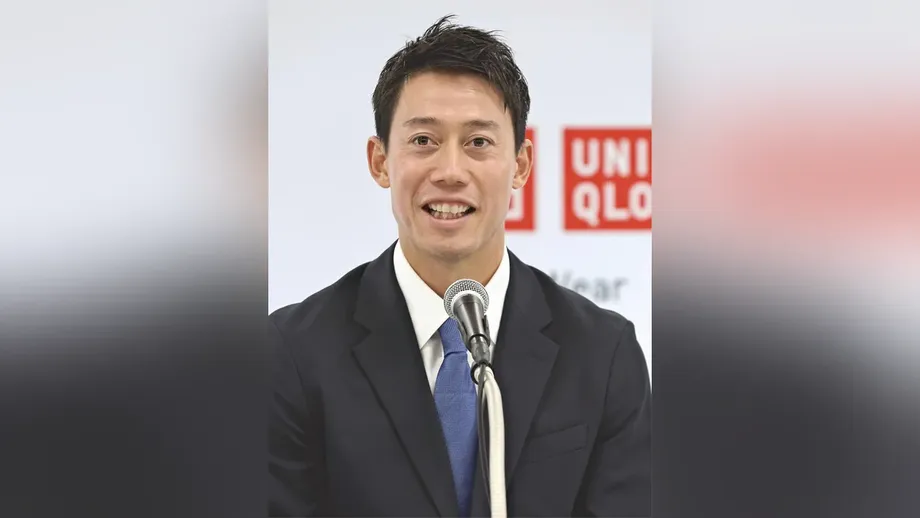
Kei Nishikori ended his farewell celebrations at Tokyo's Ariake Coliseum on October 11, 2026, with a goal that reaches beyond his own achievements: helping more Japanese and Asian players reach the world's top 50 and top 30. The 36-year-old former world No. 4 spoke after a Uniqlo event attended by about 9,000 spectators, where Roger Federer joined him on court.
Contents
- A farewell in Tokyo, with a new ambition taking shape
- What the career numbers reveal
- The US Open run that changed his expectations
- Federer returns the admiration
- An Olympic medal with a different meaning
- The final weeks and the people behind them
- A celebration that brought different players together
- Retirement changes the meaning of pain
- Why overseas opportunities are central to his plans
- What is decided, and what is still an idea
- Key Points
Nishikori's final competitive match had come on October 1, in the opening round of the Kinoshita Group Japan Open Tennis Championships. His retirement closes approximately 19 years as a professional, a career that produced 12 ATP titles, 452 victories at tour level and the first Grand Slam singles final appearance by an Asian man.
At his retirement news conference, Nishikori described the satisfaction of devoting so much of his life to one pursuit. His comments, translated from Japanese, also acknowledged the sacrifices behind those results.
I was able to pour this incredibly long period of my youth entirely into tennis. Not everyone can devote their life to one thing. I think the time I spent absorbed in it was truly happy.
His next role is not settled. He discussed an academy, a tennis club and financial support for juniors to train overseas, while making clear that these remain ideas rather than announced projects. For now, retirement brings both relief from the demands of competition and sadness at leaving serious matches behind.
What the career numbers reveal
The ATP's career tribute records 12 tour titles and 15 other finals, including four at Masters 1000 tournaments. Those events sit below the four Grand Slams in the men's tournament hierarchy. Nishikori never won a Masters 1000 title, but his repeated appearances in their finals show how often he challenged near the top of the sport.
He also qualified four times for the ATP Finals, the season's concluding tournament for leading players, and reached its semifinals twice. He finished two seasons in the top five and another two in the top 10.
His strongest statistical distinction may be his ability to win close contests. According to the Infosys ATP Win/Loss Index cited by the ATP, Nishikori won 158 of 218 deciding sets, a success rate of 72.5%. That ranks third in the tour's historical records behind Bjorn Borg's 73.4% and John McEnroe's 72.8%.
A deciding set is the final set required when both players have won the same number of sets. In matches that reached a fifth set, Nishikori's record was stronger still: 29 wins and eight losses, or 78.4%. Those figures give a measurable basis to the reputation for competitive resolve celebrated at his farewell.
The US Open run that changed his expectations
Nishikori's defining breakthrough came at the 2014 US Open. He beat Milos Raonic in five sets in the fourth round, then needed another five sets to defeat Stan Wawrinka in the quarterfinals. Those two matches kept him on court for more than eight hours before he faced world No. 1 Novak Djokovic.
He defeated Djokovic in four sets to become the first Asian man to reach a Grand Slam singles final. Marin Cilic beat him in the championship match, leaving Nishikori without the major title he had dreamed of winning since childhood.
At the farewell event, Nishikori said the tournament remained the most memorable of his tennis life. His recollection focused less on the final defeat than on discovering that he could reach that stage.
It gave me tremendous confidence. I lost in the final, but it gave me more motivation. Knowing that I had the ability to reach a Grand Slam final led to what came afterward.
The breakthrough was part of a season in which he won 54 matches, lost 14 and collected four titles. Those four trophies represented one third of his eventual 12 ATP titles. He also became the first Asian man to qualify for the ATP Finals that year, before reaching his highest ranking, No. 4, in March 2015.
Federer returns the admiration
Federer's participation gave the Tokyo farewell a personal connection to Nishikori's early development. Nishikori recalled practising with the Swiss player when he was 16 and learning both from the quality of his shots and from the seriousness of his preparation.
Federer, a former world No. 1 and winner of 20 Grand Slam singles titles, said the young Nishikori had stood out among his practice partners. During the farewell reflections, he also praised the Japanese player's backhand and the difficulty of facing him.
Every time I played against you, it was a huge challenge. You had all the virtues necessary to succeed in this sport; your tennis became increasingly aggressive, and I believe your backhand has been one of the best in history.
Federer won eight of their 11 competitive meetings, leaving Nishikori with three victories. The ATP records seven Nishikori wins against Federer, Rafael Nadal and Djokovic combined: three against Federer and two against each of the others.
Nishikori responded to the praise with humour, suggesting that about half of it was flattery. His account of competing in that era was more serious: Federer, Djokovic, Nadal and Andy Murray were so strong that breaking into their group became a central motivation for the players pursuing them.
An Olympic medal with a different meaning
One of Nishikori's two victories over Nadal secured bronze at the 2016 Rio de Janeiro Olympics. The ATP identifies it as Japan's first Olympic tennis medal in 96 years, giving the result a national significance beyond another win over a leading rival.
At the farewell event, Nishikori contrasted the Olympics with the usual professional circuit, where players compete for prize money and ranking points. He said playing for people who might take joy from his performance helped him find a different kind of strength.
Nishikori, explaining the motivation behind his victory in the bronze medal match, said:
In my case, when I played thinking that even a few people might be happy, or that I was doing it for someone else, I became incredibly strong. That helped me beat Nadal at an important moment and win a medal.
He described it as a win for which he could give himself credit. Five years later, at the Tokyo Olympics in 2021, he reached the quarterfinals after opening his campaign with a victory over fifth seed Andrey Rublev.
The Olympic memories also connect with his next ambition. At the news conference, he spoke about wanting to raise the value of tennis and sport in Japan, extending the public connection he had felt while representing the country.
The final weeks and the people behind them
Nishikori's retirement unfolded through several separate occasions, rather than a single goodbye. His last match, the Japan Open ceremony and the Uniqlo celebration gave him opportunities to address different parts of his tennis life.
- April 2026: Nishikori announced his retirement, saying his love of tennis and belief that he could improve had repeatedly brought him back to the court.
- October 1: He lost in the first round of the Japan Open in Tokyo, his final official match.
- October 6: He gave a retirement speech at the Japan Open venue, with junior benefactor Masaaki Morita and former coach Michael Chang among those attending.
- October 11: About 9,000 spectators attended the Uniqlo farewell event at Ariake Coliseum, followed by his retirement news conference.
At the October 6 ceremony, Nishikori thanked his parents, sister, staff and supporters. He recalled starting tennis at five and credited his sister as his first rival. He also spoke about his father's commitment and his mother's support.
Accounts differ on the age at which he moved to the United States. Nishikori said in his ceremony speech that he went at 13 with Morita's support. The ATP tribute places his move to Florida's IMG Academy at 14 and says he arrived without speaking English. Both accounts identify overseas training as a major step in his development.
A celebration that brought different players together
The event, UNIQLO LifeWear Day Tokyo 2026 with Kei Nishikori, lasted about four hours. The audience of roughly 9,000 attended after being selected through a public lottery. Uniqlo, Nishikori's longtime sponsor and the brand for which he serves as a global ambassador, organised the celebration.
Federer and Nishikori paired up for an exhibition against former Japanese players Go Soeda and Satoshi Iwabuchi. Another match teamed Nishikori with wheelchair tennis champion Shingo Kunieda against Federer and Gordon Reid. Arthur Rinderknech also took part in the day's tennis activities.
The different pairings made the farewell more than a sequence of speeches. Nishikori could play alongside the rival he had admired as a teenager, while sharing the court with figures from Japanese and wheelchair tennis.
Speaking to the crowd, Nishikori expressed gratitude for being able to finish his career with their support. His public farewell conveyed acceptance, although his earlier ceremony speech had also acknowledged regrets about results he still wished he had achieved.
Those feelings need not conflict. He could be satisfied with the effort he had given while still wishing for a Grand Slam title, a higher ranking or more time to compete. In his April retirement announcement, he had already said that he still wanted to continue playing, but could proudly say he had given everything.
Retirement changes the meaning of pain
The news conference offered a more intimate picture of the transition. Nishikori said he still experienced pain after the Japan Open, but no longer had to assess every discomfort against the demands of tomorrow's match.
For a player whose later career included repeated injury interruptions, that was a substantial change. He described the removal of this constant worry as a release, rather than claiming that retirement had made his physical problems disappear.
Nishikori also explained that, during his playing career, concerns about doping tests had shaped how he obtained medicine. He said that even with a cold, his usual practice was to visit a hospital and have suitable medication prescribed. Being able to buy medicine at a drugstore now made everyday life easier. This was his description of his own precautions, not a statement that every pharmacy medicine is prohibited for athletes.
Other freedoms were smaller and more cheerful: ordering two desserts at lunch and hoping to obtain a driving licence in Japan. Yet he also said the loss of serious competition was becoming more tangible with each passing day.
The ATP records a reminder of how long his competitive drive lasted. In 2025, at 35, he reached the Hong Kong final, six years after his previous ATP title in Brisbane, and beat third seed Karen Khachanov during that run.
Why overseas opportunities are central to his plans
Nishikori's ideas for supporting juniors draw directly on his own experience of leaving Japan. He said the main centres of professional tennis are in Europe and the United States, and argued that young players need exposure to competitors there to develop the mental strength required at higher levels.
He also said that remaining in Asia can make that progression difficult. In his assessment, some Asian tournaments offer weaker competition than events with comparable prize money in Europe or the United States. That was his view of the development challenge, not a ranking of tournaments published by the ATP.
The practical problem is cost. Nishikori acknowledged that overseas training and competition are demanding and expensive, and that not every family can pursue the route he took. His proposed academy, club, foundation or fund would seek to address some part of that gap.
The target he described was broader than producing one successor. He wants to help many players reach the top 50 or top 30. That distinction matters: it points toward building a larger group of internationally competitive players rather than relying on one exceptional career.
Nishikori also said he wanted to pass on lessons from injury recovery. The quiet, repetitive work required to return to competition had helped him grow, he said, and was experience he hoped to share with younger generations.
What is decided, and what is still an idea
Nishikori has not announced the launch of an academy, a funding programme or a foundation. He gave no opening date, location, budget or selection process for junior support. He said he wanted to consult different people while working out the most effective way to help.
Asked whom he would like to speak with, he jokingly named Prime Minister Sanae Takaichi. That drew laughter at the news conference, but it was not an announcement of a meeting, government involvement or public funding.
He also mentioned Naomi Osaka when reflecting on carrying Japanese expectations, and identified Rei Sakamoto as one of the newer players whose progress he would like to support. The ATP tribute includes Sakamoto's account of growing up watching Nishikori, illustrating how the 2014 breakthrough reached the next generation.
Sakamoto, a young Japanese player who later defeated Nishikori in US Open qualifying, told the ATP:
A lot of [Japanese] people follow tennis because of him. He's a superstar.
For Nishikori, the immediate commitment is to rest and then explore how to remain involved. His retirement ends his pursuit of titles as a professional player. It does not yet establish the structure of his next contribution, but the priorities he named are specific: stronger Japanese and Asian tennis, access to overseas competition and more players near the top of the rankings.
Key Points
- Nishikori, 36, played his final official match at the Japan Open on October 1, 2026.
- About 9,000 fans attended his October 11 farewell event at Ariake Coliseum, with Federer among the participants.
- His career produced 12 ATP titles, 452 tour victories and a highest ranking of No. 4.
- He reached the 2014 US Open final and won Olympic bronze in Rio in 2016.
- The ATP records a 72.5% success rate in deciding sets, third in its historical rankings.
- He wants to support more Japanese and Asian players into the top 50 and top 30, but has not announced a programme or launch date.