Cancelled medical entrance test puts NTA reform under scrutiny
India's National Testing Agency conducted NEET UG on May 3, 2026, then cancelled it on May 12 amid allegations of a question paper leak. Five months later, a parliamentary committee has proposed changes reaching from the agency's legal accountability to how questions are selected, examination centres are funded and late arrivals are treated.
Contents
- Cancelled medical entrance test puts NTA reform under scrutiny
- Why the committee wants accountability to Parliament
- What the staffing and litigation figures reveal
- A question bank designed to limit advance knowledge
- Computer testing depends on public infrastructure
- Late arrivals, traffic and uninterrupted test time
- Possible changes to NEET eligibility and structure
- Fairness, vendors and remedies for candidates
- A disputed record and decisions still pending
- Key Points
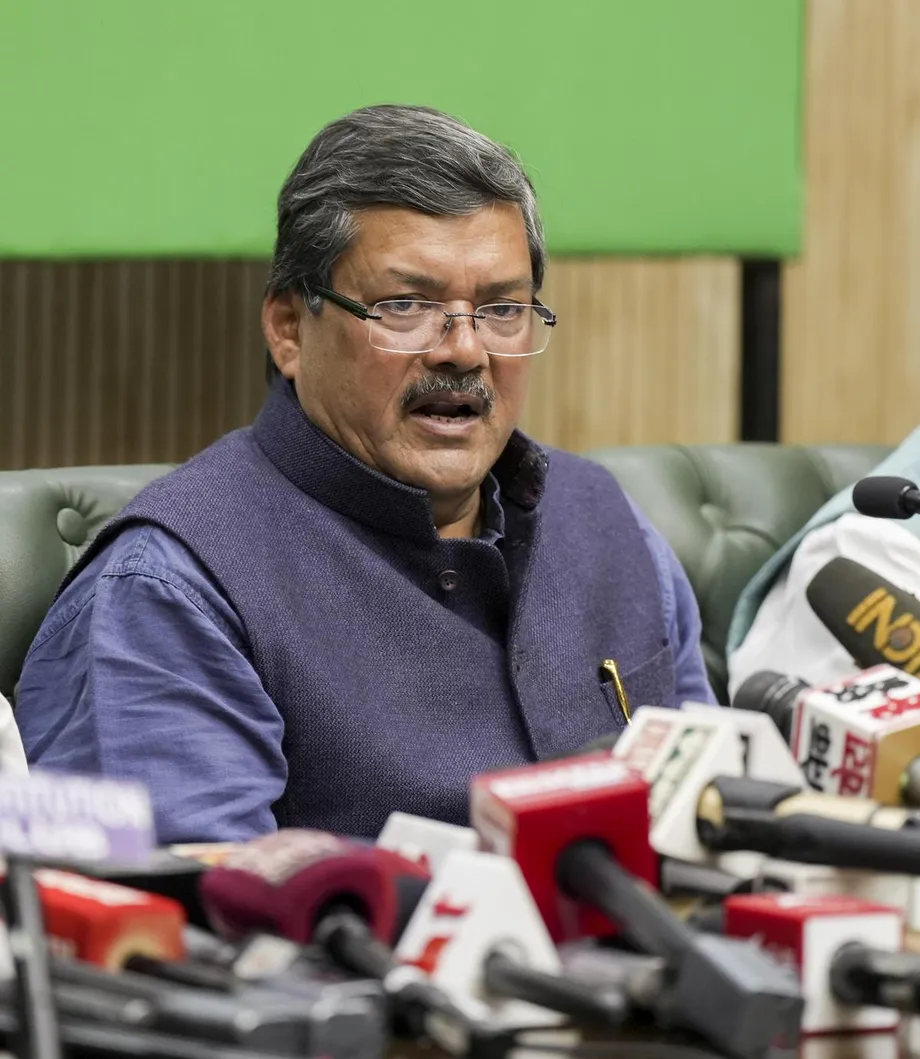
The Parliamentary Standing Committee on Education, Women, Children, Youth and Sports, chaired by Rajya Sabha MP Mukul Wasnik, presented its 382nd report, titled Reforms and Strengthening of the National Testing Agency (NTA), to the Rajya Sabha Chairman on October 9, 2026. The 44 page document contains 35 observations and recommendations. It was also forwarded to the Lok Sabha Speaker.
The agency's reach explains the stakes. Between 2018 and 2026, it conducted more than 270 examinations involving over 6.6 crore candidate participations. Around 1.2 crore candidates take its examinations annually, including major tests for medical, engineering and university admissions. These figures describe examination participation, not necessarily separate individuals.
The committee acknowledged reforms introduced after the NEET UG 2024 controversy, but said the cancellation in 2026 showed that further procedural and institutional changes were necessary. Reports describe the latest controversy as having prompted nationwide student protests and the resignation of then Education Minister Dharmendra Pradhan.
Its proposals combine stronger parliamentary oversight, permanent specialist staff, a larger question bank and investment in government examination centres. They also address the consequences for candidates, including compensation after administrative cancellations and independent handling of complaints. Most remain recommendations rather than new examination rules.
Why the committee wants accountability to Parliament
The NTA is registered as a society under the Societies Registration Act, 1860, rather than established as a statutory body through an Act of Parliament. The committee said it is therefore not directly accountable to Parliament in the same way as a statutory body and does not lay an annual report before it.
The panel wants the education department to develop an appropriate parliamentary framework so that the agency answers to both Houses. Its argument is that the NTA's resources and accountability arrangements should match the scale of the responsibilities entrusted to it.
The committee, led by Wasnik, expressed that recommendation in its report:
The education department may introduce appropriate Parliamentary framework that ensures NTA's accountability to Parliament.
The panel also recommended annual reporting to Parliament on cases registered, investigated and prosecuted under the Public Examinations (Prevention of Unfair Means) Act, 2024. That would distinguish allegations from investigations and prosecutions, rather than treating every complaint as proof of wrongdoing.
A separate mechanism, independent of the NTA, would audit examination security, investigate candidate grievances and report directly to the education ministry. Parliamentary reporting and independent scrutiny would serve different purposes: one would establish public accountability, while the other would examine operational failures outside the agency's own complaint process.
What the staffing and litigation figures reveal
Only 23 officers occupied the NTA's 39 sanctioned positions, leaving 16 vacancies. Those figures mean approximately 59% of posts were occupied and 41% were vacant. Reports differ in their description: one calls 41% the proportion filled, but that wording conflicts with the stated count of 23 out of 39.
The officers in position were serving on deputation, meaning they had been assigned temporarily from other government organisations. The committee wants permanent NTA specialists in psychometrics, examination security, digital infrastructure, data analytics and examination logistics. Psychometrics is the study of how tests measure knowledge or ability, including whether questions produce reliable and fair results.
The panel said 16 posts under the Central Staffing Scheme should supplement senior leadership rather than substitute for specialist expertise. It also discouraged assigning key positions as an additional responsibility, citing the director general's post between June 2024 and April 2026.
The agency's legal workload was substantial. Its records for 2024 to 2025 showed that it was a party to 474 court cases, including 356 concerning NEET UG 2024. That is about 75% of the total. The number shows how heavily one examination controversy dominated the agency's litigation, although it does not establish that the NTA was at fault in every case.
The committee also asked the agency to refocus on admission tests for higher education institutions. It noted that the NTA continued conducting recruitment examinations despite the Radhakrishnan committee's advice that additional functions should follow, rather than precede, greater institutional capacity.
A question bank designed to limit advance knowledge
The panel's central proposal for protecting question papers is a large, diverse and continuously updated question bank. Instead of repeatedly using familiar question sets or commissioning an entire paper afresh each year, the NTA would assemble final papers from a much larger pool using digital tools.
The intended safeguard is to separate the creation of individual questions from knowledge of the final examination paper. People contributing questions would not automatically know which ones candidates would face. Final papers would be prepared close to the examination and checked by a limited group of vetted experts.
The committee explained its concern about existing practices:
Investment in question banks is the most viable defence against paper leaks in the long run. The repeated use of the same question sets or the practice of having examiners set new question papers every year can pose a risk to the integrity of the examination process.
Experts from the Indian Institutes of Technology, Indian Institutes of Management and All India Institutes of Medical Sciences would contribute to question development and translation. Their records would be checked for integrity and conflicts of interest, including ownership of or teaching roles at private coaching centres and family members taking the examination.
The panel also proposed strict isolation of the experts who check final papers until the examination concludes. Alongside this, it recommended an internal cybersecurity team and artificial intelligence tools to identify suspicious answer patterns. Such patterns would be signals for investigation, not automatic proof of cheating.
Computer testing depends on public infrastructure
The committee supported moving NEET UG from paper to computer based testing, while reducing dependence on private examination centres. Digital delivery would remove the need to print question papers and transport them to centres, allowing final papers to be assembled closer to examination day.
That change addresses one route through which papers can be exposed. It does not remove the need for secure digital systems, trusted staff or reliable centres. The panel therefore tied the transition to investment in facilities owned and operated by government, particularly in smaller cities and rural areas.
It called for a clear, phased timetable to implement the High Level Committee of Experts' recommendation for 1,000 secure government computer testing centres. The NTA should also help fund IT laboratories in schools and colleges, on the condition that they are available for examinations, with at least one centre in every district.
Reports state that the Centre had announced a switch to computer testing for NEET UG from the following year, meaning 2027 in the context of the October 2026 reporting. The committee's position was more conditional: the transition should be accompanied by substantial infrastructure investment and a national strategy for digital accessibility.
The precise rollout schedule, district coverage and arrangements for candidates unfamiliar with computers were not specified. The panel proposed using the NTA's accumulated surplus for public centres and mock tests. Congress spokesperson Jairam Ramesh put that surplus at Rs 590 crore and alleged that it remained in fixed deposits rather than being spent on students and infrastructure.
Late arrivals, traffic and uninterrupted test time
The committee proposed allowing candidates who arrive a few minutes late to enter after signing an undertaking recording their delayed arrival. They would receive only the time remaining in the examination, with no additional time under any circumstances.
This would replace automatic exclusion in some cases with a documented admission process. The recommendation recognises that genuine delays can occur, while retaining a common finishing time. It does not specify a universal latest entry time or all the security conditions that would govern admission.
The panel also recommended a separate 15 minute window, before or after the examination, for invigilators to complete signatures and checking formalities. The aim is to prevent administrative interruptions while candidates are answering questions.
To reduce avoidable travel disruption, it proposed amending the Public Examinations (Prevention of Unfair Means) Act, 2024, so district administrations could withhold permission for rallies, processions and public gatherings on crucial examination days. Traffic and public order arrangements should be organised in advance.
The NTA has previously issued advisories asking candidates to arrive early and plan around such events. The committee's proposal would place more responsibility on local authorities to prevent disruption, rather than leaving candidates to manage it alone. No date for introducing or voting on the proposed amendment was given.
Possible changes to NEET eligibility and structure
The committee asked the education ministry to explore reasonable age and attempt limits for major examinations, including NEET UG, in consultation with the health ministry and other stakeholders. It identified UGC NET as a possible exception.
NEET UG currently has no attempt limit or effective upper age limit, according to the committee, which noted participation by candidates older than 70. The report did not prescribe a particular maximum age or number of attempts. Its recommendation to explore limits should therefore not be read as an eligibility change already in force.
The panel also proposed examining a format with two stages: a common preliminary test for medical streams, followed by specialised main examinations for different courses. It argued that candidates seeking nursing or AYUSH admissions could be tested and ranked separately from those seeking MBBS seats. AYUSH refers to Indian systems of medicine and related disciplines, including Ayurveda and homeopathy.
The committee described NEET UG as a single examination handling more than 22 lakh candidates across several admission routes. It also wanted a review of qualifying thresholds by year so the number of qualified candidates better matches available seats. Qualifying for an examination is different from securing admission, because seats remain limited.
Fairness, vendors and remedies for candidates
The panel recommended annual audits of examination outcomes by state, gender, school board, language of instruction and social category. It said the NTA held registration figures by state but lacked corresponding information on whether those candidates succeeded.
Registration data alone cannot show whether different groups have comparable chances of progressing through an examination. Publishing outcome audits in the NTA's annual report and submitting them to the education ministry would make that comparison possible without assuming what the results would show.
A proposed national registry of blacklisted examination vendors would list associated individuals, the reasons for exclusion and the authority responsible. This would provide a common record for assessing firms involved in examination services. Ramesh alleged that firms blacklisted in one state continued receiving government contracts elsewhere.
The committee also wanted the NTA to define its duty of care towards candidates, potentially including financial compensation for those affected by administrative cancellations. It called for fixed grievance timelines and an independent complaint mechanism. Neither compensation amounts nor binding deadlines were specified.
Private coaching was another concern. The panel cited fees of Rs 2 lakh to Rs 5 lakh affordable to wealthier families and warned that the examination system rewards familiarity with question patterns over conceptual understanding. It recommended regulation covering fee transparency, student safety and mental health, alongside more consistent communication between the NTA and the public.
A disputed record and decisions still pending
The Department of Higher Education told the committee that no paper leak had occurred in an NTA examination between the agency's formation in 2017 and 2025. The report recorded disagreement from some committee members and recommended greater public disclosure of investigations into examination irregularities.
On October 11, Congress spokesperson Jairam Ramesh accused the NTA and education ministry of "grave incompetence and malpractice". He cited nine known paper leaks and irregularities. That combined description should not be treated as a verified count of nine proven leaks. It also concerns a period ending in 2025, distinct from the May 2026 cancellation.
The sequence of events and subsequent proposals is:
- May 3, 2026: The NTA conducted NEET UG.
- May 12, 2026: The examination was cancelled amid paper leak allegations.
- October 9, 2026: Wasnik's committee presented its report on NTA reform.
- October 11, 2026: Congress publicly challenged the ministry's account of earlier leaks and irregularities.
- 2027: Reports identify this as the announced year for switching NEET UG to computer testing, with detailed implementation arrangements unspecified.
The committee's package connects institutional accountability with practical protections for candidates. A question bank and digital testing address paper handling; permanent staff and independent audits address management; public centres and outcome audits address access and fairness. No legislative timetable, adopted age or attempt limits, compensation scheme or replacement examination date was given. Those distinctions matter for candidates planning their next steps.
Key Points
- NEET UG 2026 was held on May 3 and cancelled on May 12 amid paper leak allegations.
- The parliamentary committee presented 35 observations and recommendations on October 9, 2026.
- It proposed accountability to both Houses of Parliament and independent security and grievance scrutiny.
- Only 23 of 39 sanctioned NTA positions were occupied, leaving approximately 41% vacant.
- Proposals include a larger question bank, permanent specialists and 1,000 secure government computer testing centres.
- Late arrivals could receive only the remaining examination time, while administrative checks would have a separate 15 minute window.
- Age limits, attempt limits, an examination format with two stages and candidate compensation remain proposals, not confirmed new rules.