Safety checks and platform duties move into transport bill
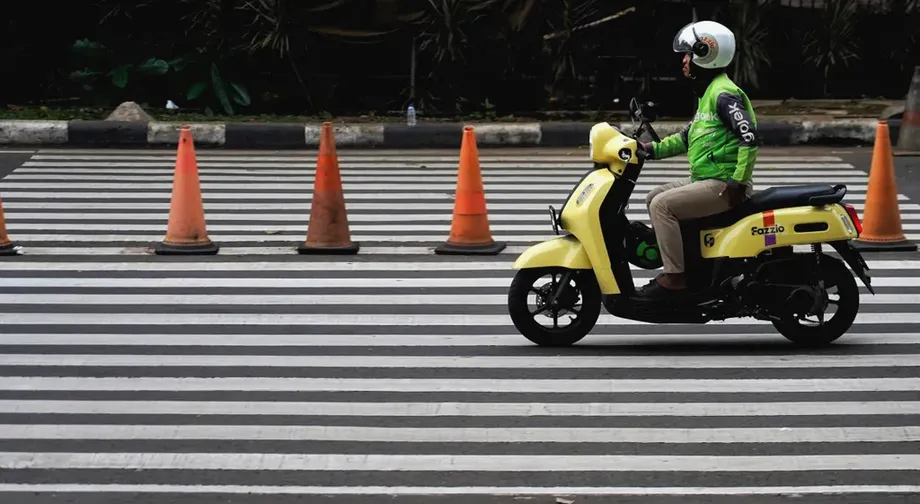
Indonesia is preparing to bring online motorcycle taxis and other transport services booked through apps into its road transport law, with vehicle maintenance checks, safety equipment standards and stronger duties for platform companies. Transport Minister Dudy Purwagandhi wants the revision completed in 2026 so implementation can begin in 2027, but lawmakers have not yet approved the bill.
Contents
- Safety checks and platform duties move into transport bill
- What legal recognition would change
- What safety standards are being considered?
- Accident figures need careful interpretation
- Drivers resist inspections that cut earnings
- Platforms face maintenance and pricing duties
- Worker protection follows a separate legislative track
- Recognition does not settle the mass transport debate
- A broader bill with a 2027 implementation goal
- Key Points
The proposal goes beyond recognizing a service already used by millions. A new Chapter XIII A would regulate special rental transport and limited motorcycle transport for passengers, goods and food, alongside fares, quotas, participation by microbusinesses and the rights and duties of application companies.
At a September 30, 2026 meeting with House of Representatives Commission V in Jakarta, the government backed the proposed chapter as part of the Third Amendment to Law No. 22 of 2009 on Road Traffic and Transportation. The Transport Ministry's official meeting statement also describes a proposed vehicle category for transport services operating under specified conditions.
That wording matters. Although the debate is often presented as making motorcycles public transport, the formal proposal describes motorcycle services as limited transport. The final category will help determine whether drivers face the same inspection and registration duties as conventional operators or a separate set of requirements.
The central dispute is therefore about both safety and responsibility: how to make motorcycles carrying paying passengers safer, who checks compliance, and who pays without cutting deeply into driver income.
What legal recognition would change
The Audit Board's legal database lists Law No. 22/2009 as in force since June 22, 2009. It records subsequent changes through the job creation legislation of 2020, 2022 and 2023. The current proposal would make another substantial revision rather than create an entirely separate transport code.
Motorcycle taxi drivers and users previously sought recognition through the Constitutional Court. In Decision No. 41/PUU-XVI/2018, the court rejected a challenge to Article 47(3), concerning the classification of vehicles by their private or public function. The applicants argued that the lack of recognition denied drivers legal certainty and left their livelihoods vulnerable to local restrictions.
The court's reasoning stressed road safety and security. That history helps explain why the government is now pursuing legislative change rather than relying solely on ministerial rules. Minister of Transportation Regulation PM 12 of 2019 already provides safety protections for motorcycles used for public interests, including helmet and protective jacket requirements, but has not settled the statutory status at the center of the debate.
The legal database also records a separate 2015 Constitutional Court decision invalidating part of Article 47(2)(e). That ruling is distinct from the rejected 2018 motorcycle taxi challenge and should not be read as having resolved the current proposal.
What safety standards are being considered?
Dudy has identified vehicle condition, maintenance, driver safety equipment and training as areas requiring stronger supervision. Possible enforcement measures include monitoring vehicles, checking equipment and imposing sanctions for breaches. The ministry also wants trip records that allow journeys booked through apps to be traced.
The minister said platform companies should monitor maintenance rather than leave it entirely to individual drivers. In an English statement attributed to Dudy, the transport minister explained the connection between public transport status and safety duties:
If it has become public transportation, it means there must be safety standards, such as helmets, vehicle maintenance; and application companies must also oversee this maintenance.
On October 9, he also described a possible reporting chain in which drivers submit maintenance reports to their application companies, which pass them to the Transport Ministry. He mentioned periodic roadworthiness testing, known in Indonesia as KIR. Such inspections assess whether a vehicle is fit to operate; they are different from reminders to service it.
The proposals are not yet a complete inspection system. No final testing frequency, charges, reporting format or division of costs has been announced in the accounts of the discussions. A minister's reference to possible KIR testing does not establish that every motorcycle driver already has a legal duty to undergo it.
Accident figures need careful interpretation
Director General of Land Transportation Aan Suhanan put safety at the center of the government's case during an October 2 workshop in Bandung. He said motorcycles contribute 78 percent to accidents and warned of a regulatory vacuum if their use for limited public transport is left unaddressed.
One account describes the figure as involving motorcycle taxis, but the quoted wording in both accounts refers to motorcycles generally. No supporting dataset, reporting period or definition of the accident measure is identified. The 78 percent figure should not be treated as a verified share of crashes involving online motorcycle taxis.
The distinction is substantial. A statistic covering all motorcycles cannot by itself establish the risk of commercial rides booked through an app, or whether those rides are safer or less safe than other motorcycle journeys.
The debate also cites more than seven million online motorcycle taxi driver partners. That figure indicates the potential scale of supervision, but no method is given for identifying unique active drivers or handling people registered with more than one platform. It is not a confirmed count of drivers operating at any particular time.
Drivers resist inspections that cut earnings
Raden Igun Wicaksono, chairman of the Indonesian Online Motorcycle Taxi Drivers Association, supports clearer legal status but wants a distinct category rather than the same treatment as buses, minibuses and taxis. He argues that drivers generally use privately owned motorcycles flexibly while earning income individually.
Igun also opposes requiring drivers to change to yellow registration plates associated with public transport. He proposes other identification arrangements that would recognize commercial use without imposing an unnecessary burden.
Garda Indonesia has rejected mandatory KIR testing comparable to conventional public transport inspections, citing costs, administrative procedures and income lost while drivers queue or complete paperwork. Its argument is that recognition should improve rights and protections, not simply increase obligations.
Organda Secretary General Kurnia Lesani Adnan takes a different position. He calls for periodic roadworthiness testing and a Safety Management System covering vehicles and crews. Such a system organizes how an operator identifies risks, checks compliance and responds to safety failures, rather than treating each inspection as an isolated task.
The disagreement is not simply over whether motorcycles should be maintained. It concerns how maintenance is verified and who carries the burden. Conventional transport operators can organize checks across a fleet, while an individual motorcycle driver may have to pay for servicing and stop earning during the process. Dudy has acknowledged that maintenance costs could fall to drivers, but the bill remains under discussion.
Platforms face maintenance and pricing duties
The proposed Chapter XIII A would place application companies within the transport law's regulatory framework. Dudy has said companies should support safety by monitoring vehicle condition and sending maintenance reminders based on how intensively a motorcycle is used.
Trip recording and monitoring would provide another layer of accountability. A traceable journey record can establish that a trip took place and connect it with the relevant driver and platform. It cannot substitute for checking brakes, tires, helmets or other physical safety requirements.
A separate measure, Presidential Regulation No. 27 of 2026 on the Protection of the Digital Platform Based Transportation Ecosystem, was reported issued on October 8. Dudy described it as a foundation for strengthening partnerships between drivers and companies and providing clearer protection mechanisms.
Reports describe that regulation, together with an earlier ministerial decision, as setting a maximum platform deduction of 8 percent and assigning the Transport Ministry responsibility for base fares. This is separate from the pending transport law amendment. The precise fee categories, exceptions and enforcement arrangements cannot be established from those descriptions alone.
Dudy has also called for fairness, transparency and compliance in setting transport and application service fees. He said passenger transport fares could provide a reference for the Ministry of Communication and Digital Affairs when regulating goods and food transport. The proposed chapter also includes quotas, but no numerical limits have been announced.
Worker protection follows a separate legislative track
Recognizing a transport service does not automatically settle whether its drivers are employees or independent partners. That distinction affects which duties platform companies owe drivers and which legal protections apply to their work.
Indonesian Transportation Workers Union chair Lily Pujiati has criticized the partnership provisions in Ministerial Regulation No. 12/2019, arguing that they favor platform companies. She wants motorcycle taxi regulation grounded in employment protection legislation. Her claims about platform influence are allegations, not established findings.
Accounts of the July 20 legislative harmonization meeting say lawmakers agreed not to put online driver rights and duties into the road transport law. Worker protection would instead be addressed through separate proposals, including the Online Transportation Bill and the Gig Economy Worker Protection Bill in the 2026 priority legislative program.
This creates an important distinction between the official transport proposal's provisions on application company rights and duties and the separate debate over driver employment rights. A report of Dudy's October 9 remarks also describes social protection among the matters to be regulated, leaving some uncertainty about where individual protections will ultimately sit.
Until final texts clarify those boundaries, passage of the transport amendment should not be presented as a complete settlement of driver welfare or employment status.
Recognition does not settle the mass transport debate
IB Ilham Malik, vice chairman of the Indonesian Transportation Society for transport policy formulation, argues that motorcycles do not satisfy the accessibility and capacity criteria commonly associated with public transport. He points to difficulties serving children, older people, pregnant passengers and people with disabilities, as well as the limited number of passengers each motorcycle carries.
Ilham argues that a service carrying one passenger per vehicle can add traffic rather than move large numbers efficiently. He also says emissions per passenger can be higher than those of transport carrying many people at once. These are his policy arguments; no local congestion model or emissions calculation accompanies them.
His reference to the 2022 Expert Group for Urban Mobility report, The Context of Public Transport in Europe, supports his call for clearer definitions. It does not by itself determine how Indonesian law must classify motorcycle services.
Ilham wants lawmakers to require a share of motor vehicle tax revenue to fund public transport. That is his recommendation, not an agreed provision. Commission V member Irine Yusiana Roba has likewise called for a longer perspective and consultation with researchers and associations, linking driver welfare and passenger safety to the wider design of Indonesian transport.
A broader bill with a 2027 implementation goal
The amendment reaches well beyond motorcycle taxis. The Transport Ministry says the House proposal would change 89 articles, insert 56, delete five, change two chapter titles, add one chapter and revise two article explanations. The government's proposals would change 55 articles and insert 28. Those counts describe competing proposals, not changes already enacted or totals that can simply be added together.
The government also supports adding the ministries responsible for basic and secondary education, health, and communication and digital affairs to the institutional framework. Their proposed roles concern traffic education, care after accidents and digital transport platforms.
Other provisions would extend criminal liability for vehicles exceeding permitted loads or dimensions beyond drivers to vehicle owners, corporations and goods owners. The government has also proposed public service obligations for mass transport provided by central and local authorities. These provisions show that lawmakers are considering platform transport alongside freight enforcement and mass transport responsibilities.
The main milestones are:
- July 20, 2026: A legislative harmonization meeting reportedly places online driver rights and duties on a separate legislative track.
- September 30: Dudy presents the government's list of issues and positions to Commission V.
- October 2: Aan sets out the safety rationale at a Bandung workshop.
- October 8: Presidential Regulation No. 27 of 2026 is reported issued.
- October 9: Dudy discusses maintenance reporting and possible KIR inspections.
- October 11: Dudy reiterates the goal of completing the amendment in 2026 for implementation in 2027.
No fixed date for a final vote or subsequent hearing is given. The immediate decisions still concern the vehicle category, inspection requirements, platform responsibilities and how costs will be divided. The 2027 start remains a government goal, conditional on the legislative process and the final rules.
Key Points
- Indonesia proposes a new Chapter XIII A covering transport booked through digital platforms, including limited motorcycle passenger and delivery services.
- Safety proposals include maintenance monitoring, equipment checks, training, traceable trip records and possible periodic inspections.
- Driver groups want legal recognition without registration changes, costly procedures or lost earnings.
- The cited 78 percent accident figure refers in the quoted wording to motorcycles generally, not specifically online motorcycle taxis.
- Driver employment protections are being considered through separate legislation.
- The government aims to finish the transport amendment in 2026 and begin implementation in 2027, but the bill has not been approved.