Audit puts motorcycle procurement losses at Rp 863.8 billion
Indonesian prosecutors have reported state losses of Rp 863,846,166,953 in an alleged corruption scheme involving electric motorcycles purchased for the Free Nutritious Meals program, known as MBG. Five suspects and the evidence against them were transferred to prosecutors in Central Jakarta on October 9, 2026, bringing the procurement case closer to trial.
Contents
- Audit puts motorcycle procurement losses at Rp 863.8 billion
- Missing batteries affected almost three in ten motorcycles
- Five suspects include a BGN official and company executives
- Investigators allege the tender was arranged for selected vendors
- Why the motorcycle totals do not yet line up
- The warehouse seizure preceded the October audit
- The budget, contract value and audited loss are different measures
- A broader BGN investigation covers other purchases and assets
- Charges and recovery remain the next legal steps
- Key Points
The loss calculation comes from audit report PE.03.03/SR/S-791/D6/03/2026, dated October 5, 2026. The investigation concerns purchases by the National Nutrition Agency, or BGN, during 2025 and 2026 through PT Yasa Artha Trimanunggal, also identified as PT YAT.
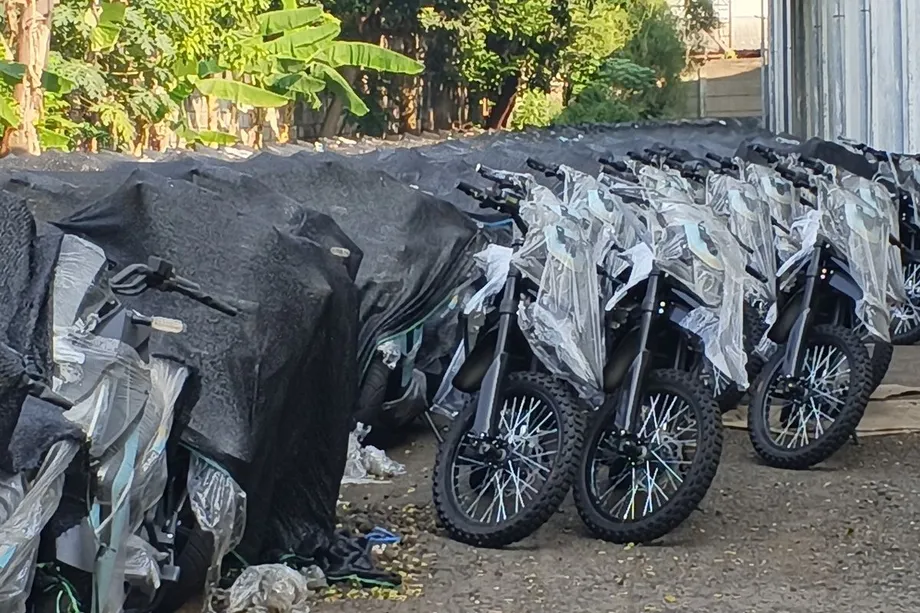
The October case account covers 19,269 electric motorcycles. Investigators reported that 5,585 lacked batteries and that every vehicle in that group lacked official vehicle registration plates. According to the Attorney General's Office, the motorcycles consequently could not be used or entered into the inventory of state property.
Anang Supriatna, head of the Attorney General's Office Legal Information Center, stated the precise financial loss attributed to the case:
The case resulted in state financial losses amounting to Rp863,846,166,953.
The transfer is a procedural step toward prosecution, not a finding of guilt. Prosecutors must examine the files and evidence, prepare indictments and submit the case to the Corruption Court at the Central Jakarta District Court.
Missing batteries affected almost three in ten motorcycles
The procurement group described in October consisted of 13,155 trail motorcycles and 6,114 scooters or mopeds. Of those, 5,355 trail motorcycles and 230 scooters or mopeds were reported to be without batteries.
Those figures mean that approximately 29 percent of the 19,269 motorcycles lacked batteries. The problem was concentrated among trail motorcycles: about 40.7 percent lacked batteries, compared with about 3.8 percent of the scooters or mopeds.
A missing battery prevents an electric motorcycle from operating. The registration problem was broader, however, because prosecutors said it affected all 19,269 vehicles, including those not reported to have missing batteries. Resolving the battery shortage alone would therefore not resolve every obstacle identified by investigators.
The distinction matters when assessing what the state received for its expenditure. The October account describes physical vehicles with specific deficiencies, rather than simply a failure to purchase any motorcycles. It also identifies a separate problem with recognizing those purchases as usable government assets.
Five suspects include a BGN official and company executives
The five suspects transferred on October 9 include Colonel Budi Utomo, identified as a former secretary of BGN's deputy responsible for provision and distribution. He also served as the procurement commitment official, known in Indonesia as the PPK, a role responsible for contractual commitments involving public spending.
The four private sector suspects are Andri Mulyono, identified as a commissioner of PT YAT and PT ASE; Yenna Yuniana, identified as PT YAT's director and referred to as YY in several accounts; AA, a director of PT ASE; and GB, a director of PT ASE who is also identified as a director of PT AKI.
The transfer took place at Kartika Adhyaksa Tower in Jakarta. It was conducted by the joint investigation team under the Deputy Attorney General for Military Crimes, known as Jampidmil, and delivered the suspects and evidence to the prosecution team at the Central Jakarta District Prosecutor's Office.
All five were detained for a further 20 days. Investigators were also examining whether Budi received benefits or promises of payments from private parties. The accounts do not establish a final finding on those alleged benefits or specify their value.
Investigators allege the tender was arranged for selected vendors
The alleged misconduct extends beyond the condition of the motorcycles. Investigators suspect collusion over the selection of the winning bidder, technical specifications and the procurement price estimate, with arrangements intended to secure business for PT YAT and PT ASE.
The estimate, known as Harga Perkiraan Sendiri or HPS, is the purchasing authority's estimate of what the procurement should cost. Alleged manipulation of that estimate concerns the basis used to assess pricing, while changes to specifications can affect which suppliers qualify to compete.
Investigators also alleged inflated procurement costs and contracts awarded to vendors that did not meet qualification requirements. PT YAT was suspected of lacking an adequate dealership network and active service centers to support a procurement project operating across the country.
These allegations concern different stages of the same purchase: how the supplier was chosen, how the price was set, whether the supplier could support the vehicles and what was ultimately delivered. They remain allegations to be tested through prosecution and trial.
Why the motorcycle totals do not yet line up
Several different motorcycle totals appear in accounts of the investigation, and they cannot safely be treated as interchangeable. Anang said the initially promised quantity was approximately 25,644 units, later revised to 21,000. He said actual realization by around the end of March 2026 was only 2,117 units, while records made it appear that approximately 21,800 had been completed.
Measured against the revised target of 21,000, the stated March realization was approximately 10.1 percent. The gap between 2,117 actual units and the approximately 21,800 represented as completed was about 19,683 motorcycles. That calculation describes the alleged reporting gap, not an independently established count of missing vehicles.
A June account described a warehouse containing 21,801 motorcycles for which BGN had fully paid. The October prosecution account, by contrast, describes 19,269 motorcycles in the procurement group covered by the case.
The difference between the June warehouse figure and the October case figure is 2,532 motorcycles. No explanation establishes whether these totals reflect different contract scopes, delivery stages or groups of evidence. Nor is it established that the 19,269 motorcycles were all stolen or absent: the October account describes vehicles with missing batteries and registration plates.
The warehouse seizure preceded the October audit
Investigators sealed a storage facility in Sentul, West Java, on June 17, 2026, after physically checking assets there. At that stage, most of the 21,801 motorcycles described as fully paid for were reportedly still stored and had not been distributed to their intended recipients.
Syarief Sulaeman Nahdi, director of investigations at the Attorney General's Office Special Crimes Unit, explained why investigators sealed the warehouse:
The sealing was carried out to ensure that evidence remains secure while the investigation is ongoing.
The main dates show how the investigation progressed from questions about delivery to an audit and transfer for prosecution:
- End of March 2026: Prosecutors say actual procurement realization stood at 2,117 units, despite records suggesting approximately 21,800 had been completed.
- June 17, 2026: Investigators sealed the motorcycle warehouse in Sentul, West Java.
- September 29, 2026: Suspects in another branch of the BGN investigation were transferred to the Central Jakarta District Prosecutor's Office.
- October 2, 2026: Anang publicly described the alleged manipulation of procurement quantities and a budget of approximately Rp 1.2 trillion.
- October 5, 2026: The audit calculating the motorcycle case loss was dated.
- October 9, 2026: The five motorcycle procurement suspects and evidence were transferred to prosecutors.
Reports differ on whether Anang's written statement giving the exact loss figure was issued on October 9 or October 10. They agree on the October 9 transfer and the October 5 audit date.
The budget, contract value and audited loss are different measures
Anang described the motorcycle procurement budget as approximately Rp 1.2 trillion. The June warehouse account placed the contract for 21,801 motorcycles at Rp 1.035 trillion. The audited loss subsequently cited for the October case was Rp 863.846 billion.
A budget is an allocation for spending, a contract value is the amount attached to an agreement, and an audited loss is a calculation of financial harm. These figures therefore should not be presented as competing estimates of the same thing.
The audited loss is approximately 83.5 percent of the reported Rp 1.035 trillion contract value, or about 72 percent of the stated Rp 1.2 trillion budget. Those comparisons show the scale of the loss, but the different motorcycle totals mean they cannot establish a recovery rate or the value of usable vehicles.
The detailed audit methodology is not described. In particular, the accounts do not explain how auditors valued vehicles without batteries or registration plates, or what residual value they assigned to the seized motorcycles.
A broader BGN investigation covers other purchases and assets
The motorcycle prosecution is one branch of a wider investigation into management of the MBG program. By early October, prosecutors had identified 11 suspects across the BGN cases, with six suspects from another branch already transferred for prosecution.
That group included former BGN chief Dadan Hindayana, former deputy heads Sony Sonjaya and Lodewyk Pusung, Asep Yusuf Somantri, Indonesia Food Security Review foundation chair Glory Harimas Sihombing, and Lalu Muhammad Iwan, identified as secretary of BGN's deputy for promotion and cooperation. Sony's surname also appears as Sanjaya, while Asep's name appears as Soemantri in another account.
The wider inquiry examines suspected irregularities involving 32,000 pairs of shoes, 31,994 tablets and 5,400 televisions, as well as alleged affiliations between suspects and foundations managing nutrition service units.
Prosecutors have cited an estimated Rp 10 trillion loss across the broader BGN governance case, attributed to calculations by the Financial and Development Supervisory Agency, or BPKP. That figure concerns a wider investigation and should not be added to the motorcycle loss without evidence that the calculations are separate.
Investigators also seized aircraft, a helicopter, vehicles, Rp 24.970 billion in cash, phones and documents in the wider case. The accounts do not specify which assets relate to the motorcycle procurement or how much of their value could ultimately be recovered.
Charges and recovery remain the next legal steps
The suspects face primary allegations under Article 603 of the Criminal Code, enacted through Law No. 1 of 2023, and subsidiary allegations under Article 604. The provisions are cited together with Article 18 of Law No. 31 of 1999 on corruption, as amended by Law No. 20 of 2001, and Article 20(c) of the Criminal Code. A subsidiary allegation provides an alternative legal basis if the primary allegation is not established.
Anang said prosecutors would examine the case files, prepare indictments and transfer the matter to the Central Jakarta Corruption Court. No trial opening date is given. The reported 20 days of detention is a custody period, not a trial deadline or sentence.
Zaenur Rohman, a researcher at Gadjah Mada University's Center for Anti Corruption Studies, urged investigators to examine BGN procurement more broadly and prioritize recovery of public money. He argued that purchases should be assessed against actual needs and that investigators should trace those who benefited:
To be optimal, we need to follow the money. All parties benefiting from the proceeds of crime must be prosecuted and the proceeds confiscated.
The unresolved issues include the reconciliation of motorcycle counts, the audit's valuation method, the alleged benefits received by individual suspects and the amount recoverable from seized assets. Prosecutors must now turn the investigation findings into specific allegations that can be examined in court.
Key Points
- An October 5, 2026 audit put alleged motorcycle procurement losses at Rp 863,846,166,953.
- Five suspects and evidence were transferred to Central Jakarta prosecutors on October 9.
- The October case covers 19,269 motorcycles, including 5,585 reported without batteries.
- Prosecutors said all 19,269 lacked official registration plates and could not be used or inventoried as state property.
- The March realization, June warehouse and October case totals have not been reconciled.
- The broader BGN investigation covers other purchases and an estimated Rp 10 trillion loss.
- Indictments and transfer to the corruption court are the next steps; no trial date is given.