A tripling of infections and a widening threat to children
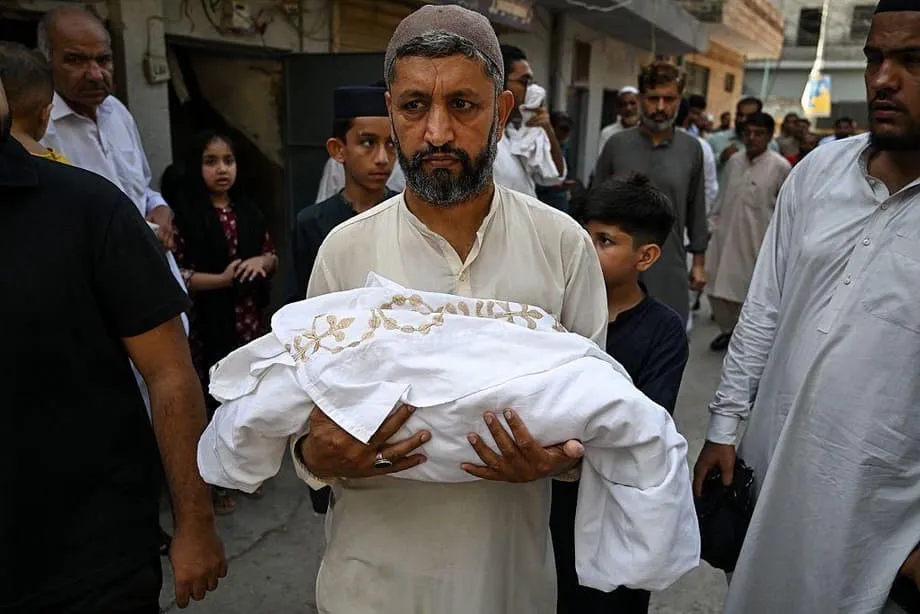
Pakistan recorded an estimated 48,000 new HIV infections in 2024, up from 16,000 in 2010, while routine medical care has emerged as a major route of exposure for children and other patients. In Taunsa, Punjab, 331 children tested positive between November 2024 and October 2025. Contaminated needles were considered the probable source in more than half of those cases, and fewer than 5% of the affected children had mothers living with HIV.
Contents
- A tripling of infections and a widening threat to children
- What the Taunsa outbreak reveals
- Child outbreaks stretch across several years
- Why everyday injections carry such a large risk
- Treatment has expanded, but most people remain outside care
- Children face two distinct prevention failures
- Stigma and travel costs obstruct diagnosis
- Enforcement must reach injections, blood and clinics
- Financing and local access are the next tests
- Key Points
These figures point to a crisis that extends beyond the populations historically most affected by HIV. Unsafe injections, inadequately screened blood and failures in infection control are exposing people seeking treatment for ordinary illnesses to a virus that requires lifelong care. Sexual transmission, injecting drug use and transmission during pregnancy, birth or breastfeeding remain part of the epidemic, but they cannot explain every outbreak.
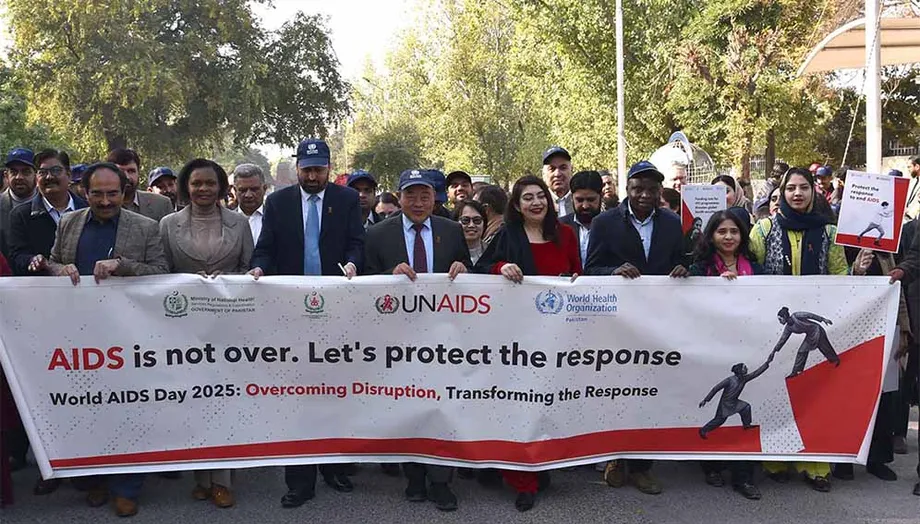
In their World AIDS Day statement of 1 December 2025, the World Health Organization and UNAIDS, working with Pakistan's Ministry of Health, warned that HIV was spreading to children, spouses and the wider community. They identified unsafe blood management and injection practices alongside gaps in testing, prevention and treatment.
The national estimates show the scale of the response needed: about 350,000 people were living with HIV, yet only 21% knew their status in 2024. That leaves approximately 276,500 people unaware of their infection, calculated from the estimated total and diagnosis rate. The figures are estimates, not a count of individually confirmed cases, but they reveal how much of the epidemic remains outside routine care.
What the Taunsa outbreak reveals
The Taunsa findings bring the danger inside a government hospital, rather than confining it to informal clinics. An undercover investigation recorded staff apparently reusing syringes to access medicine vials containing several doses, handling medical waste unsafely and continuing dangerous practices after authorities had promised intervention.
The Lancet HIV commentary describes contaminated needles as the probable source in more than half of the 331 paediatric cases. That assessment supports concern about medical transmission, but it does not establish the precise route of infection for every child. The low proportion with mothers living with HIV makes transmission from mother to child an insufficient explanation for most of this cluster.
The Taunsa hospital investigation, detailed on 14 April 2026, documented ten occasions when syringes were reused on medicine vials during 32 hours of filming in late 2025. On four occasions, medicine from the same potentially contaminated vial was given to different children. The hospital's medical superintendent had been suspended in March 2025, showing that administrative action had preceded the later footage without eliminating the recorded risks.
A vial intended to supply several doses can become a shared source of infection if a used syringe introduces contaminated blood into it. Changing the needle alone does not make a used syringe safe, because contamination can remain in the syringe barrel. The central safeguard is a new sterile needle and syringe for every patient and every procedure requiring them.
Child outbreaks stretch across several years
Taunsa is part of a longer pattern. WHO lists outbreaks involving unsafe injections and blood transfusions from Larkana in 2019 through several locations in 2025. The Lancet HIV commentary says children represented more than 80% of detected cases across the outbreaks it describes; WHO uses the narrower wording that this occurred in several outbreaks. Neither statement means children account for that share of all HIV infections nationally.
The sequence shows repeated warnings across different districts rather than one isolated hospital failure:
- 2019: An outbreak in Larkana exposed a major concentration of infections among children.
- 2023: WHO identifies outbreaks in Jacobabad and Shikarpur.
- 2024: Outbreaks were recorded in Taunsa and Mirpur Khas.
- November 2024 to October 2025: Investigators identified 331 children testing positive in Taunsa.
- 2025: WHO lists further outbreaks in Sindh, including Hyderabad, Naushahro Feroze and Pathan Colony.
- January to March 2026: The Lancet HIV commentary reports that another 329 children tested positive in Sindh.
The Pakistan Medical Association warned that the actual number behind the first quarter of 2026 figure could be four times higher because screening facilities were scarce. That is a warning about possible undercounting, not a verified total. A positive test during that period also does not establish when the child acquired HIV.
Why everyday injections carry such a large risk
People in Pakistan receive an average of eight to 14 therapeutic injections annually, according to the Lancet HIV commentary. These are injections given as medical treatment, distinct from injecting drugs outside medical care. Frequent use creates repeated opportunities for exposure when equipment, medicine handling or disposal is unsafe.
Naveed Akram, a physician involved in infection control advocacy and a former professor at the University of Health Sciences Lahore, described how patient expectations and weak oversight sustain the problem.
"In many communities, injections are still perceived as more effective treatment, while poor regulation allows unsafe practices to continue in both public and private healthcare settings," Akram said.
The risks are not identical in every facility. Overcrowded public hospitals face shortages of staff and supplies, while patients in poorer communities may turn to unlicensed providers because qualified care is distant or unaffordable. The Taunsa evidence shows why inspections must cover government hospitals as well as private and informal practices.
Amina Khan, a doctor in Sindh who treats children living with HIV, described infections acquired during treatment as iatrogenic. The term means harm caused through medical care, rather than the illness that initially brought a patient to a clinic.
These children come to hospitals with fever, diarrhoea, or routine illnesses and leave infected with a lifelong virus," Khan said. "The infection is often iatrogenic, acquired during medical care. A reused syringe can destroy an entire family's future.
Treatment has expanded, but most people remain outside care
Pakistan has increased the number of people receiving antiretroviral therapy, or ART, from around 6,500 in 2013 to 55,500 in 2024. Treatment centres grew from 13 in 2010 to 95 in 2025. These are substantial gains, but they have not kept pace with the estimated population needing services.
WHO estimates that 16% of people living with HIV were receiving treatment in 2024 and only 7% had achieved viral suppression. Viral suppression means medicines have reduced the amount of HIV in the blood to a very low level. Treatment protects health, while sustained suppression also prevents sexual transmission.
The diagnosis, treatment and suppression percentages all refer to the estimated population living with HIV. They should not be read as successive percentages of the preceding group. Using the 350,000 estimate, 7% corresponds to approximately 24,500 people with viral suppression.
The Lancet HIV commentary separately cites 76,167 people registered as living with HIV by March 2025. That figure and the 350,000 estimate measure different things: recorded registrations at one date and estimated infections across the population. The gap highlights undiagnosed infection and incomplete service reach, rather than proving that either figure is wrong.
More than 14,000 people were estimated to have died from AIDS in 2024. The commentary describes this as an increase of more than 500% since 2010. HIV is the virus; AIDS is the most advanced stage of infection, which timely and effective treatment can prevent.
Children face two distinct prevention failures
New HIV infections among children aged 0 to 14 rose from 530 in 2010 to 1,800 in 2023, according to WHO. That is about 3.4 times the earlier figure, an increase of roughly 240%. More than 1,100 deaths related to AIDS among children were estimated in 2023.
Unsafe medical care is one route of exposure. Gaps in care during pregnancy are another. Only 14% of pregnant women who need treatment to prevent transmission to their children receive it, according to WHO. Routine HIV testing during antenatal care and prompt treatment can address this risk, but cannot replace safe injections and screened blood.
Only 38% of children aged 0 to 14 living with HIV are on treatment. That leaves most without the therapy needed to control the virus. The figures describe separate failures in prevention and care: children can acquire infection through unsafe procedures or untreated maternal infection, then face further barriers to diagnosis and medicines.
The Taunsa evidence is especially useful in distinguishing these routes. Fewer than 5% of affected children had mothers living with HIV, while contaminated needles were considered probable in more than half of cases. National action therefore needs both safer clinical procedures and stronger maternity services.
Stigma and travel costs obstruct diagnosis
For families, a diagnosis can bring isolation as well as medical expenses. A father from southern Punjab, who said his son acquired HIV after treatment at a local clinic, described the consequences. He withheld his name because of the stigma surrounding the disease.
We trusted the doctor with our child. Now people avoid us because they think HIV is shameful. My son needs medicines for life but even reaching the treatment centre costs more than we can afford.
His account illustrates why adding treatment centres does not automatically make care accessible. Families still need transport, repeated visits and confidence that seeking help will not expose them to discrimination. HIV is not spread through ordinary social contact, so avoiding affected families does nothing to prevent transmission.
Sajid Abdullah, a government official who volunteers with an HIV awareness team, said rising reported case numbers can also reflect more people coming forward for testing. That distinction matters: diagnosed cases depend on screening, while estimates of new infections aim to measure transmission. Better detection can raise recorded numbers even as it helps bring people into care.
Abdullah also warned that fear and silence delay testing until illness has progressed. Awareness efforts therefore need to explain prevention and treatment without portraying HIV as evidence of shameful conduct.
Enforcement must reach injections, blood and clinics
Pakistan has officially banned used and reusable syringes, yet unsafe reuse continues amid weak enforcement. A rule on paper cannot protect patients if clinics lack supplies, staff disregard safe procedures or inspectors fail to detect violations.
The Lancet HIV commentary proposes three focused measures: systematic inspections to enforce use of each syringe only once, HIV screening of all blood before transfusion, and routine antenatal testing followed promptly by treatment for women who test positive. Each addresses a different route of preventable infection.
Healthcare expert Javed Akram called for stronger blood screening, testing, penalties and public awareness alongside action against unqualified practitioners. Pakistan's national HIV taskforce has also recommended inspections of clinics and pharmacies and tougher action against the sale and reuse of disposable syringes. These are recommendations, not evidence that a nationwide inspection programme has been completed.
At the December 2025 event, Pakistan's Health Director General Dr Ayesha Majeed Isani said communities, regulators and clinicians all needed to take part.
We need everyone involved to end unsafe practices for injections and blood transfusions. We need to educate people. We need to take our clinicians on board as well.
Reducing unnecessary injections would lower opportunities for unsafe exposure. Syringes designed to disable after use can provide another safeguard, but safe medicine handling, blood screening and disposal remain necessary.
Financing and local access are the next tests
A Karachi seminar organised by Bridge Consultants Foundation, described in a report published on 21 June 2026, called for greater domestic financing for prevention, testing, treatment and care. Participants identified dependence on external donors, weak surveillance and limited regulation of informal providers as obstacles to a sustained response.
Their recommendations included wider access to HIV self testing, routine testing for pregnant women and tuberculosis patients, and bringing ART services into primary healthcare. They also urged safer disposal of syringes and medical waste, reduced use of unnecessary injections and involvement of general practitioners in HIV care.
These proposals connect the two main failures exposed by the figures: medical services that can transmit infection and an HIV care network that still misses most people who need it. Integrating treatment into local services could reduce travel burdens, but those services must themselves meet infection control standards.
WHO and UNAIDS have set 2030 as the goal for ending AIDS as a public health threat. UNAIDS Director in Pakistan Trouble Chikoko called for renewed international financing alongside national resources. No implementation deadline for the proposed inspections, blood screening expansion or broader local treatment access is specified. Their reach, funding and enforcement remain unresolved.
Key Points
- Estimated new HIV infections rose from 16,000 in 2010 to 48,000 in 2024.
- Unsafe injections and blood transfusions have been linked to repeated outbreaks involving children.
- Taunsa recorded 331 children testing positive over 12 months; contaminated needles were considered probable in more than half of cases.
- Only 21% of people living with HIV knew their status in 2024, 16% received treatment and 7% had viral suppression.
- Prevention priorities include safe injections, screened blood and routine antenatal testing with prompt treatment.
- Expanded testing and local treatment require financing, reliable inspections and protection from discrimination.