Fourteen deaths after warnings went unanswered
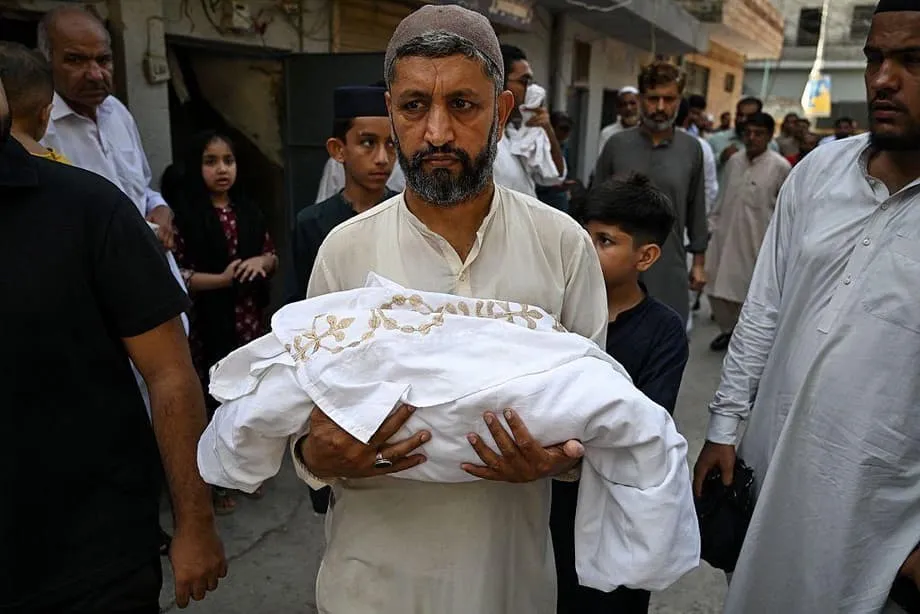
Fourteen newborn babies died in a nursery designed for 10 beds at the Pakistan Institute of Medical Sciences in Islamabad after years of safety warnings failed to produce effective protection, an official inquiry has found. Fifteen critically ill babies were inside when the fire broke out on 26 August. Only one survived.
Contents
- Fourteen deaths after warnings went unanswered
- An air conditioner cable was the probable starting point
- Seconds inside the ward, minutes before outside help
- Rescue efforts challenged claims of abandonment
- Why moving the babies was so difficult
- Earlier warnings had not led to verified repairs
- Disciplinary action and criminal investigation
- Electrical safety extends beyond equipment servicing
- What the committee recommended changing
- The Bottom Line
A committee appointed by Prime Minister Shehbaz Sharif found that the neonatal unit lacked functioning smoke detection, fire alarms and sprinklers. Emergency routes were difficult to access, staff had no approved and practiced plan for evacuating newborns, and outside emergency services were notified about 16 minutes after the fire began.
The committee examined CCTV footage, forensic material, maintenance records, duty rosters, medical documents, telephone records and witness statements. It described the failures at PIMS and its senior management as institutional: known dangers had not been turned into a working safety system.
Many babies were premature or depended on oxygen and respiratory support. Moving them required people, equipment and somewhere safe to continue treatment. Smoke rapidly overwhelmed the nursery, leaving staff to attempt rescues without the preparation or protective systems that the inquiry said should have been in place.
The findings have led to recommendations for disciplinary action, further criminal investigation, changes to hospital management and fire and electrical safety audits across public and private buildings in Pakistan. They also distinguish between the responsibility of senior management for unsafe conditions and the actions of frontline workers who tried to save the babies.
An air conditioner cable was the probable starting point
Technical investigators identified the power cable connected to air conditioner No. 2 as the most probable ignition point. Possible causes included local overheating, excessive current, a high resistance connection or another electrical defect that damaged insulation and set nearby materials alight.
A high resistance connection can generate heat where electricity passes through a poor connection. Insulation is the protective covering around a cable. The inquiry left the exact electrical defect for further investigation, while identifying an electrical fault as the likely origin of the fire.
Investigators found no evidence of deliberate ignition. They ruled out an external fault involving the Islamabad Electric Supply Company, an oxygen leak as the initial source, and incubators or infant warmers.
Maintenance records showed that the air conditioning units had been serviced. The committee explained that servicing an appliance and inspecting its electrical safety are different tasks. Equipment can keep working even when its cables, connections, insulation, earthing or circuit protection are unsafe.
Plastic materials, medical equipment and waste containers helped the flames spread. The oxygen rich environment may have intensified the fire and smoke, although investigators found no evidence that oxygen provided a route for the fire to travel.
Seconds inside the ward, minutes before outside help
CCTV footage placed the first visible emergency at about 06:38, when a nurse ran from the ward for help and returned with a security guard. Staff nurse Razia Noreen entered the nursery and came out carrying the only baby who survived. Within roughly a minute, thick smoke blocked the camera's view.
External emergency services were notified at about 06:54. Dispatch followed at approximately 06:55, and operational teams arrived at about 07:01. The gap between the fire's beginning and the request for outside assistance was approximately 16 minutes, close to 20 minutes.
The key events recorded before and during the disaster were:
- 2018: Approval reportedly existed to replace and upgrade air conditioning units, but the work remained unfinished years later.
- 6 July: A fire at the PIMS nursing hostel raised concerns about detection, alarms, evacuation, equipment, security response and records.
- 26 August, about 06:38: CCTV showed the emergency unfolding in the neonatal nursery.
- About 06:54: External emergency services were notified.
- About 06:55: Emergency dispatch followed.
- About 07:01: Operational teams reached the hospital.
The committee said PIMS had not demonstrated a functioning incident command system. Such a system assigns responsibility for sounding alarms, calling emergency services, controlling access and coordinating evacuation, so those tasks can begin immediately and work together.
Rescue efforts challenged claims of abandonment
The inquiry rejected broad claims that frontline staff abandoned the babies. It recorded immediate efforts by nurses, a security guard and a doctor, and said workers whose rescue attempts were supported by evidence should not be punished simply because the outcome was tragic.
Noreen rescued one infant and tried to return to the nursery. Charge Nurse Nasreen Akhtar, Security Guard Maria Saleem and Dr Muhammad Abdul Rehman were also identified as responding during the first moments of the fire.
A firefighter who spoke anonymously described an extremely difficult rescue. Workers had to break through windows because some doors were locked, while doors leading toward the ward were also inaccessible. He arrived after the flames had been extinguished, when the area remained dangerous, and described medical equipment above the babies as having melted and collapsed onto them.
Abdul Ghafoor, who was visiting his mother in a nearby ward, said smoke filled the corridor so completely that people could not see. He joined seven or eight people who broke glass panels at the end of a corridor to release smoke before firefighters arrived.
Hivsa Walid, whose newborn niece and sister in law were in a neighboring ward, described a loud commotion followed by smoke coming from the nursery. People concentrated on getting downstairs and saving themselves. Walid said:
There should have been fire extinguishers and protocols, but no one was doing anything. Everyone was just running,
The committee acknowledged that hospital security controls may be justified where authorities have previously faced baby abduction incidents. It said those controls must still allow emergency escape and access for rescuers. Locked or inaccessible routes became another obstacle when seconds mattered.
Why moving the babies was so difficult
Fifteen newborns occupied a nursery designed for 10 beds, five more than its intended capacity, or 50 percent above it. Most needed oxygen or respiratory support, and only a limited number of doctors and nurses were present.
Evacuating such patients involves more than carrying them away from flames. Staff need equipment and trained colleagues to keep babies supported during movement, along with a clear destination where treatment can continue. The inquiry found no approved and practiced standard operating procedure for doing this in the unit.
Staff had not been trained to isolate the oxygen supply during an emergency. There was also no evidence of regular evacuation drills designed around premature or critically ill babies. Workers were left making decisions in darkness and smoke while trying to move infants connected to medical equipment.
Reliable automatic detection, alarms and sprinklers were missing. Detectors and alarms can give people extra time to respond before smoke becomes overwhelming, while sprinklers can contain or suppress flames before a fire reaches a life threatening scale. At PIMS, the first warning came from people inside the ward.
The inquiry's account connects these failures. A crowded nursery with vulnerable patients required a particularly well prepared response, yet staff faced rapidly spreading smoke, restricted access and no rehearsed evacuation process. The delayed call for outside help added to those difficulties.
Earlier warnings had not led to verified repairs
The Capital Development Authority had previously raised fire safety weaknesses in correspondence, and the Federal Ombudsman had issued recommendations. PIMS management also acknowledged in 2025 that its safety infrastructure was outdated.
The nursing hostel fire on 6 July, only weeks before the nursery disaster, brought further concerns. Those included smoke detection, alarms, evacuation planning, firefighting equipment, the security response and record keeping.
The committee found that warnings had not been converted into a programme of repairs with deadlines and independent checks that the work was complete. Approval to replace and upgrade air conditioning units had reportedly existed since 2018, yet the work had still not been finished years later.
A repair approval is only the beginning of correcting a hazard. Someone must take responsibility, set a deadline, complete the work and check that it has removed the danger. Without that final verification, paperwork can show activity while patients remain exposed.
The report placed primary responsibility on PIMS and its senior management for failing to act on known risks. Its criticism focused on the hospital's ability to maintain a safe system over time, alongside its examination of what happened during the emergency itself.
Disciplinary action and criminal investigation
Prime Minister Sharif ordered short term measures to be implemented within three months and directed fire safety audits of public and private offices and buildings. Initial findings called for eight officials to be suspended and criminal proceedings to begin; the later full report recommended departmental action against nine PIMS officers.
Two nurses who had initially faced temporary suspension were cleared of wrongdoing and recommended for reinstatement. The committee also recognized Noreen and other frontline personnel who attempted to rescue the babies.
Further investigation was recommended to determine whether anyone was culpably negligent in the electrical installation or maintenance of the air conditioner, the obstruction of emergency routes, the failure to act on earlier warnings or the delay in seeking outside assistance. The role of contractors was also among the matters requiring examination.
Criminal responsibility for a named individual remained to be determined through that investigation. Administrative responsibility and criminal liability involve different decisions: hospital managers can face action for failing to maintain a safe institution, while prosecutors must prove the specific duties, knowledge and conduct of any person accused of a crime.
The committee's treatment of frontline staff follows that same focus on individual evidence. It sought accountability for failures while recognizing that nurses, a guard and a doctor responded immediately under dangerous conditions.
Electrical safety extends beyond equipment servicing
The PIMS fire has drawn attention to electrical systems in hospitals across Pakistan. Extinguishers and evacuation signs form only part of hospital protection. Reliable wiring, properly rated circuit protection, safe grounding, emergency power and inspected equipment are also needed, with special protection for intensive care and neonatal areas.
Pakistan has engineering and building safety codes, but enforcement responsibilities are divided among engineering authorities, local governments, electric inspectors, electricity distributors and provincial or Islamabad health regulators. A central issue is which authority must confirm that a hospital's electrical installation remains safe throughout its operating life.
Punjab Rescue 1122 recorded 15,590 fires in 2020, with 47.1 percent attributed to electrical short circuits. Recorded fires in the province rose to 28,018 in 2024. Applying the 2020 electrical share to the 2024 total produces an estimate of roughly 13,200 electrical fires; the figure is an estimate using the earlier share, while the official figures given are the 2024 total and the 2020 cause percentage.
Regular independent electrical audits would examine circuit loads, cables, panels, sockets, earthing, emergency generators, automatic transfer systems, cable penetrations and supplies serving critical care areas. Automatic transfer systems switch between power supplies, while checks on cable penetrations cover places where cables pass through building barriers.
Problems found during inspections should be ranked by risk, given correction deadlines and checked by an authority separate from the hospital's routine maintenance team. Hospitals should also record near misses, including overheated sockets, repeated breaker trips, burnt plugs, small electrical fires and failures of equipment insulation. Those events can expose danger before a patient is harmed.
What the committee recommended changing
The committee recommended immediate fire and electrical audits, working detection and alarm systems, improved firefighting equipment, procedures for evacuating newborns, regular drills and stronger administrative oversight. It also proposed changes to the administrative structure of PIMS and called for a permanent management model instead of an experimental arrangement.
A national hospital safety framework could clarify the standards applying to public and private facilities, identify who must inspect them and set inspection frequency. It could also require trained and certified personnel to design, install, maintain and inspect electrical systems in medical facilities.
Neonatal wards need plans that account for babies connected to oxygen, incubators and monitors, limited staffing, smoke movement, locked access points and the medical risks of moving patients. Drills should test the entire response, from detection and alarm through oxygen isolation, emergency access, evacuation and transfer to another ward.
The inquiry identified an electrical fault as the probable beginning of the PIMS disaster. Its explanation for the scale of the deaths went much further: earlier warnings went unanswered, protective systems were absent, emergency access was restricted and assistance was delayed. An equipment problem became a mass casualty event after several layers of protection failed.
The Bottom Line
- Fourteen newborns died and one survived after the 26 August fire at PIMS in Islamabad.
- The nursery held 15 babies despite being designed for 10 beds.
- Investigators identified the cable connected to air conditioner No. 2 as the most probable ignition point; the precise electrical defect needs further investigation.
- The unit lacked functioning smoke detection, fire alarms, sprinklers and a practiced newborn evacuation plan.
- Outside emergency services were notified about 16 minutes after the fire began.
- The inquiry recorded immediate rescue efforts and rejected broad claims that frontline staff abandoned the babies.
- PIMS and its senior management bore primary institutional responsibility for failing to address known risks.
- The recommendations include disciplinary action, further criminal investigation, fire and electrical audits, improved evacuation planning and stronger hospital management.