Appeals follow prison terms for Tiananmen vigil organizers
Hong Kong democracy activists Chow Hang-tung and Lee Cheuk-yan have appealed their convictions and prison sentences for inciting subversion, taking the case against the organizers of the city's annual Tiananmen commemorations into a new legal phase. Chow received seven years and three months in prison, while Lee received seven years, in sentences handed down on September 11, 2026.
Contents
- Appeals follow prison terms for Tiananmen vigil organizers
- What the court decided and when
- Why the judges treated the case as serious
- How constitutional protections became central to the charge
- Authorities deny punishing political beliefs
- Chow's statement challenges the judgment
- The vigils and international response
- What the appeals have yet to settle
- Key Points
Chow, a 41-year-old human rights lawyer, filed her appeal on a Monday following sentencing. Lee, a 69-year-old former lawmaker, subsequently challenged both his conviction and punishment. No hearing date has been scheduled for either appeal. The reports describing their filings do not give exact calendar dates.
The Court of First Instance also sentenced former lawmaker Albert Ho, identified in the government statement as Ho Chun-yan, to five years and two months after his guilty plea. The Hong Kong Alliance in Support of Patriotic Democratic Movements of China, which the three had led, was convicted and fined HK$1.5 million.
The sentences move the case beyond the initial guilty verdicts, when Chow and Lee faced a maximum prison term of 10 years and punishment had yet to be decided. Both had pleaded not guilty after being charged in 2021.
At the center of the dispute is whether the Alliance's campaign to end Communist Party rule constituted unlawful incitement against China's constitutional system or legitimate advocacy for democracy. Hong Kong authorities say the defendants crossed the boundary of lawful expression. Chow rejects that distinction, arguing that the judgment criminalizes the convictions behind the group's public activities.
What the court decided and when
The Hong Kong government's sentencing statement says the Court of First Instance delivered its conviction verdict on August 21, 2026, and imposed sentences on September 11. Human Rights in China also identifies August 21 as the conviction date.
Reports differ on that detail. One account of Lee's appeal gives August 22 as the date he and Chow were convicted. The two institutional statements agree on August 21, while the sentencing date is consistent across the accounts. The initial account describes the verdict as occurring on a Thursday but does not give a calendar date.
The principal stages of the case are:
- 2020: Beijing imposed Hong Kong's national security law following the city's mass protests in 2019.
- 2021: Chow and Lee were charged. The Alliance voted to disband in September following the arrests of its leadership.
- January 2026: Ho pleaded guilty when the trial opened, according to an account of the proceedings.
- August 21, 2026: The conviction date given by the Hong Kong government and Human Rights in China. One report instead gives August 22.
- August 28, 2026: Chow attempted to deliver her mitigation statement before sentencing.
- September 11, 2026: The court imposed prison terms on the three former leaders and fined the Alliance.
- After sentencing: Chow and Lee filed appeals. Hearing dates have not been set.
The distinction between conviction and sentencing matters. Conviction establishes criminal liability; sentencing determines punishment. An appeal against both challenges the guilty finding as well as the prison term, rather than asking only for a shorter sentence.
Why the judges treated the case as serious
According to the government statement, the court classified the offense as being of a serious nature. It said the defendants had mobilizing power and influence, and that their activities continued for 14 months through public events and online platforms with a reach across Hong Kong and different age groups.
The court's account placed weight on the timing and persistence of the conduct. It said the defendants continued promoting their agenda after the national security law took effect, despite believing that it might breach that law and China's Constitution. Those are findings attributed to the court, not admissions by Chow or Lee.
An account of sentencing says the three judges, Andrew Chan, Johnny Chan and Alex Lee, used seven years and six months as the starting point for punishment. They regarded the three leaders as acting together through the Alliance and having essentially equal responsibility, before making individual reductions.
The resulting sentences differed by substantial amounts. Chow's term was three months longer than Lee's. Ho's sentence was two years and one month shorter than Chow's and one year and ten months shorter than Lee's. The sentencing account identifies Ho's guilty plea, previous public service and unexpected trial delays among the considerations behind reductions, without providing a complete calculation for each defendant.
How constitutional protections became central to the charge
The government identifies Article 23 of the Hong Kong National Security Law as the provision under which the defendants were charged with incitement to subversion. Its explanation of the underlying offense relies on Article 22, which prohibits organizing, planning, committing or participating in acts using force, threats of force or other unlawful means to subvert state power.
That distinction helps explain the case. Incitement concerns encouraging others to engage in prohibited conduct. The prosecution did not need to establish that the defendants had successfully overthrown the government. The dispute instead concerned whether their advocacy encouraged acts covered by the law.
The government's constitutional argument connects Article 22 to Article 1 of the Constitution of the People's Republic of China. It says Communist Party leadership is central to the country's fundamental system, and that overthrowing or undermining that leadership therefore amounts to undermining the system protected by the national security law.
The sentencing account says the court treated the Alliance's demand to end rule by a single party as the unlawful means required for the subversion offense because the demand sought to end Communist Party leadership and was considered unconstitutional. This is the legal reasoning Chow disputes: she argues that a demand for democratic change should not become criminal merely because it challenges the existing political order.
Authorities deny punishing political beliefs
The Hong Kong government says the law was not applied retrospectively. Its statement attributes to the court the finding that the defendants were prosecuted for prohibited acts after the law took effect, rather than for earlier activities or their political ideology. This makes the alleged 14 months of conduct central to the official explanation of the convictions.
Chief Executive John Lee defended the sentences and said the Alliance's agenda sought to undermine Communist Party leadership and the fundamental system of the People's Republic of China. Describing what he said was the court's assessment, he stated:
The defendants intended to cause others to lose confidence in the CPC by stirring up hostility and causing division, so as to achieve the objective of undermining the fundamental system of the People's Republic of China (PRC).
A government spokesman also said all defendants received a fair trial under Hong Kong law, the Basic Law and the Hong Kong Bill of Rights, without interference. The government rejected foreign criticism and maintained that the court considered the relevant law and evidence rather than political views.
These statements set out the authorities' position. They do not resolve the disagreement over whether the acts identified by the court can be separated from the defendants' beliefs, which lies at the heart of Chow's response.
Chow's statement challenges the judgment
Human Rights in China published Chow's full mitigation statement on August 28, 2026, in English and simplified Chinese, translated from Cantonese. The organization says the judge stopped her after she read only its opening sentences and that the full text was subsequently uploaded to her Patreon page.
A mitigation statement normally gives a defendant an opportunity to address the court before punishment is imposed. Chow used hers to dispute the moral and legal basis of the conviction, rather than to apologize for her position. Referring to the length of the judgment, she wrote:
The 206-page judgment, stripped to its essence, says only this: pursuing democracy is a crime.
That sentence is Chow's assessment, not the court's stated conclusion. She argued that the judgment left no lawful space for people who believe Communist Party rule should end, and that even commemorating June Fourth could become criminal when viewed through that political belief.
Chow also rejected the claim that her advocacy depended on hostility. She said the movement could win support through facts and reason, and distinguished demands for equality and democratic accountability from incitement to hatred.
Her statement made clear that she did not intend to abandon her cause in prison. It listed the release of democracy activists, recognition of the 1989 democracy movement, accountability for the crackdown and a democratic Hong Kong and China as goals she would continue to pursue.
Addressing the personal cost, Chow wrote:
I therefore have no regrets whatsoever about the path I have walked with the Hong Kong Alliance and with the people of Hong Kong. I regret only the hardship endured by my family and by those who love me.
The vigils and international response
The Alliance was founded in 1989 and spent decades organizing annual candlelight vigils for those killed when Chinese troops suppressed demonstrations in Beijing on June 4 that year. Estimates of the dead range from hundreds to possibly thousands; no definitive toll is established in the accounts of this case.
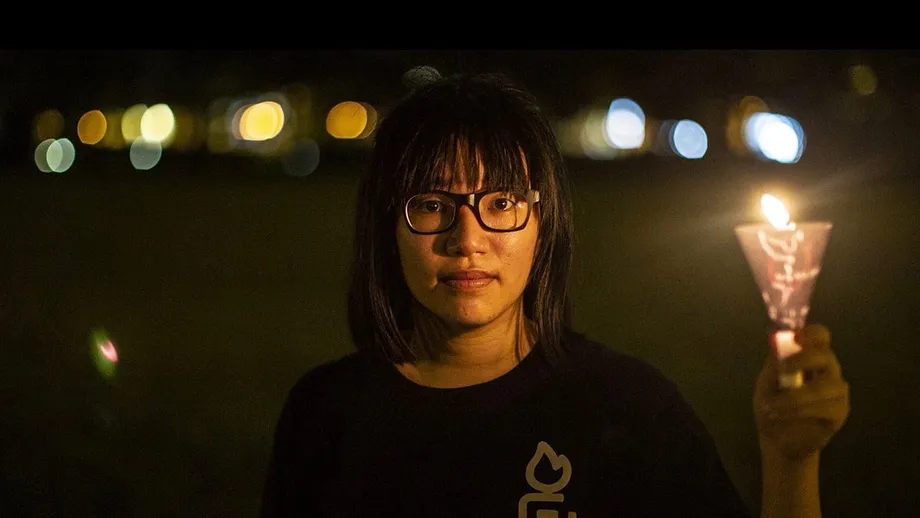
Chow's statement recalls 30 years of candlelight gatherings in Victoria Park. Those commemorations linked remembrance of the crackdown with demands for accountability and political change. Public commemorations in Hong Kong have been effectively banned since the national security law was imposed in 2020, after the mass demonstrations of 2019.
Germany and France issued a joint statement after the convictions expressing regret over the guilty verdict against Chow, who received the Franco-German Human Rights Award in 2023. The two governments called for her immediate release and said:
peaceful advocacy for human rights does not constitute a crime.
Taiwan's Mainland Affairs Council, the body responsible for policy toward China, expressed regret and sorrow and urged the Chinese Communist Party and Hong Kong government to release those detained in the case. It also called on China to stop political persecution.
The convictions have also drawn condemnation from rights groups and the United Nations. The contrast with Hong Kong's defense of the prosecution is direct: critics describe the conduct as protected advocacy, while local authorities describe it as unlawful action against the state's constitutional order.
What the appeals have yet to settle
No appeal hearing date or detailed grounds of appeal have been disclosed in the accounts of the filings. It is therefore not yet possible to say which parts of the trial court's reasoning Chow and Lee will formally challenge, or when an appellate court will consider their cases.
Time already spent in custody is another important part of the sentencing picture. Lee had been held on remand for 1,442 days by September 11, according to the sentencing account. That is almost four years before the seven year term was imposed, making it misleading to read the sentence as seven additional years from that date.
Published calculations estimate Lee's release around September 2029, Chow's around January 2030 and Ho's around April 2028. These are estimates rather than confirmed release dates. The calculation for Lee expressly assumes no prison remission, and an appeal that changes a conviction or sentence could also change the timetable.
The next concrete development will be the scheduling and consideration of the appeals. For now, the prison terms stand, while Chow and Lee contest both the finding that their activities constituted incitement to subversion and the punishment imposed for it.
Key Points
- Chow Hang-tung and Lee Cheuk-yan have appealed their convictions and sentences. No hearings have been scheduled.
- Chow received seven years and three months, Lee seven years, and Albert Ho five years and two months on September 11, 2026.
- The Hong Kong Alliance was convicted and fined HK$1.5 million.
- The government and Human Rights in China give August 21 as the conviction date; one report gives August 22.
- Authorities say the case concerned unlawful acts after the national security law took effect, not political beliefs or earlier conduct.
- Chow disputes that distinction and says the judgment criminalizes advocacy for democracy.
- Projected release dates are estimates, not confirmed dates, and may be affected by the appeals.