A 500 Hectare Project Faces a Dispute Over National Interests
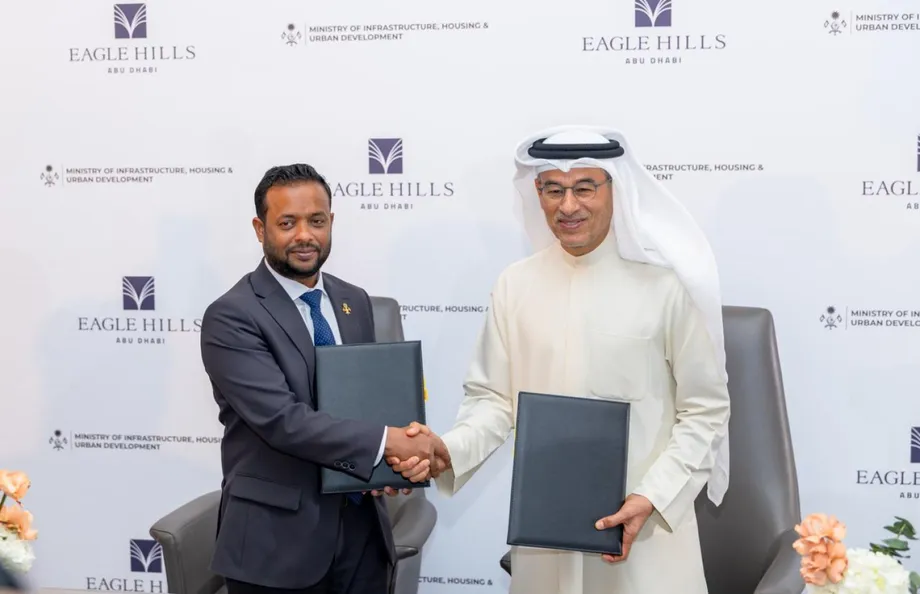
Former Maldivian President Abdulla Yameen Abdul Gayoom has attacked the government's Rasmale' agreement with Eagle Hills, challenging the safeguards behind a reported 99 year arrangement for a development covering 500 hectares. His criticism comes as Eagle Hills chairman Mohamed Alabbar promotes a project projected to attract USD 20 billion in investment, require 15,000 construction workers and accommodate at least 1,500 shops.
Contents
- A 500 Hectare Project Faces a Dispute Over National Interests
- Yameen Challenges the Government's Legal Silence
- Signing in Dubai Does Not Settle Which Law Applies
- Alabbar Describes Second Homes, Not Permanent Settlement
- Which Company Stands Behind the Experience?
- Local Jobs and Shops Form the Economic Case
- The Scale Is Large, but the Figures Are Projections
- Gaza Remarks Add to the Political Dispute
- Earlier Disputes Return as Disclosure Demands Grow
- Key Points
The competing arguments concern the same development, the Maldives Waterfront and Marina, on reclaimed land near Male'. Yameen says the government has failed to explain its benefits and risks. Alabbar says it will create opportunities for Maldivian businesses and provide overseas buyers with second homes rather than a place to settle permanently.
The distinction matters because the debate mixes several different issues: control of land, property purchases, residency rights, local employment and the government's choice of commercial partner. A promise about how a development will operate does not, by itself, establish what its agreement legally permits or requires.
Speaking at a People's National Front (PNF) front office rally, Yameen described the agreement as "no good" and a "crime." Those descriptions are his allegations, not an established finding of wrongdoing. He also claimed that former leaders and government legal officials "do not dare" to discuss the deal.
Yameen Challenges the Government's Legal Silence
Yameen directed particular criticism at the Attorney General's Office, alleging that it lacked a proper legal framework for the project and that state legal officials had "stopped talking" about it. His argument was that a commitment involving a large area of land and a duration approaching a century requires a clear public explanation.
He warned that the arrangement could allow foreigners to settle in ways that undermine national interests. He also argued that allocating extensive coastal land without adequate safeguards could create risks for coastal security and the tourism industry. These were warnings about possible consequences, rather than evidence that those consequences had occurred.
Yameen placed the development within a wider argument about national resources. Economic returns, he said, should come from making the best use of those resources, not from selling strategic assets such as the international airport and main port in the name of profit. His references to those facilities were part of that broader argument; they do not establish that the Rasmale' agreement includes either asset.
Signing in Dubai Does Not Settle Which Law Applies
The agreement was reportedly signed in Dubai, although the land and planned investment are in the Maldives. That has prompted an allegation that the arrangement was designed to make Maldivian law inapplicable. The location of a signing ceremony, however, does not establish which law governs a contract or which authority can hear a dispute.
Those issues depend on the agreement's wording and the relevant legal requirements. A governing law clause identifies the law used to interpret contractual obligations. A dispute resolution clause sets out where and how disagreements are handled. Neither can be inferred simply from the city where signatures were exchanged.
There is also a distinction between leasing land and transferring ownership. A lease generally grants rights to use property for a specified period, while ownership concerns legal title. Residency permission is a separate matter again. Reports describe the 99 year arrangement both as a land allocation or lease and in connection with a residency programme, leaving the precise relationship between those rights unresolved.
In a statement dated 8 October 2026, Ibrahim Rizwan argued that the Constitution prohibits foreign ownership of Maldivian land and called for land sales serving what he described as Zionist interests to be stopped. His constitutional argument does not establish that the Rasmale' arrangement transfers ownership. Determining that would require the actual rights granted by the agreement, rather than treating a lease, a property purchase and residency as interchangeable.
Alabbar Describes Second Homes, Not Permanent Settlement
Alabbar has directly addressed the concern that foreign buyers would establish permanent lives in the Maldives through the project. Speaking to journalists during a visit to the country, the Eagle Hills chairman described its intended purpose:
"The Maldives project is creating a second home," said Alabbar.
That explanation presents the development as a destination for people who maintain their principal lives elsewhere. It answers the criticism at the level of commercial intent, but does not specify how residency permissions would operate, how long buyers could remain, or whether restrictions would be enforceable.
Alabbar also said his businesses work across 20 countries and respect national laws and regulations. In urging confidence in his experience, he told journalists:
"So I would like everyone to place their trust in me. I have done this before," said Alabbar.
His appeal rests on a record of delivering developments elsewhere. Yameen's challenge concerns whether the particular agreement protects Maldivian interests. Those arguments address different tests: the developer's ability to build and the state's ability to retain control over the terms.
Which Company Stands Behind the Experience?
Alabbar's examples also require a distinction between Eagle Hills and Emaar Properties. He chairs both companies, but they are separate businesses. Emaar was founded in 1997 and became a public company with outside shareholders. Eagle Hills was registered in 2014 and is a private company.
Several developments Alabbar cited as evidence of his experience are associated with Emaar, rather than Eagle Hills alone. The Maldives Waterfront and Marina project has been described as an effort involving both companies, while the government's land allocation and the agreement at the centre of the controversy concern Eagle Hills.
Alabbar said he had managed projects worth USD 450 billion since Emaar's beginnings and referred to 29 years in business. That is his description of a wider development record, not the value of Eagle Hills' Maldives investment. The Rasmale' investment projection is USD 20 billion.
The corporate distinction matters when assessing delivery promises. A common chairman can bring experience from one business to another, but it does not make their finances, ownership or contractual responsibilities identical. The division of obligations between the companies remains an important part of understanding who would fund, build and operate the development.
Local Jobs and Shops Form the Economic Case
Alabbar's argument for domestic benefits is more specific than a general promise of investment. He estimates that construction will require 15,000 workers and says the completed development will contain at least 1,500 shops, with priority for Maldivian business owners. He also says construction materials should be bought from Maldivian vendors whenever they are available locally.
On access to commercial premises, the Eagle Hills chairman said:
There'll be 1,500 businessmen, and we will give the priority of these shops for the local people.
Priority is not the same as a guaranteed allocation. The terms on which businesses would obtain premises, including eligibility, rents, repayment arrangements and any reserved share, have not been established in the public descriptions of the proposal. Similarly, the construction workforce estimate is not a confirmed number of jobs reserved for Maldivians.
Alabbar offered a possible financing model for businesses without enough capital to expand. Eagle Hills could construct premises for a local shop or restaurant, allowing repayment to begin after the business starts generating revenue. That could lower the initial cost of entry, although its value to an operator would depend on the eventual repayment terms and other charges.
For comparison, Alabbar cited Marassi on Egypt's Mediterranean coast, saying about 15,000 Egyptians work there and that its employees, contractors, engineers and staff are local. The Egyptian employment figure and the Maldives construction estimate happen to be the same, but describe different things. One is his account of employment at an existing development; the other is a forecast for a construction phase.
The Scale Is Large, but the Figures Are Projections
The planned 500 hectare development would occupy five square kilometres of reclaimed land. That conversion helps convey its physical scale without assuming what proportion of Rasmale' it represents, since a total area for the wider project has not been specified in the figures being discussed.
The economic projections are also substantial: USD 20 billion in investment and one million additional tourist arrivals each year. These are expectations for the development, not money already invested or visitors already received. No delivery schedule accompanying those figures establishes when the full investment or annual tourism increase would be achieved.
The forecast also differs from the more immediate construction ambition. Alabbar said he hoped practical work could begin within 12 months, subject to what the company could undertake. He did not present that as an unconditional start date or a promise to complete the development within a year.
The employment, retail and tourism figures therefore need to be read separately. Construction jobs relate to building the project. Shops concern its commercial operation. Additional visitors concern its projected effect on tourism. Combining them into a single claim of assured economic benefit would overlook the different stages and conditions involved.
Gaza Remarks Add to the Political Dispute
Yameen also objected to closer business relations with parties in Abu Dhabi whom he alleged were linked to Israel's actions in Palestine. He questioned the silence of religious scholars and argued that commercial gain should not override those concerns. His allegation of such links is not established by the project descriptions or Alabbar's statements about its economic benefits.
A separate controversy concerns Alabbar's response to a question about rebuilding Gaza at the 2026 One Billion Summit in Dubai. He said he would not have a role, describing himself as a businessman rather than a provider of charity. He argued that those who destroyed Gaza should be responsible for rebuilding it.
The remarks prompted criticism and calls for President Mohamed Muizzu's government to distance itself from parties such as Eagle Hills. They also brought renewed demands for disclosure of the Rasmale' deal. Refusing a role in reconstruction, however, is not evidence of involvement in Gaza's destruction.
Rizwan's October statement took a more confrontational position, calling on soldiers and police to put loyalty to the nation and citizens before political leaders or parties. Those were his appeals to the security services, not an announced position of either institution.
Earlier Disputes Return as Disclosure Demands Grow
Political commentary dated 10 October 2026 compared support for lengthy Rasmale' land arrangements with earlier protests over allegations that Faafu Atoll would be sold and over handing Velana International Airport to GMR. It also alleged inconsistency between opposition to maritime boundary decisions involving Chagos and support for the new development.
These comparisons concern political consistency, not proof that the transactions have the same legal structure. The criticism is that positions on foreign involvement in national assets appear to change depending on who holds power. The same commentary argued that principles expressed through Palestine related boycotts were being set aside in major state transactions.
The dated events and statements can be separated from announcements whose exact dates have not been identified:
- Early 2026: Alabbar answered a question about Gaza reconstruction at the One Billion Summit in Dubai.
- 8 October 2026: Rizwan issued his statement on foreign land ownership and the duties of soldiers and police.
- 10 October 2026: Political commentary compared Rasmale' support with earlier disputes involving Faafu Atoll, the airport and Chagos.
- Date unspecified: Alabbar expressed hope that practical work in the Maldives could begin within 12 months, subject to company capabilities.
No exact signing date, firm construction start date, completion deadline or scheduled legal hearing has been established in these public accounts. The central unresolved issues are the rights granted over land and residency, the applicable legal safeguards, the companies' responsibilities and whether promises for local businesses will become enforceable commitments. Disclosure of those terms would allow the debate to move beyond competing assurances and allegations.
Key Points
- Yameen alleges that the Rasmale' agreement threatens national interests and lacks an adequate public legal explanation.
- The development is described as covering 500 hectares, with a reported 99 year arrangement.
- Alabbar says the project is intended to provide second homes, not permanent settlement.
- Projected benefits include USD 20 billion in investment, 15,000 construction workers, at least 1,500 shops and one million additional annual tourist arrivals.
- Local businesses are promised priority, but detailed access and repayment terms remain unresolved.
- Eagle Hills and Emaar are separate companies chaired by Alabbar.
- Alabbar's Gaza remarks have added to criticism and demands for disclosure of the deal.
- The hoped for start within 12 months is conditional, not a confirmed construction deadline.