Verified arrests in Kabul and Herat
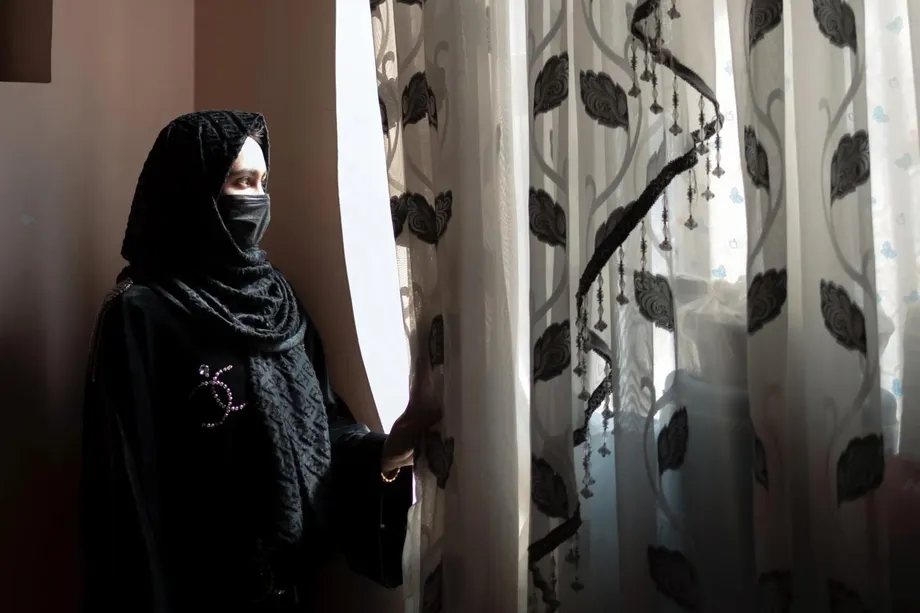
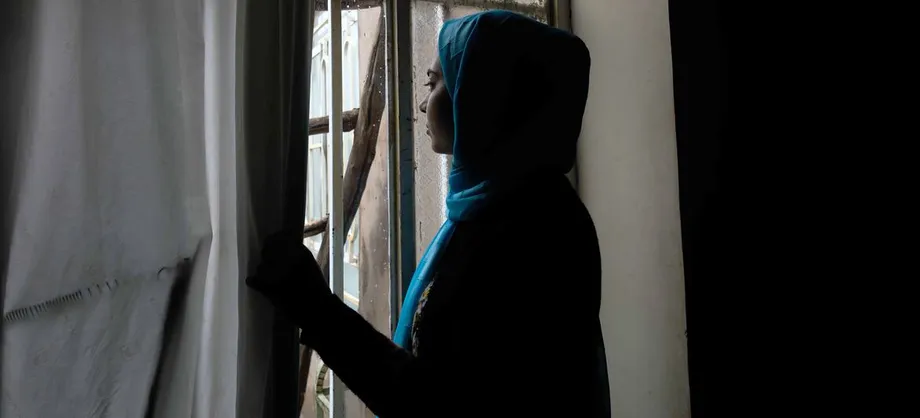
Taliban authorities arrested or detained at least 52 women and one girl in Kabul and Herat between July and September 2026 for alleged violations that included wearing colorful scarves or makeup, showing their hair, or appearing in public without a male guardian, the United Nations Assistance Mission in Afghanistan (UNAMA) said on October 8.
Contents
- Verified arrests in Kabul and Herat
- What triggered the detentions?
- Short detention can carry lasting costs
- June arrests led to a deadly protest
- The rules and the limits on police force
- Rights obligations and disputed warrant reports
- Nearly 6.5 million returnees face rebuilding pressures
- Work, shelter and documents remain scarce
- What has not been established
- Key Points
The women were released after several hours, according to the mission. Other women faced threats of arrest. UNAMA warned that its verified count may understate the extent of enforcement because protection concerns and social stigma prevent some incidents from being reported.
In its October 8 statement, UNAMA described itself as "gravely concerned" about arrests, detentions and threats targeting women and girls in multiple areas of Afghanistan. It also reported verbal abuse, beatings and threats against women, including female shopkeepers.
The findings follow arrests in Herat in June and a protest at which officials allegedly opened fire. They also arrive as Afghanistan absorbs nearly 6.5 million people who have returned from Iran and Pakistan since 2023, many facing unemployment, inadequate shelter and missing documents.
The Taliban did not immediately respond to the latest UNAMA statement. The mission called on the authorities to stop discriminatory enforcement and respect Afghanistan's obligations under international human rights law.
What triggered the detentions?
UNAMA identified several alleged grounds for detention: not wearing a chador, having visible hair, wearing colorful scarves or makeup, and being outside without a mahram. A chador is a garment that covers the body, while a mahram is a male guardian or chaperone.
The list shows that enforcement extends beyond clothing to whether women can move through public places independently. UNAMA did not provide a breakdown showing how many women were detained for each alleged violation, or how the 53 verified cases were divided between Kabul and Herat.
The mission described the incidents as arrests or detentions, without distinguishing the two categories in its count. Its statement does not detail formal charges, court proceedings or the precise circumstances of each release. The verified figure therefore documents people subjected to enforcement, rather than a published total of prosecutions or convictions.
Release after several hours limits what can be concluded about the duration of custody. It does not remove the concerns about the grounds for detention or the treatment women experienced before being allowed to leave.
Short detention can carry lasting costs
UNAMA said the practices violate women's and girls' rights to freedom of movement, expression and autonomy. Those rights concern the ability to travel, express personal choices and make decisions about one's own life without unjustified interference.
The mission also warned that arrest and detention expose women and girls to severe social stigma and further exclusion. That concern helps explain why a verified minimum is not necessarily a reliable measure of the full scale of enforcement: women who fear consequences from reporting an incident may never enter the documented count.
Threats of arrest matter separately from completed detentions. A woman may avoid a shop, workplace or journey because she fears being stopped, even if authorities never take her into custody. UNAMA recorded threats but did not publish a total for women affected by them.
The inclusion of female shopkeepers connects the reported abuse to women's ability to earn a living. The mission did not quantify how many shopkeepers were threatened or beaten, or calculate business losses. Its statement nevertheless identifies women engaged in ordinary commercial activity among those facing intimidation.
June arrests led to a deadly protest
The latest findings follow an earlier confrontation in Herat. Independent UN human rights experts said dozens of women were detained on June 6 and 7, 2026, for alleged violations of an order governing women's attire. The reported requirements included wearing a burka or a chador with a face mask, as well as a ban on perfume.
On June 9, men, women and children gathered to protest the restrictions and detentions. In their statement on Herat, the experts said officials allegedly opened fire and beat demonstrators.
Accounts differ on the casualties. UNAMA's earlier account described at least one boy killed by gunfire in Herat's Jibreil area and several other people injured. The independent experts reported at least two people killed, including a boy, and more than 20 injured. The different minimum totals cannot be treated as identical, and no reconciliation of them has been announced.
Reporting on UNAMA's June findings also put the number of women arrested in Herat at at least 30, with dozens more receiving verbal warnings. That figure concerns a separate period from the 52 women and one girl documented between July and September. It should not be used to calculate a trend without comparable information about reporting and verification.
The sequence of documented events is:
- June 6 and 7, 2026: Dozens of women were reportedly detained in Herat over alleged attire violations.
- June 9: Demonstrators protested the restrictions and detentions; officials allegedly used gunfire and beatings.
- July to September: UNAMA verified the arrest or detention of at least 52 women and one girl in Kabul and Herat.
- October 8: UNAMA published its latest findings and urged an end to discriminatory enforcement.
The rules and the limits on police force
The Ministry for the Propagation of Virtue and the Prevention of Vice enforces the Taliban's rules on dress and public conduct. The governing framework is the Law on the Propagation of Virtue and Prevention of Vice, under which morality officials have broad enforcement powers.
Since returning to power in 2021, as forces led by the United States withdrew, the Taliban have imposed extensive restrictions on women's education, employment and movement. Girls and women are barred from education beyond primary school. Public dress requirements include a headscarf, a long garment covering the body and a face covering.
The Taliban maintain that their rules reflect their interpretation of Islamic law and Afghan culture. The UN's objection concerns both the restrictions themselves and the use of coercive powers to enforce them.
The independent experts who addressed the June violence included Richard Bennett, special rapporteur on human rights in Afghanistan, and Reem Alsalem, special rapporteur on violence against women and girls. They explained the legal limits on law enforcement:
Use of force in law enforcement is strictly restricted under international law," the experts said. "It is permitted only when it is legal, necessary and proportionate to the threat posed to officers or to others, and when it respects principles of precaution, non-discrimination and accountability.
The experts acknowledged reports that some protesters threw stones. They said those actions would not, by themselves, meet the strict threshold for lethal force. They called for an independent, impartial and transparent investigation capable of establishing whether lethal force was necessary to protect life and identifying responsibility through the chain of command.
Rights obligations and disputed warrant reports
The June experts said detention for dress violations may be arbitrary and unlawful because it appears to punish women's exercise of freedom of expression and their right to be free from gender discrimination. An arbitrary detention is one that lacks adequate legal justification or violates fundamental rights, even where authorities invoke a domestic rule.
They cited Afghanistan's obligations under the International Covenant on Civil and Political Rights, the Convention against Torture, and the Convention on the Elimination of All Forms of Discrimination against Women. Their position was that the Taliban, as the authorities exercising control, must comply with the treaties to which Afghanistan is a party.
Separate reports describe International Criminal Court action against senior Taliban officials, but differ over the timing and number of warrants. One account says four warrants were issued earlier in the week of October 8. Another says two additional warrants were unsealed that week, adding to existing warrants for Taliban leader Hibatullah Akhundzada and supreme court head Abdulhakim Haqani.
Those descriptions should not be collapsed into a claim that four new warrants were issued that week. Both connect the court action to alleged crimes against humanity involving the deprivation of women's and girls' rights. The identities of the two additional officials are not specified in those accounts.
An arrest warrant is not a conviction. The Taliban rejected the court action as politically motivated and a violation of Afghanistan's sovereignty. That response to the ICC is separate from the absence of an immediate response to UNAMA's October 8 statement.
Nearly 6.5 million returnees face rebuilding pressures
Alongside the arrest findings, the International Organization for Migration (IOM) published findings on Afghans returning from Iran and Pakistan. Nearly 6.5 million have returned since 2023, according to the UN's October briefing, which presented the agency's Returnee Resilience Overview.
The overview examines undocumented returnee households and individual returnees who had been in Afghanistan for at least eight months after arrival. That makes the findings relevant to whether people can rebuild their lives after the initial return, rather than only to immediate needs at the border.
Mihyung Park, IOM's chief of mission in Afghanistan, described the scale of the challenge:
"Afghanistan is receiving returnees at a scale and pace that requires sustained support beyond the point of arrival," said Mihyung Park.
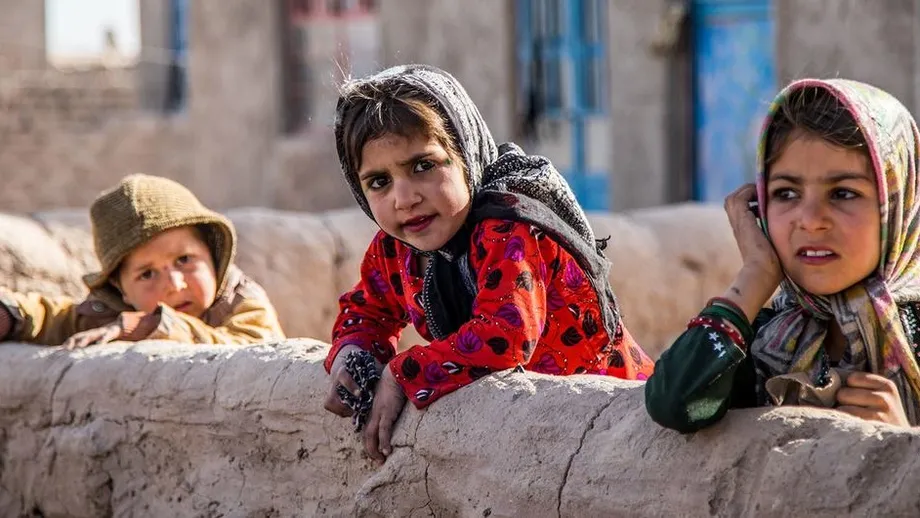
In the assessed population, 82 percent returned as households, with an average household size of 6.1 people. Children under 18 accounted for 58 percent. Those findings point to substantial needs for family shelter, schooling and essential services.
The returnee statistics are separate from UNAMA's detention count. They do not establish how many returnees were stopped over dress rules, or whether any of the detained women had recently returned from Iran or Pakistan.
Work, shelter and documents remain scarce
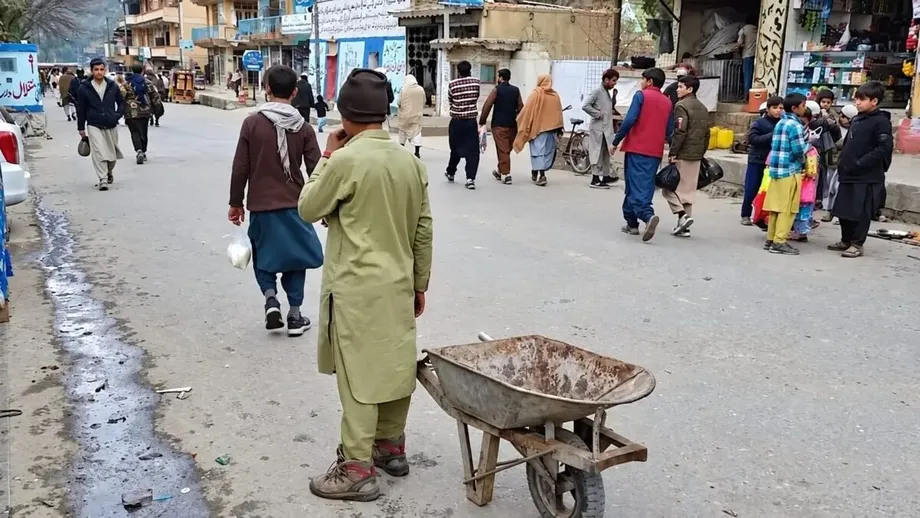
Among assessed returnees aged 14 and above, 53 percent had no completed education, half had no specialized experience, and 69 percent had not been employed during the 30 days before their interview. The employment figure measures recent work, not permanent exclusion from employment, but it shows how many were rebuilding their lives without recent earnings.
Housing conditions were also difficult. Transitional shelters housed 77 percent of those assessed, while 51 percent lacked sufficient living space. These are different measures: the type of accommodation does not, by itself, establish whether a household has enough room.
Only 21 percent of household respondents said every household member had documentation. Separately, 43 percent lacked the documents needed to access relevant services. These percentages should not be treated as opposites because complete household documentation and possession of papers for a particular service are different tests.
Park explained what IOM considers necessary for lasting recovery:
The findings show that many returnees intend to stay and rebuild their lives, but their ability to do so depends on access to livelihoods, safe shelter, documentation and essential services alongside support for the communities receiving them.
IOM called for sustained assistance to returnees and the communities receiving them, including work opportunities, shelter, documentation support and basic services. Its approach focuses on the places where people settle, rather than limiting assistance to the moment they arrive.
What has not been established
The two UN findings expose a practical tension. Returnees need access to work and services, while restrictions on women's movement and public presence constrain their ability to pursue those same needs. The data do not measure the direct effect of dress enforcement on returnee households, so that connection cannot be expressed as a financial loss or a count of services missed.
UNAMA has not published a full count of threats, a city by city breakdown of the latest detentions, or individual case histories. The June casualty totals also remain different across accounts. No findings from the independent investigation sought by the human rights experts are identified.
The experts called for the release of detainees, protection against mistreatment, access to medical care for injured people and an end to searches of people's homes. UNAMA's October statement asks for discriminatory enforcement to cease. Neither statement sets a compliance deadline or announces a hearing date.
The immediate distinction is between release and a change in enforcement. UNAMA says the women were freed after several hours, but it also documents threats and abuse. Its demand is therefore broader than ending individual periods of custody: it seeks an end to practices that punish women and girls for clothing choices and public movement.
Key Points
- UNAMA verified at least 52 women and one girl arrested or detained in Kabul and Herat between July and September 2026.
- Alleged violations included visible hair, colorful scarves, makeup, missing a chador and appearing without a male guardian.
- The women were released after several hours; UNAMA warned that fear and stigma may conceal additional cases.
- June protests in Herat followed earlier detentions. Accounts differ between at least one death and at least two deaths.
- UN officials and independent experts called for an end to discriminatory enforcement and accountability for alleged abuses.
- Reports differ on whether four ICC warrants were newly issued or two were unsealed alongside two existing warrants.
- Nearly 6.5 million Afghans have returned from Iran and Pakistan since 2023, with IOM documenting major gaps in work, shelter and papers needed for services.