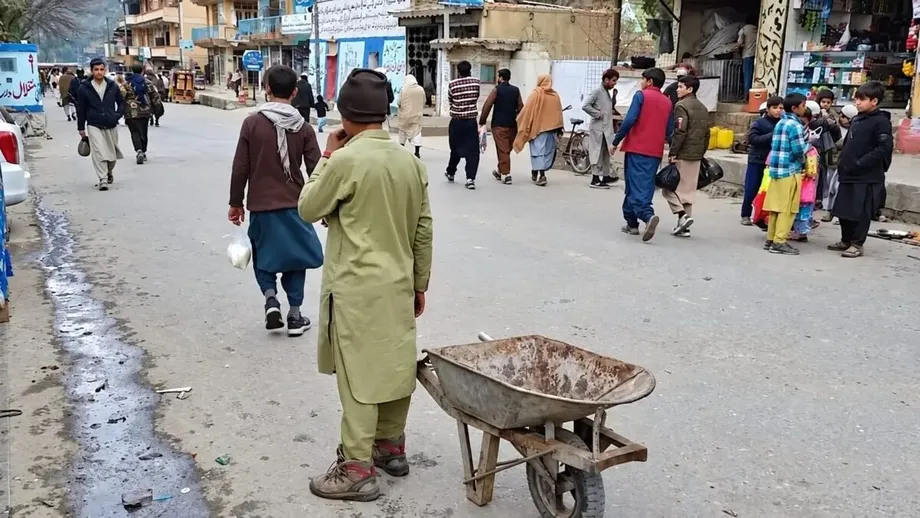
557 boys recruited despite orders banning the practice
United Nations monitoring verified that Taliban forces recruited and used 557 boys between January 2023 and December 2025, including children as young as 12. Of those boys, 341 performed support duties and 216 served in both combat and support roles. The findings put concrete numbers behind a central conclusion of the U.S. State Department's 2026 trafficking assessment: children continue to be drawn into armed groups despite formal prohibitions.
Contents
- 557 boys recruited despite orders banning the practice
- What the recruitment figures actually show
- Schools, family pressure and altered identity documents
- A sequence of bans without demonstrated enforcement
- Sexual exploitation remains hidden by fear
- Trafficking laws and arrests leave accountability unclear
- Children can be treated as offenders instead of victims
- Recruitment is part of a wider pattern of harm
- The record predates Taliban rule
- Key Points
Afghanistan remains in Tier 3, the lowest category in the department's 2026 Afghanistan trafficking report. That classification means responsible institutions do not fully meet minimum standards for eliminating trafficking and are not making significant efforts to do so. The department describes patterns of child recruitment and sexual slavery, alongside failures to identify victims, provide protection or report prosecutions.
The report also records a limited but concrete intervention: an international organization secured the release of 58 children from Taliban ranks after discussions with the group and supported their reintegration. It does not identify the organization or establish how many children remain in the forces.
Taliban deputy spokesperson Hamdullah Fitrat rejected the allegations and said recruitment of underage people is strictly prohibited. The central dispute is therefore about enforcement, not simply whether a ban exists. Both the U.S. assessment and UN findings describe continued recruitment after Taliban authorities announced restrictions and a commission intended to remove children from their ranks.
What the recruitment figures actually show
The UN Secretary General's Children and Armed Conflict in Afghanistan report, published on September 10, 2026, describes an 81 percent increase in verified recruitment and use compared with the preceding reporting period. Its annual figures were uneven: 342 boys in 2023, 11 in 2024 and 204 in 2025.
Those figures are not a straightforward measure of changes in recruitment activity. The UN linked the low 2024 count partly to underreporting caused by fears among victims and families. The increase recorded in 2025 followed local UN engagement with the Taliban over the release of children. Greater access or disclosure can expose cases that would otherwise remain hidden.
Support duties accounted for 341 of the 557 boys, approximately 61 percent. The remaining 216, approximately 39 percent, performed both combat and support duties. Children do not need to fight directly to be used by an armed group: carrying weapons, guarding positions and gathering information can place them inside military operations and expose them to violence.
The UN recorded persuasion by local leaders, relatives or parents in 185 cases. Recruitment methods were unknown in the other 372. Poverty was identified as a contributing factor, but the missing information limits conclusions about how frequently particular recruitment methods were used.
All 557 verified recruitment cases in that UN report involved Taliban forces. The State Department separately identifies recruitment by Islamic State Khorasan, known as ISIS-K, and the National Resistance Front. These findings have different scopes: a set of verified UN cases does not establish that other groups stopped recruiting children.
Schools, family pressure and altered identity documents
The State Department describes Taliban recruitment through coercion, fraud and false promises, including recruitment from schools in Afghanistan and Pakistan. Children are enrolled in jihadi madrasas that reportedly provide military training. Its 2025 assessment also described religious indoctrination and efforts to encourage relatives to send children into Taliban ranks.
Observers cited by the department reported that local Taliban members falsified ages on identity cards to enable recruitment. The 2025 Afghanistan trafficking report identified children as young as 12 in support roles. The 2026 assessment refers to those earlier reports of altered documents and describes continued use in combat and support duties.
ISIS-K and the National Resistance Front are accused of using children to plant and detonate improvised explosive devices, carry weapons, spy and guard bases. Improvised explosive devices are bombs assembled outside conventional weapons manufacturing, often using readily available components.
The reports connect recruitment risk with displacement, rural poverty and limited economic options. Family involvement does not remove the possibility of exploitation: pressure to earn money, trust in relatives or instructions from local leaders can draw children into dangerous duties without a meaningful opportunity to refuse.
A sequence of bans without demonstrated enforcement
Taliban authorities have announced several measures against child recruitment and trafficking. Their chronology matters because the documented recruitment continued after the principal bans and the creation of a demobilization commission.
- March and May 2022: The UN records decrees by the Taliban leader and Defence Ministry prohibiting child recruitment into security institutions and the army.
- October 2022: A commission was announced to support the removal of children from Taliban ranks.
- December 2024: A Taliban decree declared trafficking illegal under Sharia and instructed ministries to investigate crimes, coordinate action and conduct public awareness activities.
- January 2026: A new penal edict prescribed prison terms of one to three years for trafficking offenses.
- September 10, 2026: The UN country report documented recruitment and other violations during 2023 through 2025.
- October 2026: The U.S. trafficking findings described continued recruitment, inadequate protection and no reported trafficking prosecutions.
Reports differ on the date of an earlier recruitment prohibition. One account of Fitrat's response cites a decree attributed to Taliban leader Hibatullah Akhundzada as published on March 27, 2021, while describing it as belonging to the first year after the Taliban returned to power. That date precedes the August 2021 takeover. The UN account separately dates recruitment bans to March and May 2022, so the decrees should not be treated as one securely dated announcement.
Fitrat, the Taliban deputy spokesperson, defended the group's position. In translation, he said:
Recruitment of underage people into the ranks of the Islamic Emirate is strictly prohibited.
He also attributed protection against child abuse to the application of Islamic law and dismissed the concerns as uninformed. The State Department nevertheless says the Taliban did not implement measures to prevent unlawful recruitment. Its 2025 report recorded no Taliban report of identifying or demobilizing any child soldiers in 2024.
The 2026 assessment describes the commission responsible for identifying and removing children as composed of senior Taliban members. The release of 58 children shows that negotiated departures occurred, but it does not establish that the commission has an effective screening system or that recruitment has ended.
Sexual exploitation remains hidden by fear
The State Department also documents bacha bazi, a practice in which men exploit boys for social and sexual entertainment. It describes victims as typically aged 10 to 18 and says some are abducted or sold by impoverished families. Observers report involvement by Taliban members and nearly all armed groups despite an official prohibition.
The department says civil society specialists consider boys particularly vulnerable to trafficking, especially through bacha bazi. That assessment concerns trafficking patterns and should not be confused with the sex distribution in a separate UN count of verified sexual violence.
The UN verified 24 cases of sexual violence against children during 2023 through 2025, involving eight boys and 16 girls. They comprised 14 rapes, seven forced marriages, two attempted rapes and one sexual assault. Twenty one cases were attributed to the Taliban and three to unidentified perpetrators. Alleged perpetrators had been arrested in 10 cases, remained at large in 13 and had been killed in one.
These are verified cases, not an estimate of the full scale of abuse. The UN describes barriers including stigma, possible rejection by families, retaliation and inadequate support. The State Department adds that victims fear punishment for perceived moral offenses. A child subjected to sexual exploitation may therefore face both abuse and the danger of being penalized for acts resulting from that abuse.
Trafficking laws and arrests leave accountability unclear
The January 2026 penal edict prescribed mandatory sentences of one to three years for first, second and third trafficking offenses. The State Department says it lacks a clear definition of trafficking and sufficiently stringent penalties. Legal concerns cited in the report include reliance on confessions without safeguards against coercion and the absence of explicit protections for defense counsel.
The department also says several provisions use terminology that implicitly recognizes concepts associated with slavery. It does not say the edict expressly authorizes people to own slaves. That distinction matters when assessing what the text actually establishes.
Confusion between trafficking and migrant smuggling is another recurring concern. Trafficking involves exploitation, such as forced labor or sexual abuse, and can occur entirely within one country. Migrant smuggling concerns arranging unauthorized entry across a border. Smuggling arrangements can lead to trafficking, but the two are not interchangeable.
In 2025, the Taliban Ministry of Interior claimed that 300 traffickers had been arrested over three years without supplying further details. The 2026 report cites observers who reported 20 suspected traffickers arrested in Nimroz province, but says those cases likely involved other crimes. Neither claim demonstrates a documented prosecution or conviction for trafficking.
The department reports no Taliban disclosures of investigations, prosecutions or convictions involving members accused of complicity. A previously announced strategy covering four years and the December 2024 decree also lacked reported implementation. Earlier labor enforcement figures, 259 factories inspected and 42 child labor cases identified in 2023, were not followed by inspection information for the 2025 reporting period.
Children can be treated as offenders instead of victims
Potential trafficking victims, including children begging in the streets, were routinely detained without screening for exploitation, according to the State Department. Some were held alongside adults and exposed to unlawful prison labor, physical abuse or sexual abuse.
The UN separately verified the Taliban's detention of 31 children in 2023, including 29 boys and two girls aged 11 to 17, on security charges or allegations of association with ISIS-K or the National Resistance Front. It could not verify detention cases in 2024 and 2025 because access to detention facilities and juvenile rehabilitation centers was restricted. That lack of verification is not evidence that detentions stopped.
Protection capacity remains limited. NGOs reported operating two shelters in Kabul for child crime victims and homeless children, and three shelters for women surviving domestic violence. These facilities could assist trafficking victims, but the reports do not give their capacity or establish that they meet national needs.
The Ministry of Labor and Social Affairs operates limited child welfare facilities, including in Kabul. The 2026 report says these lack specialized trafficking services, standardized screening and adequate support after referral. Restrictions on women working for NGOs, and detention of female staff without a male chaperone, further obstruct assistance.
Recruitment is part of a wider pattern of harm
The UN verified 4,582 grave violations affecting 1,993 children during 2023 through 2025. Violations outnumber victims because one child can suffer more than one abuse. Although the total fell 38 percent compared with the preceding period, recruitment and denial of humanitarian access increased. Monitoring restrictions and reduced funding mean the count is incomplete.
The Taliban were attributed responsibility for 3,180 violations. Unidentified perpetrators accounted for 1,202, Pakistani armed forces for 162, ISIS-K for 30, the National Resistance Front for seven and the Afghanistan Freedom Front for one. These totals cover several categories of harm, not recruitment alone.
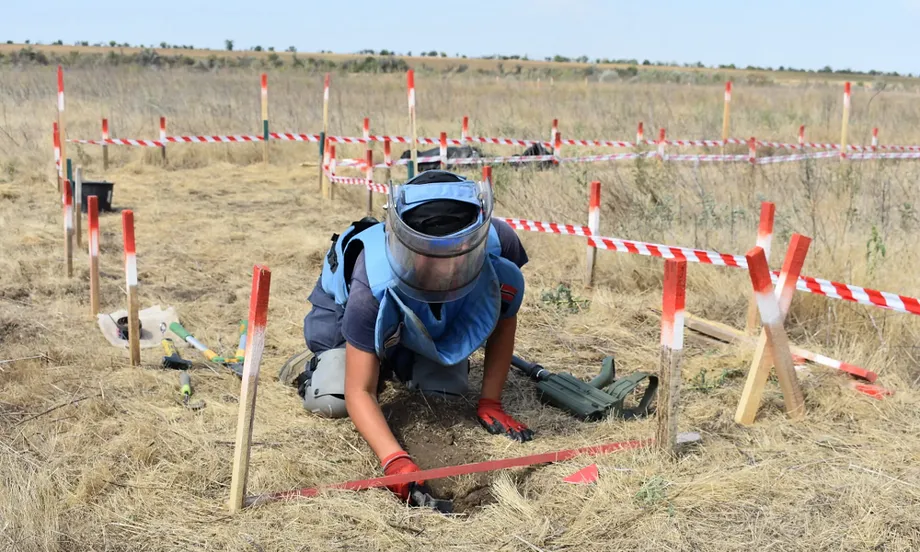
Explosive remnants of war caused 1,128 of the 1,415 verified child casualties, approximately 80 percent. The casualty total included 446 children killed and 969 injured or maimed. In Ghazni province on March 31, 2024, five girls and four boys aged seven to 15 were killed while playing with unexploded ordnance.
The report also verified 338 attacks on schools, hospitals and protected personnel. The Taliban used 64 schools and one hospital for military purposes, depriving approximately 32,500 children of education, while 39 schools previously occupied by Taliban forces were vacated during the period. Poverty, disrupted schooling and unsafe surroundings compound the risks children face.
The record predates Taliban rule
Child recruitment did not begin with the Taliban's return in August 2021. The Stimson Center's Afghanistan CSPA profile records recruitment by the former government's army, police, intelligence service and supported militias through their loss of power. It records seven annual Afghanistan listings beginning in 2019 under the Child Soldiers Prevention Act.
That U.S. law restricts certain arms sales and military assistance to listed countries, although presidents can waive restrictions. Full waivers in 2019 and 2020 enabled just under $221 million in covered assistance and arms sales during fiscal years 2020 and 2021: more than $216 million in commercial arms sales, $3.5 million in excess defense articles and $1.3 million in military education and training. Covered assistance stopped after the Taliban takeover.
The former Afghan authorities reported preventing more than 5,050 children from entering defense and security forces during the 2021 reporting period. Civil society nevertheless described recruitment protection units as inadequately equipped, staffed or trained, and investigations into some officials did not produce prosecutions. The historical record shows why announced prevention measures must be judged alongside enforcement and accountability.
The present assessments leave key matters unresolved: the number of children still serving, the extent of unreported sexual exploitation and whether recent legal measures will produce identifiable prosecutions. They give no deadline for completing demobilization. The UN calls for immediate releases, a formal definition of children as everyone under 18, reliable age assessment and protection units at recruitment centers. The State Department also stresses reintegration and protection rather than punishment of victims, while clarifying that references to the Taliban do not constitute U.S. recognition of it as Afghanistan's government.
Key Points
- The UN verified Taliban recruitment and use of 557 boys during 2023 through 2025, including children as young as 12.
- Afghanistan remains in Tier 3 of the U.S. trafficking assessment, with continued recruitment and sexual exploitation documented.
- An international organization secured the release and reintegration of 58 children from Taliban ranks.
- The Taliban rejects the allegations and says recruitment of underage people is prohibited.
- The January 2026 penal edict sets prison terms for trafficking, but the State Department finds its definition and penalties inadequate.
- Restricted monitoring, fear of punishment and limited services leave the full scale of abuse unknown.