Unanimous vote opens a route to revisit Koshi
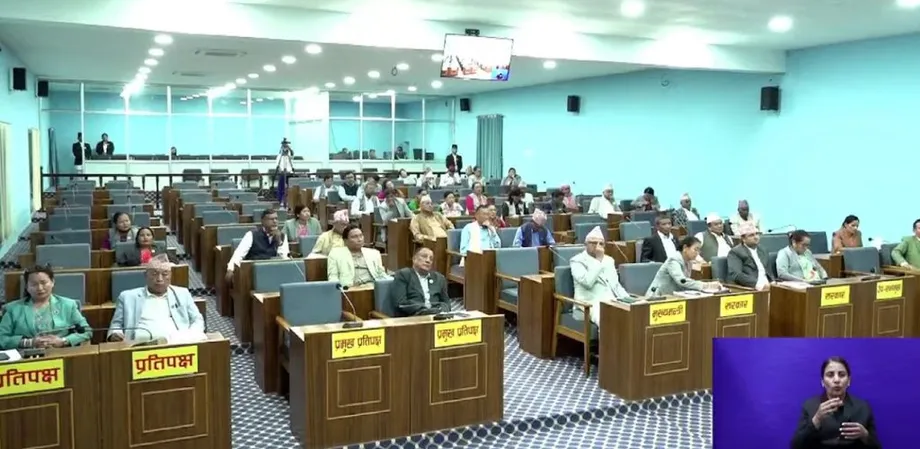
Nepal's Koshi Provincial Assembly has unanimously adopted new operating rules that allow one third of its total membership to submit a proposal to change the province's name. The decision, taken in Biratnagar on Saturday before the ninth session ended, settles a prolonged dispute over assembly procedure without settling the politically sensitive question of what the province should be called.
Contents
- Unanimous vote opens a route to revisit Koshi
- How Rule 212 moves a proposal into the assembly
- A naming dispute delayed the wider rules
- From the first rulebook to Saturday's agreement
- Party support for procedure does not settle the name
- Identity demands persist beyond the chamber
- New forums for women and former lawmakers
- Virtual sittings and the decisions still pending
- Key Points
The central provision, Rule 212, sets out how lawmakers can seek an amendment to a name already adopted under Article 295(2) of Nepal's Constitution. A proposal backed by one third of all assembly members can enter the formal process, but changing the name still requires a two thirds majority. Permission to propose a change is not approval of a new name.
The rules also establish arrangements for women lawmakers, consultation with former members and virtual meetings during emergencies. Until their adoption, the assembly elected in November 2022 had continued using rules drawn up during its first term.
Drafting committee chair Rewati Raman Bhandari presented the committee's report, identified as the Provincial Assembly Rules Drafting Committee Report, 2083 BS. Lawmakers discussed its principles and approved it unanimously, with support from CPN (UML) chief whip Ramesh Kumar Basnet and Nepali Congress chief whip Gopal Tamang.
Reports differ in their date labels: the initial account carries Asoj 24, while subsequent accounts carry Asoj 25. They agree that the vote took place on Saturday before the ninth session closed. Accounts describe the drafting effort as taking about four years, with Social Development Minister Gita Timsina also referring to four years of work.
How Rule 212 moves a proposal into the assembly
The new procedure begins with support from one third of the assembly's total membership. Those lawmakers may submit notice of a proposed alteration or amendment to the province's name to the assembly secretary. The threshold concerns the full membership, rather than simply the lawmakers attending a particular sitting.
Under the next step, the secretary presents the proposal to the speaker. The speaker then determines the date and time for discussion in consultation with the Business Advisory Committee, the body involved in arranging assembly business.
These provisions identify both the route for submitting a proposal and the authority responsible for scheduling debate. They give lawmakers seeking a different name a defined parliamentary process instead of leaving the demand solely to political negotiations or demonstrations outside the chamber.
The numerical distinction remains decisive. One third is enough to initiate the process; two thirds is needed for the final decision. The latter fraction is twice the former, meaning a group large enough to submit a proposal would still need substantially broader support to secure a name change.
The unanimous vote on the operating rules therefore should not be read as unanimous support for renaming Koshi. Lawmakers agreed on a procedure through which the issue can be raised. No replacement name was approved in that vote, and no submitted name amendment proposal or date for such a debate has been identified in the reports.
A naming dispute delayed the wider rules
The assembly's difficulty in adopting new rules was closely tied to disagreement over whether the province's name should be open to reconsideration. UML had maintained that naming was settled and that the rules did not need a provision for changing it. Lawmakers from Congress and the Nepal Communist Party wanted a route for the assembly to discuss a change.
An 11 member committee led by lawmaker Lilaballabh Adhikari was formed on Magh 23, 2079 BS. It prepared a draft, but the parties could not agree on the amendments. A later five member working group led by Bhandari revised the text and brought the disputed provisions toward agreement.
The four other members named alongside Bhandari were Khageshwori Poudel, Narayan Bahadur Magar, Nimsari Rajwanshi and Nirmala Limbu. Bhandari said the final rules reflected common agreement among the parties and were intended to remove ambiguities in assembly operations.
An earlier proposal from the Nepal Communist Party would have allowed discussion of the naming issue if 25 percent of lawmakers wanted it. The adopted provision requires one third, approximately 33.3 percent, to submit a name amendment proposal. That is about 8.3 percentage points higher than the earlier suggested threshold, although the two proposals were described in different procedural terms.
Before the vote, Speaker Ambar Bahadur Bista had explained that efforts focused on reaching unanimity rather than advancing the rules through a majority against dissenting parties. Adhikari attributed some of the difficulty to changing party positions after shifts in governing alliances. The final vote resolved the procedural disagreement that had held up the wider document.
From the first rulebook to Saturday's agreement
The naming question and the effort to replace the assembly's inherited operating rules developed alongside each other. The first assembly did not settle the province's name, while the second adopted Koshi and then struggled to agree on how that decision could be revisited.
The principal milestones were:
- 2074 BS: The first Provincial Assembly adopted its operating rules but did not settle the province's name during its term.
- Chaitra 10, 2075 BS: The original operating rules were amended.
- November 20, 2022: Elections produced the second Provincial Assembly.
- Magh 23, 2079 BS: An 11 member drafting committee was formed under Lilaballabh Adhikari.
- March 1, 2023, or Falgun 17, 2079 BS: The assembly named the former Province 1 Koshi with more than a two thirds majority.
- Falgun 19, 2081 BS: The speaker was advised to convene a meeting involving party leaders, whips and the internal affairs and law minister to seek agreement on the rules.
- Saturday, before the ninth session ended: The assembly unanimously adopted the new rules, including the name amendment procedure.
This sequence shows why the new rules matter beyond routine administration. The assembly first made a naming decision with a substantial majority, then spent years negotiating whether its own procedures should expressly allow that decision to be reconsidered.
Party support for procedure does not settle the name
Support from the chief whips of UML and Congress was central to the unanimous passage. Their backing brought together the ruling party and the main opposition behind rules that had previously been blocked by disagreement.
Ramesh Kumar Basnet, UML's chief whip, urged lawmakers to approve a rulebook prepared during their own term rather than continue relying on the first assembly's rules. He supported unanimous adoption:
"In the current context, these regulations are relevant. Let's make arrangements to conduct the assembly not from the regulations made by the first assembly, but from the regulations we make ourselves. Let this be approved unanimously," he said.
Congress chief whip Gopal Tamang recalled that the delay had centred on identity concerns and the demand that lawmakers should at least be allowed to propose a name change in the chamber. His account placed the new procedure at the heart of the compromise rather than treating it as a minor drafting adjustment.
Nepal Communist Party parliamentary leader Indra Bahadur Angbo described inclusion of the renaming issue as an important achievement. Tourism, Forest and Environment Minister Khinu Langwa also said the revised rules made correction or renaming possible if further effort was made.
Those reactions show different political readings of the same vote. Supporters of reconsidering Koshi see an opportunity to pursue their demand. UML's support establishes agreement on assembly procedure, but does not by itself establish that the party would vote for a different name.
Chief Minister Hikmat Kumar Karki publicly welcomed a separate bill on languages used for government business that passed on the same Saturday. Reports did not identify a corresponding public statement from him on the name amendment provision. That absence does not establish his position on a future proposal.
Identity demands persist beyond the chamber
The March 2023 naming decision prompted opposition from organisations seeking a name reflecting the region's ethnic and cultural identities. Groups formed a joint front and held demonstrations across the province and in Kathmandu.
The then Maoist Centre, described in later accounts as part of the Nepal Communist Party, had supported the Koshi naming decision. It subsequently acknowledged that position as a mistake and committed to supporting reconsideration. It also continued using Province 1 in party programmes, keeping its objection visible after the assembly's vote.
Reports describe the protest campaign as having weakened following the Gen Z movement, but opposition to the Koshi name has continued. On the Friday before the rules were adopted, demonstrators protested during a rally in Biratnagar ahead of the opening of the Kirat Rai Yayokkha general convention.
The new rules connect that continuing demand to a possible legislative process. They do not guarantee that protesting organisations will secure enough assembly support, and they do not establish which alternative name lawmakers might put forward.
The practical change is narrower and more concrete: legislators now have an express route to submit a naming amendment and have it scheduled for discussion. The dispute can enter the chamber through an identified procedure, while the political argument over the name remains unresolved.
New forums for women and former lawmakers
The adopted rules extend beyond naming. They provide for a Women Coordination Committee comprising all women members of the Provincial Assembly. Its purpose includes discussion of issues affecting women lawmakers and support for developing their capacity.
If the deputy speaker is a woman, she automatically coordinates the committee. If there is no woman deputy speaker, committee members select a coordinator from among themselves. This gives the forum a defined membership and leadership arrangement.
The rules also allow a Coordination Committee of Former Members to draw on the experience and suggestions of previous lawmakers. Former members select their coordinator themselves. Bhandari described the arrangement as a loose forum connecting their experience with the assembly.
These structures serve different groups: the women's committee brings current lawmakers together, while the former members' committee creates a channel for advice from those who have left office. Neither is described as replacing the assembly's decision making authority. Reports do not specify meeting schedules, budgets or when the committees will begin work.
Virtual sittings and the decisions still pending
The rules establish a basis for holding meetings through information technology during epidemics, disasters or circumstances in which physical attendance is impossible. This addresses continuity of assembly business when lawmakers cannot meet in person.
The emergency provision sits alongside Bhandari's stated aim of removing ambiguity from assembly operations. It is a separate administrative change from the naming procedure, and its inclusion shows that the adopted document deals with how the institution functions as well as what issues it may debate.
Details of any virtual meeting platform, attendance verification or voting arrangements have not been identified in the reports. Adoption of a legal basis for remote meetings should therefore be distinguished from evidence that a particular technical system is already in use.
For the naming issue, the next concrete step would be a notice supported by one third of the total membership and submitted to the secretary. The speaker would then schedule discussion with the Business Advisory Committee. No filing deadline, scheduled naming debate or final vote date has been announced in the accounts of the rules' passage.
The outcome is a completed agreement on procedure, with substantive decisions still ahead. Koshi remains the province's name. Any attempt to replace it must move through the newly defined process and secure the required two thirds majority.
Key Points
- The Koshi Provincial Assembly unanimously adopted new operating rules before its ninth session ended.
- Rule 212 allows one third of the total membership to submit notice of a province name amendment proposal.
- A final name change still requires a two thirds majority.
- The secretary forwards the proposal to the speaker, who schedules discussion with the Business Advisory Committee.
- The rules provide for committees of women lawmakers and former members, along with virtual meetings during emergencies.
- No replacement name, submitted amendment proposal or naming debate date has been identified.