Geely cuts 30 seconds, but the bigger contest is access
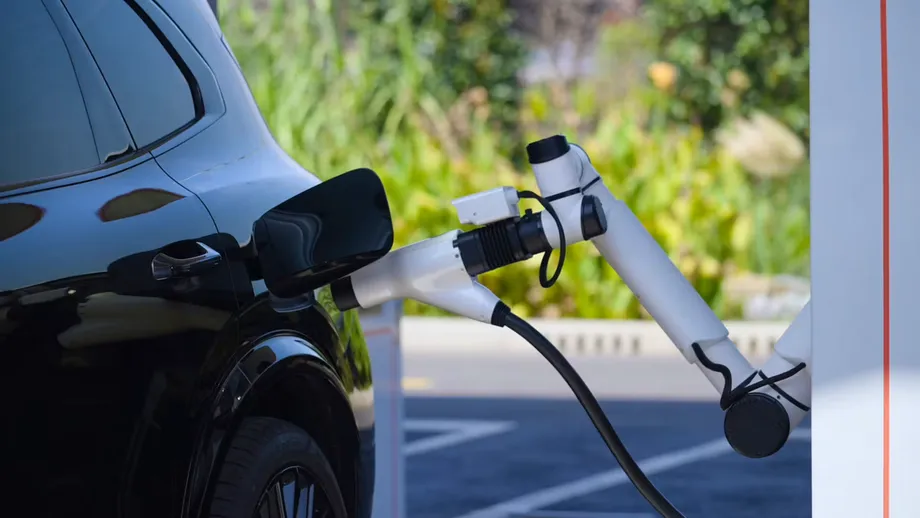
Geely has announced charging from 10% to 70% in four minutes and 30 seconds, using a system rated at up to 2,250 kilowatts per connector. Unveiled in Ningbo, Zhejiang province, it trims 30 seconds from BYD's advertised five minutes for the same battery percentage range. Yet Geely executive Zhang Dewang offered a warning alongside the faster result.
Contents
- Geely cuts 30 seconds, but the bigger contest is access
- What the charging figures actually measure
- Why manufacturers are competing over seconds
- BYD's network targets demand sustained construction
- A 2.25 megawatt charger needs more than a plug
- Geely uses temperature prediction to manage battery stress
- The official safety deadline is July 2026
- Holiday demand shows why highway capacity matters
- South Korea and the United States face different choices
- Key Points
Zhang, speaking at the launch, described the limits facing further gains in charging speed:
Charging speed is already approaching a physical limit.
The comparison captures a shift in China's electric vehicle competition. Geely's advertised charging time is 10% shorter than BYD's for the 10% to 70% interval, while its maximum connector power is 50% higher than BYD's 1,500 kW. Those figures describe different things, elapsed time and peak power, but together show why a larger charger rating does not produce an equally large reduction in waiting time.
The next contest is increasingly about getting that performance beyond a demonstration: compatible batteries, enough charging locations, cooling systems, stationary storage and electricity connections capable of serving several vehicles at once. BYD is pursuing 20,000 flash charging stations by the end of 2026, while Geely is linking charging control to batteries, storage and the grid.
A regulatory detail also changes the picture. China's official registry gives July 1, 2026, as the implementation date for its new battery safety standard, rather than the unspecified July 1 described in some reports. Separating verified deadlines from company performance claims matters as the industry moves from impressive charging demonstrations toward dependable everyday service.
What the charging figures actually measure
Geely says its system charges from 10% to 97% in eight minutes and 40 seconds. BYD advertises nine minutes for that interval. CATL's April announcement goes further, claiming three minutes and 44 seconds from 10% to 80%, and six minutes and 27 seconds from 10% to 98%, for its third generation Shenxing battery technology.
These are not interchangeable tests. Charging from 10% to 70% adds 60 percentage points, while charging to 80% adds 70. Battery capacity also matters: the same percentage increase can represent different amounts of energy in different vehicles. Peak charger power is a maximum rating, not a promise that the battery receives that power throughout the session.
Reported tests involving Geely's Lynk & Co 10 and Zeekr 001 achieved the advertised four minutes and 30 seconds to 70%, and eight minutes and 40 seconds to 97%, with its Shendun Golden Battery. The battery supports a maximum charging rate of 12C. In simple terms, 12C represents a rate that would theoretically fill a battery in five minutes if maintained throughout; actual charging varies as the battery fills and its temperature changes.
FAW's Hongqi brand has also reportedly demonstrated 10% to 70% charging in three minutes and 41 seconds in a July test. No date for series production was announced. That result makes it inappropriate to describe Geely's announcement as an unconditional speed record. A test result, a commercial vehicle feature and a charging service available across a network are separate achievements.
Why manufacturers are competing over seconds
China has more than 100 domestic passenger car brands, creating intense pressure to distinguish vehicles through something other than price. Stephen Chan, an analyst at S&P Global Ratings, describes reducing the gap between charging and the roughly five minutes needed to refuel a gasoline vehicle as a way to address anxiety about running out of range.
BYD's September sales figures show why manufacturers are searching for another selling point. Global sales reached 463,561 vehicles, up 17% from a year earlier, while domestic sales were 282,861, down 13%. Overseas sales rose 153.6%. Subtracting domestic sales from the global total gives 180,700 vehicles sold abroad, approximately 39% of the total.
Reported cumulative domestic sales for January through September fell 30%. The divergence means a growing global total can coexist with considerable pressure in the home market. Faster charging offers a practical benefit to promote when discounts and longer advertised driving ranges are no longer enough to secure a purchase.
The competition follows BYD's sweeping price cuts in May 2025, when discounts reached 34% across 22 models. Financial pressure later surfaced in BYD's market value collapse, covered in February 2026 after more than $60 billion in investor wealth had disappeared since the preceding May. Building charging infrastructure introduces another large commitment into a market already facing pressure on profits.
BYD's network targets demand sustained construction
BYD's flash charging network reportedly reached 11,586 locations across 341 cities by September. It also announced its 2,000th highway charging station and megawatt charging coverage along the Beijing to Shanghai expressway. Reported average spacing between highway locations is a little more than 100 kilometres.
Reaching 20,000 locations from 11,586 requires another 8,414, an increase of about 73%. An estimate of roughly 80 openings a day illustrates the pace required, although the exact daily rate depends on the September count date. The target concerns locations, not individual connectors, so it should not be compared directly with national figures counting charging equipment.
Deutsche Bank's analysis describes a further 30,000 stations in 2027 and 40,000 in 2028, bringing the planned total to 90,000. Reports that describe the initial deadline simply as year end are clarified by other accounts specifying the end of 2026. Sunwoda, another battery manufacturer, reportedly plans 10,000 stations capable of megawatt charging by the end of 2027.
Zhang expects charging to move toward a model resembling gasoline stations serving vehicles from multiple brands. That would shift the value of a network from its association with one manufacturer toward coverage and practical access. His expectation is not confirmation that every connector, vehicle or advertised charging rate will work across brands.
A 2.25 megawatt charger needs more than a plug
Geely's 2,250 kW rating equals 2.25 megawatts. Dividing that by an assumed household contracted capacity of 3 kW gives 750 households. This is a comparison of power capacity, not household energy consumption over a day. It nevertheless illustrates the scale of the electrical equipment needed to support a single connector at maximum output.
Several vehicles charging together can multiply the demand. Chan says most public charging stations in China still operate below one megawatt, meaning that much of the existing network cannot deliver the full performance advertised for the latest systems. A compatible battery alone cannot remove that constraint.
Energy storage systems help bridge the gap. Stationary batteries can accumulate electricity over a longer period and release it rapidly when vehicles arrive, reducing the immediate draw on the grid. Storage does not create energy, however. It needs sufficient capacity, a connection capable of replenishing it and controls that manage successive charging sessions.
A study published in Nature Communications analysed 760,000 charging records from Beijing, Shanghai and Guangzhou and warned that rapid urban charging could put pressure on grid stability. Its relevance is the collective pattern of charging demand, rather than proof that any specific new charger will cause a disruption. The challenge is coordinating many charging sessions with the capacity of the local electricity network.
Geely uses temperature prediction to manage battery stress
Rapid charging puts stress on the battery as well as the grid. Chris Liu, a Shanghai based senior analyst at technology research group Omdia, identifies repeated performance as the central test:
The real challenge is whether the battery can accept that level of current quickly and repeatedly without overheating, excessive degradation or internal bottlenecks.
Geely says its Xingrui PowerMind system, developed with artificial intelligence company StepFun, connects vehicles, batteries, chargers, cloud services, the grid and stationary storage. It predicts internal battery temperature changes up to 30 seconds ahead and adjusts charging power. The company targets average temperatures below 55 degrees Celsius during rapid charging and peaks below 65 degrees Celsius.
Liquid cooling extends through the stationary storage, charger, cable and connector to the vehicle battery. Geely also claims that pulse regeneration and charging management can increase battery cycle life by up to 20%, but has not specified the underlying lifespan. Without that baseline and detailed test conditions, the percentage cannot be translated into years of ownership.
BYD says its own tests retained 98.7% of battery capacity after 350 rapid charging cycles. These are company test results, not independent confirmation of comparable performance across years of daily use. Geely is also developing a cheaper Ultra Short Blade Battery supporting up to 6C, with a laser welding process it says reduces charging heat by 10%. Its separate emphasis on lower power home charging shows that maximum speed is not the intended answer for every situation.
The official safety deadline is July 2026
China's State Administration for Market Regulation lists GB 38031-2025, Safety Requirements for Power Batteries of Electric Vehicles, in its national standards registry. The mandatory national standard was published on March 28, 2025, with implementation on July 1, 2026. It fully replaces GB 38031-2020.
Some reports describe the standard as having taken effect on July 1 without identifying the year. The official entry resolves that ambiguity. It places responsibility with the Ministry of Industry and Information Technology, with implementation entrusted to the electric vehicle subcommittee of the National Technical Committee of Auto Standardization.
The drafting organisations include CATL, BYD, automotive testing bodies and manufacturers including Toyota, Nissan, BMW, Volkswagen and Tesla's Shanghai operation. The scope of participation shows that the standard extends beyond the companies competing for the shortest charging times.
The battery safety standard specifies the rapid charging cycle test in clauses 5.1.7 and 8.1.8. It applies to battery cells that charge from 20% to 80% in no more than 15 minutes, excluding cells charged only through vehicle energy. After 300 cycles, the cells undergo an external short circuit test lasting 10 minutes, with external circuit resistance below 5 milliohms, followed by one hour of observation. The cells must not catch fire or explode. A safety test and a claim about retained capacity measure different outcomes: avoiding a dangerous failure does not itself establish how much usable capacity a battery will retain.
Holiday demand shows why highway capacity matters
National Energy Administration figures reported for October 1 through 7, 2026, put highway charging consumption for new energy vehicles at 163 million kilowatt hours, up 51.42% from a year earlier. That averages about 23.26 million kilowatt hours daily. The figures measure energy delivered, unlike the kilowatt and megawatt ratings used to describe instantaneous charging power.
The reported statistics cover 62,700 highway charging connectors included in the national charging facilities monitoring service platform, from midnight on October 1 through the end of October 7. They record 6.711 million charging sessions and average daily consumption of 23.2566 million kilowatt hours, with the 51.42% increase applying to that daily average. The National Energy Administration's original release or dataset for the full seven day period has not been identified in the supplied sources. Its October 2 release covers only the holiday's first day, reporting 28.0469 million kilowatt hours, up 60.40%, using the same count of monitored highway connectors.
Reported national totals exceed 24 million charging connectors, with about 89,000 charging facilities at expressway service areas. Around 11,000 units capable of delivering high power were added at those service areas from January through August 2026, roughly matching the cumulative total installed before that year.
China's new energy vehicle fleet reportedly reached 48.97 million vehicles, representing 13.19% of all vehicles. This category includes plug in hybrids as well as vehicles running entirely on batteries. The fleet and holiday charging figures demonstrate that pressure on charging infrastructure can keep growing even when an individual manufacturer's domestic sales decline.
The 2030 target is more than 40 million charging facilities, including approximately 300,000 units delivering high power, supporting more than 110 million electric vehicles. The underlying source and methodology for that reported target are not specified in the supplied sources. Those categories are broader than BYD's branded flash charging locations. National equipment totals therefore cannot establish how many drivers have access to the newest advertised charging speeds.
South Korea and the United States face different choices
Hyundai Motor Group's Ioniq 5 and Kia EV6, built on the 800 volt E-GMP platform, advertise approximately 18 minutes from 10% to 80% using a suitable 350 kW charger. That benchmark accompanied the launch of the E-pit network in 2021. SK On unveiled technology claiming seven minutes for the same percentage range in March, but the timing for use in production vehicles is undecided.
CATL's three minutes and 44 seconds represents roughly one fifth of the Hyundai and Kia benchmark time. The comparison uses the same percentage interval, but it does not establish equivalent battery sizes, weather conditions or everyday availability. BYD Korea has added electric vehicle charging and energy storage installation and operation to its business purposes, while saying a domestic introduction has not been finalised.
In the United States, charging from 10% to 80% typically takes approximately 20 to 40 minutes, according to S&P. Newer Hyundai, Kia and Porsche models can achieve around 18 to 20 minutes under optimal conditions. Neal Ganguli, a partner and managing director at AlixPartners, expects the United States may pursue more moderate network upgrades instead of matching China's megawatt competition.
The key dated milestones separate regulation, demonstrations and future commitments:
- March 28, 2025: China publishes GB 38031-2025.
- July 1, 2026: The new battery safety standard takes effect.
- October 1 to 7, 2026: Reported highway charging consumption reaches 163 million kilowatt hours; the original release or dataset for the full period has not been identified.
- End of 2026: BYD targets 20,000 flash charging stations.
- 2027 and 2028: BYD plans another 30,000 and 40,000 stations respectively.
- 2030: China reportedly targets more than 40 million charging facilities; the underlying source and methodology are unspecified.
Production dates for Hongqi's demonstrated technology and SK On's seven minute system remain unannounced. Independent confirmation of repeated battery performance is also missing from the company claims described here. The practical test is whether drivers can obtain rapid charging repeatedly, at accessible locations, without unacceptable battery wear or excessive demand on local electricity infrastructure.
Key Points
- Geely advertises 10% to 70% charging in four minutes and 30 seconds, using a connector rated at 2.25 megawatts.
- CATL claims 10% to 80% in three minutes and 44 seconds; different charging intervals require careful comparison.
- BYD's reported September network of 11,586 locations must grow by 8,414 to meet its end of 2026 target.
- Most existing public stations in China operate below one megawatt, limiting access to the newest charging performance.
- China's official registry sets July 1, 2026, as the implementation date for GB 38031-2025; the standard requires eligible cells to avoid fire or explosion in an external short circuit test after 300 rapid charging cycles.
- Battery cooling, stationary storage and grid capacity are becoming central to the charging competition.