Construction footage challenges assurances on a HK$42.36 billion route
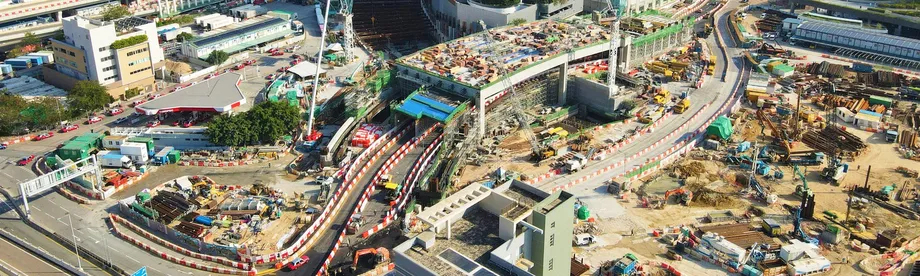
Footage of concrete being poured around apparently unconnected reinforcing bars in Hong Kong's Central Kowloon Bypass has prompted questions about the tunnel's construction, with the Highways Department saying the work followed an approved alternative design. The disputed work concerns the tunnel floor structure in the Yau Ma Tei section, which opened on December 21, 2025.
Contents
- Construction footage challenges assurances on a HK$42.36 billion route
- What the footage appears to show
- Two changes were included in the alternative design
- How the department says approval and inspection worked
- Engineers differ over what the visible bars mean
- Claims about durability remain unverified
- Official project records clarify responsibilities
- Coupler information concerns a different tunnel package
- The chronology and the next opening
- What remains unresolved
- Key Points
The department says contractors assessed construction difficulties in November 2024 and obtained approval to change parts of the reinforcement arrangement before pouring concrete. Those changes included drilling into existing concrete to insert additional steel bars and using a design without stirrups in some sections of the tunnel floor.
The central issue is whether the approved changes account for the specific bars shown in the footage. The department has described its approval and inspection procedures, but has not disclosed the precise locations where the alternative design was used or released the records requested to explain the visible connections.
The Highways Department's Central Kowloon Route listing puts the estimated project cost at HK$42.36 billion. It identifies contract HY/2014/08, covering the Yau Ma Tei tunnel and associated works, as a HK$5.02 billion contract awarded to Build King and SK ecoplant's joint venture, with the Arup and Mott MacDonald joint venture as resident engineer.
No structural failure has been established in the accounts of the dispute. The department says the tunnel floor remains in normal condition. Engineers and the person who publicised the footage differ over whether that assurance adequately addresses what was visible during construction.
What the footage appears to show
Jason Poon, chairman of the construction monitoring group China Technology, posted footage showing workers pouring concrete into the steel reinforcement of the tunnel floor. Several bars at the end adjoining a concrete wall appear not to have been screwed into threaded connectors embedded in that wall.
These connectors, commonly called mechanical couplers, join reinforcing bars so that forces can pass across a connection. A bar lying beside a connector is not the same as a bar engaged with it. However, an unused connector does not by itself prove a defect if an approved replacement arrangement provides the required structural connection elsewhere.
That distinction is at the heart of the dispute. Poon questions whether the replacement arrangement was actually installed. The department says the design was checked and the construction inspected, but its responses have not mapped those assurances to the individual bars visible in the footage.
The public accounts also do not establish the exact extent of the affected area, how many connections were changed or whether the video captures every part of the replacement reinforcement. The footage raises a specific construction question, rather than providing a complete assessment of the finished tunnel.
Two changes were included in the alternative design
The department says the contractor and resident engineering staff found that some locations were cramped and required a large amount of reinforcement. Installing the original design would therefore have presented practical difficulties.
The proposed revision had two elements: drilling holes at suitable locations and inserting additional reinforcing bars, and adopting a design without stirrups for parts of the tunnel floor structure. The second element matters because the dispute concerns both the connections at the wall and the arrangement of reinforcement within the slab.
Stirrups are smaller reinforcing bars that wrap around or connect other bars. Depending on the structural design, they can hold reinforcement in position and help resist shear, the forces that tend to make adjacent parts of a structure slide past one another. Whether they are required in a particular slab depends on its calculated loads and the rest of its reinforcement.
The department says the revised arrangement met requirements for carrying loads, resisting tension and maintaining structural safety. It also describes the approach as an accepted practice in the construction industry. That establishes the government's position on the design, but does not disclose the calculations or installation details needed to independently assess the disputed locations.
How the department says approval and inspection worked
According to the Highways Department, an independent checking engineer reviewed the relevant data and accepted the alternative design before implementation. Resident engineering staff then approved the work and inspected the site before authorising concrete placement.
The department says its engineering team and engineering audit unit also checked construction records and carried out inspections. These are separate steps: checking a design addresses whether the proposed structure should work, while site inspection addresses whether workers built it as approved.
That distinction becomes especially important once reinforcement is covered by concrete. Records of the work before the pour can help establish the location, type and connection of bars that are no longer visible.
The department acknowledges receiving a similar inquiry in November 2024 and responding in December that year. It says the relevant tunnel floor works were completed in early 2025, and routine monitoring since opening has found the structure in normal condition. The government has also said any violations discovered would receive serious follow up and action.
When asked where the alternative design had been used and how it explained the apparently unconnected bars, the department repeated its account of the revised design and supervision. It did not provide the requested location details or supporting construction records.
Engineers differ over what the visible bars mean
Senior structural engineer Ni Xueren, whose Chinese name is 倪學仁, explained that the drilling method described by the department involves making holes in hardened concrete, inserting reinforcing bars and securing them with adhesive.
After viewing the footage, Ni said the bars appeared neither screwed into the couplers nor inserted into drilled holes. His assessment was expressed in these words, translated from Chinese:
Not normal.
Ni questioned how the arrangement could be corrected when concrete placement was already under way. He also raised concern about the dense reinforcement, saying it could make it difficult for concrete to reach the lower parts of the structure properly. His concern was that the concrete might separate rather than form a sound, continuous mass around the steel.
He argued that bars left unconnected at the structural interface might not transfer their forces into the wider structure as intended, making them more vulnerable to failure. That is an assessment of the apparent construction arrangement, not a finding from tests of the completed slab.
Engineering constituency legislator Bok Kwok ming took a different view. He said site constraints can prevent bars from lining up with couplers and that drilling and installing bars elsewhere is a common alternative. If the department knew about and supervised the change, he believed the replacement could have been properly implemented and safe.
Bok also argued that a major problem would likely have become apparent after nearly a year of operation. The department's report of normal conditions supports an account of present performance, but neither that observation nor the time elapsed supplies the missing installation details.
Claims about durability remain unverified
Poon has made broader allegations about workmanship and the tunnel floor's service life. He says the structure was intended to last 120 years and that the disputed reinforcement could reduce that period by half, potentially requiring further public spending on repairs.
He argues that insufficient stirrups could allow bars to move during concrete placement or under traffic loads, leading to cracks. He also alleges that moisture could contribute to deformation and cracking, allow water to enter and cause reinforcing steel to rust.
These are claims, not established findings about the tunnel. No calculation, condition survey or test result cited in the dispute demonstrates a reduction from 120 years to 60 years. The 120 year figure itself is attributed to Poon rather than confirmed in the official project documents discussed here.
Cracking and water entry can matter to the durability of reinforced concrete because corrosion can damage embedded steel and the surrounding concrete. Whether that process is occurring in this tunnel, and whether its reinforcement creates the risks Poon describes, has not been demonstrated.
Poon also says photographs of the types and quantities of steel stored at the site appear more consistent with the original construction method. Such photographs may inform questions about procurement and installation, but cannot alone establish which bars were eventually installed or how they were connected.
Official project records clarify responsibilities
The government identifies Build King and SK ecoplant's joint venture as the contractor for the Yau Ma Tei tunnel contract, which began in January 2018. Its scope also included rebuilding part of the Gascoigne Road Flyover and replacing affected public facilities.
A separate account of Poon's allegations names Hin Fung Engineering as the tunnel contractor. That differs from the government's identification of the main contractor. The account does not establish whether Hin Fung had a subcontracting role in the disputed work, so the two names should not be treated as interchangeable.
Mott MacDonald's project supervision account says its joint venture with Arup provides design, engineering and construction supervision across eight contracts. It describes a digital supervision platform combining information from six contract operations, alongside building information modelling, or BIM, which links three dimensional models with project data.
The company says those models include construction records and will support maintenance and operation after opening. This description establishes the project's intended record keeping capabilities. It does not answer the specific reinforcement allegations or publish the revised design for the disputed slab.
Its account also documents the constraints around Yau Ma Tei, including utilities, nearby buildings and maintaining traffic during construction. Those constraints provide context for the department's explanation of practical difficulties, but do not establish whether any particular reinforcement change was correctly executed.
Coupler information concerns a different tunnel package
Reinforcement supplier Dextra's Central Tunnel supply account says it supplied Fortec+ mechanical couplers for the Central Tunnel project. It lists their use at precast panels, tunnel access points and driveways.
Dextra says its preparation process includes testing threaded bar ends under a tensile load within the steel's elastic range. That means applying a pulling force while keeping the bar below the point at which it would be permanently deformed.
The company also lists steel rock bolts, expandable friction bolts, umbrella pipes and bars used for tensioning among its supplies. These concern several aspects of tunnelling and structural construction, rather than just the disputed floor connections.
The geographic distinction is essential: Dextra's statement concerns the Central Tunnel package and does not identify the supplier or connection system in the Yau Ma Tei footage. Its description explains the purpose of couplers and factory testing, but does not verify installation at the location under scrutiny.
The chronology and the next opening
The official record fixes the Yau Ma Tei opening date at December 21, 2025. A report of Poon's later challenge dates the department's response to October 7, 2026, with his public allegations the following morning. Relative references to last year or nearly a year of operation should be read against those dates.
- December 2017: Construction of the Central Kowloon Route project began.
- January 2018: The Yau Ma Tei tunnel contract commenced.
- November 2024: The department says the construction team assessed the reinforcement difficulties and received a similar inquiry.
- December 2024: The department says it replied to that inquiry.
- Early 2025: The department says the relevant tunnel floor works were completed.
- December 16, 2025: Government departments held a briefing on opening arrangements.
- December 21, 2025: The Yau Ma Tei section opened to traffic.
- October 7 and 8, 2026: The later dispute is reported as involving a departmental response followed by Poon's public allegations.
The Highways Department's December opening announcement said journeys between Yau Ma Tei and Kowloon Bay could fall from about 30 minutes to about five minutes. That represents a projected saving of 25 minutes, or approximately 83%, rather than a measured result presented in the statement.
The announcement planned eight bus routes at opening and another four in 2026. It said toll collection would begin when the entire bypass, including the Kowloon Bay section, opened in 2026. The later departmental response gives December 6 as the planned opening date for that connecting section.
What remains unresolved
The department separately says paving materials met standards and the road passed smoothness tests, responding to complaints about an uneven surface. Surface smoothness and buried reinforcement address different issues. Passing a paving test does not establish how the slab's bars were connected.
The outstanding questions concern the exact locations of the revised design, its approved drawings and calculations, and the inspection records linking those approvals to the work shown in the footage. The department's assurance of normal structural condition is relevant, but it does not make those details public.
No special testing programme, disclosure deadline or formal finding of defective reinforcement has been announced in the accounts of the dispute. The next stated transport milestone is the planned December 6 opening of the Kowloon Bay section. The reinforcement controversy remains a disagreement between an official account of approved, inspected changes and challenges to whether those changes explain the visible construction.
Key Points
- The Yau Ma Tei section opened on December 21, 2025, as part of a project estimated at HK$42.36 billion.
- Construction footage appears to show several reinforcing bars not engaged with wall couplers.
- The department says an approved alternative used additional bars inserted into drilled holes and omitted stirrups in some floor sections.
- Officials say independent checking, site inspections and audits took place, and the tunnel floor remains in normal condition.
- The exact locations and supporting records for the disputed design changes have not been disclosed in the responses described.
- Claims that the tunnel's service life could be halved have not been substantiated by published tests or calculations.
- The connecting Kowloon Bay section is scheduled to open on December 6.