Unhealthy air spreads as respiratory cases rise
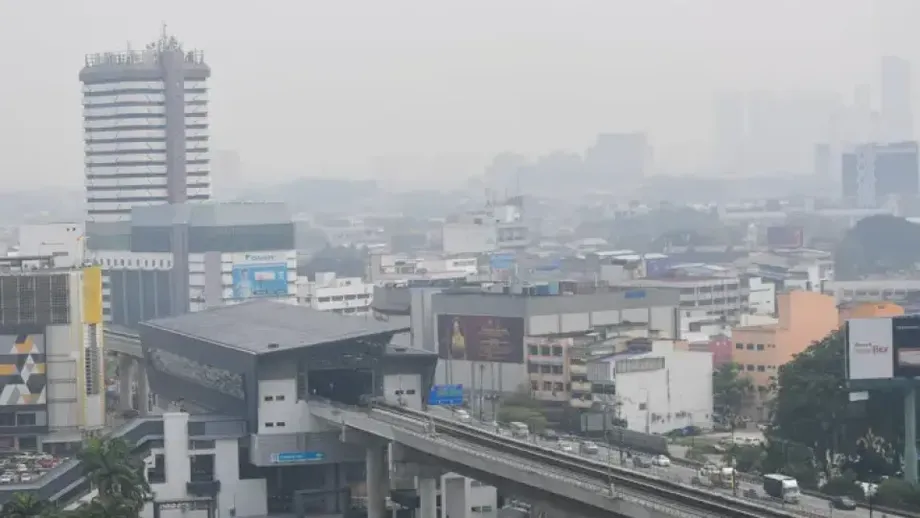
Thirty four areas across Malaysia recorded unhealthy air quality at 9am on October 15, 2026, with Johan Setia in Selangor reaching an Air Pollutant Index reading of 192, just nine points below the very unhealthy category. Alongside the visible haze, health specialists are warning about another danger: ground level ozone, a gas that can irritate the lungs and worsen the effects of breathing polluted air.
Contents
- Unhealthy air spreads as respiratory cases rise
- Where Malaysia's air quality was worst
- Why particles and ozone create different threats
- What the health figures show
- Who faces the greatest risk
- Indonesian fires are disrupting daily life
- Why peat fires can keep producing smoke
- The sequence and the response
- How to reduce exposure to both pollutants
- Key Points
The Department of Environment's Air Pollutant Index Management System, known as APIMS, recorded another 34 areas with moderate air quality. Malaysia's Health Ministry also recorded increases in respiratory infections and eye inflammation at 78 selected healthcare facilities nationwide.
Upper respiratory tract infection cases rose from 3,509 in Epidemiological Week 39 to 3,875 in Week 40, an increase of 366 cases, or 10.43%. Conjunctivitis cases increased by 26.47%. Conjunctivitis is inflammation of the thin tissue covering the white of the eye and the inside of the eyelids, often causing redness and discomfort.
Prof Dr Mohd Hasni Jaafar, an environmental health and toxicology specialist at Universiti Kebangsaan Malaysia, said exposure to fine particles and ozone together could place an acute burden on breathing and cardiovascular health, including among otherwise healthy adults.
For families deciding whether children should play outside, and workers spending hours outdoors, the practical issue is that protection against smoke particles and protection against ozone require different measures. A properly fitted N95 respirator can reduce exposure to fine particles. It does not filter ozone gas. Staying away from polluted outdoor air remains central to reducing exposure to both.
Where Malaysia's air quality was worst
Johan Setia had the highest reading at 9am, followed closely by Klang at 191. Shah Alam recorded 179, Banting 170, Petaling Jaya 168 and Kuala Selangor 161. Putrajaya stood at 175, while Cheras and Batu Muda in Kuala Lumpur registered 172 and 162 respectively.
Johor had eight areas with unhealthy readings: Larkin at 187, Batu Pahat at 182, Pasir Gudang at 181, Tangkak at 177, Pengerang at 170, Kluang at 165, Kota Tinggi at 162 and Segamat at 161. In Negeri Sembilan, Nilai recorded 187, Seremban 182 and Port Dickson 176.
Melaka's Bukit Rambai registered 184, followed by Melaka City at 178 and Alor Gajah at 176. Unhealthy readings also extended to Perak, Penang, Pahang and Sarawak. Seberang Perai recorded 142, Temerloh 156, Samarahan 152 and Serian 120.
Malaysia classifies API readings from zero to 50 as good, 51 to 100 as moderate, 101 to 200 as unhealthy, 201 to 300 as very unhealthy, and above 300 as hazardous. An API number expresses air quality on an index scale; a particle concentration measures the amount of pollution in a volume of air.
Why particles and ozone create different threats
PM2.5 means particulate matter measuring 2.5 micrometres or less in diameter, following the World Health Organisation's definition. These particles are small enough to travel deep into the lungs. Smoke is one source, and its particles can carry a mixture of chemical substances.
Ground level ozone forms when nitrogen oxides and volatile organic compounds react in sunlight. High temperatures can speed up those reactions. Some vegetation also releases compounds that contribute to ozone formation, with emissions potentially increasing in hotter conditions.
Mohd Hasni explained that both pollutants can cause oxidative stress and inflammation. Oxidative stress occurs when reactive chemicals overwhelm the body's protective systems and damage cells. Inflammation is the body's response to injury or irritation; when it affects the airways, breathing can become more difficult.
PM2.5 can trigger inflammation deep in the lungs and contribute to disturbances affecting the heart and blood vessels. Ozone directly irritates the respiratory tract, causing coughing, throat irritation, chest tightness, pain during deep breathing and reduced lung function. Physical exertion in air with high ozone concentrations can increase the burden on the lungs.
What the health figures show
Malaysia's increase from 3,509 to 3,875 upper respiratory tract infection cases represents about one additional recorded case for every ten counted the previous week. The Health Ministry's figures cover 78 selected facilities, giving a picture of illness among patients attending those locations.
The 26.47% rise in conjunctivitis was larger in percentage terms than the increase in respiratory infections. The ministry figures described here did not include the underlying conjunctivitis case totals.
Datuk Dr Zainal Ariffin Omar, a public health medicine specialist, said simultaneous exposure to PM2.5 and ground level ozone was concerning because both can trigger respiratory inflammation and oxidative stress. He pointed to studies finding greater reductions in lung function and increased risks of hospital admission for respiratory illness following exposure to both pollutants.
The European Union's Copernicus Atmosphere Monitoring Service also described a wider ozone problem. Its assessment said heatwaves, wildfires and emissions caused by human activity had combined to expose 40% of the world's population to extremely high ozone pollution during the year, with Asia the worst affected region.
Who faces the greatest risk
Children, older adults, pregnant women and people with existing respiratory or cardiovascular diseases are among the groups most vulnerable to polluted air. Outdoor workers face the added difficulty of spending long periods in the conditions that others may be able to avoid.
Children and people with asthma are particularly susceptible to ozone irritation and reduced lung function. Someone who already has narrowed or inflamed airways may experience greater difficulty when pollution adds further irritation.
People with chronic kidney disease also warrant attention. Mohd Hasni explained that a small fraction of inhaled particles or their soluble constituents may reach the bloodstream. Exposure can also trigger inflammation and changes in blood vessel function that may affect the kidneys.
The kidneys receive approximately 20% to 25% of the blood pumped by the heart at rest. Their large blood supply helps them filter waste and regulate fluid, but also exposes them to substances circulating in the blood. People whose kidney function is already impaired may be particularly vulnerable to additional stress.
Indonesian fires are disrupting daily life
Palangkaraya in Central Kalimantan recorded an air quality index of 2,052, according to the city's Regional Disaster Management Agency, as forest and land fires spread. By October 14, the burned area had reached 1,444 hectares. The agency recorded 887 fires between June and October 13.
Authorities also recorded 548 hotspots in Palangkaraya and 11,166 across Central Kalimantan. A hotspot is a heat signal detected through monitoring, often by satellite. One continuing fire can generate multiple detections as observations are repeated.
Palangkaraya resident Nono described breathing difficulties affecting his family, including young children and his elderly parents. The smoke spread beyond Indonesia to neighbouring countries, including Malaysia. Timor-Leste announced a nationwide school closure lasting three days from Thursday.
Jambi's provincial health department recorded 26,957 patients with acute respiratory infections during September 2026. Kota Jambi recorded 9,281 cases from August to September 24. Those figures cover different periods, so the city total and provincial total describe separate windows of illness.
On October 9, environment ministry monitoring recorded PM2.5 at 484 micrograms per cubic metre in Kota Jambi and 740 in Tebo. Tebo's PM10 concentration reached 1,922 micrograms per cubic metre. PM10 includes particles up to 10 micrometres across, a broader size range than PM2.5.
Zakaria, the Jambi provincial health department's disease prevention and control chief, warned that smoke exposure could increase risks of asthma attacks, lung disease and heart attacks. Jambi Mayor Maulana had issued more than eight circulars since August 26 directing children from preschool through junior secondary school to learn remotely.
Why peat fires can keep producing smoke
Peat is soil made from accumulated plant material. When it dries, it can burn below the surface, allowing heat and fire to persist after visible flames disappear. Smoke can continue while crews struggle to reach the burning layers.
Indonesian peat fire smoke contains PM2.5 alongside hazardous chemicals including formaldehyde, hydrogen cyanide and ammonia. Dry conditions and limited water supplies make firefighting more difficult, while thick smoke reduces visibility for helicopters dropping water.
Walhi Jambi's satellite analysis estimated that 43,451 hectares had burned in Jambi by October 8, including 11,339 hectares in Berbak and Sembilang National Park. The park accounted for roughly 26% of the estimated burned area, using those two figures. More than 2,134 hectares of burned forest lay within its core zone.
Yunaidi, head of the national park authority, described fires spreading rapidly through places with no access routes and dwindling water supplies. Crews had to inject water directly into peat at some locations. Deep peat also made it difficult for excavators to move while creating firebreaks.
KKI Warsi recorded fires in at least 36 oil palm plantations and 15 forestry concessions. Iola Abas of Pantau Gambut said El Niño increased fire risk, while drainage and land management made peat more vulnerable to ignition. A Pantau Gambut sample found about 70% of 77 canal blocks damaged and about 52% with groundwater more than 40 centimetres below the surface. Canal blocks help retain water in peatlands; damaged structures can make it harder to keep the soil wet.
The sequence and the response
Indonesia's firefighting effort has continued alongside rising health concerns and school disruption. Several dates show how the emergency developed:
- August 9: Fires appeared near the Berbak and Sembilang National Park landscape at Parit 4, Rantau Rasau, according to park chief Yunaidi.
- August 26 onward: Jambi's mayor repeatedly issued directions for remote learning as smoke affected the city.
- September 29: Japan's assistance mission ended after providing three CH-47 Chinook helicopters, personnel and supporting equipment.
- October 8: Walhi Jambi's satellite analysis estimated 43,451 hectares burned across Jambi.
- October 9: Monitoring recorded PM2.5 concentrations of 484 micrograms per cubic metre in Kota Jambi and 740 in Tebo.
- October 15: Malaysia recorded 34 areas with unhealthy air quality at 9am.
Indonesian Environment Minister Jumhur Hidayat said the fires could be brought fully under control within a month, based on discussions with the National Disaster Mitigation Agency. He also acknowledged that poor visibility had hampered helicopter operations.
Jumhur said the government was assessing offers of foreign assistance before deciding whether to accept them:
"We need to first examine the type of assistance being offered and whether it would genuinely be beneficial and appropriate," he said.
Indonesia had previously received firefighting powder from Brazil as well as Japan's aircraft and personnel. Jumhur's estimate gave a broad timeframe rather than a fixed date for bringing the fires under control.
How to reduce exposure to both pollutants
Zainal Ariffin advised limiting strenuous outdoor activity, especially during hot, sunny afternoons when ozone can be high. Exercise increases the amount of air a person breathes, which can increase the amount of pollution entering the lungs.
A well fitted N95 respirator can reduce inhalation of PM2.5 when someone must go outdoors. Its seal matters because air leaking around the edges bypasses the filter. Ozone is a gas and passes through ordinary N95 particle filters, so reducing time outdoors remains necessary even when wearing one.
Indoor protection also depends on the pollutant. Air purifiers equipped with high efficiency particulate air filters, known as HEPA filters, can lower indoor particle concentrations. Standard HEPA filters do not effectively remove ozone gas.
Zainal Ariffin recommended staying in an air conditioned indoor space with windows closed during polluted conditions. For families, schools and employers, the immediate choices are practical: move strenuous activities indoors, shorten necessary outdoor exposure and pay particular attention to people with asthma, heart disease or kidney disease. Outdoor workers need arrangements that reduce the time they spend breathing polluted air.
Key Points
- Malaysia recorded unhealthy air quality in 34 areas at 9am on October 15, with Johan Setia highest at API 192.
- Upper respiratory tract infection cases at 78 selected facilities increased from 3,509 to 3,875 between Weeks 39 and 40.
- Fine particles and ground level ozone can both inflame the airways and place additional strain on health.
- Children, older adults, pregnant women and people with existing illnesses face greater risks.
- Persistent Indonesian peat fires are producing smoke while disrupting schools and firefighting operations.
- N95 respirators and HEPA filters reduce particle exposure, but ordinary versions do not remove ozone gas.