Two flights bring an early visibility gain
Indonesia's disaster management agency, BNPB, reported that visibility around Palembang's Sultan Mahmud Badaruddin II International Airport increased from about 650 metres to 2,800 metres during the country's first trial of dry ice to disperse wildfire haze. The operation began on October 15, 2026, as smoke disrupted aviation and exposed communities across Southeast Asia to unhealthy air.
Contents
- Two flights bring an early visibility gain
- What happened in Palembang?
- How can dry ice move smoke?
- Why airports are the first priority
- Dry ice and artificial rain have different jobs
- An old material with a new purpose
- Fires continue across Sumatra and Borneo
- Health pressures extend beyond Indonesia
- What determines a wider rollout?
- Key Points
A Cessna Caravan carrying registration PK-SNP made two sorties on the first day, each carrying 800 kilograms of material at an altitude of about 4,500 feet, according to BNPB spokesperson Berton SP Panjaitan. The aircraft targeted the area around the airport, where thick smoke had been obstructing flights.
The reported visibility gain amounted to about 4.3 times the initial reading, although it remained below the government's target of 5,000 metres or more. Before the trial, officials had described visibility in affected areas as roughly 1,000 metres; BNPB's operational update gave the more specific initial reading of 650 metres near the airport.
Authorities are testing whether extremely cold pellets of solid carbon dioxide can help disperse smoke trapped close to the ground. Their immediate aim is to improve conditions around populated areas and airports while firefighting and operations to stimulate rain continue.
What happened in Palembang?
Coordinating Minister for Political and Security Affairs Dudung Abdurachman inspected preparations in Palembang on October 14, following instructions from President Prabowo Subianto to accelerate the response to forest and land fires. South Sumatra Governor Herman Deru joined the preparations, with Palembang and a neighbouring district identified as the initial targets.
The sequence moves from preparation to a short operational trial:
- October 14, 2026: Dudung and local officials inspected preparations in Palembang, including at Sri Mulyono Herlambang Air Base.
- October 15: Aircraft began dispersing dry ice over Palembang and surrounding areas. BNPB recorded two sorties on the first day.
- October 15 and 16: Conventional operations to stimulate rain were also scheduled in Central Kalimantan.
- October 18: The dry ice trial was scheduled to finish, followed by an evaluation before any wider deployment.
BNPB identified the aircraft used as a Cessna Caravan flown from Raden Inten II Airport in Lampung. Preparations had also described a Cessna, although an earlier announcement named a CASA aircraft departing from Lampung.
Officials initially prepared 1.5 tonnes of dry ice, supplied from Lampung and locally. BNPB's subsequent account of two loads of 800 kilograms puts the material carried on the first day at 1.6 tonnes.
How can dry ice move smoke?
Dry ice is carbon dioxide in solid form. Unlike ordinary ice, it changes directly from a solid into a gas as it warms. BNPB described the material used in the operation as pellets about three millimetres across, with a temperature of roughly minus 75 degrees Celsius.
Palembang's trial focuses on a weather condition called a temperature inversion. Normally, air becomes cooler with height. During an inversion, a warmer layer sits above cooler air near the ground, limiting upward movement and allowing smoke to accumulate underneath.
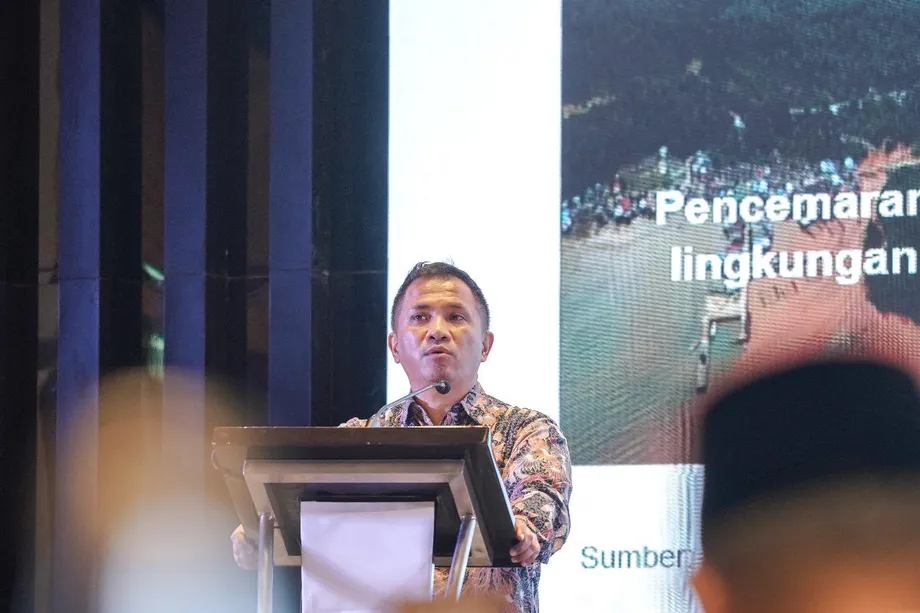
Budi Harsoyo, director of weather modification operations at Indonesia's Meteorology, Climatology and Geophysics Agency, or BMKG, explained that rapid cooling from the dry ice could disturb that stable layer. Officials hope the disturbance will allow smoke to spread upward and disperse, reducing its concentration closer to people.
BNPB gave a similar explanation: the pellets are intended to make the atmosphere less stable so trapped smoke can move and spread. The operation targets the conditions holding pollution in place, while crews elsewhere continue tackling the fires producing it.
The operational question is how much improvement the method can deliver in tropical wildfire conditions, and for how long. Authorities will assess smoke concentration, air quality and visibility after the trial ends on October 18; a publication date for that assessment has not been announced.
Why airports are the first priority
BMKG plans to concentrate dispersal in areas upwind of airports rather than attempt to clear entire provinces. Wind can carry air from those targeted areas toward runways, making the location of each flight important.
South Sumatra's disaster management authorities have been coordinating the release locations with provincial officials, taking account of atmospheric conditions and the position of the smoke. Governor Herman Deru requested that Palembang receive priority as the provincial capital.
The Transport Ministry recorded 1,813 domestic flights affected by wildfire haze since August 11. Poor visibility has also interrupted aircraft used to fight the fires, including helicopters dropping water and planes carrying materials to stimulate rainfall.
Better visibility could therefore support two urgent tasks at once: restoring transport and allowing firefighting aircraft to operate. BNPB's first releases around Sultan Mahmud Badaruddin II airport put that approach into practice.
The government's target would raise visibility from its initial planning figure of about one kilometre to at least five kilometres, a fivefold increase. For airport operations, the distance pilots can see is a practical concern, while measurements of airborne pollution will matter for residents breathing the smoke.
Dry ice and artificial rain have different jobs
Indonesia is running the dry ice experiment alongside Operasi Modifikasi Cuaca, commonly shortened to OMC, its weather modification operations. Conventional operations seek to stimulate rainfall that can help extinguish fires. The Palembang experiment instead aims to disperse haze without depending on rain clouds.
Dudung Abdurachman, the coordinating minister overseeing political and security affairs, described the two tasks during preparations:
Dry ice seeding is specifically intended to disperse smoke, while weather modification will continue to stimulate artificial rainfall to extinguish fires. We are therefore pursuing every possible approach.
BNPB explained that conventional rain stimulation commonly uses fine particles of sodium chloride, or salt. Cloud seeding introduces material into suitable clouds to encourage processes that produce rain. The dry ice operation is directed at the atmosphere trapping smoke.
South Sumatra's provincial government said more than 70 weather modification operations had already taken place in the province, yet heavy haze persisted. Ground crews and aircraft continued suppressing fires while the additional technique was tested.
An old material with a new purpose
Dry ice has been used in weather experiments since 1946, when American researcher Vincent Schaefer discovered that it could trigger the formation of ice crystals in clouds. In 1947, the United States military dropped crushed dry ice into a hurricane during an experiment, while Australian scientists also tested its use to induce rainfall.
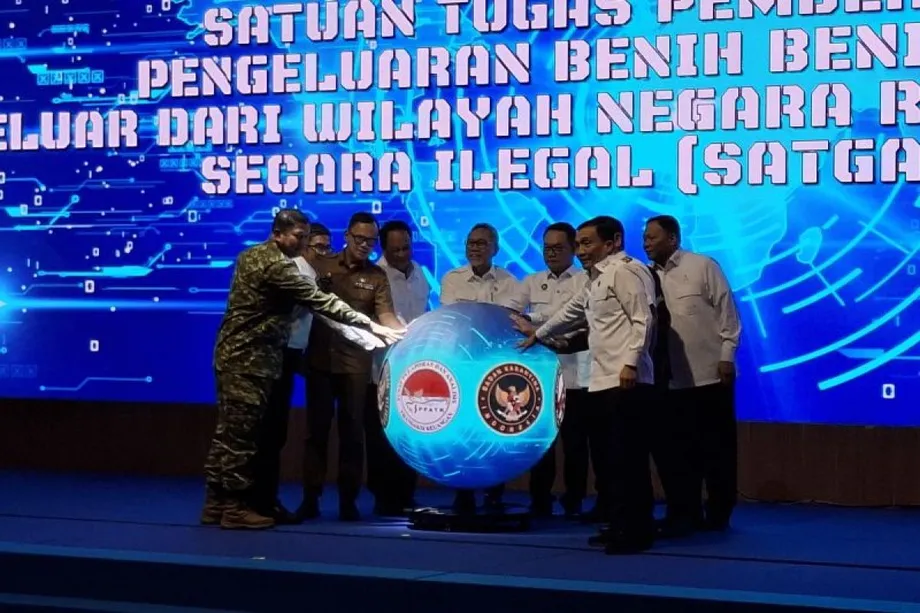
Indonesia is adapting that history to a different immediate task: improving visibility and reducing concentrated smoke near the ground. BMKG proposed the programme, the president approved it, and BNPB joined its implementation, according to Governor Herman Deru.
South Sumatra is the first Indonesian province to test this particular response to haze and one of six priority provinces identified by BNPB for the fire emergency. The government intends to use the results to decide whether the method should be extended to other affected areas.
Fires continue across Sumatra and Borneo
Nusantara Atlas, an independent forest monitoring platform, recorded more than one million wildfire hotspots and nearly 900,000 hectares burned in Indonesia in 2026. Hotspots are locations where monitoring detects unusual heat; the burned area figure describes the extent of land affected.
Strong El Niño conditions have worsened drought and made fires harder to control across Sumatra and Borneo. El Niño is a recurring warming of the tropical Pacific that can alter rainfall patterns, bringing drier conditions to parts of Indonesia.
Indonesia's weather agency placed a large area of the country under a very high fire weather index, meaning conditions favour fires that are difficult to control. The ASEAN Specialised Meteorological Centre forecast continuing dry weather in the days around the trial, with some showers possible in northern and central parts of Sumatra and Borneo.
The damage has reached residential areas as well as forests and peatlands. An official said a fire on Sumatra on the Tuesday before the trial destroyed nearly 300 homes and forced hundreds of people to evacuate.
Police have named more than 200 individuals and nine companies as suspects in connection with the fires. Fire prevention and enforcement against those responsible remain part of the response, alongside suppression on the ground and from the air.
Health pressures extend beyond Indonesia
Authorities recorded more than 280,000 respiratory problems in haze affected regions from August 18. Smoke contains fine particles that can enter deep into the lungs, making prolonged exposure a concern for communities living under the haze.
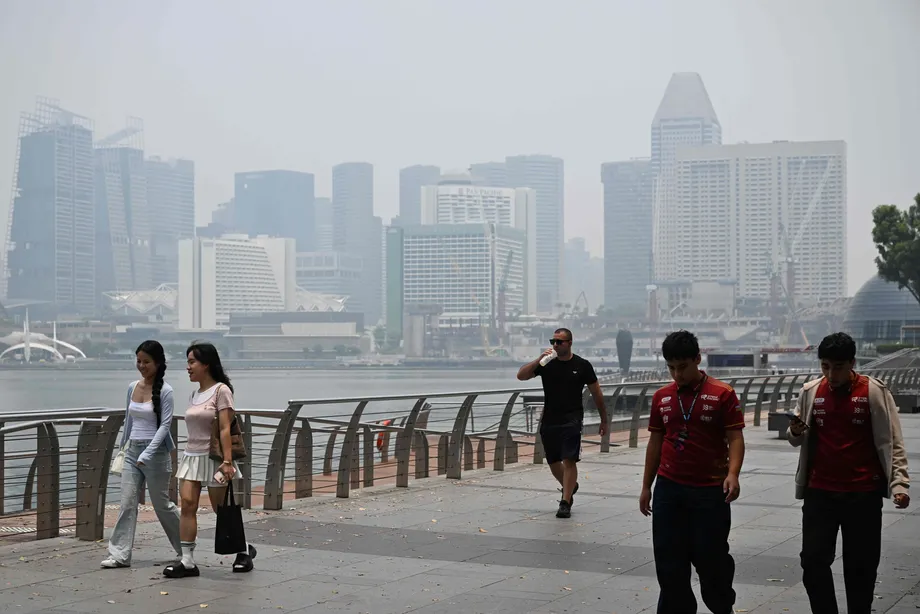
Pollution travelled beyond Indonesia to Singapore, Malaysia, East Timor and the Philippines. Singapore's National Environment Agency placed pollution in western Singapore at its highest warning level on the Wednesday before the Palembang trial.
Singapore activated subsidies for medical treatment related to haze from Monday, reviving a measure last used during the severe regional smoke episode in 2015. It also began distributing N95 masks to eligible residents when pollution reached very unhealthy levels.
Malaysia ordered school closures across three states and parts of four others because of unhealthy air. East Timor began a school closure lasting three days on Thursday and urged families to keep children indoors and wear masks when going outside.
Malaysia also carried out 11 conventional cloud seeding missions from late August, according to Deputy Minister of Natural Resources and Environmental Sustainability Syed Ibrahim Syed Noh. Operations extended to Johor as pollution worsened beyond northern Peninsular Malaysia.
Indonesia had granted Malaysian agencies permission the previous month to enter its airspace for cloud seeding along their shared border. The cross border response reflects how smoke from fires can affect communities far from the burning land.
What determines a wider rollout?
Central Kalimantan is the main area officials have named for a possible extension of dry ice operations. Dudung said the decision would depend on the South Sumatra results, while BNPB committed to an evaluation and further coordination after the trial.
Dudung described the condition for expansion:
If this trial is successful, we will continue with other areas that are central to the haze, such as Central Kalimantan and its surroundings.
Palembang's early visibility readings give officials an operational result to examine alongside air quality and smoke measurements. For residents, the immediate priorities are cleaner air and functioning transport. For emergency crews, they include sufficient visibility to keep aircraft flying while fires are extinguished.
Key Points
- Indonesia began its first dry ice trial against wildfire haze in South Sumatra on October 15, 2026.
- BNPB reported visibility near Palembang's airport increasing from about 650 metres to 2,800 metres during the first day's operations.
- A Cessna Caravan made two sorties, each carrying 800 kilograms of dry ice at about 4,500 feet.
- The method aims to disperse trapped smoke while separate weather modification operations stimulate rain to help fight fires.
- The trial was scheduled to run through October 18, with evaluation before possible expansion to Central Kalimantan and other areas.
- More than 280,000 respiratory problems and 1,813 affected domestic flights were recorded as the haze emergency spread across borders.