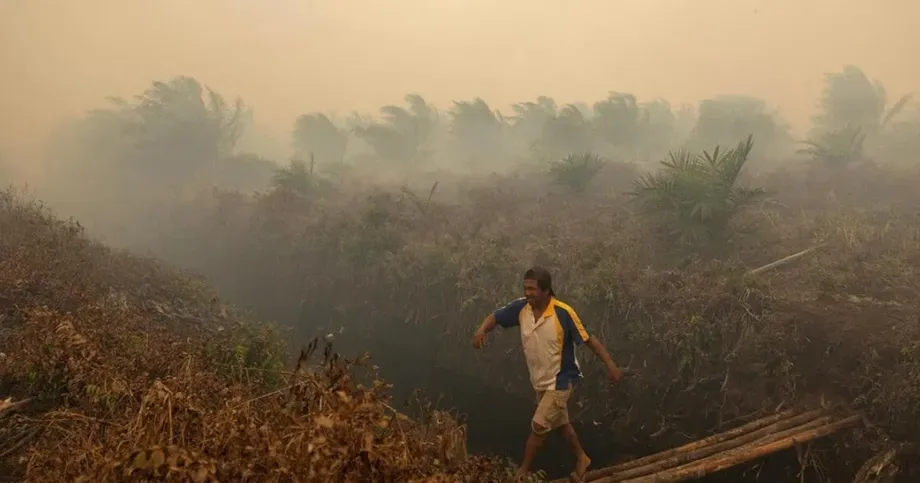
980 smoke points detected inside oil palm concessions
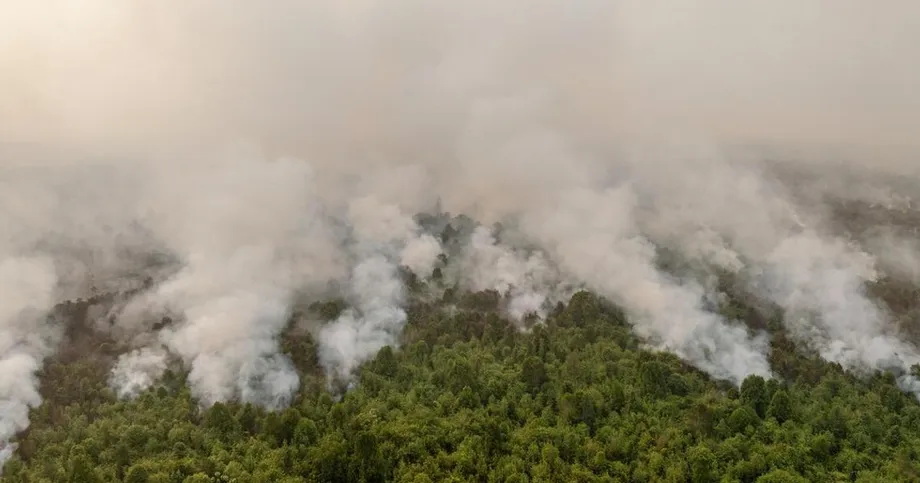
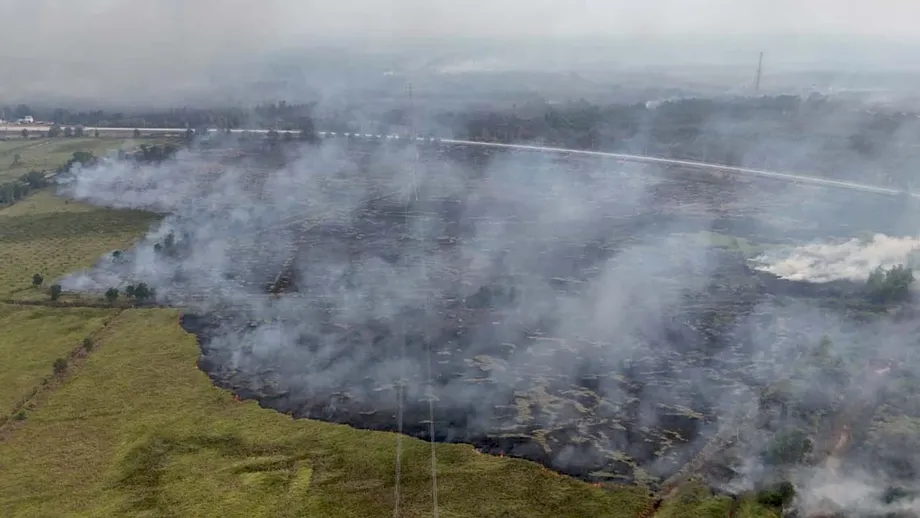
Greenpeace Indonesia identified 980 smoke source points inside 233 oil palm concessions between August 8 and October 1, 2026, as fires in Indonesia spread haze across Southeast Asia. Its investigation linked plantation businesses associated with Singapore listed First Resources and Bumitama Agri, along with privately held First Borneo Plantations, to areas where fires and smoke were detected.
Contents
- 980 smoke points detected inside oil palm concessions
- How the plantations connect to Singapore
- First Resources says outside fires crossed its boundaries
- Peatlands and repeated burning widen the damage
- What Singapore's haze law allows
- Polluted air changes daily life across the region
- Indonesia accepts help as residents seek court action
- Earlier land clearing allegations add scrutiny
- How the fire season reached this point
- Key Points
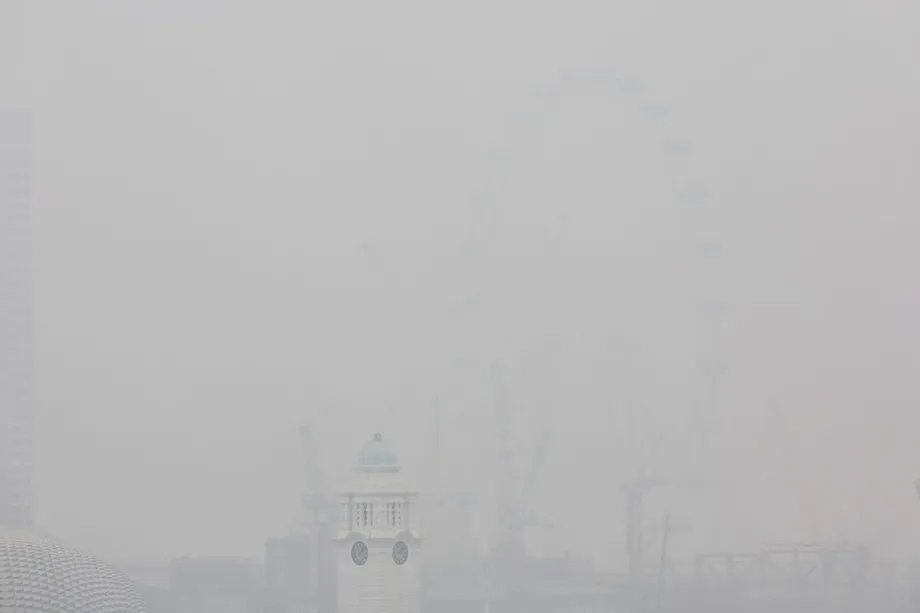
Singapore is examining which companies may be responsible as pollution reaches very unhealthy levels. At 9 a.m. on October 16, the country's Pollutant Standards Index (PSI) ranged from 149 to 227, with the central region recording the highest reading. First Resources disputes suggestions that fires originated within its operations, saying some blazes crossed into its estates from outside.
The plantation findings form part of a much larger picture. Greenpeace Indonesia's October 5 investigation recorded 6,811 smoke source points nationwide. Of those, 970 were inside 120 forestry concessions, while 3,557 were within 141 peat hydrological units, landscapes connected by the movement and storage of water.
Greenpeace combined satellite observations with corporate ownership research to connect affected land to business groups. A concession is land that a company has permission to use or develop, with management responsibilities attached to that permission. Investigators examining individual fires must trace where they began, how they spread and what the companies managing the land did.
The immediate consequences reach beyond plantation boundaries: residents face polluted air, governments are arranging firefighting assistance, and Singapore is considering a law that allows action over haze caused by activities overseas.
How the plantations connect to Singapore
First Resources entered the ownership chain of one plantation identified by Greenpeace through its acquisition of Indonesian producer Austindo Nusantara Jaya (ANJ) in May 2025. It bought an initial 91.17 percent stake for about US$330 million, or S$423 million, and increased its holding to 95.92 percent later that year.
ANJ owns 99.99 percent of Kayung Agro Lestari, whose plantations cover 13,878 hectares in Ketapang, West Kalimantan. Greenpeace identified its concession among the areas where fires and smoke were detected. Across land managed by two First Resources subsidiaries, Greenpeace recorded more than 30 haze source points during August and September.
First Resources is majority owned by members of Indonesia's Fangiono family. Ciliandra Fangiono serves as chief executive, while his brother Fang Zhixiang is deputy chief executive. The acquisition places the Kayung Agro Lestari plantation within the group's corporate structure during the 2026 fire season.
Bumitama Agri was linked through Indonesian plantation company Damai Agro Sejahtera, which Greenpeace also identified. Bumitama is controlled by the Lim family and connected to Indonesia's Harita Group, a conglomerate active in mining and palm oil. Lim Gunawan Hariyanto is its executive chairman and chief executive.
First Borneo Plantations has a different Singapore connection. A 2019 regulatory filing by Thai energy company PTT said Singapore incorporated Chancellor Oil operated a palm oil business through First Borneo. PTT sold its 77.56 percent stake in Chancellor Oil to Premier Palmoil Energy in April 2019. Corporate filings list Indonesian businessman Alexander Thaslim as a director of both Singapore companies.
First Resources says outside fires crossed its boundaries
First Resources said on October 15 that checks of hotspots near its West Kalimantan concessions placed many outside its operating boundaries. It acknowledged that some external fires spread onto land it manages, describing some blazes as too large and fast moving for its teams to contain fully.
The company attributed heightened fire risk to prolonged dry conditions associated with the 2026 El Nino event. El Nino is a natural climate pattern that changes rainfall and temperatures around the world; in parts of Indonesia, it can bring extended dry weather that leaves vegetation more likely to burn.
First Resources also attributed some uncontrolled fires to traditional land clearing by nearby communities during the drought. It said plantations bordering community land and unmanaged areas faced greater exposure, and that its firefighting teams had been stationed along concession boundaries after nearby hotspots appeared.
The company cited its Zero Burning Policy and Integrated Fire Management programme, including daily satellite tracking and drone surveillance. It said it had distributed 17 water pump units to affected villages and thousands of masks to local education offices, while coordinating firefighting support with neighbouring companies where appropriate.
First Resources said hotspot numbers had fallen sharply in recent weeks, with current detections largely concentrated in places where it does not operate. Bumitama Agri and First Borneo Plantations had not responded to requests for comment by the time of the October reports.
Peatlands and repeated burning widen the damage
Greenpeace's national figures show how much of the fire problem involves peat landscapes and previously burned land. Its 3,557 smoke source points within peat hydrological units represented about 52 percent of the 6,811 total. Another 2,719 points, about 40 percent, were in areas that had burned during 2015 to 2023.
Peat consists of partly decomposed plant material accumulated in wet conditions. When drained and dried, it can burn below the surface, producing persistent smoke and making extinguishing a fire more difficult. Water management across an entire peat landscape therefore matters alongside firefighting at individual plantations.
Greenpeace cited Pantau Gambut research showing that, as of July 2025, 8.3 million hectares of peat hydrological units lay within 936 concessions. Against the national total of 24.2 million hectares cited in the same research, that is roughly one third. Pantau Gambut classified about 16.4 million hectares as vulnerable to fire.
South Papua accounted for 1,413 smoke source points, approximately 21 percent of Greenpeace's national total. The organisation also detected points in two conservation areas in Merauke, extending concern beyond the more familiar fire regions of Sumatra and Kalimantan.
Nusantara Atlas recorded 1,043,377 wildfire hotspots and 900,000 hectares affected by fire in Indonesia. Hotspots are satellite detections of unusual heat; Greenpeace's smoke source analysis uses a different measure and a stated observation period. Each dataset describes a different part of the fire emergency.
What Singapore's haze law allows
Prime Minister Lawrence Wong said on October 15 that Singapore was examining which companies might be responsible. He set out the possibility of domestic enforcement and cooperation with other countries.
"Where warranted, we will take action under Singapore's Transboundary Haze Pollution Act, and explore joint action with other countries," he said.
The Transboundary Haze Pollution Act, enacted in 2014, allows Singapore to pursue companies responsible for causing or contributing to haze pollution in the country, including through activities overseas. The law addresses conduct causing or condoning fires when the resulting haze keeps the PSI in the unhealthy range in any part of Singapore for at least 24 hours.
Unhealthy air begins at a PSI of 101. Penalties can reach S$100,000 for each day of pollution, subject to a total cap of S$2 million. Sustainability and the Environment Minister Grace Fu said on October 14 that Singapore was collecting and reviewing data while keeping its enforcement options open.
The National Environment Agency issued legal notices to six companies following concession fires in 2015. It says investigations remain ongoing into four: PT Bumi Andalas Permai, PT Bumi Mekar Hijau, PT Sebangun Bumi Andalas Woods Industries and PT Rimba Hutani Mas. Authorities encountered difficulties obtaining information from Indonesia during that earlier enforcement effort.
The current investigation has no announced completion date. Indonesian police, meanwhile, say they are investigating nine palm oil companies over forest and land fires, without naming them.
Polluted air changes daily life across the region
Singapore's PSI reached 212 in the west at noon on October 15, then ranged as high as 227 the next morning. Readings from 201 to 300 fall in the very unhealthy category. The government is distributing masks, including N95 masks, to vulnerable residents and opening spaces with air conditioning at community clubs and selected neighbourhood centres.
Greenpeace's monitoring through October 1 recorded haze on five days in Singapore, compared with 55 days in Sarawak, 16 in Sabah, and 13 each in Johor and Kuala Lumpur. Those figures describe the period before Singapore's higher pollution readings in mid October. Some schools in Malaysia have closed during the wider emergency.
Workers who earn their income outdoors face particularly difficult choices. Imrayedi, a 63 year old motorcycle taxi driver in Pekanbaru, Sumatra, described the effects on his health while continuing to work.
"I'm short of breath and have a headache from breathing this air. But I still have to work," he said.
Greenpeace also cited a 2022 study estimating that long term exposure to fine particles from peat fires in Sumatra and Kalimantan was associated with about 33,100 premature adult deaths and 2,900 infant deaths annually. Those annual estimates describe the wider health burden studied by the researchers; the death toll from the current emergency has not been established.
Indonesia accepts help as residents seek court action
Indonesia said on October 15 that it would accept foreign assistance. Foreign Minister Arrmanatha Nasir said President Prabowo Subianto had approved the help and technical discussions were under way. Singapore had offered support and said it would continue working with Indonesia and other Association of Southeast Asian Nations partners.
Malaysia's Foreign Minister Mohamad Hasan said legal action or a diplomatic note would be a last resort. Malaysia intends to continue using diplomatic channels and ASEAN mechanisms to address the haze with Indonesia.
Indonesian authorities have also suspended the operating licences of 26 companies linked to wildfires and begun investigations into others. Greenpeace's broader investigation identified more than 20 companies in the palm oil, pulp and sugar industries, including Malaysia listed Kuala Lumpur Kepong.
Greenpeace recorded 19 haze source points on land managed by Kuala Lumpur Kepong subsidiary PT Menteng Jaya Sawit Perdana. The parent company said most fires originated outside the concession and had been extinguished, and said it prohibits open burning across its operations.
In Pontianak, West Kalimantan, civil society groups have filed a class action against the Indonesian government and President Prabowo, alleging negligence over recurring haze. They want a national disaster declaration and recovery measures, including coverage of healthcare costs. A similar case in South Sumatra was dismissed the previous year.
Earlier land clearing allegations add scrutiny
First Borneo faces scrutiny beyond the current fire detections. Greenpeace linked plantation company Arjuna Utama Sawit to the group in its October investigation. In February 2026, environmental organisation Mighty Earth accused another First Borneo subsidiary, PT Equator Sumber Rezeki, of continuing to clear rainforest and orangutan habitat without a permit in West Kalimantan.
The February allegations concern forest clearance at a different concession from Arjuna Utama Sawit. Together, the cases place attention on how corporate groups supervise land management across their subsidiaries, while the current fire investigations focus on the origins and spread of individual blazes.
How the fire season reached this point
The events stretch from corporate acquisitions before the fires to government responses as smoke crossed borders. The main dates are:
- April 2019: PTT sold its 77.56 percent stake in Chancellor Oil to Premier Palmoil Energy.
- May 2025: First Resources acquired an initial 91.17 percent stake in ANJ, later increasing it to 95.92 percent.
- February 2026: Mighty Earth accused a First Borneo subsidiary of clearing rainforest and orangutan habitat without a permit.
- August 8 to October 1, 2026: Greenpeace identified 6,811 smoke source points across Indonesia.
- October 5: Greenpeace Indonesia published its findings.
- October 14 and 15: Singapore outlined possible enforcement, First Resources issued its response, and Indonesia announced approval for foreign assistance.
- October 16: Singapore's 24 hour PSI readings ranged from 149 to 227 at 9 a.m.
Singapore's next enforcement decision will depend on its review of fire and pollution data. For communities in Indonesia, Malaysia and Singapore, firefighting support and protection from polluted air are already immediate needs.
Key Points
- Greenpeace linked First Resources, Bumitama Agri and First Borneo Plantations to Indonesian concessions where fires and smoke were detected.
- Its national analysis found 980 smoke source points inside 233 oil palm concessions during August 8 to October 1, 2026.
- First Resources says outside fires entered its plantations during prolonged dry weather and cites monitoring and firefighting measures.
- Singapore is considering enforcement under its haze law, which permits fines of up to S$100,000 a day, capped at S$2 million.
- Indonesia has approved foreign assistance, while police are investigating nine unnamed palm oil companies.
- Singapore's PSI reached 227 on October 16, within the very unhealthy range.