Visibility falls to 500 metres around Tanjung Puting
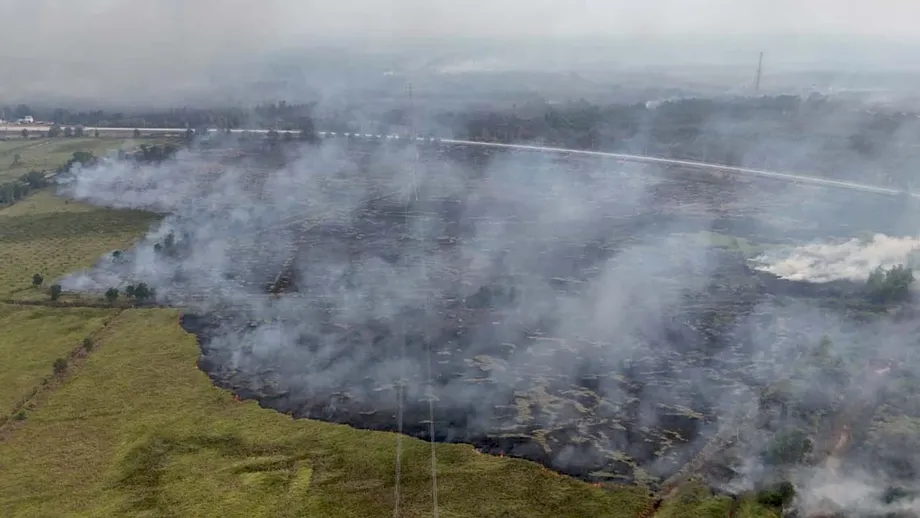
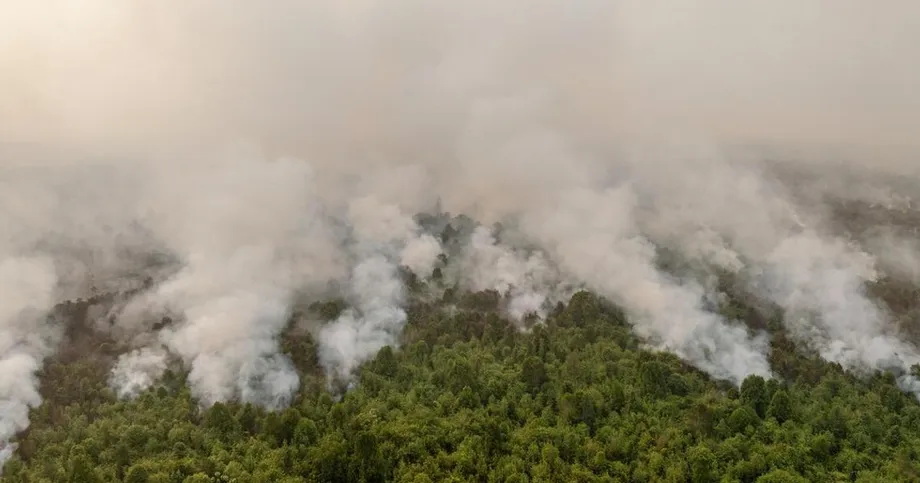
Thick smoke has grounded civilian firefighting aircraft in Central Kalimantan for about a week, forcing Indonesia to rely on ground crews as fires spread across more than 500 hectares in the Tanjung Puting National Park area and surrounding parts of West Kotawaringin and Seruyan regencies. Visibility around the internationally known orangutan habitat has fallen to about 500 metres.
Contents
- Visibility falls to 500 metres around Tanjung Puting
- Smoke restricts firefighting from the air
- Ground crews face scattered fires and swamp terrain
- Prabowo promises 200 pumps and 200 water points
- A month to extinguish the fires is a forecast
- Foreign aid is being assessed, not yet accepted
- Earlier assistance ended before the latest decisions
- Haze creates health costs beyond the fire zones
- Prevention proposals target burning and forest protection
- Key Points
At an October 12 meeting chaired by President Prabowo Subianto, regional military commander Major General Zainul Arifin described scattered fires, swampy terrain and shortages of pumps. Prabowo responded by promising 200 pumps, four times the 50 requested, and two billion rupiah to fund 200 groundwater drilling points.
Cabinet Secretary Teddy Indra Wijaya disclosed details of the meeting on October 13. That same day, Environment Minister Jumhur Hidayat said declining fire intensity gave the government reason to expect the blazes could be extinguished within a month, possibly sooner. His forecast came despite continuing restrictions on aircraft and limited water supplies.
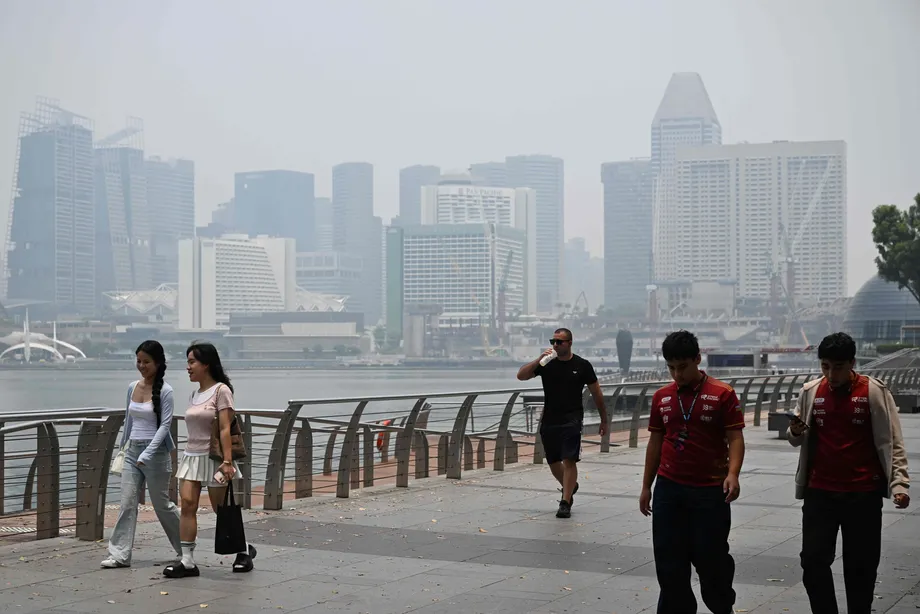
The emergency extends beyond the park. National Disaster Mitigation Agency chief Suharyanto told the president that 639.23 hectares remained ablaze across six priority provinces as of October 12, while nearly 130,000 hectares had burned cumulatively. Haze has disrupted flights, forced school closures and contributed to respiratory health problems in Indonesia, Malaysia and Singapore.
The immediate challenge is therefore more specific than finding additional aircraft or deploying more personnel. Crews need to reach isolated fires, secure water and operate safely in conditions that have disabled part of the aerial response. Those constraints also shape Indonesia's assessment of assistance offered by its neighbours.
Smoke restricts firefighting from the air
Suharyanto, who heads the National Disaster Mitigation Agency, known by its Indonesian abbreviation BNPB, explained how poor visibility had interrupted aerial operations in the province.
“In Central Kalimantan in particular, water-bombing helicopters have been unable to fly for about a week because of poor visibility,” he said.
Aircraft have been unable to operate from Palangka Raya, the capital of Central Kalimantan, and Banjarmasin in neighbouring South Kalimantan. The disruption has affected flights intended to encourage rainfall through weather modification, as well as commercial services.
Zainul told Prabowo that private aircraft operators required visibility of about 5,000 metres. The reported 500 metres around the park was one tenth of that distance. He suggested military crews might be able to operate under more restricted conditions, based on previous experience, and Prabowo instructed military and police officials to coordinate their aviation personnel.
That instruction was not confirmation that military flights had resumed. No revised operating threshold or date for restoring aerial firefighting was announced. Additional aircraft would still need conditions in which crews could safely fly and release water.
Ground crews face scattered fires and swamp terrain
With aircraft grounded, much of the response depends on personnel entering areas that are difficult to reach. Zainul, the regional military commander briefing the president, described the conditions inside and around Tanjung Puting.
The locations are very scattered, and the terrain is swampy. It is not just orang utans there. There are many dangerous animals, including crocodiles and snakes. So we have to be careful when entering these areas.
Teams were being organised with local disaster management officials, police and regional authorities to allow personnel to enter affected areas safely. Firefighting operations were focused on Central Kalimantan and South Sumatra, although BNPB's remaining fire tally covered six priority provinces.
Teddy said more than 60,000 personnel had been deployed in ground operations, extinguishing an average of more than 80% of newly burned land each day. That measure describes daily suppression activity, not the share of all previously burned land that has recovered. It also does not mean that the remaining fires are easily accessible.
Prabowo promises 200 pumps and 200 water points
Zainul said some portable pumps previously supplied to Central Kalimantan were still being used to cool areas where fires had been extinguished. Those pumps were therefore not necessarily available for new fire locations. Additional equipment was difficult to obtain locally and sometimes had to be brought from Java.
When Prabowo asked how many pumps were needed, Zainul requested 50. The president replied:
I will send 200.
The proposed drilling programme addresses a separate problem: supplying water in places vehicles cannot reach. Zainul said groundwater could be accessed at depths of about 10 to 15 metres, with each drilling point costing around 10 million rupiah. He said local residents could be recruited to help drill the wells.
After confirming the estimated cost with Zainul, Prabowo committed funding for the programme.
Okay, I will send two billion rupiah, for 200 points.
The allocation matches the stated estimate of 200 points at 10 million rupiah each. The announcements establish the intended scale of the response, but no delivery date for the pumps or completion schedule for the drilling points was given.
A month to extinguish the fires is a forecast
Jumhur gave his assessment on October 13 at the Prasasti Indonesia Policy Forum 2026 in Jakarta. He said discussions with BNPB suggested extinguishing the fires would take a few weeks, with intensity already starting to decline.
Reports differ slightly in their wording of the target: some describe fires being extinguished within a month, while others describe the minister hoping it would take less than a month. Both accounts present an expectation based on declining intensity, rather than a confirmed completion date.
The 639.23 hectares still burning and the nearly 130,000 hectares burned cumulatively measure different things. The first is a snapshot of active fires in six priority provinces on October 12. The second describes accumulated damage. A reduction in active fires would not reverse the land already burned.
Limited water supplies and restrictions on aircraft remain practical obstacles to meeting the minister's forecast. No detailed schedule for extinguishing fires in each province was announced.
Foreign aid is being assessed, not yet accepted
Singapore and Malaysia have offered help, but officials said those proposals were not discussed at the October 12 presidential meeting. Jumhur said the government was reviewing the type of assistance offered and whether it would accelerate operations.
The environment minister explained why Indonesia was examining the proposals before deciding whether to accept them.
“We must first see what kind of assistance it is, whether it is significant or not. Instead of making mistakes later, it’s better for us to curate it first, to make sure that it fits,” he said.
Singapore's Minister for Sustainability and the Environment, Grace Fu, said on October 10 that she had contacted Jumhur and offered support. Malaysia's Deputy Prime Minister Ahmad Zahid Hamidi said on October 11 that he had offered assistance to Prabowo in September. Malaysia's National Disaster Management Agency had also written to Indonesia but had received no reply at that point.
Reports differ on the size of Malaysia's proposed deployment. Some give 52 personnel, while another gives 55. The offers were described as including three helicopters and firefighting aircraft, with one account specifying a plane. An accepted deployment package has not been announced.
Jumhur argued that a small personnel deployment might have limited impact alongside Indonesia's tens of thousands of responders. Aircraft support, he said, also had to be judged against operational needs. The visibility restrictions explain why the number of aircraft offered cannot, by itself, establish how much help they would provide.
Earlier assistance ended before the latest decisions
Indonesia had already accepted three CH-47 Chinook helicopters, personnel and support equipment from Japan, as well as fire suppressant powder from Brazil. The Japanese mission ended on September 29. A Japanese Defence Ministry statement said Indonesia had expressed appreciation for the assistance and readiness to handle the fires independently.
That earlier acceptance means the current review concerns new offers, rather than a complete refusal of foreign assistance throughout the emergency. The sequence of departures, proposals and government decisions is:
- September: Ahmad Zahid said he offered Malaysia's help during a conversation with Prabowo.
- September 29: Japan's helicopter assistance mission ended.
- October 10: Grace Fu said she had contacted Jumhur and offered Singapore's support.
- October 11: Ahmad Zahid said Malaysia's disaster agency had not received a reply to its written offer.
- October 12: Prabowo chaired the meeting on firefighting operations and equipment needs.
- October 13: Jumhur outlined the expected suppression timeframe and the review of foreign aid.
No date was given for a decision on the new assistance proposals. That leaves both the equipment commitments and the aid review without a publicly stated timetable.
Haze creates health costs beyond the fire zones
The fires have produced haze across parts of Southeast Asia, with reports of increased respiratory conditions in Indonesia, Malaysia and Singapore. School closures in Malaysia have included the southern state of Johor, while flight disruptions have affected transport as well as emergency operations.
Sultan Bachtiar Najamudin, speaker of Indonesia's Regional Representative Council, urged a rapid response in an October 13 press release. He described the fires as both an environmental emergency and a regional health problem.
“Forest and land fires occurring in several regions constitute an ecological disaster that has evolved into a public health issue with widespread regional impact,” Sultan said.
Sultan urged the government to welcome assistance from friendly countries, particularly members of the Association of Southeast Asian Nations, if needed. He also said Indonesia could accept foreign help without declaring a national emergency.
At Tanjung Puting, the fires threaten a conservation area known for orangutans and rainforest tourism. Zainul said 247 foreign tourists visited on October 12, bringing the reported 2026 total to 66,000. Those figures show visits continued, but they do not establish that every part of the park was unaffected or accessible. No count of wildlife deaths or detailed assessment of habitat damage was given.
Prevention proposals target burning and forest protection
Alongside the immediate response, Jumhur outlined plans to remove the provision allowing households to clear plots of up to two hectares by burning under customary practices. The proposal concerns an exception permitting limited burning, not a general authorisation to burn forests.
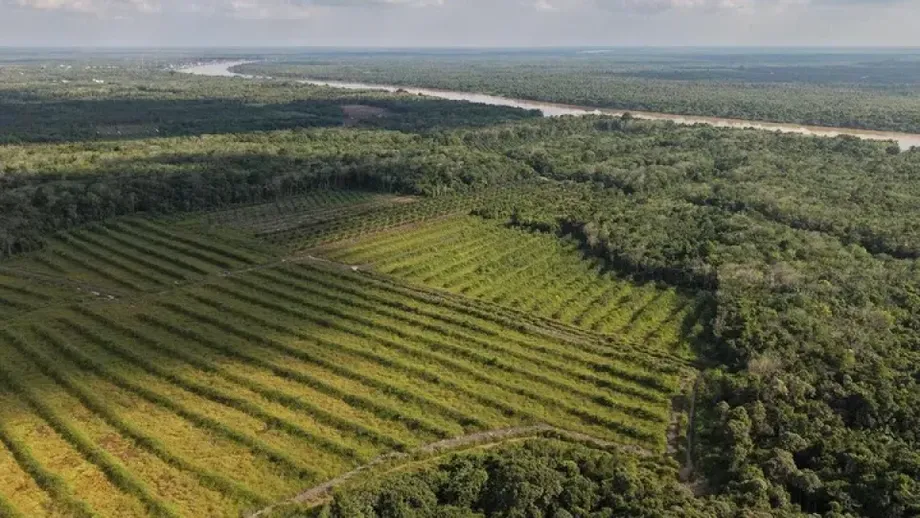
The government is also examining restrictions on replanting plantation crops, including oil palm, on concession land burned before commercial planting. Concessions are areas allocated for commercial activity. Preventing planting after a fire would seek to remove the benefit of using deliberate burning to clear such land.
Reports describe the planting restriction with different degrees of certainty: some call it a measure under consideration, while another presents it as a planned prohibition. Neither an enacted change nor a start date was identified. Jumhur also warned of strict sanctions where intentional burning was found in concession areas.
Prabowo reiterated his request for 70,000 forest police officers and suggested that the police and military could help train them. This is a separate proposal from the deployment of more than 60,000 personnel already supporting ground firefighting. He called for prevention and mitigation to begin at village level, drawing on advice from university experts.
The unresolved tasks now span both emergency operations and prevention: delivering pumps, drilling water points, restoring safe aerial access, deciding on foreign aid and setting out the proposed legal changes. The minister's expectation of extinguishing the fires within a month does not provide deadlines for those separate decisions.
Key Points
- Visibility of about 500 metres has prevented civilian aerial firefighting around Tanjung Puting, with Central Kalimantan helicopters grounded for about a week.
- More than 500 hectares were affected in the park area and surrounding regencies; BNPB reported 639.23 hectares still burning across six priority provinces.
- Prabowo promised 200 pumps and two billion rupiah for 200 groundwater drilling points, without announcing delivery or completion dates.
- Jumhur expects the fires to be extinguished within a month, possibly sooner, but water shortages and aircraft restrictions persist.
- Singapore and Malaysia have offered help. Indonesia is assessing new assistance, and reports differ between 52 and 55 Malaysian personnel.
- Proposed prevention measures include removing the household burning exception and restricting plantation planting on burned concession land.