

Six kilometres of coastline carry a vast share of India's western connections
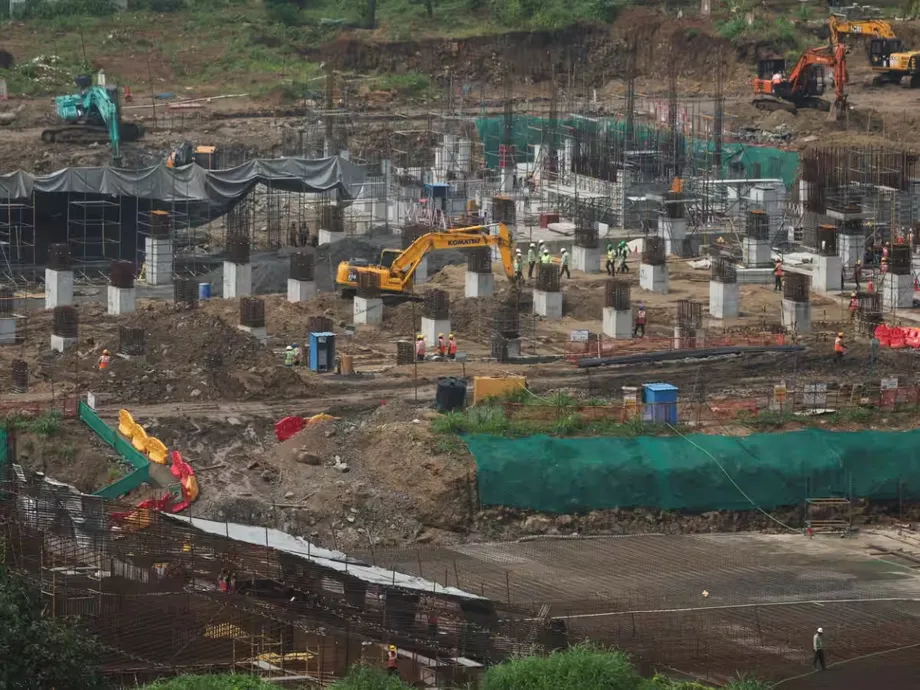
At least 13 of India's 18 intercontinental submarine cables reach land within roughly six kilometres of one another near Versova, a densely populated neighbourhood on Mumbai's Arabian Sea coast. Together, they carry as much as 95% of India's international bandwidth to Europe, Africa and West Asia, placing a large share of the country's western connectivity within one narrow coastal zone.
Contents
- Six kilometres of coastline carry a vast share of India's western connections
- Why India's growing data demand makes delays costly
- Older cables and everyday maritime hazards add to the exposure
- Foreign repair ships can leave India waiting for weeks
- Data centre expansion is running ahead of cable planning
- Multiple approval processes slow construction and repairs
- New projects are moving toward additional coastal gateways
- Monitoring the seabed and building local skills
- What India needs to become a regional cable hub
- The Bottom Line
As of September 9, 2026, this concentration presents a growing concern for an economy increasingly dependent on digital payments, cloud computing, government networks and international business. A problem affecting several cables near Mumbai could disrupt services far beyond the city.
Submarine cables contain bundles of optical fibres and transmit information as pulses of light across the seabed. They carry about 99% of global communications traffic. Satellites attract considerable attention, but these underwater connections provide the capacity that makes large volumes of internet traffic affordable and fast.
Anwesha Sen of the Takshashila Institution describes the danger posed by cables converging in such a small area:
This network faces a critical vulnerability due to severe geographic concentration. If several of those cables were cut simultaneously, either accidentally or deliberately, a bulk of India's westward bandwidth to West Asia, Africa and Europe would be impacted.
India's networks can redirect traffic through other landing points, including Chennai and Kochi. Even with those alternatives, a disruption could be costly. Traffic sent along longer routes takes more time to reach its destination, while the remaining connections can become congested as they carry extra demand.
Latency is the time data takes to travel between systems. Small increases can affect stock trading, digital payments, cloud applications and artificial intelligence workloads. For businesses that exchange information constantly, slower connections can become a serious operational problem even while the internet remains accessible.
Why India's growing data demand makes delays costly
Banks use international connections to process transactions and communicate with systems overseas. Stock exchanges depend on precise timing, and cloud companies move information between customers, servers and backup locations. Government networks also need stable connections for administration and public services.
Artificial intelligence adds more demand. Training large models involves moving huge datasets between data centres. Applications using AI often require rapid exchanges between computing hubs and their users. When a cable route is damaged, sending that traffic along a longer path can reduce performance or raise operating costs.
India had more than one billion broadband subscribers by late 2025, following rapid growth supported by cheap mobile data, widespread smartphone adoption and expanding digital services. According to industry figures, the country consumes roughly one fifth of the world's data but is connected to only about 3% of global submarine cable systems.
Those figures describe different measures, data consumption and cable connections, but together they show the scale of the infrastructure challenge. India's role as a consumer and producer of digital services is growing without a comparable share of the physical connections linking it with other markets.
Aruna Sundararajan, chairperson of the Broadband India Forum, says the country needs to expand its coastal gateways by several times. These gateways include cable landing stations, the facilities where international cables meet terrestrial fibre networks, telecom operators and data centres.
Landing stations determine where international capacity enters India and how easily it reaches users inland. More capacity at sea therefore needs matching connections on land. The reliability of a service depends on the route from the underwater cable through the landing station and onward to the networks and computing facilities that use it.
Older cables and everyday maritime hazards add to the exposure
A paper from the Takshashila Institution found that 11 of India's 18 international cables are more than 20 years old. Submarine systems are commonly designed to operate for about 25 years, although maintenance and upgrades can keep individual systems working beyond that period.
Amajit Gupta, group chief executive and managing director of digital infrastructure company Lightstorm, considers the age of India's landing cables a legitimate concern. Older equipment can cost more to maintain and may provide less capacity than newer systems designed for today's demand.
Across the world, an estimated 150 to 200 cable faults occur each year. Fishing activity, ship anchors, underwater landslides, storms and equipment failures account for most incidents. Deliberate interference is also a concern, particularly where cables gather near shore, but routine maritime activity creates the more frequent danger.
Mumbai's concentration brings those risks together geographically. An incident near a shared landing area could affect several connections, while ageing systems add maintenance demands to a network already carrying substantial traffic.
The Red Sea disruptions illustrated how damage in one region can affect international networks. When cables there were damaged, some traffic was redirected east through Singapore before continuing toward the United States. Alternative routes preserved connectivity, while also making journeys longer and putting additional pressure on the routes still operating.
India's exposure to routes around the Red Sea makes a broader choice of connections valuable. Additional landing points on both its eastern and western coasts would give operators more options when a corridor is damaged or congested. Replacing ageing cables and spreading routes geographically address different parts of the same reliability problem.
Foreign repair ships can leave India waiting for weeks
India does not currently have a dedicated domestic submarine cable repair ship. When a cable breaks in Indian waters, operators usually need a specialist vessel from abroad, often from Dubai or Singapore. The ship must then receive permission to work in Indian waters.
Repair work involves several steps before technicians can reach the damaged cable. Operators need to locate the fault, assign a suitable vessel, arrange equipment and obtain the required licences. Weather and sea conditions can extend the timetable further, while the process of bringing in a foreign vessel and securing permission can add weeks.
Sen identifies dependence on foreign repair ships and the licensing process as a recurring vulnerability. Gupta argues that the central problem is less the ability to redirect traffic than the absence of local repair capacity. He describes the practical delay:
Every cable fault in Indian waters depends on foreign repair ships from Dubai or Singapore. Once a foreign ship is assigned, it must obtain licences to operate in Indian waters, adding weeks to an already lengthy process.
A domestic repair vessel could give India faster access to specialist crews and equipment during an emergency. Locating faults, organising equipment and waiting for suitable sea conditions would still be part of the work, but having a ship available locally could shorten the response.
A wider regional arrangement could also help. Access to repair vessels, spare cable and trained crews, combined with procedures approved in advance, could reduce downtime. Repair readiness matters because redirected traffic can remain on longer, more crowded routes throughout the wait for a damaged cable to return to service.
Data centre expansion is running ahead of cable planning
Government figures show India's installed data centre capacity rising from about 375 megawatts in 2020 to roughly 1,575 megawatts as of September 9, 2026. That is about 4.2 times the 2020 level. Industry estimates suggest capacity could exceed 4.5 gigawatts by 2030.
Data centres require large amounts of electricity and dependable networks linking them with users, content platforms and other facilities. A new centre can be ready before the international cable capacity needed to serve it has been added.
The milestones show how quickly demand and computing infrastructure have grown:
- 2020: Installed data centre capacity stood at about 375 megawatts.
- Late 2025: India had more than one billion broadband subscribers.
- September 9, 2026: Installed data centre capacity was roughly 1,575 megawatts.
- 2030: Industry estimates suggest data centre capacity could pass 4.5 gigawatts.
Submarine cable projects have long lead times. Planning can take three to four years, followed by as much as two years for manufacture and installation, depending on the route. That timetable creates a difficult mismatch with the rapid pace of investment in cloud services and AI.
Sundararajan says cable capacity should be planned alongside data centre development, rather than added later. Gupta similarly argues that the industry needs to stay ahead of demand instead of waiting for congestion to appear.
New landing stations also require strong inland fibre connections, reliable power infrastructure and links to data centres. A station in a remote location has limited value if terrestrial networks cannot move its traffic to major computing and commercial centres. Building a more distributed network therefore means coordinating investment at sea, on the coast and inland.
Multiple approval processes slow construction and repairs
Submarine cable projects in India can require approval from authorities responsible for telecommunications, defence, internal security, shipping, ports, the environment and state administration. Companies may face separate procedures for construction, marine surveys, cable installation, operations, maintenance and the vessels needed for repairs.
Sundararajan says as many as 16 agencies may be involved. A single landing station can require around 50 clearances across at least 16 ministries. The volume of permissions adds complexity to both new investment and maintenance.
Fragmented approval processes can discourage companies from committing capital and make emergency repairs slower. Choosing a new landing location can also mean beginning another series of permissions and technical assessments, complicating efforts to spread connections beyond established hubs.
The Broadband India Forum has called for the Department of Telecommunications to become the lead agency through a single window system. Under that approach, companies would have a central route through the approval process.
Industry representatives also want multiple landing sites on both coasts and in island territories to be identified and approved in advance. Standard conditions for construction and maintenance could make planning more predictable and help operators consider locations outside the existing concentration.
India has already designated submarine cable systems as critical telecommunications infrastructure. That status could support faster approvals, emergency repair procedures and legal protection for cable corridors. Protected zones could restrict anchoring and trawling near landing sites and known cable routes, addressing two recurring sources of damage.
New projects are moving toward additional coastal gateways
Four new submarine cable systems are being commissioned, with three more planned. Among the major projects is I-2SEA, a planned connection between India, Malaysia and Singapore led by a consortium that includes Lightstorm and other industry partners.
I-2SEA is expected to have two Indian landings, at Machilipatnam and South Chennai. The Machilipatnam route would offer a shorter connection toward Hyderabad, where demand for cloud and AI computing is increasing. The second landing would add capacity and geographic diversity beyond Mumbai.
Visakhapatnam is also emerging as a potential gateway on India's eastern coast. Plans involve international technology companies, telecom operators and data centre developers. New links could connect India more directly with Southeast Asia, Australia, the Middle East and Africa.
Airtel and Jio are expanding their cable portfolios, while major technology companies are investing directly in international systems. These developments reflect a broader global change in who pays for and controls underwater connectivity.
Google, Meta, Microsoft and Amazon have moved from being large buyers of cable capacity to backing cable systems and, in some cases, owning them. The shift has been driven first by video and streaming traffic, followed by cloud services and AI.
Hyperscalers, companies operating computing infrastructure on a very large scale, want direct control over routes connecting their data centres. That control can improve capacity planning and reduce dependence on networks operated by other companies. For India, the new projects create opportunities to add capacity while placing landings in a wider range of locations.
Monitoring the seabed and building local skills
Distributed Acoustic Sensing offers a way to monitor activity around underwater cables. The technology uses optical fibre inside a cable as a long sensor. Changes in light patterns can reveal vibrations caused by ships, anchors or underwater vehicles.
Such systems could alert operators when a vessel moves dangerously close to a cable corridor. An early warning could give authorities or ship operators time to respond before a cable is severed. Physical diversification remains the main defence, supported by monitoring and the ability to repair damage promptly.
Cable security also depends on accurate maps, regular inspections and cooperation between telecom operators, ports, fishing communities and maritime authorities. Protection needs vary by location: cables are buried near some shores, while those in deeper water rest directly on the seabed.
India also needs specialist industrial skills. Its manufacturers have experience producing terrestrial optical fibre, but submarine systems require more advanced wet plant equipment. This is the equipment designed to work underwater, including armoured cable, repeaters and other components intended to remain there for decades.
A domestic repair fleet and stronger local manufacturing could reduce reliance on overseas suppliers. Developing those capabilities would support the practical work of maintaining cables as well as the broader effort to expand the network.
What India needs to become a regional cable hub
India's market size, data demand and technology investment make it an attractive destination for international cables. Its location offers potential connections to Europe, the Middle East, Africa, Southeast Asia and Australia. A large base of digital businesses and an expanding data centre industry add to that appeal.
Singapore provides an example of a coordinated cable hub. Many cables converge across a small number of landing sites, supported by predictable regulation, strong terrestrial networks and rapid access to repair services. India has a much larger coastline and more room to distribute landings geographically, but operators need suitable conditions to make use of those locations.
Mumbai became a centre for cable connections because infrastructure, customers and technical expertise were already concentrated there. That commercial advantage has also created a security weakness. New coastal gateways need strong backhaul networks, the inland links carrying traffic onward, along with reliable electricity, skilled workers and clear rules.
India's practical priorities are to add landing stations, spread them across regions, replace ageing cables, protect routes, simplify approvals and develop domestic repair capacity. Coordinating those measures with data centre investment would strengthen the connections supporting cloud computing, digital public services and AI.
The country is already adding systems and considering new gateways. Its challenge is to turn that expansion into a network with more route choices, dependable inland connections and faster repairs, so that a fault in one coastal corridor places less pressure on the rest.
The Bottom Line
- At least 13 of India's 18 intercontinental submarine cables land within roughly six kilometres near Versova in Mumbai.
- Those cables carry as much as 95% of India's international bandwidth to Europe, Africa and West Asia.
- India consumes roughly 20% of global data but is connected to about 3% of global submarine cable systems.
- Eleven of its 18 international cables are more than 20 years old; submarine systems commonly have a design life of about 25 years.
- Most of the estimated 150 to 200 cable faults worldwide each year arise from fishing, anchors, natural hazards or equipment failures.
- India has no dedicated domestic cable repair vessel and relies on foreign ships that need permission to operate in its waters.
- Installed data centre capacity grew from about 375 megawatts in 2020 to roughly 1,575 megawatts by September 9, 2026.
- Four new cable systems are being commissioned and three more are planned, with projects pointing toward Machilipatnam, South Chennai and Visakhapatnam.
- More landing locations, coordinated approvals, protected routes and local repair capacity are central to reducing disruption.